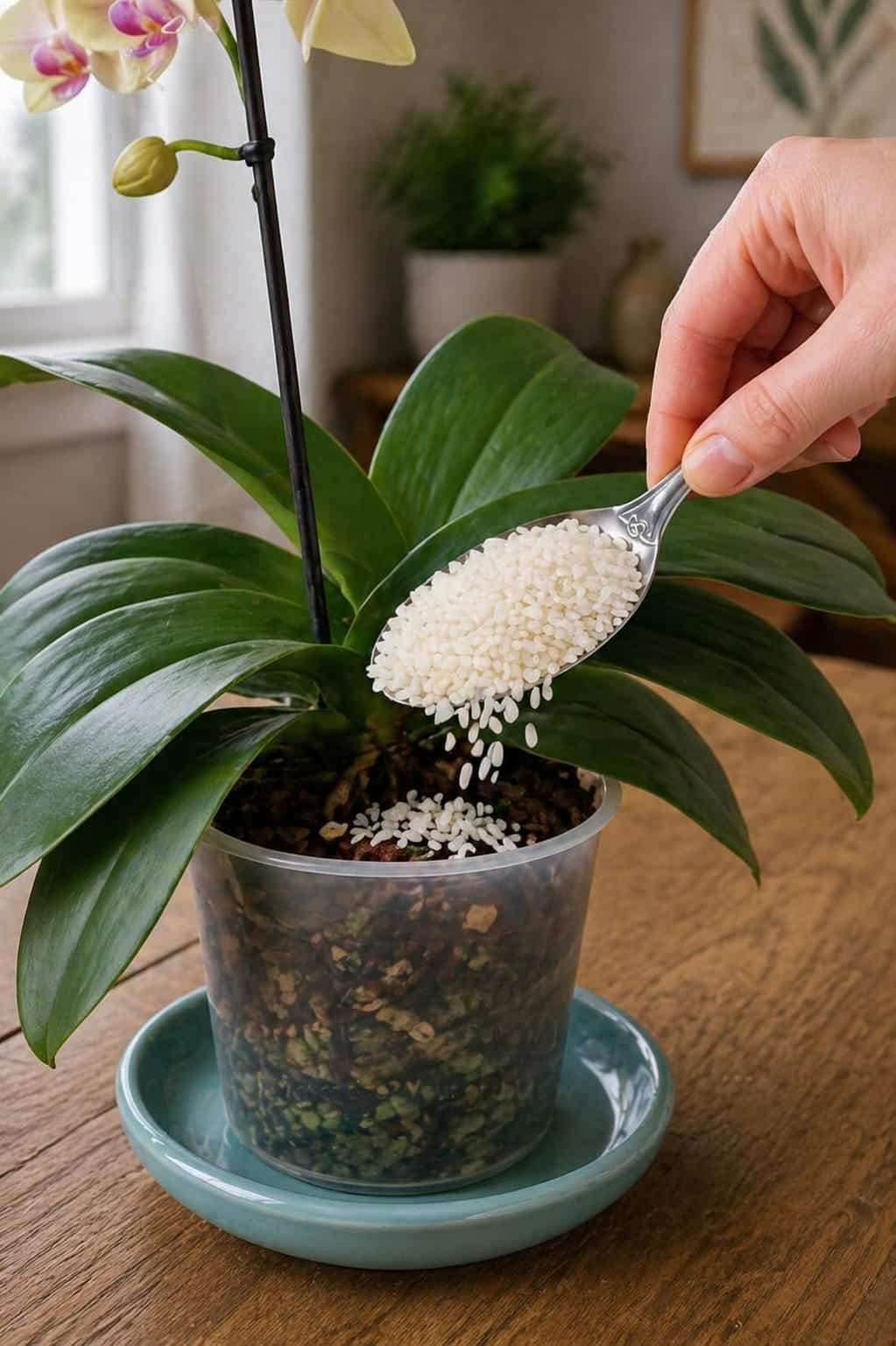
How Rice Water Fits Into a Healthy Orchid Routine
A safe orchid routine with rice water might look like this:
- Check the roots and potting medium before watering.
- Use plain water most of the time.
- Use diluted orchid fertilizer during active growth.
- Use diluted rice water once every four to six weeks if desired.
- Never leave rice grains in the pot.
- Keep the crown dry.
- Provide bright indirect light.
- Repot when bark breaks down.
This routine keeps rice water in the right place: as a small extra, not the foundation of care.
Common Orchid Problems Rice Cannot Fix
Root Rot
If orchid roots are mushy, brown, black, or hollow, rice water will not fix them. The orchid needs to be removed from the pot, cleaned, trimmed, and repotted in fresh medium.
No Light
An orchid kept in a dark room will not bloom well. Rice water cannot replace sunlight or bright indirect light.
Old Potting Bark
Broken-down bark holds too much moisture. If the medium is old and compacted, repotting is better than adding rice water.
Crown Rot
If water sits in the crown, the plant can rot from the center. Always keep the crown dry. Rice water should not be poured into the leaf center.
Pest Problems
Rice water will not remove mealybugs, scale, or spider mites. Pest problems need proper treatment.
Signs Your Orchid Likes the Routine
A healthy orchid will show firm leaves, active root tips, and stable growth. New roots are one of the best signs. They often appear as green or reddish tips emerging from the base of the plant or along existing roots.
If the orchid is in a good season and receives enough light, it may eventually produce a flower spike. A flower spike usually looks different from a root because it has a flatter, mitten-like tip, while roots are rounder and smoother.
Do not judge the rice trick by flowers alone. Root growth and leaf health are better early signs.
Signs You Should Stop Using Rice Water
Stop using rice water if you see mold on the bark, fungus gnats, a sour smell, slimy residue, or worsening root health. These signs suggest the mixture is too strong, too frequent, or the potting medium is staying too wet.
Flush the pot with plain water and let it drain fully. Improve airflow around the plant. If the problem continues, repot into fresh orchid bark.
Never keep adding homemade treatments to a plant that is clearly reacting badly. Return to basic care first.
How to Prevent Mold When Using Rice Water
To prevent mold, always dilute the rice water well. Use it fresh, not fermented. Strain out every rice grain. Apply it only when the orchid needs watering. Make sure the pot drains completely.
Good airflow also helps. Orchids like air movement around their roots and leaves. Avoid placing them in a stagnant, damp corner. A bright room with gentle air circulation is much better.
If your home is cool and dark, use rice water less often or not at all. Organic liquids are more likely to linger in slow-drying conditions.
Can Rice Water Help Weak Orchids?
Rice water may help a mildly tired orchid if the plant still has healthy roots and is simply lacking a little care consistency. But if the orchid is severely weak, limp, or rootless, rice water is not the first solution.
A weak orchid should be inspected carefully. Remove it from the pot if you suspect root problems. Trim dead roots. Repot in fresh bark. Adjust light and watering. Let the plant stabilize.
Once new roots begin to grow, you can consider gentle supplements like rice water. But during rescue care, simple is usually better. Too many treatments can stress the plant further.
Can Rice Water Help Orchid Leaves Shine?
Rice water should not be used as a leaf shine. Do not wipe orchid leaves with rice water because it may leave residue. If orchid leaves look dusty or dull, clean them with a soft damp cloth using plain water.
Healthy shine comes from clean leaves, good hydration, and proper light. Avoid oily leaf shine products, especially on orchids. The leaves need to breathe and function naturally.
Use rice water only in the potting medium, not on the leaf surface.
Best Time of Year to Use Rice Water
The best time to use rice water is during active growth. For many orchids, this is after blooming, when the plant begins producing new roots and leaves. Spring and summer are often good times, but indoor orchids can vary depending on home conditions.
Avoid using rice water frequently during cold, dark months when the plant is growing slowly. The medium may take longer to dry, and organic residue may stay active too long.
Watch the plant, not just the calendar. If you see new roots or leaves, the orchid is active. If growth has paused, keep care simple.
How to Use Rice Water with Orchid Fertilizer
Do not mix rice water with strong orchid fertilizer. Too many additives at once can overwhelm the root environment. Use them on separate watering days.
A simple schedule could be:
- First watering: plain water
- Second watering: weak orchid fertilizer
- Third watering: plain water
- Fourth watering: diluted rice water
This is just an example. The exact schedule depends on how often your orchid dries out. Always water based on the plant’s needs, not a strict calendar.
What If Rice Grains Already Fell into the Pot?
If a few grains fell onto the bark, remove them by hand or with tweezers. If many grains were sprinkled into the pot, gently scoop them out before they become wet and soft. If they have already started to mold or break down, it may be best to repot the orchid in fresh bark.
Do not panic over a few grains, but do not leave a pile of rice in the pot. Orchids need a clean, airy medium.
Can You Use Rice Water on All Orchids?
Rice water can be tried carefully on many common orchids, but different orchid types have different needs. Phalaenopsis orchids are the most common household orchids and are usually the focus of this trick. Dendrobiums, Cattleyas, Oncidiums, and other orchids may have different watering and drying preferences.
Before using rice water, understand your orchid type. Some orchids prefer to dry more thoroughly. Others like more consistent moisture. The more sensitive the orchid, the more cautious you should be.
When in doubt, test on one healthy plant first and observe the response for several weeks.
Why This Trick Feels So Satisfying
The rice orchid trick feels satisfying because it makes plant care feel creative. Instead of simply watering, you are preparing a gentle homemade rinse. You are paying attention to the plant, looking at the roots, checking the bark, and treating the orchid with care.
This attention often matters more than the ingredient itself. Many plants improve when their owners become more observant and consistent. The rice water ritual encourages that.
It also feels good to reuse something from the kitchen. Rice rinse water is usually wasted. Turning it into a plant-care supplement makes the routine feel resourceful and natural.
A Complete Orchid Care Plan with Rice Water
If you want to try the rice trick safely, follow this complete plan:
- Grow your orchid in proper airy orchid bark.
- Use a pot with excellent drainage.
- Place the orchid in bright indirect light.
- Water only when the roots and medium indicate it is time.
- Keep water out of the crown.
- Use plain water for most waterings.
- Use weak orchid fertilizer during active growth.
- Use diluted rice water only once every four to six weeks.
- Never leave rice grains in the pot.
- Watch for mold, gnats, or sour smells.
This plan gives you the benefit of the rice trick without risking the orchid’s root health.
Frequently Asked Questions
Can I put rice directly on my orchid?
It is better not to leave rice grains in the orchid pot. They can swell, mold, or attract pests. Use diluted rice water instead.
How do I make rice water for orchids?
Rinse one tablespoon of plain uncooked rice in one cup of water, strain out the rice, then dilute the cloudy water with three to four cups of clean water.
How often should I use rice water on orchids?
Use it once every four to six weeks during active growth. Do not use it every time you water.
Can rice water make orchids bloom?
Rice water may support general health, but blooms depend mainly on light, root health, temperature, maturity, and proper orchid care.
Can I use cooked rice water?
No, especially if it contains salt, oil, or seasoning. Use fresh rinse water from plain uncooked rice only.
Can rice water cause mold?
Yes, if it is too strong, used too often, or if rice grains are left in the pot. Always dilute well and strain completely.
Should I spray rice water on orchid leaves?
No. Use rice water only on the potting medium. Clean leaves with plain water and a soft cloth.
Can rice water replace orchid fertilizer?
No. Rice water is not a complete fertilizer. Use it only as an occasional supplement.
What should I do if my orchid smells sour after rice water?
Stop using rice water, flush with plain water, improve airflow, and check the roots. If the smell continues, repot in fresh orchid bark.
Is rice water safe for weak orchids?
Only if the orchid still has healthy roots and the mixture is very diluted. For severely weak or rotting orchids, fix the roots and potting medium first.
Final Thoughts
The rice orchid trick is simple, interesting, and easy to try, but it must be done the right way. The safest method is not burying rice grains in the pot. It is using fresh diluted rice water as an occasional rinse for a healthy orchid growing in a proper airy medium.
Rice water may offer a mild natural boost, but it is not magic. It cannot replace bright indirect light, healthy roots, good drainage, proper watering, or real orchid fertilizer. It works best as a small addition to an already balanced care routine.
If you want to try it, keep the mixture weak. Strain out every grain. Use it only when the orchid is ready for watering. Let it drain completely. Watch the plant carefully afterward. If the orchid responds well, you can repeat the method once every month or so during active growth.
Orchids reward patience and consistency. A spoonful of rice may look like a surprising secret, but the true secret is understanding what the plant needs. Give your orchid air, light, careful moisture, and gentle support, and it has a much better chance of growing strong roots, glossy leaves, and beautiful blooms again.
Sometimes the smallest kitchen habit can become a meaningful plant-care ritual. With rice water used wisely, your orchid routine may feel more natural, more attentive, and more rewarding.