Snake plants are some of the most reliable houseplants you can keep indoors. They are bold, upright, sculptural, and forgiving. Their thick sword-shaped leaves bring strong lines to a room, and their green patterns with yellow edges make them look decorative even when they are not flowering. A healthy snake plant can sit on a table, shelf, floor, plant stand, or sunny corner and instantly make the space feel more alive.
But even a tough snake plant can start to look tired. The leaves may lose their firmness, the color may look dull, the plant may stop producing new shoots, or the soil may seem dry and lifeless. Because snake plants grow slowly, it can feel frustrating when they do not change for months. That is why simple homemade tricks become so popular. People want a small routine that helps wake up the plant without buying complicated products.
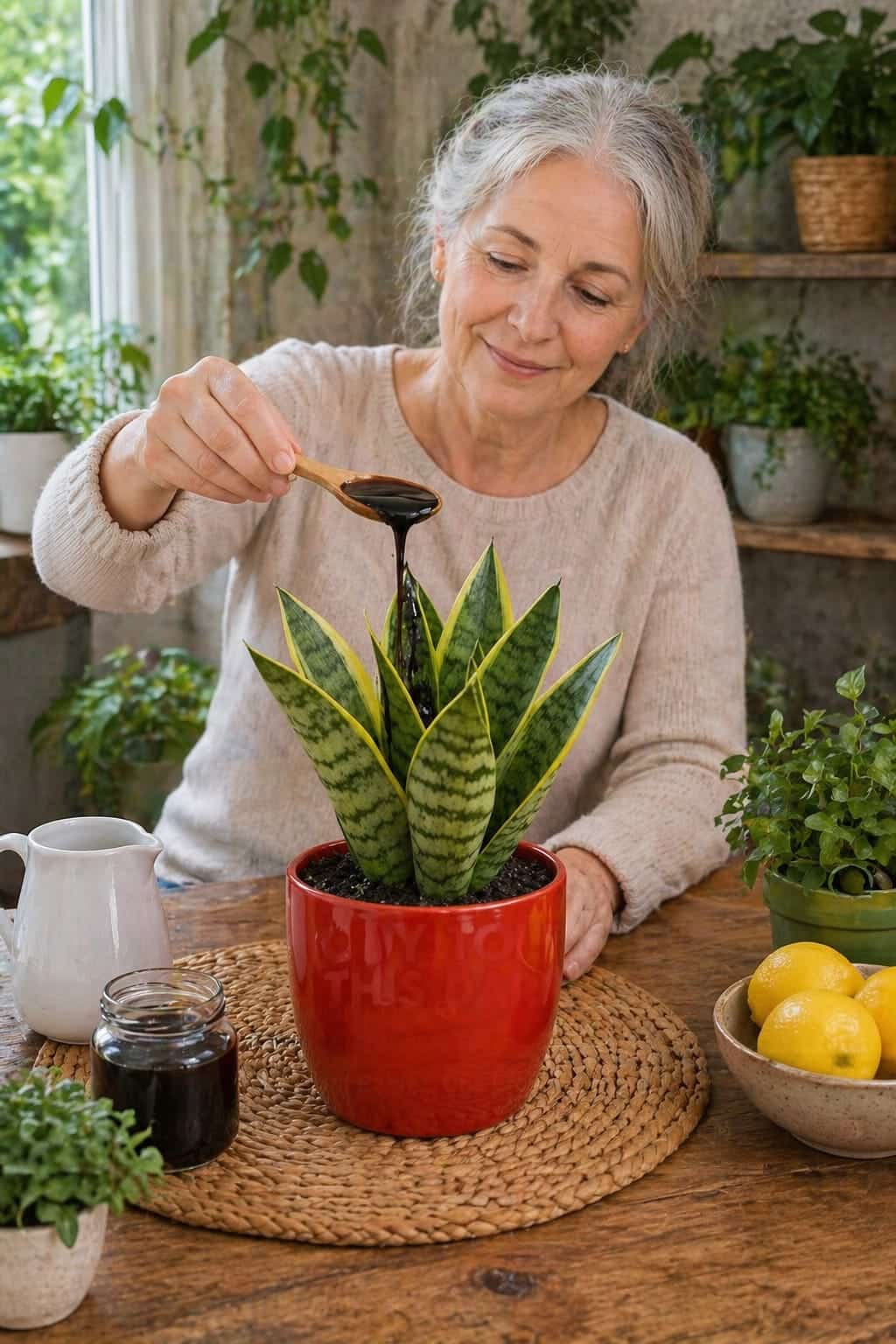
The image shows a woman gently pouring a dark syrup-like liquid from a spoon onto the soil of a snake plant in a bright red pot. Nearby, there is a small jar of dark liquid, a white pitcher, and a bowl of lemons. The scene feels warm, natural, and homemade. It looks like a simple kitchen ingredient has been turned into a plant-care booster.
This trick is often called the dark syrup snake plant trick, the molasses water method, the black tonic plant boost, or the homemade root-energy pour. The idea is that a very diluted dark liquid, usually blackstrap molasses water or compost-style plant tonic, is added to the soil occasionally to support soil life and encourage a stronger root zone.
But there is one very important rule: this trick must be diluted.
Snake plants are succulent-like houseplants. They store water in their thick leaves and underground rhizomes. They do not like sticky soil, constant moisture, or heavy sugary liquids. Pouring thick syrup directly into the pot can attract ants, fungus gnats, mold, and bad smells. It can also keep the soil too wet and harm the roots.
The safe version of this trick is not a spoonful of thick syrup poured straight onto the plant. The safe version is a very weak dark tonic made by mixing a tiny amount of unsulfured blackstrap molasses into plenty of water, then using it only occasionally during the growing season. The liquid should look like weak tea, not like heavy syrup.
Used carefully, this trick can be a satisfying seasonal routine for a healthy snake plant. It may help support beneficial microbes in the soil, lightly refresh the root zone, and encourage you to pay closer attention to watering and plant health. Used too strongly, it can create problems quickly.
In this complete guide, you will learn what the dark syrup snake plant trick is, how to make it safely, when to use it, when to avoid it, how it may support growth, and what your snake plant really needs to stay firm, upright, and beautiful indoors.
What Is the Dark Syrup Snake Plant Trick?
The dark syrup snake plant trick is a homemade plant-care routine where a tiny amount of dark natural liquid is diluted in water and applied to the soil. The dark liquid is usually unsulfured blackstrap molasses, compost tea, worm casting tea, or a very weak organic plant tonic. In photos, it often looks like thick black syrup, but the real plant-safe version should be watery and heavily diluted.
The purpose of the trick is not to feed the snake plant with sugar directly. Plants make their own sugars through photosynthesis when they receive light. The idea behind molasses water is more about feeding the soil environment. In living soil, tiny organisms break down organic matter and help make nutrients more available. A very weak molasses solution may provide a small boost to soil microbial activity when used carefully.
However, indoor potted plants are different from outdoor garden beds. A pot has limited soil volume, limited airflow, and limited drainage space. If you add too much sticky organic liquid, it can become sour, moldy, or pest-attracting. This is especially risky for snake plants because they prefer dry, airy soil.
So the trick should be treated as a rare soil refresh, not a regular watering method.
Why This Trick Looks So Appealing
The image is powerful because it feels simple and old-fashioned. A caring gardener, a wooden spoon, a small jar of dark liquid, fresh lemons nearby, and a healthy snake plant in a bright red pot all create a cozy feeling. It looks like a family gardening secret passed down through generations.
That is why this kind of trick catches attention. It does not look like a chemical product. It looks natural, homemade, and easy. The dark liquid looks rich and concentrated, almost like plant medicine.
But with snake plants, rich is not always better. These plants do not need heavy feeding. They do not want wet, sticky soil. They grow best when their roots can breathe and their potting mix dries between waterings.
The beauty of the trick is in the ritual, not in using a lot. You prepare a tiny amount, dilute it well, check the soil, apply it carefully, and then let the plant rest. That mindful care can be helpful. The thick syrup look is only for drama. The real version should be gentle.
What Is the Dark Liquid?
The dark liquid in this type of trick is most commonly interpreted as blackstrap molasses. Blackstrap molasses is a thick, dark byproduct of sugar processing. It contains small amounts of minerals and has a strong dark color. Gardeners sometimes use it in diluted form in compost tea or organic soil routines.
Another possibility is worm casting tea, compost tea, or a homemade plant tonic. These liquids can also look dark brown or black. They are usually used to lightly refresh soil and support microbial activity.
The lemons in the image may suggest lemon water or a kitchen mixture, but lemon juice should not be poured on snake plant soil. Lemon juice is acidic and can stress roots if used carelessly. The lemons are better understood as decorative kitchen background items, not part of the snake plant recipe.
For this trick, the safest dark liquid to discuss is diluted unsulfured blackstrap molasses water. It should be used in extremely small amounts and only on healthy plants.
Why You Should Not Pour Thick Molasses Directly Into the Pot
Thick molasses should never be poured directly onto snake plant soil. It is sticky, concentrated, and slow to move through the potting mix. It can coat the soil surface, attract insects, and create a sweet environment for mold or unwanted microbial growth.
When thick syrup sits on the surface, it can also block airflow. Snake plant roots and rhizomes need oxygen. A sticky layer on top of the soil works against that.
If molasses gets wet and stays in a warm indoor pot, it may smell sour or fermented. Fungus gnats and ants may become interested. The pot can become unpleasant very quickly.
The correct method is dilution. The liquid should be mixed into water until it looks like weak brown tea. If it still looks like syrup, it is too strong.
The Safe Dark Tonic Recipe for Snake Plants
This is the safest version of the dark syrup trick for snake plants. It gives the visual idea of a dark homemade tonic without overwhelming the soil.
Ingredients
- 1/4 teaspoon unsulfured blackstrap molasses
- 1 quart clean room-temperature water
- A clean jar or watering cup
- A spoon for mixing
Instructions
- Add 1/4 teaspoon of unsulfured blackstrap molasses to 1 quart of water.
- Stir until fully dissolved.
- Make sure the liquid looks like weak tea, not syrup.
- Use only when the snake plant soil is dry and ready for watering.
- Pour a small amount onto the soil, not the leaves.
- Let excess liquid drain completely.
- Empty the saucer after watering.
This is a very weak mixture, and that is exactly what you want. Snake plants prefer gentle care. More molasses does not mean more growth. More molasses usually means more risk.
How Often Should You Use the Dark Syrup Trick?
Use it rarely. Once every two to three months during the growing season is enough. For most indoor snake plants, spring and summer are the best times. During these months, the plant receives more light and warmth, so it is more likely to use water and nutrients actively.
Do not use this trick every week. Do not use it every time you water. Do not use it in winter unless the plant is actively growing in a warm, bright room.
Snake plants grow slowly. They do not need constant feeding or constant stimulation. A light seasonal tonic is enough if you choose to use one.
If your plant is already healthy, you may not need this trick at all. It is optional.
When Is the Best Time to Apply It?
The best time to apply the dark tonic is when the snake plant soil is dry and the plant is due for watering. This is important because the tonic counts as watering. It should not be added on top of already damp soil.
Check the soil before using it. Push your finger into the mix or use a wooden skewer. If the soil is still damp below the surface, wait. If the pot feels heavy, wait. If the plant is in a cool or low-light spot, wait even longer.
Morning or early afternoon is best. This gives the pot time to drain and settle during the day.
Never use the tonic as an extra drink between waterings. Snake plants prefer dry-down time.
When Should You Avoid This Trick?
Do not use the dark syrup trick if your snake plant is already struggling from overwatering. Signs of overwatering include yellow leaves, mushy bases, soft stems, black spots near the soil, mold on the soil surface, or a sour smell from the pot.
Do not use it if the pot has no drainage holes. Any homemade liquid can become risky if it cannot drain away.
Do not use it if you already have fungus gnats or ants. A sweet organic liquid can make pest problems worse.
Do not use it on a newly repotted or freshly divided snake plant. Let the roots settle first.
Do not use it on a plant in very low light. Low-light plants use water slowly, so extra organic liquid can linger too long.
This trick is for healthy plants, not emergency rescue.
Can This Trick Make Snake Plants Grow Faster?
The dark syrup trick may support the soil environment slightly, but it will not make a snake plant grow dramatically faster. Snake plants are naturally slow growers. Their growth depends mostly on light, warmth, root health, and proper watering.
If a snake plant is in a dark corner, molasses water will not wake it up. If the roots are rotting, molasses water will not save it. If the soil is dense and wet, the tonic can make things worse.
However, if the plant is healthy and growing during spring or summer, a very weak organic tonic may support the potting mix and root zone. It can be part of a care routine that encourages stronger growth over time.
The improvement will be gradual, not instant.
Can This Trick Help Snake Plants Produce Pups?
Snake plant pups grow from underground rhizomes. These rhizomes store energy and send up new shoots when conditions are right. Pups are usually encouraged by bright indirect light, healthy roots, a slightly snug pot, warm temperatures, and correct watering.
The dark syrup trick does not directly create pups. It may support soil activity in a small way, but pups come from the plant’s stored energy and rhizome health.
If you want more pups, focus on the basics first:
- Move the plant to brighter indirect light
- Use fast-draining soil
- Use a pot with drainage holes
- Let the soil dry between waterings
- Keep the plant warm
- Feed lightly during active growth
- Avoid oversized pots
The tonic can be a small addition, but these conditions matter much more.
Why Light Matters More Than Molasses
Plants create energy through photosynthesis. That means light is the real source of plant strength. Snake plants can survive in low light, but they grow better in bright indirect light.
If your snake plant has not produced new growth in months, light may be the missing factor. Move it closer to a bright window, but avoid sudden harsh direct sun if it has been in shade for a long time.
An east-facing window is often excellent. A bright north-facing window can work. A south or west window may need a sheer curtain.
A homemade tonic can support care, but it cannot replace light. Without enough light, the plant has limited energy to use any supplement.
Best Soil for This Trick
If you use any homemade liquid, the soil must drain well. Snake plants need a gritty, airy mix. Dense soil holds moisture too long and can become sour if organic liquids are added.
A good snake plant mix can include:
- 2 parts cactus or succulent mix
- 1 part perlite or pumice
- 1 part coarse sand, fine bark, lava rock, or small gravel
This kind of mix lets water flow through and allows oxygen around the roots. It makes occasional supplements safer because the liquid does not sit in the pot for too long.
If your snake plant is in heavy, muddy, compacted soil, repotting will help more than any dark tonic.
Why Drainage Is Essential
The red pot in the image looks beautiful, but the most important question is whether it has drainage holes. A snake plant pot must allow excess water to escape. Without drainage, water collects at the bottom and can rot the roots and rhizomes.
This is especially important when using molasses water or any organic liquid. If it sits at the bottom of a pot, it can become stale, sour, or smelly.
If your decorative pot does not have drainage holes, use it as a cover pot. Keep the snake plant in a plastic nursery pot with holes, place it inside the decorative pot, and remove it for watering.
No homemade trick is safe in a pot that traps water.
How Much Should You Pour?
Use a modest amount. The image shows syrup being poured from a spoon, but for real care, the dark tonic should be diluted in water and applied like a light watering.
For a small snake plant, use only a few tablespoons of diluted tonic. For a medium plant, use about one-quarter to one-half cup. For a larger pot, use enough to lightly moisten the soil, but do not flood it.
If liquid runs out quickly, let it drain and empty the saucer. If the soil stays wet for many days, reduce the amount next time or improve the potting mix.
Snake plants prefer less rather than more.
Should You Pour It on the Leaves?
No. The dark tonic should be poured onto the soil only. Do not coat snake plant leaves with molasses water. Sticky residue on the leaves can attract dust, pests, and mold. It can also make the plant look dirty instead of glossy.
If the liquid splashes onto the leaves, wipe it off with a damp cloth. Keep the leaf surfaces clean so they can absorb light properly.
Snake plant leaves are naturally attractive when clean. They do not need syrup or shine products.
Can You Mix Lemon Juice Into the Tonic?
No. Even though lemons appear in the image, lemon juice should not be added to snake plant soil. Lemon juice is acidic and can irritate roots if used incorrectly. It can also disrupt the soil balance in a small pot.
The lemons should be treated as decorative background items, not part of the plant recipe.
If you want a homemade snake plant tonic, keep it simple: a tiny amount of unsulfured blackstrap molasses diluted in plenty of water. No lemon, vinegar, sugar, salt, or extra kitchen ingredients.
Simple is safer.
Continue to Page 2
Continue to page 2 for more details about this article and the key points many readers miss on the first page.