Spider plants are among the most charming houseplants you can grow. They are graceful, forgiving, fast to multiply, and full of movement. Their long arching leaves spill beautifully over the sides of a pot, and when the plant is happy, it sends out trailing stems covered with tiny baby plants. These little plantlets make spider plants feel almost magical because one plant can slowly become many.
But even spider plants can start looking tired. The leaves may become pale, the tips may turn brown, the runners may look thin, or the plant may stop producing babies. A spider plant that once looked full and lively can begin to look dry, faded, and exhausted, especially indoors where light, humidity, and watering are not always perfect.
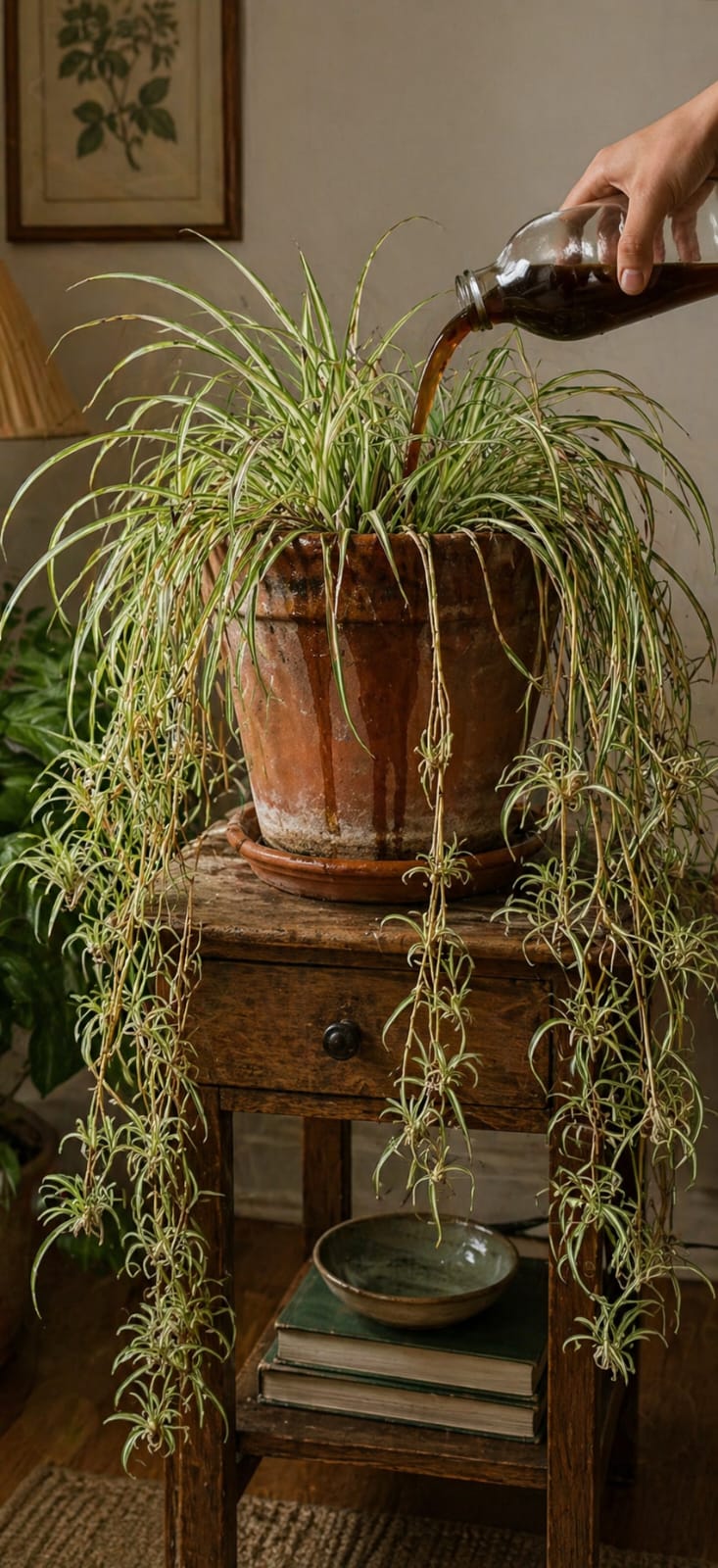
The image shows a dramatic spider plant in a terracotta pot, with long trailing runners and many baby spider plants hanging down like green ribbons. A hand is pouring a dark brown liquid from a bottle into the pot. The liquid runs down the outside of the terracotta, making the scene look rustic, homemade, and powerful. It feels like an old garden trick: a simple brown pour that wakes up a tired spider plant and helps it trail again.
This trick is often called the brown liquid spider plant trick, the compost tea spider plant method, the black tea plant tonic, the worm casting tea pour, or the homemade runner booster. The idea is to use a weak, diluted brown plant tonic to refresh the soil and support the plant during active growth. The liquid can be made from compost tea, worm castings, diluted black tea, or a very mild organic fertilizer tea.
However, the safe version of this trick is gentle. Spider plants like moisture more than snake plants, but they still do not want sour, thick, sticky, or overly strong liquids sitting around their roots. A dark liquid can look rich and powerful in photos, but if it is too concentrated, it can create odor, mold, fungus gnats, root stress, or brown leaf tips.
The real secret is dilution.
A spider plant does not need a heavy brown syrup. It needs bright indirect light, evenly moist but well-drained soil, occasional feeding, clean leaves, and enough room for its roots and runners. A weak brown tonic can be a helpful seasonal boost, but it should never replace proper care.
In this complete guide, you will learn what the brown liquid spider plant trick is, how to make it safely, how often to use it, what mistakes to avoid, and what your spider plant really needs to grow long runners, fresh leaves, and more baby plants year after year.
What Is the Brown Liquid Spider Plant Trick?
The brown liquid spider plant trick is a homemade watering routine where a weak, dark-colored plant tonic is poured into the soil of a spider plant. The liquid is usually brown because it comes from organic ingredients such as compost, worm castings, black tea, banana peel tea, or a diluted organic fertilizer.
The goal is not to drown the plant or force instant growth. The goal is to give the soil a gentle refresh during the growing season. A mild brown tonic may provide small amounts of nutrients and support the living activity in the potting mix. When the soil is healthy and the plant has enough light, the spider plant may respond with stronger leaves, better color, and more runners over time.
In the image, the liquid is very dark. For real plant care, it should not be used that strong unless it is already properly diluted. The safest brown liquid should look like weak tea, not thick coffee, syrup, or muddy water. If it smells rotten, sour, or alcoholic, it should not be used indoors.
This trick works best as an occasional boost for a healthy spider plant. It is not the right solution for a plant with rotting roots, soggy soil, pest problems, or severe damage.
Why Spider Plants Love a Gentle Feeding Routine
Spider plants are more active growers than many slow houseplants. When they are happy, they produce new leaves, long arching stems, and baby plantlets. That growth takes energy. While spider plants are not extremely heavy feeders, they do appreciate light feeding during spring and summer.
A spider plant that has been sitting in the same pot for a long time may start using up nutrients in the soil. The plant may still survive, but it may not look as fresh or productive. Leaves may become thinner, color may fade, and baby plant production may slow down.
A gentle brown tonic can help refresh the growing routine. It gives the plant a mild feeding moment without the harshness of strong fertilizer. When combined with good light and correct watering, this can support healthier growth.
The key is mild feeding. Spider plants can develop brown leaf tips if they receive too much fertilizer or if salts build up in the soil. So the brown liquid should be weak and occasional.
What Is the Dark Brown Liquid?
The dark brown liquid in the image can be interpreted in a few safe plant-care ways. The most useful options are compost tea, worm casting tea, or weak black tea. Each one has a slightly different purpose.
Compost Tea
Compost tea is made by steeping finished compost in water. It creates a brown liquid that may contain mild nutrients and beneficial microorganisms. It should smell earthy, not rotten.
Worm Casting Tea
Worm casting tea is made by soaking worm castings in water. It is usually gentler and cleaner than strong compost tea, making it a good choice for indoor houseplants.
Weak Black Tea
Plain unsweetened black tea can be used very weakly as an occasional watering liquid. It should be cooled completely and diluted. It is not a complete fertilizer, but some plant owners use it as a mild soil refresh.
Diluted Organic Fertilizer
Some liquid organic fertilizers are naturally brown. These should be used only according to the label and preferably at half strength for spider plants.
The important thing is that the liquid must be mild, clean, and diluted. Do not use sugary drinks, coffee, soda, alcohol, thick molasses, cooking water with salt, or spoiled kitchen liquid.
The Best Brown Tonic Recipe for Spider Plants
The safest homemade version is worm casting tea because it is gentle, simple, and less likely to smell bad than strong compost tea.
Ingredients
- 1 tablespoon worm castings
- 1 quart clean water
- A jar or pitcher
- A strainer or cloth
Instructions
- Add 1 tablespoon of worm castings to 1 quart of water.
- Stir gently.
- Let it sit for 2 to 4 hours.
- Strain out the solids.
- Use the liquid the same day.
- Pour it onto the soil only when the plant is ready for watering.
The finished liquid should be light brown. It should smell earthy and mild. If it smells rotten, do not use it.
This tea can be used once every four to six weeks during spring and summer. Use plain water the rest of the time.
Compost Tea Version
If you want to use compost tea, keep it very mild. Indoor plants do not need strong compost liquids.
Ingredients
- 1 tablespoon finished compost
- 1 quart clean water
- A jar or bucket
- A strainer
Instructions
- Place finished compost in clean water.
- Stir gently.
- Let it steep for a few hours.
- Strain well so no chunks go into the pot.
- Dilute with extra water if the liquid looks very dark.
- Use immediately.
Good compost tea should smell like fresh soil. If it smells like garbage, sewage, vinegar, or rot, throw it away. Never pour bad-smelling liquid into an indoor plant pot.
Weak Black Tea Version
Plain black tea can also create the brown liquid look. This version is simple if you do not have worm castings or compost.
Ingredients
- 1 used black tea bag or 1 weak cup of plain black tea
- 2 to 3 cups extra water
- A watering cup
Instructions
- Brew plain black tea with no sugar, milk, lemon, or flavoring.
- Let it cool completely.
- Dilute it with at least 2 to 3 times as much water.
- Use it only when the soil is ready for watering.
This should be used rarely. Black tea is not a complete plant food, and too much can affect the soil. It is best treated as a mild occasional refresh, not a main fertilizer.
Why You Should Not Use Coffee as the Brown Liquid
Coffee is a common houseplant trick, but it is not ideal for spider plants when used casually. Coffee can be acidic, and used coffee grounds can compact the soil. In indoor pots, coffee residue may encourage mold or fungus gnats if the soil stays damp.
A tiny amount of very diluted plain coffee may not instantly kill a plant, but it is not the best choice for this trick. Worm casting tea, mild compost tea, or a proper diluted fertilizer is safer and more predictable.
Do not pour leftover coffee with sugar, milk, creamer, or flavoring into plant soil. Those ingredients can attract pests and create sour odors.
The brown liquid should be plant-friendly, not leftover breakfast waste.
Why You Should Not Use Soda, Alcohol, or Sweet Drinks
Some dark liquids look like plant tonics, but they should never go into a spider plant pot. Soda, alcohol, sweet tea, energy drinks, and syrupy liquids can harm roots and attract pests.
Sugar can feed mold and insects. Alcohol can damage plant tissue. Carbonated or flavored drinks contain ingredients plants do not need. These liquids can quickly turn a potting mix sour and unhealthy.
Only use clean, mild, unsweetened plant-safe liquids. If you would not want it sitting in a small pot of soil for several days, do not pour it into your plant.
How Often Should You Use the Brown Liquid Trick?
Use the brown liquid trick once every four to six weeks during the growing season. Spring and summer are best because the plant is actively growing and can use mild nutrients more effectively.
Do not use it every week. Do not use it every watering. Do not use it in winter unless the plant is actively growing in bright light.
Spider plants can be sensitive to salt buildup and overfeeding. Too much feeding can cause brown tips. A gentle monthly routine is enough.
Most of the time, use plain water.
When Is the Best Time to Apply It?
The best time to apply the brown tonic is when the top inch of soil feels dry and the plant is ready for watering. The tonic should count as a watering, not an extra pour between waterings.
Morning is the best time. This gives the plant the day to absorb moisture and allows the soil surface to settle before night.
Do not pour tonic into already wet soil. If the pot is heavy or the soil feels damp, wait. Overwatering is more harmful than skipping a feeding.
A spider plant should be moist, not swampy.
How to Apply the Brown Liquid Correctly
Pour the brown liquid directly onto the soil, not onto the leaves. In the image, the liquid runs down the outside of the terracotta pot. In real use, try to pour slowly and carefully so most of the liquid goes into the soil and not down the pot.
- Check the soil moisture first.
- Use only fresh, mild, diluted brown tonic.
- Pour slowly around the soil surface.
- Avoid splashing the leaves.
- Stop when the soil is evenly moist.
- Let extra liquid drain out.
- Empty the saucer after watering.
- Wipe spills from the pot, table, or floor.
If the liquid pools on top for a long time, the soil may be compacted. If it runs straight through without soaking in, the soil may be too dry or hydrophobic. Either way, adjust your watering method.
Why Terracotta Pots Work Well for Spider Plants
The spider plant in the image is growing in a terracotta pot. Terracotta is a good choice because it is porous. It allows some moisture to evaporate through the sides, helping the soil dry more evenly.
Spider plants like consistent moisture, but they do not want stagnant wet soil. Terracotta can reduce the risk of overwatering compared with a sealed pot. It also gives the plant a rustic, natural look.
However, terracotta can dry out faster than plastic or glazed ceramic. A spider plant in terracotta may need watering more often, especially in warm rooms or bright light.
The white mineral marks on terracotta are normal. They come from water and mineral salts moving through the pot. If they become heavy, flush the soil occasionally with plain water and wipe the pot.
Why Drainage Is Essential
A spider plant pot must have drainage holes. Even though spider plants like moisture, their roots still need oxygen. If water collects at the bottom, roots can rot.
This is especially important when using brown organic liquids. If the liquid cannot drain, it may become sour and smelly inside the pot.
After watering, always empty the saucer. Do not leave the pot sitting in standing water.
Drainage is one of the main reasons a spider plant stays healthy enough to produce long runners and baby plants.
Can the Brown Liquid Help Spider Plants Make More Babies?
A mild brown tonic may support the plant during active growth, but it does not directly force baby plants. Spider plants produce babies when they are mature and growing in good conditions.
The biggest factors for baby production are bright indirect light, a healthy root system, regular watering, and light feeding. A plant that receives too little light may survive but produce fewer runners.
If your spider plant has no babies, improve the light first. Move it closer to a bright window or use a grow light. Then water consistently and feed lightly during spring and summer.
The brown liquid trick can be part of that care routine, but it is not the only reason babies appear.
Best Light for More Spider Plant Runners
Spider plants grow best in bright indirect light. They can tolerate lower light, but they become fuller and more productive with better brightness. Too much direct sun can burn the leaves, especially variegated leaves, so filtered light is ideal.
Place the plant near an east-facing window, a bright north-facing window, or a filtered south or west window. If leaves look faded or scorched, move it away from harsh sun. If growth is slow and runners are absent, move it closer to light.
Light is the real energy source for new leaves and baby plants. Brown tonic can support the soil, but light drives the growth.
Best Soil for Spider Plants
Spider plants like soil that holds moisture but drains well. A dense, soggy mix can cause root issues. A mix that dries instantly can make the plant wilt too often. Balance is the goal.
A good spider plant mix can include:
- 2 parts indoor potting mix
- 1 part perlite or pumice
- 1 part coco coir, fine bark, or composted bark
This mix gives the roots both moisture and air. If using organic brown tonics, airy soil is especially important because it prevents the liquid from sitting too long.
If your spider plant soil smells sour, stays wet for many days, or has become compacted, repotting is better than adding more tonic.
How to Water Spider Plants Normally
Spider plants prefer evenly moist soil, but they should not be constantly wet. Water when the top inch of soil begins to dry. In warm bright conditions, this may be once a week. In cooler or lower-light conditions, it may be less often.
When watering, water thoroughly until excess drains out. Then empty the saucer. If your tap water is very hard or treated, spider plants may develop brown tips. Filtered water, rainwater, or water left out overnight may help in some homes.
The brown liquid trick should replace one normal watering occasionally. It should not be added on top of a regular watering.
Why Spider Plant Leaf Tips Turn Brown
Brown tips are one of the most common spider plant problems. They can happen for several reasons:
- Dry air
- Underwatering
- Overwatering
- Salt buildup from fertilizer
- Minerals in tap water
- Too much direct sun
- Root crowding
If you use the brown liquid trick too often or too strongly, it may contribute to brown tips by increasing residue in the soil. This is why dilution matters.
Trim brown tips if you dislike the look, but correct the care issue too. Use clean scissors and follow the natural leaf shape.
Continue to Page 2
Continue to page 2 for more details about this article and the key points many readers miss on the first page.