Jade plants are some of the most loved indoor succulents because they look strong, glossy, and almost tree-like as they mature. Their thick oval leaves store water, their stems become woody with age, and their deep green color gives any room a calm, healthy feeling. A mature jade plant can look like a tiny indoor tree, while a small jade cutting can look like a little green treasure waiting to grow.
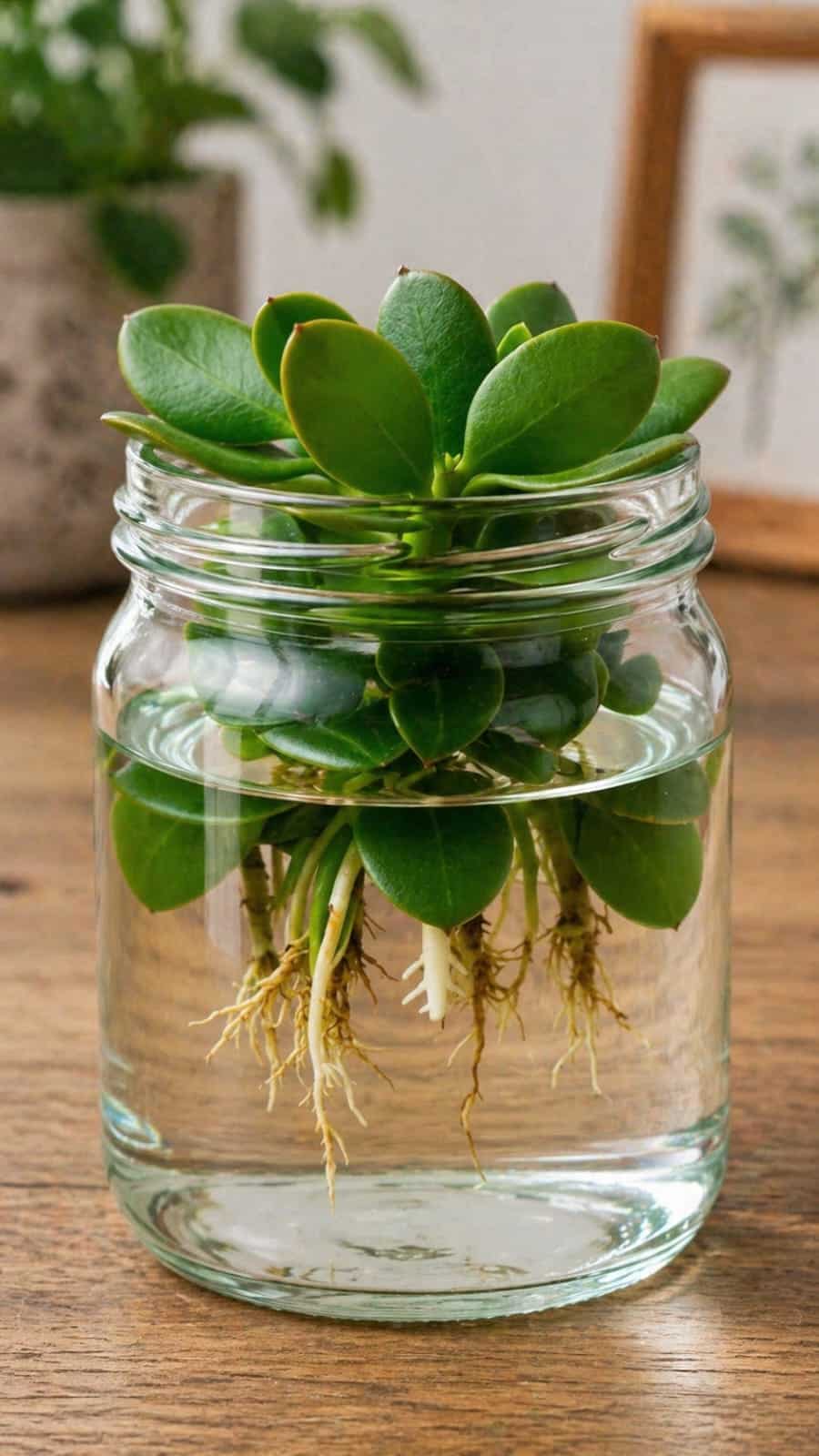
The image shows a beautiful and simple plant trick: several jade plant cuttings are sitting in a clear glass jar of water. The leaves rest above the rim, while the stems and roots hang down into the water. Some roots are already long and pale, showing that the cuttings have begun to grow. The setup is clean, decorative, and easy to understand. It turns a basic glass jar into a little rooting station.
This trick is often called the water rooting jade plant method, the jade cutting jar trick, the water propagation hack, or the simple glass jar succulent rooting method. The idea is to place healthy jade cuttings in clean water until roots appear, then transfer them to soil once the roots are strong enough.
Many people think succulents can only be rooted in soil, and soil propagation is still one of the best methods. But jade plants can also root in water when the cutting is healthy, the water stays clean, and the leaves are kept above the waterline. This makes the method popular for beginners because you can actually see the roots forming through the glass.
The best part of this trick is how satisfying it feels. Instead of guessing what is happening under the soil, you watch the roots grow day by day. Tiny white roots appear first, then longer root strands develop. Once the cutting has a small root system, it can be planted in a light succulent mix and grown into a new jade plant.
However, this trick needs care. Jade plants are succulents, and succulents can rot if their stems stay too wet for too long. Water propagation works best when the cuttings are allowed to callus before being placed in water, when the water is changed often, and when the cuttings are moved to soil before they become too dependent on water.
Used correctly, the glass jar water rooting method is one of the easiest ways to multiply a jade plant. It is decorative, simple, and beginner-friendly. Used carelessly, it can lead to mushy stems and failed cuttings.
In this complete guide, you will learn what the water rooting jade plant trick is, how to prepare cuttings, how to root them in a jar, how long the process takes, when to move them to soil, and how to care for your new jade plants after propagation.
What Is the Water Rooting Jade Plant Trick?
The water rooting jade plant trick is a propagation method where jade plant cuttings are placed in a jar of water until they grow roots. The cutting is usually taken from a healthy jade plant stem. After the cut end dries and calluses, the stem is suspended so the lower part touches water while the leaves remain above the surface.
Over time, roots begin to grow from the lower nodes or cut end. In a clear jar, you can watch the entire process. This makes the method especially exciting for new plant owners because the progress is visible.
The trick works because jade plants naturally have the ability to grow new roots from stem cuttings. In nature, a fallen stem can root if it lands in a suitable place. In the home, you can guide that process by giving the cutting clean water, bright indirect light, and time.
The method is not meant to keep jade plants in water forever. Jade plants are not true aquatic plants. They are succulents that grow best in well-draining soil. Water rooting is mainly a temporary step to start roots before planting.
The safest goal is simple: root in water, then transfer to soil.
Why This Trick Looks So Beautiful
The image is beautiful because it shows both the plant and the hidden root process at the same time. Normally, roots are underground and invisible. In a glass jar, they become part of the display. The green leaves sit above the rim like a little bouquet, while the roots hang in the clear water like delicate threads.
This is why water propagation is so popular. It feels clean, transparent, and almost magical. You are not just caring for a plant; you are watching it build itself.
Jade plants also look especially attractive in water because their leaves are thick and glossy. The contrast between the firm green leaves and the soft pale roots makes the setup feel fresh and alive.
A jar of jade cuttings can sit on a windowsill, shelf, desk, or kitchen table as a temporary propagation display. It looks intentional, not messy. It also makes plant multiplication feel easy and approachable.
Why Jade Plants Are Easy to Propagate
Jade plants are naturally good at storing energy. Their thick leaves and stems hold water and nutrients, which helps cuttings survive while they grow new roots. This is one reason jade plants are easier to propagate than many delicate houseplants.
A healthy jade cutting can live for quite a while without roots because it has stored moisture inside its leaves and stem. During that time, it can slowly create new roots from the cut area or from nodes along the stem.
You can propagate jade plants from stem cuttings or individual leaves. Stem cuttings are faster and more reliable. Leaf cuttings can work, but they take longer and often produce tiny plants slowly.
The image shows stem cuttings with leaves attached, which is the better method if you want a fuller new plant sooner.
Can Jade Plants Really Root in Water?
Yes, jade plants can root in water, but the method must be done carefully. Because jade plants are succulents, they are more prone to rot than tropical water-loving plants like pothos or philodendron. This means the cutting should not be placed in water immediately after cutting.
The cut end should dry first. This drying process is called callusing. A callused end is less likely to rot when it touches water. If you place a fresh, wet cut directly in water, bacteria can enter the tissue more easily and the stem may become mushy.
Water rooting works best when the cutting is firm, healthy, and allowed to dry for a few days before being placed in the jar.
It also works best when the water is changed regularly and the jar is kept in bright indirect light.
Water Propagation vs Soil Propagation
Jade plants can be propagated in water or soil. Each method has advantages.
Water Propagation
Water propagation lets you see root growth. It feels cleaner and more exciting because progress is visible. It is also useful if you want a decorative display while the roots form.
Soil Propagation
Soil propagation is more natural for jade plants. The roots that form in soil are already adapted to dry, airy conditions. Soil propagation also reduces the shock of moving water roots into soil later.
Water propagation is easier to observe. Soil propagation is often more direct. Both can work.
If you use water propagation, the key is to move the cutting to soil once it has enough roots. Do not leave it in water forever.
How to Choose the Best Jade Cuttings
The success of this trick starts with the cutting. Choose a healthy stem from a healthy jade plant. The stem should be firm, green or slightly woody, and free from soft spots.
Look for a cutting with several pairs of leaves. A cutting about 3 to 5 inches long is usually a good size. Very tiny cuttings may dry out too fast, while very large cuttings may take longer to root.
Avoid cuttings with yellow leaves, black spots, mushy stems, pests, or wrinkled tissue. A weak cutting is more likely to rot before rooting.
Use clean scissors or pruning shears to make the cut. Clean tools reduce the chance of infection.
How to Prepare Jade Cuttings for Water
Preparation is the most important part of this trick. Do not cut a jade stem and immediately drop it into water. Let it callus first.
- Choose a healthy jade stem.
- Cut it with clean scissors or pruning shears.
- Remove the lowest leaves from the stem.
- Place the cutting on a dry paper towel.
- Keep it in a bright, dry spot away from direct hot sun.
- Let the cut end dry for 2 to 5 days.
- Wait until the cut end feels dry and sealed.
This dry period helps protect the cutting from rot. The exact time depends on the thickness of the stem and the humidity in your home. A thin cutting may callus in two days. A thicker cutting may need five days or more.
The callused end may look slightly pale, dry, or sealed. That is normal.
How to Set Up the Glass Jar
A clear glass jar is ideal because it lets you see the roots. Choose a jar with a mouth wide enough to hold the cuttings without crushing the leaves, but not so wide that the cuttings fall completely inside.
Fill the jar with clean room-temperature water. The water should reach the lower part of the stems, but the leaves should stay above the water. Leaves sitting in water can rot quickly.
If the stems are too short, you can use plastic wrap with small holes, a propagation lid, or a mesh support to hold the cuttings above the water. In the image, the leaf cluster rests naturally at the jar opening, keeping the leaves above the surface.
The roots should grow into the water, but the leafy top should remain dry.
How Much Water Should Be in the Jar?
Use enough water to cover the lower stem area, but not so much that the leaves are submerged. Usually, one to two inches of water touching the stem is enough.
As roots grow, they will extend down into the jar. You do not need to fill the whole jar to the top. Too much water around the leaves can increase rot risk.
Keep the waterline steady. If water evaporates, top it up with fresh water. But also change the water regularly instead of only topping off.
Clean water is one of the secrets to success.
How Often Should You Change the Water?
Change the water every 3 to 5 days. If the water becomes cloudy, change it sooner. Clear water helps reduce bacteria and keeps the cuttings fresh.
When changing the water, rinse the jar lightly. If any stem feels slimy, gently rinse it and inspect for rot. If a cutting becomes mushy, remove it immediately so it does not affect the others.
Do not add sugar, fertilizer, milk, rice water, coffee, or other homemade liquids to the jar. Jade cuttings root best in clean water.
The simpler the water, the better.
Best Light for Water Rooting Jade Cuttings
Place the jar in bright indirect light. A bright windowsill with filtered light is ideal. Avoid harsh direct afternoon sun, especially through glass, because it can heat the water and stress the cuttings.
Too little light can slow rooting. Too much direct sun can overheat the jar and encourage algae growth.
An east-facing window is often a good choice. A bright north-facing window can also work. If using a south or west window, keep the jar behind a sheer curtain or slightly away from the glass.
Light helps the leaves maintain energy while the roots form.
How Long Does It Take Jade Cuttings to Root in Water?
Jade cuttings usually take a few weeks to root, but timing can vary. Some cuttings begin showing small roots in 2 to 3 weeks. Others may take 4 to 6 weeks or longer, especially in cooler rooms or lower light.
Do not panic if nothing happens immediately. Jade plants are slow and steady. As long as the cutting remains firm and green, it may still be working on roots.
Warmth, bright indirect light, and clean water can speed the process. Cold conditions slow it down.
The first roots may appear as tiny white bumps or short pale threads. Once they appear, they usually continue growing longer.
What Healthy Roots Look Like
Healthy jade roots in water usually look white, cream, or pale tan. They may be thick at first, then branch into finer roots. Some older water roots may darken slightly, but they should not be slimy or smelly.
If roots are firm and growing, the cutting is doing well. If roots turn black, mushy, or smell rotten, the cutting may be failing.
In the image, the roots are visible and hanging into the water. That is exactly why this method is so satisfying. You can see the plant becoming independent.
What If the Stem Turns Mushy?
A mushy stem means rot. Remove that cutting from the jar immediately. If only the bottom is affected, you can try to save it.
- Cut above the mushy area with clean scissors.
- Make sure the remaining stem is firm.
- Let the new cut end callus for several days.
- Clean the jar and replace the water.
- Try again with the healthy section.
If the whole cutting is soft, throw it away. Keeping a rotting cutting in the jar can contaminate the water and harm other cuttings.
Rot usually happens when the cutting was not callused, the water was dirty, or leaves were submerged.
Can You Add Rooting Hormone?
Rooting hormone is usually not necessary for jade cuttings. Jade plants root easily enough with time. If you do use rooting hormone, it is usually better for soil propagation than water propagation because powder can wash away in water.
For water rooting, clean water and a properly callused cutting are more important.
Do not add random powders or fertilizers to the jar. They can make the water cloudy and encourage bacteria.
When Should You Move Jade Cuttings to Soil?
Move jade cuttings to soil when the roots are about 1 to 2 inches long and have begun branching. Do not wait until the roots become extremely long and tangled. Water roots are delicate and can struggle when moved into soil if they grow too long.
The goal is to transfer the cutting when it has enough roots to support itself but before it becomes fully adapted to water.
Once planted in soil, the cutting may pause for a while as it adjusts. This is normal.
How to Plant Water-Rooted Jade Cuttings in Soil
Use a small pot with drainage holes and a fast-draining succulent mix. Do not plant a small cutting in a large pot. Too much soil holds too much moisture and can cause rot.
- Choose a small pot with drainage holes.
- Fill it with cactus or succulent mix.
- Add extra perlite or pumice if the mix feels heavy.
- Make a small hole in the soil.
- Place the rooted cutting gently into the hole.
- Cover the roots lightly with soil.
- Do not bury the leaves.
- Wait a day or two before watering if the soil is slightly moist.
- Water lightly after planting.
- Place in bright indirect light.
Be gentle with water roots. They can break easily. If a few roots break, do not worry too much. The plant can grow more, but handle it carefully.
Best Soil for New Jade Plants
Jade plants need soil that drains quickly. They do not like heavy potting mix that stays wet for days. A good jade mix should be gritty and airy.
A simple soil mix can include:
- 2 parts cactus or succulent mix
- 1 part perlite or pumice
- 1 part coarse sand, fine bark, or small lava rock
This mix allows the roots to breathe and helps prevent rot. Since water-rooted cuttings are used to moisture, they need a careful transition to soil. A fast-draining mix helps them adjust safely.
Never use dense garden soil in a small indoor pot. It can suffocate jade roots.
Continue to Page 2
Continue to page 2 for more details about this article and the key points many readers miss on the first page.