How to Water After Moving to Soil
After planting a water-rooted jade cutting, water lightly. Do not soak the pot heavily. The roots need moisture, but they also need oxygen.
Let the soil dry before watering again. Jade plants prefer dry-down time. Overwatering is one of the fastest ways to lose a newly rooted cutting.
For the first few weeks, keep the soil slightly more attentive than you would for a mature jade plant, but never soggy. Once the cutting is established, water like a normal jade plant: deeply but infrequently.
If the leaves wrinkle slightly after moving to soil, the plant may be adjusting. Do not immediately flood it. Check the soil first.
How to Transition from Water to Soil Successfully
The transition from water to soil is the most delicate part of the process. Water roots are different from soil roots. They are used to constant moisture, so sudden dry soil can stress them. But too much wet soil can rot them.
The best solution is balance. Use a small pot, airy soil, and light watering. Keep the plant in bright indirect light, not harsh direct sun. Avoid fertilizer for the first month.
After a few weeks, the plant should begin adapting. New growth is a sign that the cutting has settled.
Patience is important. The cutting may not grow visibly right away because it is busy adjusting underground.
Can Jade Cuttings Stay in Water Forever?
Jade cuttings can survive in water for a while, but they are not ideal long-term water plants. They are succulents, and their natural growth pattern is better suited to dry, well-draining soil.
If left in water too long, stems may rot, roots may become weak, and growth may slow. The plant may also lack nutrients unless carefully managed, and water can become dirty or algae-filled.
For best long-term results, use water rooting as a temporary propagation method. Once roots are strong enough, move the cuttings to soil.
A jade plant in soil can live for many years and eventually become thick, woody, and tree-like.
Can You Propagate Jade Leaves in Water?
Jade leaves can sometimes root in water, but stem cuttings are better. Leaf propagation is slower and less reliable. A leaf may grow roots but take a long time to produce a new plant.
If you want to try leaf propagation, choose a healthy leaf and remove it cleanly from the stem. Let the end callus, then place the base near water or on dry succulent soil. Over time, roots and a tiny new plant may appear.
But if your goal is a full plant quickly, use stem cuttings like the ones in the image.
Can You Put Multiple Jade Cuttings in One Jar?
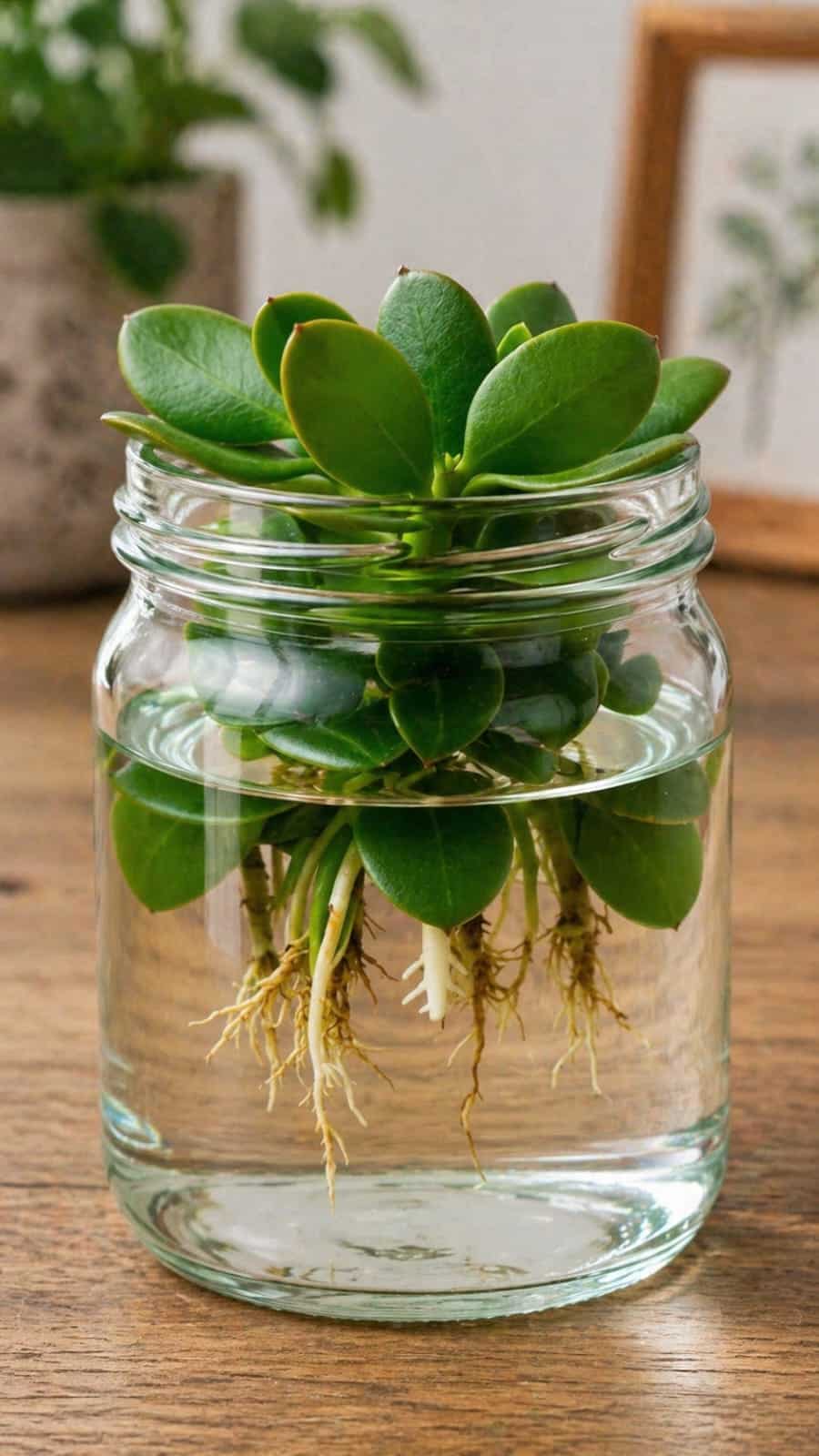
Yes, you can root several cuttings in one jar, as shown in the image. This creates a fuller display and makes efficient use of space. However, do not overcrowd the jar.
If too many stems are packed together, airflow is reduced and rot can spread more easily. Make sure each cutting has room and that the leaves are not crushed or submerged.
If one cutting rots, remove it immediately and change the water.
Multiple cuttings can later be planted together in one pot for a fuller jade plant, or separated into individual pots.
Should You Plant Several Cuttings Together?
Planting several rooted cuttings together can create a fuller pot faster. This is a good option if you want a bushy jade plant. Place the cuttings evenly around a small pot and let them grow together.
If you want each cutting to become a separate plant, pot them individually. Individual pots make it easier to shape each plant as it matures.
Both methods work. A group planting gives an instant full look. Separate pots give you more plants to share or style.
How to Encourage a Bushier Jade Plant
Once your jade cutting is established in soil and growing, you can encourage bushier growth by pruning. When you pinch or cut the top of a stem, the plant may branch from lower nodes.
Do not prune too early. Let the cutting establish roots first. Once it is actively growing, trim carefully above a leaf pair.
Give the plant bright light so new growth stays compact. Low light makes jade plants stretch and become leggy.
A bushy jade plant is created through light, pruning, and time.
Best Light for Jade Plants After Rooting
Jade plants need bright light to grow strong. After water rooting and planting, start with bright indirect light while the plant adjusts. Once established, jade plants can handle some direct morning sun.
A bright east-facing window is often excellent. A south or west window may work if the plant is introduced gradually. Too much sudden direct sun can burn leaves, especially if the cutting was rooted indoors in softer light.
If the plant stretches, leans, or produces pale new growth, it needs more light.
Strong light helps jade plants stay compact and sturdy.
How to Water Mature Jade Plants
Mature jade plants should be watered deeply but infrequently. Wait until the soil is dry before watering again. When you water, water thoroughly until excess drains out, then empty the saucer.
Do not water on a strict calendar without checking the soil. Pot size, light, season, and temperature all affect drying time.
In winter, jade plants often need much less water. Overwatering in winter is a common cause of rot.
Wrinkled leaves can mean the plant is thirsty, but soft yellow leaves often mean too much water.
What If Leaves Wrinkle During Propagation?
Some wrinkling can happen while a cutting is growing roots because it is using stored moisture. If the cutting remains firm and roots are forming, do not panic.
If the leaves become very shriveled and the stem is still not rooting, the cutting may be drying out too much or struggling. Make sure the lower stem is touching water and the jar is in bright indirect light.
Do not submerge the whole cutting to fix wrinkling. Leaves in water can rot.
Once roots grow and the cutting is planted, the leaves should gradually firm up if care is correct.
What If Leaves Turn Yellow in Water?
Yellow leaves during water propagation can happen from stress, rot, or old leaves declining. Remove any yellow leaves so they do not fall into the water.
Check the stem. If it is firm, the cutting may still be okay. If it is soft or black, rot is present.
Change the water and make sure no leaves are submerged. Keep the jar clean and bright, but out of hot direct sun.
One yellow leaf is not always failure. A mushy stem is more serious.
What If Algae Grows in the Jar?
Algae can grow when water sits in bright light for too long. It appears as green film on the glass or water. A little algae is not always disastrous, but it means the jar needs cleaning.
To prevent algae, change the water regularly and rinse the jar. Keep the jar in bright indirect light but not strong direct sun. You can also use an amber or slightly tinted jar, but clear glass is better for watching roots.
If algae becomes heavy, remove the cuttings, wash the jar, rinse the roots gently, and refill with clean water.
Can You Add Fertilizer to the Water?
Do not add fertilizer while the cuttings are trying to root. Fertilizer can make the water dirty and may stress new roots. The cutting does not need fertilizer until it is planted in soil and actively growing.
After the jade plant has been in soil for several weeks and begins growing, you can feed lightly during spring or summer. Use a diluted cactus or succulent fertilizer at half strength or less.
Young jade plants do not need heavy feeding.
Common Mistakes With the Water Rooting Jade Trick
Skipping the Callus Step
Fresh cut jade stems can rot in water. Always let the cut end dry first.
Submerging the Leaves
Leaves sitting in water can rot. Keep leaves above the waterline.
Using Dirty Water
Cloudy water encourages problems. Change water every few days.
Leaving Cuttings in Water Too Long
Move them to soil once roots are 1 to 2 inches long.
Using a Pot Without Drainage After Rooting
Jade plants need drainage holes and fast-draining soil.
Overwatering After Planting
New roots need moisture but not soggy soil.
Keeping the Jar in Hot Sun
Hot direct sun can heat the water and stress the cutting.
Signs the Trick Is Working
The water rooting trick is working if the cutting stays firm, leaves remain mostly green, and small white roots begin to appear. The water should stay clear between changes, and the stem should not become mushy.
As roots grow longer, the cutting becomes ready for soil. Once planted, the best sign of success is new leaf growth or a firmer, more stable stem.
Do not expect dramatic growth immediately. Jade plants are slow but steady.
Signs You Should Start Over
Start over if the stem becomes black, mushy, or smelly. Also start over if the water becomes cloudy very quickly even after changes, or if leaves keep dropping and the cutting softens.
Cut away rot if there is still healthy stem above it. Let the new cut callus and try again.
Propagation sometimes fails. That is normal. Taking several cuttings increases your chance of success.
A Safe Water Rooting Routine for Jade Plants
Here is the simplest routine to follow:
- Take a healthy jade stem cutting.
- Remove lower leaves.
- Let the cut end callus for 2 to 5 days.
- Place the cutting in a clean jar with water touching only the lower stem.
- Keep leaves above the waterline.
- Place in bright indirect light.
- Change water every 3 to 5 days.
- Watch for roots.
- Move to soil when roots are 1 to 2 inches long.
- Water lightly and let the plant adjust.
This routine keeps the process clean, simple, and effective.
Frequently Asked Questions
Can jade plants root in water?
Yes. Jade stem cuttings can root in water if the cut end is allowed to callus first and the water is kept clean.
How long does it take jade cuttings to root in water?
Most jade cuttings take 2 to 6 weeks, depending on warmth, light, and cutting health.
Should I let jade cuttings dry before placing them in water?
Yes. Let the cut end callus for a few days to reduce the risk of rot.
Can jade plants live in water permanently?
They may survive for a while, but jade plants grow best long-term in fast-draining soil.
When should I plant water-rooted jade cuttings?
Plant them when roots are about 1 to 2 inches long and starting to branch.
What water should I use?
Use clean room-temperature water. Change it every few days.
Can I add fertilizer to the jar?
No. Wait until the cutting is planted in soil and actively growing before feeding.
Why is my jade cutting turning mushy?
Mushy stems mean rot. This often happens when the cutting was not callused or the water was dirty.
Can I root several jade cuttings in one jar?
Yes, as long as they are not overcrowded and no leaves are submerged.
What matters most after planting?
Use fast-draining soil, a pot with drainage holes, bright light, and careful watering.
Final Thoughts
The water rooting jade plant trick is simple, beautiful, and satisfying. A few jade cuttings placed in a clear glass jar can become a living display, showing roots as they form and giving you a close look at the propagation process. It is one of the easiest ways to multiply a jade plant while enjoying the progress along the way.
The key to success is preparation. Jade cuttings should be allowed to callus before they touch water. The leaves should stay above the waterline. The jar should be kept clean. The water should be changed every few days. The cuttings should sit in bright indirect light, not hot direct sun.
Once the roots are 1 to 2 inches long, move the cuttings into a small pot with drainage holes and fast-draining succulent soil. Water lightly at first and let the plant adjust. After that, care for it like a normal jade plant, giving it bright light and allowing the soil to dry between waterings.
This trick is not about keeping jade plants in water forever. It is about using water as a clear, easy rooting stage before moving the plant to soil. When done correctly, it lets you create new jade plants from cuttings and enjoy every step of the process.
With patience, clean water, and good light, one jade plant can become many. A simple glass jar can turn a few cut stems into rooted new plants, ready to grow into glossy, sturdy, long-lasting jade plants for your home.