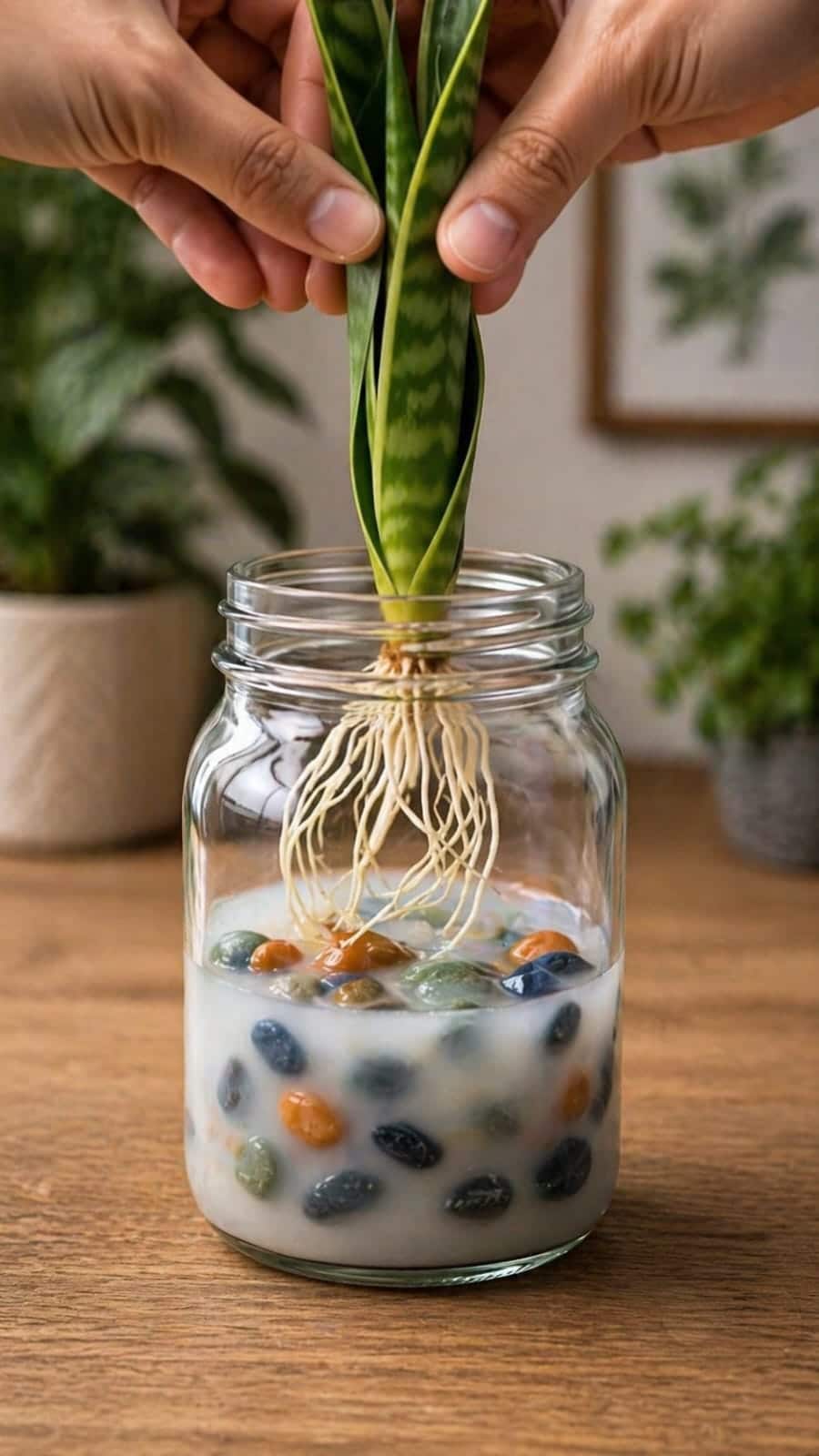
Snake plants are already famous for being strong, stylish, and almost impossible to ignore. Their upright sword-like leaves bring structure to any room, and their bold green patterns with yellow edges make them look decorative even without flowers. But the image above shows a snake plant trick that feels even more fascinating: a rooted snake plant cutting being lifted from a glass jar filled with cloudy white liquid and colorful stones.
At first glance, it looks like a secret plant spa treatment. The roots are long, pale, and healthy-looking. The leaves are upright and firm. The jar is clear, the stones are decorative, and the white liquid gives the whole setup a mysterious “plant tonic” appearance. It looks like something that could turn a simple cutting into a thriving plant with strong roots.
This method is often called the milky water snake plant rooting trick, the white jar rooting method, the rice water snake plant propagation trick, or the cloudy water root boost. The idea is simple: a snake plant pup or cutting is held in a jar with a shallow amount of diluted cloudy liquid while its roots develop. Decorative stones are added to stabilize the cutting and make the jar look beautiful.
The safest version of this trick uses diluted rice water, not real milk. The white liquid in the jar may look like milk, but using actual milk for plant propagation is not a good idea. Milk can sour, smell bad, attract insects, and encourage bacterial growth. Diluted rice rinse water gives a similar cloudy appearance while being much safer when used carefully and refreshed often.
This trick is attractive because it combines propagation and decoration. Instead of hiding roots under soil, you can watch them grow through the glass. Instead of placing a cutting in a plain jar, you can create a beautiful rooting display with stones and a soft white liquid. It feels like a plant experiment, a home decor piece, and a propagation station all at once.
However, snake plants are not true water plants. They can root in water, but they do not naturally want to live forever in cloudy liquid. They are succulent-like plants with rhizomes and thick leaves that store water. If kept too wet for too long, they can rot. So this trick works best as a temporary rooting method or short-term decorative display, not as a permanent growing system.
Used correctly, the milky water jar method can help you root a snake plant pup, watch the roots develop, and then move the plant into well-draining soil. Used incorrectly, it can cause sour water, mushy roots, and a failed cutting.
In this full guide, you will learn what this trick is, what the white liquid should be, how to prepare a snake plant cutting, how to use stones in the jar, how to keep the water clean, when to move the plant into soil, and how to avoid the common mistakes that ruin snake plant propagation.
What Is the Milky Water Snake Plant Rooting Trick?
The milky water snake plant rooting trick is a propagation method where a snake plant cutting, pup, or young division is placed in a clear jar with a cloudy white liquid and decorative stones. The lower roots or root base sit near the liquid, while the leaves remain above the jar. Over time, the plant develops roots that can be seen through the glass.
The cloudy white liquid is usually meant to represent rice water. Rice water is made by rinsing uncooked rice in water. The water turns cloudy because tiny rice starch particles wash off into it. When diluted well, it creates a pale milky liquid that looks rich and special.
The stones in the jar help hold the cutting upright. They also make the display more attractive. Instead of a plain jar of water, the setup looks decorative enough to place on a table, shelf, windowsill, or plant stand.
The purpose of the trick is to encourage visible root growth while giving the plant a clean and stylish support system. It can be used for a rooted snake plant pup, a small division, or a healthy cutting that has already started to form roots.
The key is not to overdo the white liquid. It should be weak, fresh, and changed often. Snake plant roots need oxygen and cleanliness. A jar full of old cloudy liquid can quickly become unhealthy.
What Is the White Liquid in the Jar?
The white liquid should be diluted rice water. It should not be milk, cream, yogurt, coconut milk, sweetened drink, or any dairy-based liquid.
Real milk can spoil quickly in a warm indoor environment. It can create a sour smell, attract fungus gnats, and coat the roots with residue. In a closed glass jar, spoiled milk can become unpleasant fast. Snake plant roots are not designed to sit in dairy liquid.
Diluted rice water gives the same cloudy look without the same level of risk. It is made from rinsing uncooked rice and then diluting the cloudy water with clean water. The result should look pale and watery, not thick or creamy.
The best white liquid for this trick should have these qualities:
- Lightly cloudy
- Thin like water
- Freshly made
- Unsalted
- Unseasoned
- Not fermented
- No sour smell
- No sugar or milk added
If the liquid smells sour, feels sticky, or looks thick, do not use it. The plant-safe version should be gentle and clean.
Why Rice Water Is Used in This Trick
Rice water is popular in houseplant tricks because it is simple, cheap, and visually satisfying. When rice is rinsed, the water turns cloudy and looks like a homemade plant tonic. Many plant lovers like using it because it feels natural and waste-free.
For propagation, rice water may give a mild organic boost, but it should not be treated as a miracle rooting hormone. The real reason snake plants root is because healthy plant tissue can naturally form roots when given the right conditions. Clean water, patience, warmth, and light matter more than the rice water itself.
Rice water is best used very lightly. It can make the jar look beautiful and may provide a small amount of organic material, but too much can cloud the jar, feed bacteria, and cause unpleasant smells.
So the trick works best when rice water is heavily diluted and changed frequently. The goal is a clean rooting environment, not a thick soup.
Why the Roots Look So Impressive
The image shows long, pale roots hanging from the base of the snake plant. This is what makes the trick so eye-catching. Many people grow snake plants in soil and never see what is happening below the surface. In a clear jar, the roots become part of the display.
Healthy snake plant roots in water often look white, cream, or light tan. They may be thick at first and then branch into finer strands. When the roots are firm and pale, it usually means the cutting is doing well.
The root display also creates a strong before-and-after feeling. A simple cutting becomes a rooted plant. The jar makes that transformation visible.
This is why water propagation is so satisfying. You do not have to guess whether roots are growing. You can see them.
Can Snake Plants Really Root in Water?
Yes, snake plants can root in water. Leaf cuttings, divisions, and pups can all grow roots when placed correctly. However, snake plants are slower than many tropical houseplants. A pothos cutting may root quickly, but a snake plant cutting can take several weeks or even months.
Snake plants can be propagated in water or soil. Water propagation is popular because it lets you watch the roots. Soil propagation is often more natural because the roots develop directly in the type of medium the plant will live in long-term.
Both methods can work. The water method is more decorative and beginner-friendly because root growth is visible. The soil method is less dramatic but often easier for the plant to transition into long-term growth.
If you root in water, the safest plan is to move the plant to soil once the roots are strong enough.
Is This a Permanent Setup?
This jar setup is best used as a temporary rooting display. Snake plants are not aquatic plants. They can grow roots in water, but they usually do better long-term in a gritty, well-draining soil mix.
If kept in water for a long time, snake plant roots may adapt to water conditions. When transferred to soil later, they may need time to adjust. If the jar water becomes dirty or low in oxygen, roots can rot.
Some people keep snake plants in water displays for months, but it requires clean water, careful monitoring, and occasional nutrient support. For most home gardeners, the safer and more reliable route is to root in water, enjoy the display, and then plant in soil.
Think of the jar as a nursery stage, not the final home.
What Type of Snake Plant Works Best?
The image appears to show a young snake plant division or pup with roots already attached. This is one of the best candidates for the jar trick because it already has a root base.
You can use:
- A small snake plant pup separated from the mother plant
- A rooted division from a mature snake plant
- A leaf cutting that has callused
- A cutting that has already begun rooting in water
A pup or division is usually faster and more reliable than a leaf cutting. Leaf cuttings can root, but they may take longer to produce new shoots. Also, variegated snake plant leaf cuttings can sometimes lose the yellow edge in new growth, depending on the type and method.
If you want a plant that looks like the original, division is often the best method.
How to Prepare a Snake Plant Pup for the Jar
If you are using a pup or division, preparation is simple but important. You need to separate it cleanly and make sure the roots are healthy before placing it into the jar.
- Remove the mother snake plant from its pot.
- Find a healthy pup with leaves and roots attached.
- Gently separate it from the main plant.
- Use clean scissors or a clean knife if needed.
- Inspect the roots.
- Trim away any black, mushy, or rotten parts.
- Let any cut areas dry for a few hours before placing in water.
A rooted pup can adapt more easily than a plain leaf cutting. The roots already exist, so the jar becomes a way to display, clean, and encourage further growth.
Do not place a pup with rotten roots into the jar. Rot can spread quickly in water.
How to Prepare a Snake Plant Leaf Cutting
If you are starting with a leaf cutting, you must let it callus before placing it into water. A fresh cut can rot if submerged immediately.
- Choose a healthy snake plant leaf.
- Cut a section 3 to 5 inches long.
- Remember which end is the bottom.
- Place the cutting on a dry surface.
- Let the cut end dry for 2 to 5 days.
- Once callused, place the bottom end into clean water.
The direction matters. Snake plant leaf cuttings only root properly from the bottom end. If placed upside down, the cutting may not root.
For the milky water trick, start with plain water first if you are nervous. Once roots begin forming, you can briefly use diluted rice water for the decorative cloudy effect.
How to Make the Milky Rice Water
Use uncooked rice only. Do not use cooked rice water, salted water, or water from seasoned rice.
Ingredients
- 1 tablespoon uncooked white rice
- 1 cup clean water for rinsing
- 2 to 3 cups clean water for dilution
- A small bowl
- A strainer
Instructions
- Place the uncooked rice in a bowl.
- Add 1 cup of clean water.
- Swirl the rice for 20 to 30 seconds.
- Strain the cloudy water into another container.
- Dilute the cloudy water with 2 to 3 cups of clean water.
- Use the diluted liquid immediately.
The final liquid should look lightly milky, not thick. If it looks like cream, add more water.
For propagation jars, weaker is better. The cleaner the water stays, the safer the roots will be.
How to Set Up the Jar
A clear glass jar is best because you can watch the roots. Choose a jar with a wide enough mouth to hold the snake plant without squeezing the leaves. The plant should sit upright without the leaves being submerged.
You Will Need
- A clean glass jar
- A rooted snake plant pup or callused cutting
- Decorative stones or pebbles
- Clean water or diluted rice water
- Optional: a plant support ring or jar lid insert
Steps
- Wash the jar thoroughly.
- Rinse the decorative stones.
- Add a shallow layer of stones to the bottom.
- Add clean water or diluted rice water.
- Place the snake plant roots into the jar.
- Use stones to gently hold the roots or base in place.
- Keep the leaves above the waterline.
- Place the jar in bright indirect light.
The roots should touch the liquid, but the leaves should not sit in it. If the leaf base stays wet for too long, it can rot.
Why Decorative Stones Are Added
The stones in the image are not just pretty. They help stabilize the plant inside the jar. Snake plant leaves are tall and top-heavy, so a cutting can tip over easily. Stones add weight and support.
They also make the jar look finished. Clear water with exposed roots can look simple, but cloudy water with polished stones looks like a styled plant display.
Use smooth stones, glass pebbles, river rocks, or aquarium stones. Rinse them well before use. Avoid stones that crumble, release dust, or have unknown coatings.
Do not pack the stones too tightly around the roots. Roots need space and oxygen. The stones should support, not crush.
How Much Liquid Should Be in the Jar?
Use only enough liquid to cover the roots or the bottom of the cutting. The waterline should sit below the leaves. In the image, the lower jar has cloudy liquid and stones, while the roots hang down from the plant base. This is the right idea, but the liquid should be refreshed regularly.
If the plant is a rooted pup, the roots can sit in the liquid. If it is a fresh callused leaf cutting, only the lower cut end should touch the water.
Too much liquid increases the risk of rot, especially if the leaf bases are submerged.
Keep the setup shallow, clean, and breathable.
How Often Should You Change the Milky Water?
Change the liquid every 2 to 3 days if using rice water. Rice water contains organic particles, so it can become cloudy in an unhealthy way if left too long. Even if it starts as a nice milky color, old rice water can turn sour.
If using plain water, change it every 5 to 7 days, or sooner if it becomes cloudy.
Each time you change the water, rinse the jar and stones lightly. Check the roots for any slimy or brown areas. Healthy roots should be firm. Rotten roots are mushy, dark, or smelly.
Clean water is the difference between successful rooting and rot.
Should You Use Rice Water All the Time?
No. It is better to alternate with plain water. Rice water should be used occasionally, not continuously. For example, you can use diluted rice water for 2 to 3 days, then switch back to plain water for the next change.
This gives you the visual effect and gentle boost without leaving organic material in the jar constantly.
If you notice cloudiness, odor, slime, or soft roots, stop using rice water completely and return to plain water.
The plant can root perfectly well in plain water. The rice water is optional.
Can You Use Milk Instead?
No. Do not use milk in a snake plant propagation jar. Milk can spoil quickly and create a bad smell. It can encourage bacteria, mold, and pests. It may coat the roots and make the jar unpleasant.
The image may look like milk, but the safer interpretation is diluted rice water. You can create the same cloudy look without using dairy.
If you already used milk and the jar smells sour, remove the plant immediately, rinse the roots, clean the jar, and switch to plain water.
Milk belongs in the kitchen, not in a snake plant propagation jar.
Can You Use Coconut Water?
Coconut water is sometimes used in plant tricks, but it is not ideal for a closed propagation jar unless heavily diluted and changed very often. It contains sugars and organic compounds that can encourage bacteria.
If your goal is root growth, plain water is safer. If your goal is a cloudy decorative effect, diluted rice water is safer than coconut water.
Do not use sweet drinks, fruit juice, or flavored water. These can quickly rot roots.
Can You Add Fertilizer to the Jar?
Do not add fertilizer while the plant is rooting or recovering. Fertilizer can make the water dirty, burn tender roots, or encourage algae. Snake plant roots in water are sensitive.
If the plant has strong roots and you plan to keep it in water for longer, you can use an extremely diluted hydroponic fertilizer occasionally, but this is not necessary for the simple rooting trick.
For most people, the best plan is root first, plant in soil later, then fertilize lightly during the growing season.
Continue to Page 2
Continue to page 2 for more details about this article and the key points many readers miss on the first page.