Where to Place the Jar
Place the jar in bright indirect light. Snake plants can survive in low light, but propagation works better with good brightness. Avoid harsh direct sun, especially through glass, because it can heat the water and stress the roots.
A bright windowsill with filtered light is ideal. An east-facing window is often perfect. A north-facing window can work if it is bright. A south or west window may need a sheer curtain.
Do not place the jar in a dark corner and expect fast roots. Light gives the plant energy.
Also avoid cold drafts. Warm, stable conditions encourage better rooting.
How Long Does It Take?
If you start with a rooted pup, the plant already has roots, so the jar display can look impressive immediately. New roots may grow over several weeks.
If you start with a leaf cutting, rooting can take longer. Snake plant cuttings may take 4 to 8 weeks or more to form roots. New pups can take even longer, sometimes several months.
Snake plants are slow. That does not mean the trick is failing. As long as the cutting stays firm and does not rot, it may still be working.
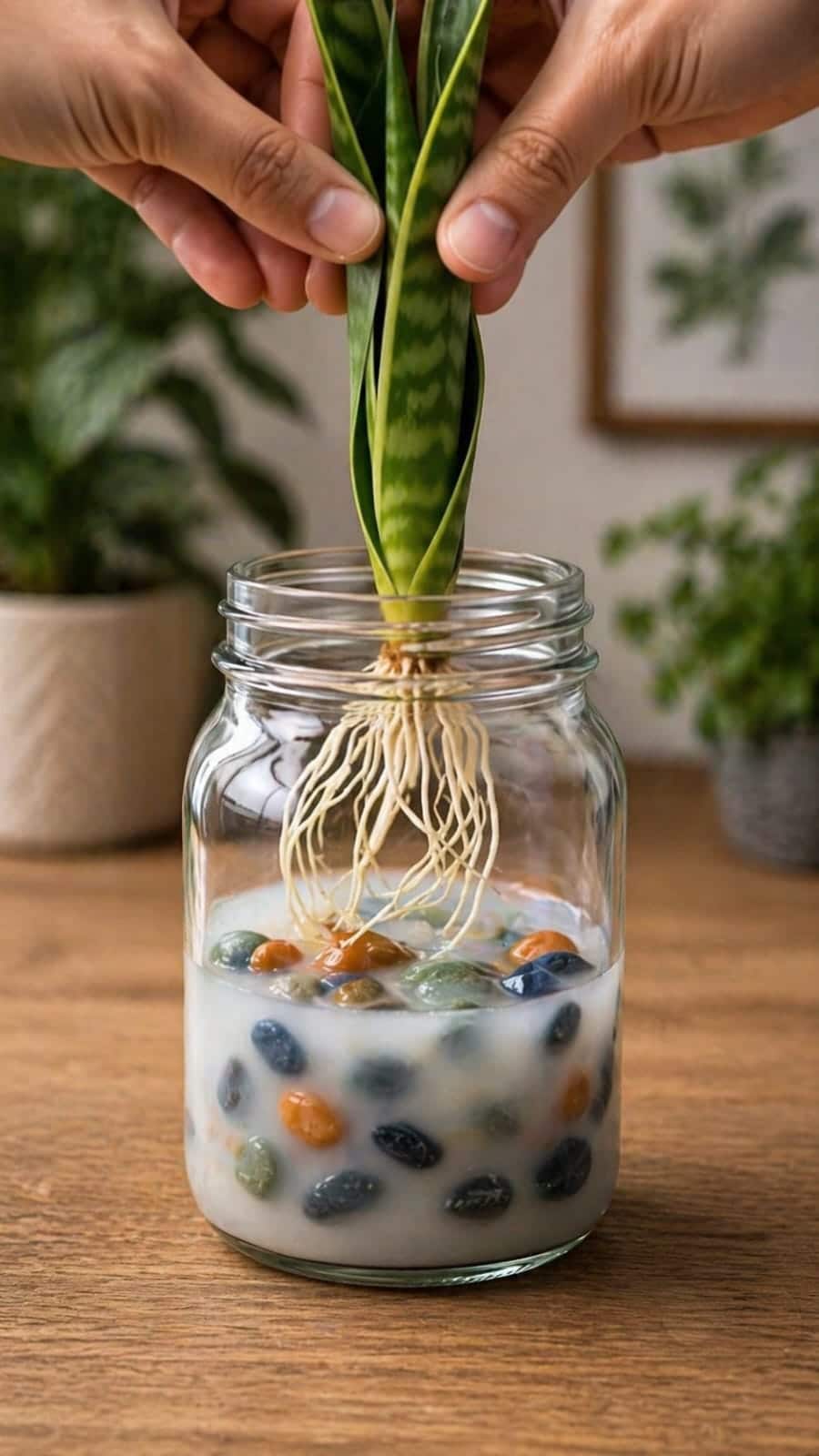
The roots in the image suggest a cutting or pup that has already been developing for some time.
What Healthy Roots Look Like
Healthy snake plant roots in water are usually white, cream, or light tan. They should feel firm, not slimy. New roots are often pale and smooth. Older roots may darken slightly but should not smell bad.
If roots are long and pale like the ones in the image, the plant is likely ready to transition to soil if that is your goal.
Do not wait until the roots become extremely tangled around the stones. Very long water roots can be delicate and may break during planting.
Move the plant to soil once the roots are several inches long and the plant feels stable.
What Rotten Roots Look Like
Rotten roots are dark brown or black, mushy, slimy, and sometimes smelly. The water may become cloudy in an unpleasant way. The base of the plant may soften.
If you notice root rot, act quickly:
- Remove the plant from the jar.
- Rinse the roots with clean water.
- Trim away mushy roots with clean scissors.
- Clean the jar and stones thoroughly.
- Let the plant dry for a few hours.
- Restart in plain clean water or plant in dry soil if enough roots remain.
Do not keep rotten roots in the jar. Rot spreads quickly in water.
When Should You Move It to Soil?
Move the snake plant to soil when it has a healthy root system and the roots are at least 2 to 3 inches long. If you started with a pup that already had roots, you can move it to soil anytime after the jar display stage.
Do not leave the plant in rice water long-term. Water roots are delicate, and snake plants usually perform better in soil over time.
The ideal moment is when the roots are long enough to support the plant but not so tangled that they are hard to separate from stones.
How to Plant a Water-Rooted Snake Plant in Soil
Use a small pot with drainage holes. Do not choose a large pot for a small cutting. Too much soil holds too much moisture and increases rot risk.
- Choose a small pot with drainage holes.
- Fill it with fast-draining snake plant or succulent mix.
- Make a hole for the roots.
- Place the rooted plant gently into the soil.
- Cover the roots, but do not bury the leaves deeply.
- Press the soil lightly to support the plant.
- Wait a day or two before watering if the roots are very wet.
- Water lightly after it settles.
- Place in bright indirect light.
The plant may pause for a while after moving to soil. This is normal. It is adjusting from water roots to soil roots.
Best Soil for Snake Plants After Water Rooting
Snake plants need fast-draining soil. A dense potting mix can hold too much water and rot the roots.
A good mix can include:
- 2 parts cactus or succulent mix
- 1 part perlite or pumice
- 1 part coarse sand, fine bark, or small lava rock
This mix gives the roots air and prevents the soil from staying wet too long. After water propagation, drainage is especially important because water-grown roots are used to moisture and need a careful transition.
Do not use heavy garden soil. Do not use a pot with no drainage.
How to Water After Moving to Soil
Water lightly at first. A newly planted water-rooted snake plant does not need to be soaked heavily. The roots need moisture, but they also need oxygen.
After the first light watering, let the soil dry before watering again. Snake plants prefer dry-down time. Overwatering after transplanting is a common mistake.
If the leaves remain firm, the plant is adjusting. If they become mushy or yellow, the soil may be too wet.
Once established, water the plant only when the soil is dry.
Can You Keep the Snake Plant in the Jar for Decoration?
You can keep it in the jar temporarily as a decorative display, but it requires maintenance. Change the water often, rinse the stones, and watch the roots. If the water becomes smelly or roots become slimy, stop the display and plant it in soil.
If you want a longer-term jar display, use plain water rather than rice water. Rice water is more likely to spoil. You may also need a very weak hydroponic nutrient eventually, but this makes the setup more complicated.
For simple home care, soil is still the best long-term home for a snake plant.
Why the Plant Should Not Sit Too Deep
In the image, the roots are in the jar while the leaves are held above. This is important. Snake plant leaves and bases can rot if submerged too deeply.
Only the roots or lower cut end should touch the liquid. Keep the crown and leaf bases dry whenever possible.
If the waterline is too high, lower it. If stones push liquid up around the leaf base, remove some stones.
A clean waterline prevents rot.
Can This Trick Wake Up a Weak Snake Plant?
This trick can help propagate or display a healthy cutting, but it is not the best rescue method for a severely weak snake plant. If a snake plant is mushy, yellow, or rotting, putting it in milky water may make things worse.
For a weak snake plant, first identify the problem. If roots are rotten, remove damaged parts. If the soil is soggy, repot into dry mix. If leaves are wrinkled from thirst, water correctly. If the plant is in a dark corner, improve the light.
Use the jar trick for healthy divisions, pups, or firm cuttings. Do not use it as a cure for rot.
Can This Trick Make Roots Grow Faster?
The jar method helps you see roots, but it does not guarantee faster growth. Snake plant roots grow at their own pace. Warmth, bright indirect light, clean water, and healthy tissue are the main factors.
Diluted rice water may make the setup look special and may provide a mild organic touch, but it should not be relied on as a rooting hormone.
If you want the safest fastest method, start with a pup that already has roots. If you start with a leaf cutting, be patient.
Can You Add Rooting Hormone?
Rooting hormone is more useful for soil propagation than water propagation. Powder hormone can wash away in water and make the jar cloudy. Liquid rooting products may be used by some growers, but they are not necessary for snake plants.
For beginners, clean water is usually better. The fewer additives in the jar, the lower the chance of rot or contamination.
The rice water effect is mostly decorative and mild. Do not overload the jar with multiple products.
Can You Use Aquarium Pebbles?
Yes, aquarium pebbles can work well because they are designed to be used in water. Rinse them thoroughly before adding them to the jar. Avoid scented, painted, or glitter-coated stones.
Smooth river stones, glass pebbles, and leca balls can also work. The main purpose is to hold the plant upright and improve the look of the jar.
Do not use stones collected outdoors unless you clean them very well. Dirt, pests, or residues can contaminate the water.
How to Clean the Jar and Stones
Since rice water can leave residue, cleaning matters. Every time you change the liquid, rinse the jar. Every week, remove the stones and rinse them well.
If the jar becomes slimy, wash it with warm water and mild dish soap, then rinse thoroughly. Make sure no soap remains before putting the plant back.
If stones become coated or smelly, replace them. Clean stones help keep the roots healthy.
A propagation jar should look fresh, not cloudy and stale.
Common Mistakes With the Milky Water Snake Plant Trick
Using Real Milk
Milk spoils and can rot roots. Use diluted rice water if you want the cloudy look.
Making the Rice Water Too Strong
Thick rice water can sour. Keep it very diluted.
Not Changing the Water
Old cloudy water can become unhealthy. Change rice water every 2 to 3 days.
Submerging the Leaf Base
Only roots or the lower cut end should touch liquid. Keep leaves above the waterline.
Using Dirty Stones
Unwashed stones can contaminate the jar. Rinse them well first.
Leaving the Plant in Rice Water Too Long
Rice water is best used briefly. Switch back to plain water or move the plant to soil.
Planting in Heavy Soil After Rooting
Use fast-draining soil when transferring to a pot.
Signs the Trick Is Working
The trick is working if the leaves stay firm, the roots remain pale and healthy, and the liquid does not smell bad. New white roots may appear, and existing roots may grow longer. The cutting or pup should stay upright and fresh.
The jar should look clean. The stones should not be slimy. The water may be cloudy from rice water at first, but it should not smell sour or develop strange film.
Healthy roots are the main sign of success.
Signs You Should Stop Immediately
Stop the trick if the liquid smells sour, roots turn black or mushy, the base of the plant softens, the jar becomes slimy, or leaves begin yellowing from the base.
Remove the plant, rinse it, trim away damaged roots, and switch to plain water or plant in dry soil depending on its condition.
Do not keep adding fresh rice water to a rotting setup. Cleanliness matters more than the trick.
A Simple Milky Water Snake Plant Routine
Here is the safest routine:
- Use a healthy rooted pup or callused cutting.
- Wash a clear glass jar.
- Rinse decorative stones.
- Add stones loosely to the jar.
- Use clean water first.
- If desired, use very diluted rice water for 2 to 3 days.
- Keep leaves above the liquid.
- Place in bright indirect light.
- Change the liquid regularly.
- Move to soil once roots are strong.
This keeps the method attractive and plant-safe.
Frequently Asked Questions
What is the white liquid in the snake plant jar?
The safest version is diluted rice water. It looks milky but should be thin and fresh.
Can I use real milk?
No. Milk can spoil, smell bad, attract pests, and rot roots.
Can snake plants grow roots in water?
Yes. Snake plant cuttings, pups, and divisions can root in water, but they are slow.
How often should I change the water?
Change diluted rice water every 2 to 3 days. Change plain water every 5 to 7 days.
Can I keep the snake plant in water forever?
It is better to use water as a temporary rooting stage and move the plant to fast-draining soil later.
Why are stones added to the jar?
Stones help support the plant and make the jar look decorative.
Should the leaves touch the water?
No. Keep leaves and leaf bases above the waterline to prevent rot.
How long does rooting take?
Snake plant cuttings may take several weeks to months. Rooted pups show results faster.
When should I move it to soil?
Move it when roots are strong and at least a few inches long.
What soil should I use after rooting?
Use a fast-draining cactus or succulent mix with added perlite, pumice, or coarse material.
Final Thoughts
The milky water snake plant rooting trick is beautiful because it makes propagation visible. Instead of hiding the roots in soil, you can watch them grow inside a clear glass jar. The cloudy white liquid and colorful stones make the setup look like a special plant-care secret, while the upright snake plant leaves give the display a clean, modern look.
The safest way to recreate this trick is to use diluted rice water, not milk. Rice water should be weak, fresh, and changed often. The plant should be a healthy rooted pup, division, or callused cutting. The stones should be clean and placed loosely. The leaves should stay above the waterline, while only the roots or lower cut end touch the liquid.
This method can help you enjoy the rooting process, but it should not be treated as a permanent home for most snake plants. Once the roots are strong, move the plant into a small pot with drainage holes and fast-draining soil. After planting, water carefully and let the soil dry between waterings.
The real secret to a thriving snake plant is not the cloudy liquid alone. It is healthy plant material, clean water, bright indirect light, patience, and good drainage after planting. The jar trick is simply a beautiful way to begin the journey.
Used wisely, this method can turn one snake plant into more plants while giving you a decorative rooting display to enjoy along the way. Keep it clean, keep it diluted, and keep the plant above the waterline. With time, those pale roots can become the beginning of a strong new snake plant ready to grow in soil for years.