Can This Trick Fix Brown Tips?
No, brown tips will not turn green again. The brown liquid trick may support future growth if the plant needs mild feeding, but it cannot repair damaged leaf tips.
To reduce future brown tips, use clean water, avoid overfeeding, keep soil evenly moist, provide bright indirect light, and flush the soil occasionally with plain water.
If tips keep browning after using a tonic, stop the tonic and return to plain water for a while.
Can This Trick Cause Brown Tips?
Yes, if used too strongly or too often. Spider plants can react to excess fertilizer or mineral buildup with brown leaf tips. Homemade tonics can also leave residue if not diluted.
If you notice more brown tips after using the brown liquid, reduce the concentration or stop completely. Flush the soil with plain water if the pot drains well.
A healthy spider plant does not need constant feeding. Gentle care is better than strong treatment.
What If the Soil Smells Bad After Using It?
A bad smell means the liquid was too strong, too old, poorly strained, or the soil stayed too wet. Stop using the tonic immediately.
Let the soil dry slightly. Remove any debris from the surface. If the smell continues, repot the plant into fresh airy mix.
Brown plant tonics should smell earthy at most. They should never make your indoor plant smell rotten.
Can This Trick Attract Fungus Gnats?
Yes, if overused. Fungus gnats love damp organic soil. A brown organic liquid can make the pot more attractive to them if the soil stays wet.
To avoid gnats, use the tonic only occasionally, keep it diluted, strain it well, and let the top inch of soil dry between waterings. Remove dead leaves and old plant debris.
If gnats appear, stop all homemade tonics. Use yellow sticky traps and adjust watering. If needed, repot into fresh soil.
Can You Pour the Brown Liquid on the Leaves?
No. The brown liquid should go into the soil only. Pouring it over the leaves can leave stains, sticky residue, or dull marks. Spider plant leaves are narrow and numerous, so cleaning residue from them can be difficult.
If the liquid splashes on the leaves, rinse or wipe it off with plain water.
Leaves need light and airflow. Keep them clean.
Can You Use This Trick on Spider Plant Babies?
Use caution. Young spider plant babies have smaller roots and are more sensitive to overwatering. It is better to root babies in plain water or light soil first. Once they are established and growing, you can use very weak tonic occasionally.
Do not pour dark organic liquid onto newly rooted babies or tiny plantlets. They need simple clean conditions.
For young plants, plain water and bright indirect light are best.
How to Propagate the Baby Spider Plants
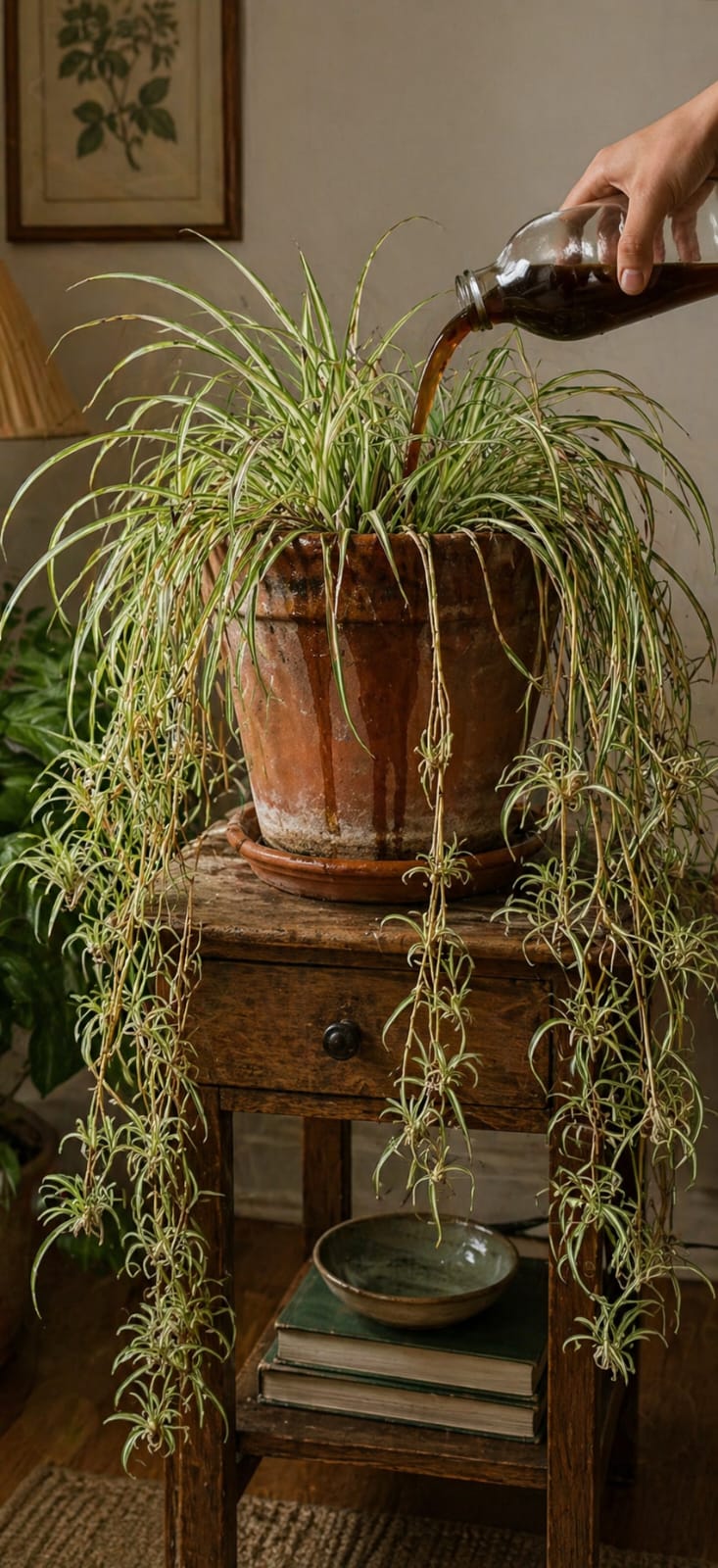
The image shows many baby spider plants hanging from runners. These can be propagated easily.
- Choose a baby plant with small roots starting to form.
- Cut it from the runner with clean scissors.
- Place it in water or directly into moist potting mix.
- Keep it in bright indirect light.
- Keep the soil lightly moist while roots develop.
- Once rooted, treat it like a normal spider plant.
You can also leave the baby attached to the mother plant and set it into a small pot of soil nearby. Once it roots, cut the runner.
Spider plants are one of the easiest houseplants to multiply, which is why they are so loved.
Should You Cut Off Spider Plant Babies?
You can leave them or remove them. Leaving them creates a dramatic trailing look, like the plant in the image. Removing some babies can help the mother plant focus energy on leaves and roots.
If the plant looks exhausted or too crowded, remove a few babies and propagate them. If the plant is healthy and you love the cascading look, keep them.
There is no strict rule. It depends on the style you want and the health of the plant.
Should You Fertilize a Spider Plant With Many Babies?
A spider plant with many babies may benefit from light feeding during active growth. Use a balanced houseplant fertilizer at half strength once a month in spring and summer, or use a mild worm casting tea every four to six weeks.
Do not overfeed. Too much fertilizer can cause brown tips and weak growth.
If you use the brown liquid trick one month, skip regular fertilizer that same month. Avoid stacking treatments.
Can You Use Banana Peel Tea?
Banana peel tea is another popular brown liquid plant trick. It may contain small amounts of potassium, but it can also ferment, smell, or attract gnats if used indoors. If you choose to use it, keep it fresh, strained, and highly diluted.
For spider plants, worm casting tea is usually safer and more balanced than banana peel water. Banana peel tea is not a complete fertilizer.
Do not use banana peel tea if it smells sour or rotten.
Can You Use Molasses Water?
Molasses water is sometimes used to support soil microbes, but for indoor spider plants it should be extremely diluted. A tiny amount may be okay, but too much can attract ants, mold, and gnats.
If using molasses, mix no more than 1/4 teaspoon unsulfured blackstrap molasses in 1 quart of water. Use rarely. Do not pour thick molasses directly into the pot.
For the image’s brown liquid look, worm casting tea is still the safer recommendation.
How to Keep a Spider Plant Full and Fresh
A full spider plant needs consistent care more than tricks. Give it bright indirect light, water when the top inch dries, use a pot with drainage, feed lightly during growth, and remove dead leaves.
Rotate the plant every couple of weeks so all sides receive light. Trim brown tips if needed. Remove old runners if they become dry or unattractive.
If the plant is rootbound and drying out too quickly, repot into a slightly larger pot. Spider plants can tolerate being somewhat snug, but extreme crowding can stress them.
When to Repot a Spider Plant
Repot when the roots are crowded, the plant dries out very quickly, growth slows, or roots push out of the drainage holes. Spider plants have thick tuberous roots that can fill a pot over time.
Choose a pot only one size larger. Too large a pot can hold excess moisture.
After repotting, use plain water for a few weeks. Do not immediately add strong fertilizer or brown tonic. Let the roots settle first.
A Safe Brown Liquid Spider Plant Routine
Here is a simple routine you can use:
- Keep the spider plant in bright indirect light.
- Use a pot with drainage holes.
- Grow it in airy, moisture-retentive soil.
- Water when the top inch of soil dries.
- Use plain water most of the time.
- Make weak worm casting tea once every four to six weeks during spring or summer.
- Pour it onto the soil only.
- Let the pot drain fully.
- Empty the saucer.
- Stop if brown tips, gnats, mold, or sour smell appear.
This routine gives the plant a gentle boost without overloading the soil.
Common Mistakes With the Brown Liquid Spider Plant Trick
Using the Liquid Too Strong
The tonic should look like weak tea. If it looks thick and dark, dilute it more.
Using It Too Often
Once every four to six weeks is enough during active growth.
Pouring It Into Wet Soil
Only use it when the plant is ready for watering.
Using Sweet or Flavored Drinks
Soda, sweet tea, coffee with sugar, and alcohol should never be used.
Ignoring Drainage
The pot must drain. Organic liquids trapped in a pot can sour.
Pouring Over Leaves
Keep the liquid on the soil only.
Expecting Instant Babies
Runners and babies depend mostly on maturity, light, and overall health.
Signs the Trick Is Working
The trick is working safely if the plant remains fresh, the leaves stay firm, and the soil smells clean. New leaves may appear stronger over time, and the plant may continue sending out runners during the growing season.
The pot should not smell sour. The soil should not grow mold. There should be no gnats. Leaf tips should not suddenly brown more than before.
Good results are gradual. Spider plants may respond within a few weeks with fresher growth, but baby production depends on the plant’s maturity and light.
Signs You Should Stop Using It
Stop using the brown liquid if the soil smells bad, fungus gnats appear, mold grows, leaves yellow, tips brown quickly, or the plant looks limp despite wet soil.
Return to plain water. Let the soil dry slightly. Improve airflow. Repot if the soil has become sour or compacted.
Never keep adding more tonic to fix a problem caused by too much tonic.
Frequently Asked Questions
What is the brown liquid poured on the spider plant?
It is most likely a mild plant tonic such as worm casting tea, compost tea, weak black tea, or diluted organic fertilizer.
Is brown liquid good for spider plants?
It can be useful if it is mild, fresh, and diluted. It should be used only occasionally during active growth.
Can I use coffee on spider plants?
Coffee is not the best choice. It can affect soil and may encourage mold. Worm casting tea or diluted fertilizer is safer.
How often should I use the trick?
Once every four to six weeks in spring or summer is enough.
Can this make spider plants produce more babies?
It may support overall health, but baby production depends more on bright indirect light, maturity, and proper care.
Can I pour it over the leaves?
No. Pour it onto the soil only.
Can it cause brown tips?
Yes, if it is too strong or used too often. Spider plants can react to overfeeding with brown tips.
What is the safest brown tonic?
Weak worm casting tea is one of the safest homemade options for indoor spider plants.
Can I use it on baby spider plants?
Wait until the babies are rooted and established. Use plain water first.
What matters more than this trick?
Bright indirect light, consistent watering, drainage, good soil, and light feeding matter much more than any homemade tonic.
Final Thoughts
The brown liquid spider plant trick looks rustic, natural, and powerful. A dark homemade pour into a terracotta pot makes the plant feel like it is receiving an old-fashioned garden tonic, something simple and secret that helps it trail beautifully and produce more babies.
Used correctly, a weak brown tonic can be a helpful part of spider plant care. Worm casting tea, mild compost tea, or very diluted organic fertilizer can support the soil and provide gentle nutrition during the growing season. This may help the plant keep producing fresh leaves, strong runners, and healthy plantlets over time.
But the trick must be gentle. Do not use thick, sour, sugary, or strong liquids. Do not pour coffee, soda, alcohol, sweet tea, or spoiled kitchen water into the pot. Do not use the brown liquid every week. Do not pour it into already wet soil. Do not let it sit in a saucer.
The safest routine is simple: make a weak brown tonic, use it once every four to six weeks during spring or summer, pour it onto the soil only, let the pot drain, and return to plain water afterward.
The real secret to a beautiful spider plant is not one dark pour. It is bright indirect light, consistent moisture, good drainage, airy soil, occasional light feeding, and regular care. The brown liquid trick can support that routine, but it cannot replace it.
With the right balance, your spider plant can stay full, fresh, and lively, with long graceful runners and baby plants cascading from the pot like living ribbons. Keep the tonic weak, keep the roots healthy, and let the plant reward you with the wild trailing beauty that makes spider plants so loved.