Can You Use Honey Instead of Molasses?
Honey is not recommended for snake plant soil. It is sticky, sugary, and can attract insects. It does not provide a balanced plant benefit and may create residue in the pot.
If your goal is to support soil microbes, diluted blackstrap molasses is the more commonly used option in gardening. Even then, it must be used carefully and rarely.
Do not pour honey onto houseplants. It is more likely to cause pests than growth.
Can You Use Coffee Instead?
Coffee is another popular plant trick, but it is not ideal for snake plants when used carelessly. Coffee can be acidic, organic, and prone to creating mold if grounds are added to indoor pots. Used coffee grounds can also compact and hold moisture.
Snake plants prefer airy soil and dry-down time. Coffee grounds often work against that.
If you want to feed a snake plant, a diluted cactus or succulent fertilizer is more predictable than coffee or syrup.
Homemade tricks should never make the potting mix heavier or wetter.
Can You Use Compost Tea Instead?
A very weak compost tea can be used on some houseplants, but it must be fresh, mild, and well-diluted. For snake plants, use it only rarely and only if the soil drains well.
Compost tea should not smell rotten. It should not be thick. It should not contain chunks. If it smells bad, do not use it indoors.
Worm casting tea is often gentler than strong compost tea. Still, plain water and occasional diluted fertilizer are usually easier and safer for most snake plant owners.
Can This Trick Attract Ants?
Yes, if the mixture is too strong or spilled around the pot. Molasses is sweet, and ants may be attracted to sticky residue. This is another reason to dilute heavily and wipe any spills immediately.
Do not leave the jar open. Do not let syrup drip onto the table, saucer, or pot rim. Do not pour thick syrup directly into the soil.
If ants appear after using the trick, stop immediately. Flush the pot with plain water if it drains well, clean the surrounding area, and return to plain watering.
Can This Trick Cause Fungus Gnats?
It can if overused. Fungus gnats like damp organic soil. A sweet organic tonic can make the soil surface more attractive if the pot stays wet.
To avoid gnats, use the tonic rarely, keep it weak, and let the soil dry between waterings. Remove dead leaves and debris from the soil surface. Do not allow sticky residue to remain.
If fungus gnats appear, stop all homemade treatments. Let the soil dry more deeply and use yellow sticky traps. If needed, repot into fresh gritty soil.
A good snake plant pot should not smell sweet, sour, or rotten.
Can This Trick Cause Mold?
Yes, if too much molasses is used or if the soil stays damp. Mold can appear as fuzzy white, gray, or green growth on the soil surface. This is a sign that the pot is too moist or rich in organic residue.
If mold appears, stop using the tonic. Scrape off the moldy top layer and replace it with fresh dry mix. Improve airflow and reduce watering.
If the soil smells sour or mold keeps returning, repot the plant.
The dark syrup trick should never leave the soil sticky or moldy. If it does, the mixture was too strong or used too often.
What If the Leaves Turn Yellow?
Yellow leaves on a snake plant are often caused by overwatering, poor drainage, or root rot. If yellowing happens after using a dark tonic, stop using it and check the soil.
If the leaves are yellow and soft at the base, remove the plant from the pot and inspect the rhizomes. Healthy rhizomes are firm. Rotten rhizomes are soft, dark, or smelly.
Cut away rotten parts and repot healthy sections into fresh dry gritty mix. Do not add more tonic until the plant fully recovers.
Yellow leaves usually mean the plant needs less moisture, not more homemade liquid.
What If the Leaves Become Wrinkled?
Wrinkled snake plant leaves can mean the plant is thirsty, but it can also mean root damage. If the soil is dry and the leaves are wrinkled, water properly. If the soil is wet and the leaves are wrinkled, the roots may not be working.
Check the roots before adding any tonic. A plant with damaged roots cannot use extra supplements well.
For a thirsty plant, plain water is often the best first step. Once the plant recovers and starts growing again, you can consider a weak tonic later.
Should You Use This Trick After Repotting?
Do not use the dark syrup trick immediately after repotting. Freshly disturbed roots need time to settle. Use plain water lightly and allow the plant to adjust.
If you repotted into fresh potting mix, the soil may already contain nutrients. Extra organic liquid is unnecessary at first.
Wait at least four to six weeks after repotting before using any homemade tonic, and only use it if the plant is healthy and actively growing.
Should You Use This Trick on Snake Plant Cuttings?
No. Snake plant cuttings should not be given molasses water. Cuttings are vulnerable to rot, especially before they have strong roots. Sticky organic liquid can increase the risk of decay.
For cuttings, use a clean rooting method. Let cut ends callus, then root them in water or a well-draining mix. Keep conditions clean and simple.
Once a cutting becomes an established plant with roots and new growth, it can be treated like a normal snake plant. Even then, the dark tonic is optional.
Can This Trick Help Soil Microbes?
A very weak molasses solution may support microbial activity in soil, especially in organic gardening. The idea is that molasses provides a small food source for beneficial microorganisms.
But indoor potting mix is limited. Too much microbial activity in a small pot can become odor, mold, or pest pressure. That is why the dose must be tiny.
If you want a healthier soil environment, you can also use a small amount of worm castings in the potting mix. This is often more stable than pouring sweet liquid into the soil.
The goal is balance. Soil should be alive enough to support roots, but not wet and sour.
Can Regular Fertilizer Work Better?
Yes. If your snake plant needs nutrients, a diluted cactus or succulent fertilizer is usually more predictable than molasses water. Fertilizer provides known nutrients in measured amounts. Molasses water is more of a soil-support trick than a balanced feed.
Use fertilizer lightly during spring and summer. Half strength or quarter strength is usually enough. Snake plants do not need heavy feeding.
Do not use fertilizer and dark tonic at the same time. Too many treatments can stress the plant or create buildup.
How to Keep Snake Plant Leaves Glossy
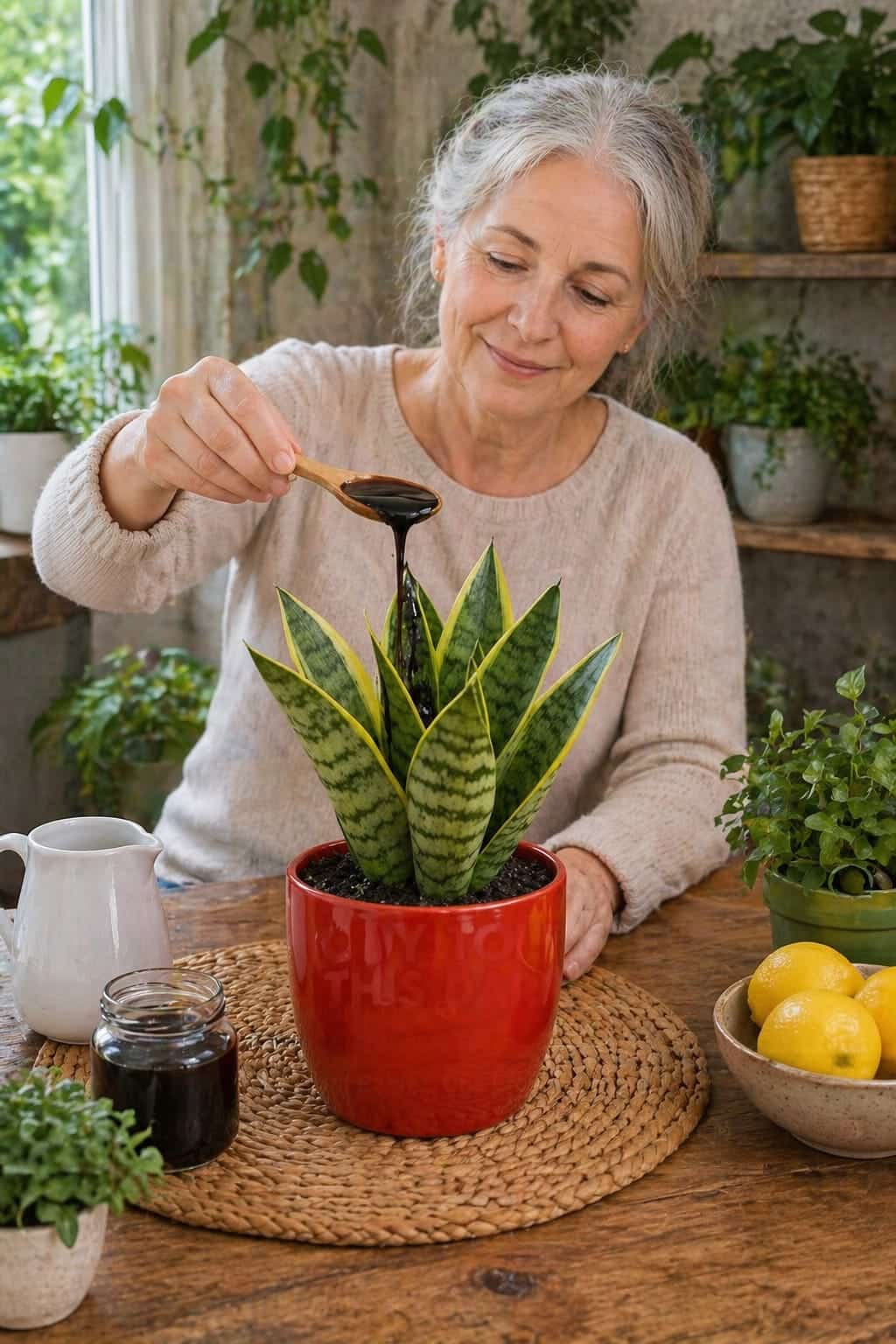
The plant in the image looks clean and attractive. To keep snake plant leaves glossy, wipe them with a soft damp cloth. Dust can dull the surface and reduce light absorption.
Do not use molasses water on leaves. Do not use oil, milk, mayonnaise, or commercial leaf shine sprays. These can attract dust and pests.
Clean leaves make a big difference. A snake plant with wiped leaves often looks healthier immediately, even without any fertilizer or tonic.
How to Build a Strong Snake Plant Routine
The best snake plant routine is simple and steady:
- Bright indirect light
- A pot with drainage holes
- Gritty, fast-draining soil
- Water only when dry
- Clean leaves regularly
- Feed lightly during growing season
- Avoid constant homemade treatments
- Repot only when needed
The dark syrup trick can be added rarely if you enjoy it, but it should never replace these basics.
A Safe Dark Syrup Snake Plant Routine
Here is a careful routine for using this trick:
- Check that the plant is healthy.
- Make sure the pot has drainage holes.
- Make sure the soil is dry and ready for watering.
- Mix 1/4 teaspoon unsulfured blackstrap molasses into 1 quart of water.
- Stir until fully dissolved.
- Pour a small amount onto the soil only.
- Let the pot drain fully.
- Empty the saucer.
- Wipe any spills from the pot or table.
- Do not repeat for at least two to three months.
This gives you the ritual of the trick while keeping the plant safe.
Common Mistakes With the Dark Syrup Trick
Using Thick Syrup Directly
Thick molasses can attract pests and create mold. Always dilute heavily.
Using Too Much
Snake plants do not need rich feeding. A tiny amount is enough.
Using It Too Often
Once every two to three months during active growth is plenty.
Adding Lemon Juice
Lemon juice is not needed and may stress roots. Keep lemons out of the recipe.
Pouring on Wet Soil
The tonic counts as watering. Use it only when the soil is dry.
Using It on Sick Plants
Rotting plants need root care, not sweet liquid.
Ignoring Drainage
A pot without drainage makes this trick risky.
Signs the Trick Is Working Safely
The trick is being used safely if the plant remains firm, upright, and clean. The soil should dry normally after watering. There should be no sour smell, no mold, no ants, no gnats, and no sticky residue.
Over time, during the growing season, you may notice stronger color, steady leaves, or new pups if the plant is receiving enough light and proper care. These results are gradual.
A successful treatment should not leave obvious evidence behind. The plant should simply continue growing well.
Signs You Should Stop Immediately
Stop using the trick if you notice ants, fungus gnats, mold, sour smell, sticky soil, yellow leaves, soft bases, or soil that stays wet too long. Return to plain water and let the soil dry.
If the plant looks worse, inspect the roots. Repot into fresh gritty soil if needed.
Do not keep adding more tonic to fix a problem caused by too much tonic.
Frequently Asked Questions
What is the dark liquid being poured on the snake plant?
It is most likely a dark homemade tonic such as diluted blackstrap molasses water, worm casting tea, or compost-style plant tea. The safest version is heavily diluted unsulfured blackstrap molasses water.
Is molasses good for snake plants?
Molasses may support soil microbes in tiny diluted amounts, but it is not necessary and should not be overused. Snake plants prefer simple, dry, well-draining care.
Can I pour molasses directly on the soil?
No. Thick molasses can attract pests, mold, and sour smells. Always dilute it heavily in water.
How much molasses should I use?
Use only 1/4 teaspoon in 1 quart of water. This creates a weak solution that is safer for potted snake plants.
How often should I use this trick?
Once every two to three months during spring or summer is enough. Do not use it weekly.
Can I add lemon juice?
No. Lemon juice is not recommended for snake plant soil. It may stress roots.
Can this make snake plants produce pups?
Not directly. Pups come from healthy rhizomes, bright indirect light, good soil, and proper watering.
Can this save a dying snake plant?
No. A dying snake plant needs diagnosis. If roots are rotting, remove damaged parts and repot into fresh soil.
Will this attract ants?
It can if used too strongly or spilled. Keep the mixture weak and clean up any residue.
What matters more than this trick?
Bright indirect light, drainage, gritty soil, careful watering, and healthy rhizomes matter much more than any homemade tonic.
Final Thoughts
The dark syrup snake plant trick looks warm, natural, and powerful. A spoonful of rich dark liquid poured over the soil makes it feel like the plant is receiving a secret homemade boost. It is easy to understand why this image captures attention. It makes plant care look simple, cozy, and almost magical.
But for snake plants, the safest version must be gentle. Do not pour thick syrup directly into the pot. Do not add lemon juice. Do not use honey, coffee, sugar, or random kitchen mixtures. If you want to try the trick, use a tiny amount of unsulfured blackstrap molasses diluted in plenty of water. The liquid should look like weak tea, not syrup.
Use it only when the soil is dry and the plant is ready for watering. Use it only in a pot with drainage holes. Let the pot drain fully and empty the saucer. Repeat only once every two to three months during active growth, if at all.
The dark tonic may support the soil environment slightly, but it is not the real secret to snake plant health. The real secret is bright indirect light, gritty soil, proper drainage, dry-down time, clean leaves, and patience. Snake plants grow slowly, and their strength comes from healthy rhizomes below the soil.
If your snake plant is already healthy, this trick can be a small seasonal ritual. If your plant is sick, yellow, mushy, or rotting, skip the tonic and fix the root problem first.
Used wisely, the dark syrup trick can add a little charm to your plant-care routine. Used heavily, it can create pests and rot. Keep it light, keep it diluted, and keep the basics strong. With steady care, your snake plant can stay firm, upright, glossy, and beautiful for years.