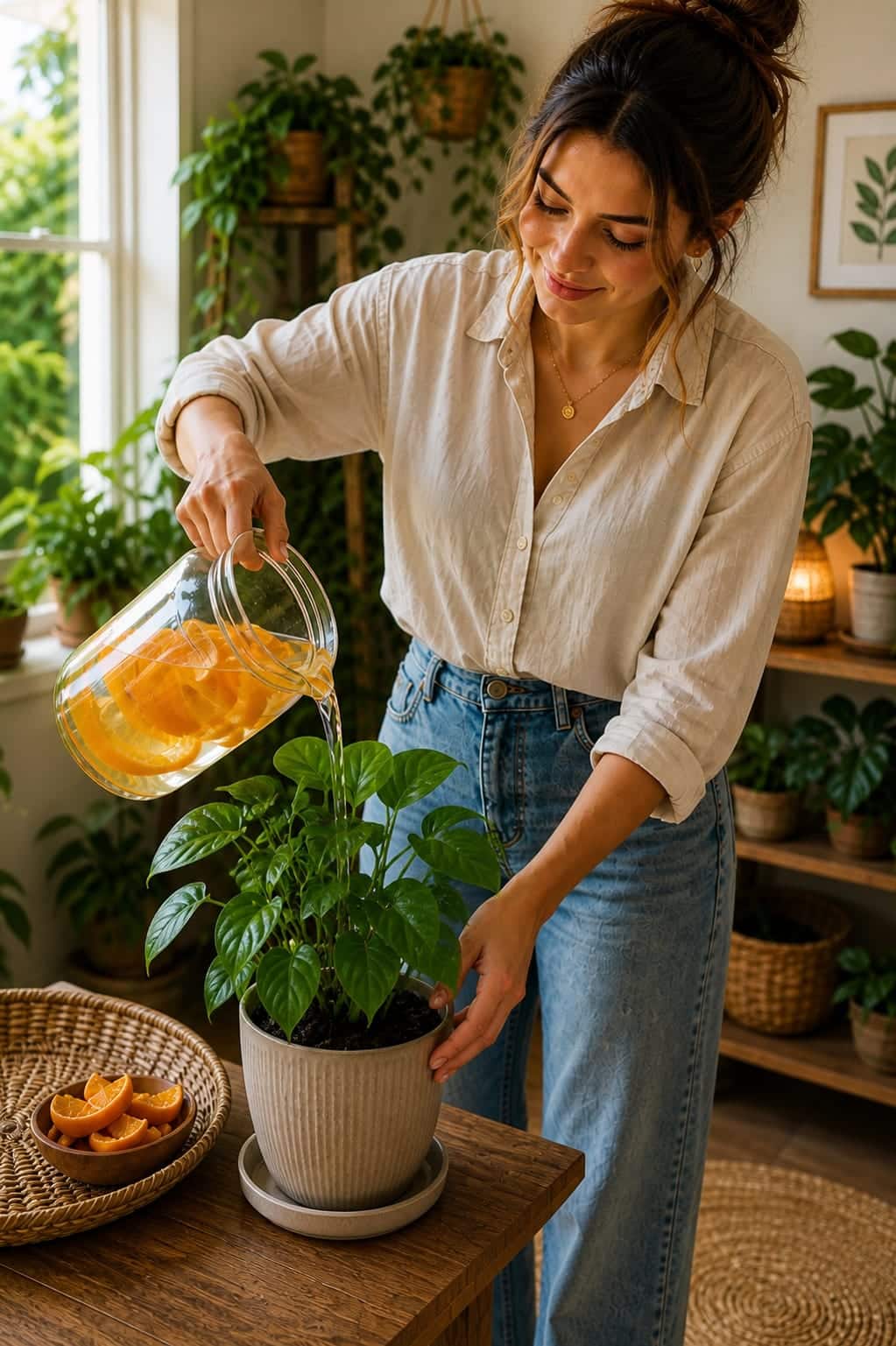
Some plant tricks look so simple that they almost feel too good to ignore. A glass jar, a few orange peels, clean water, and a tired-looking houseplant can create one of the most beautiful natural plant-care routines for indoor gardeners. The image shows a woman gently pouring orange peel water into the soil of a lush green houseplant. The setting is warm, bright, and full of indoor greenery, making the trick feel fresh, natural, and easy to try at home.
This is the kind of plant-care idea that immediately catches attention because it uses something most people throw away: orange peels. Instead of tossing them into the trash, you can turn them into a light citrus water tonic for your indoor plants. The water takes on a soft golden-orange color, smells fresh, and gives your plant-care routine a bright kitchen-garden feeling.
Orange peel water is not a miracle fertilizer, and it should never replace proper plant care. But when used carefully, it can become a gentle refresh for houseplants that enjoy occasional natural tonics. It works best when the plant is healthy but looking a little dull, dusty, slow, or tired. The real secret is not only the orange peel water itself, but the full routine around it: clean water, good drainage, bright indirect light, and careful timing.
If you love natural houseplant tricks, this one is beautiful, affordable, and perfect for creating a fresh indoor gardening ritual.
Why Orange Peel Water Became a Popular Plant Trick
Orange peels feel full of life. They smell fresh, look bright, and are often connected with cleanliness and energy. In plant-care content, they are especially attractive because they turn ordinary water into a golden citrus tonic that looks beautiful when poured into dark soil.
Many plant lovers enjoy using fruit peels in mild homemade plant routines because it feels sustainable. You are reusing kitchen scraps instead of wasting them. Orange peels can be soaked in water to create a light infusion, then strained and diluted before being poured around the soil.
The trick is especially popular for indoor plants with glossy green leaves, such as pothos, philodendron, anthurium, peace lily, money plant, and other tropical houseplants. These plants love steady care, and a gentle citrus-water refresh can become part of that care routine when used occasionally.
What This Orange Peel Water Trick Is Meant to Do
This trick is meant to refresh the soil and support the plant as part of a healthy care routine. It is not meant to force instant growth overnight. Plants grow slowly, and they respond best to consistent care.
Orange peel water can be used as a mild homemade tonic that makes watering feel special. It encourages you to check your plant, inspect the soil, remove dead leaves, and give the roots a gentle drink.
The best results come when you combine the orange peel water with:
- Bright indirect light
- Well-draining soil
- A pot with drainage holes
- Correct watering habits
- Clean leaves
- Occasional pruning
- Patience
Think of orange peel water as a small refreshing boost, not a magic solution.
What Plant Is Shown in the Image?
The plant in the image looks like a tropical indoor plant with glossy, heart-shaped green leaves. It resembles a young philodendron, pothos, or anthurium-type plant. These kinds of plants usually enjoy bright indirect light, warm indoor conditions, and soil that stays lightly moist but never soggy.
That makes them a good match for a gentle orange peel water routine, as long as the liquid is diluted and the pot drains well.
The plant looks healthy, green, and full. This is important because natural tonics are best used on plants that are already alive and stable. If a plant has rotten roots, yellowing leaves, or soggy soil, fix those issues first before trying any kitchen trick.
Important Warning: Do Not Pour Strong Citrus Water Every Day
Orange peel water should be used carefully. Citrus peels are strong, and too much can irritate the soil environment, attract pests, or create odor if the mixture is old or too concentrated.
Use the tonic fresh, diluted, and occasionally. Do not leave orange peels sitting in the pot. Do not pour thick fermented citrus liquid into indoor soil. Do not use sweetened orange juice, soda, or leftover fruit drink.
The safe version is simple: fresh orange peels soaked briefly in water, strained well, diluted, and used lightly.
How to Make Orange Peel Water for Houseplants
To make a gentle orange peel tonic, you only need orange peels and water.
Ingredients
- Peels from one small orange
- Two cups of room-temperature water
- One clean glass jar
- A strainer
Method
- Rinse the orange peel well to remove dust or residue.
- Cut the peel into small pieces or strips.
- Place the peels in a clean jar.
- Add two cups of room-temperature water.
- Let the peels soak for 6 to 12 hours.
- Strain the liquid completely.
- Dilute the orange peel water with the same amount of plain water.
- Use it fresh on the soil.
The final liquid should be light, thin, and fresh-smelling. It should not be sticky, thick, sour, or fermented.
Step 1: Check the Soil Before Pouring
Before using orange peel water, touch the soil. If the soil is already wet, wait. Do not add more liquid to a soggy pot. Overwatering is one of the fastest ways to damage indoor plants.
The best time to use this trick is when the top inch of soil feels dry. This means the plant is ready for moisture, and the orange peel water can move through the soil naturally.
If the soil feels hard, compacted, or crusty, gently loosen the top layer with a small stick or fork before watering. This helps the liquid soak in evenly instead of running down the sides of the pot.
Step 2: Pour Slowly Around the Soil
Pour the diluted orange peel water slowly around the base of the plant, just like in the image. Do not dump it all at once. A slow pour gives the soil time to absorb the liquid.
Keep the water on the soil, not on the leaves. While a few splashes are not a big problem, this trick is meant for the root zone.
For a medium indoor pot, use about one-quarter to one-half cup of diluted orange peel water, depending on the size of the pot and how dry the soil is.
Step 3: Let the Pot Drain Fully
After pouring, let the pot drain completely. If water collects in the saucer, empty it after a few minutes. This step matters a lot.
Even tropical plants do not like sitting in stagnant water. Their roots need oxygen. When water stays trapped at the bottom of the pot, roots can become weak and unhealthy.
The image shows the plant in a pot with a saucer, which is common for indoor plants. Always make sure the saucer does not stay full after watering.
Step 4: Place the Plant in Bright Indirect Light
After using the orange peel tonic, place the plant in bright indirect light. This is where most indoor tropical plants grow best.
Bright indirect light means the plant receives plenty of brightness, but the leaves are not being burned by harsh direct sun. A spot near a window with filtered light is ideal.
The orange peel water refreshes the soil, but light powers growth. Without good light, no plant trick can do much.
Step 5: Watch for Fresh Growth
After using this trick, do not expect instant results the next morning. Watch the plant over the next few weeks. A happy plant may show firmer leaves, better shine, and eventually new growth from the tips or base.
Fresh growth is the best sign that your plant is comfortable. If the leaves stay firm and green, the routine is likely gentle enough.
If the soil smells strange, small flies appear, or the plant droops, stop using the orange peel water and return to plain water until the plant stabilizes.
How Often Should You Use Orange Peel Water?
Use orange peel water only occasionally. Once every four to six weeks during the growing season is enough for most houseplants. Spring and summer are the best times because the plant is actively growing.
In fall and winter, use it less often or skip it completely. Indoor plants usually grow more slowly when the days are shorter and light is weaker.
Too much of any homemade tonic can cause problems. A small monthly refresh is better than constant use.
Best Plants for Orange Peel Water
This trick is best for leafy tropical plants that enjoy regular moisture and bright indirect light. Good options include:
- Pothos
- Philodendron
- Money plant
- Peace lily
- Anthurium
- Monstera
- Syngonium
- Aglaonema
- Spider plant
- Prayer plant
Use the tonic lightly and always check the soil first.
Continue to Page 2
Continue to page 2 for more details about this article and the key points many readers miss on the first page.