Snake plants are usually known as the “impossible to kill” houseplant. They can survive missed waterings, low light corners, dry indoor air, and weeks of neglect. But when a snake plant finally starts looking bad, it can look really bad. The thick leaves begin turning yellow, brown, curled, crispy, spotted, or soft around the edges. The plant that once looked strong and upright suddenly looks tired, weak, and almost finished.
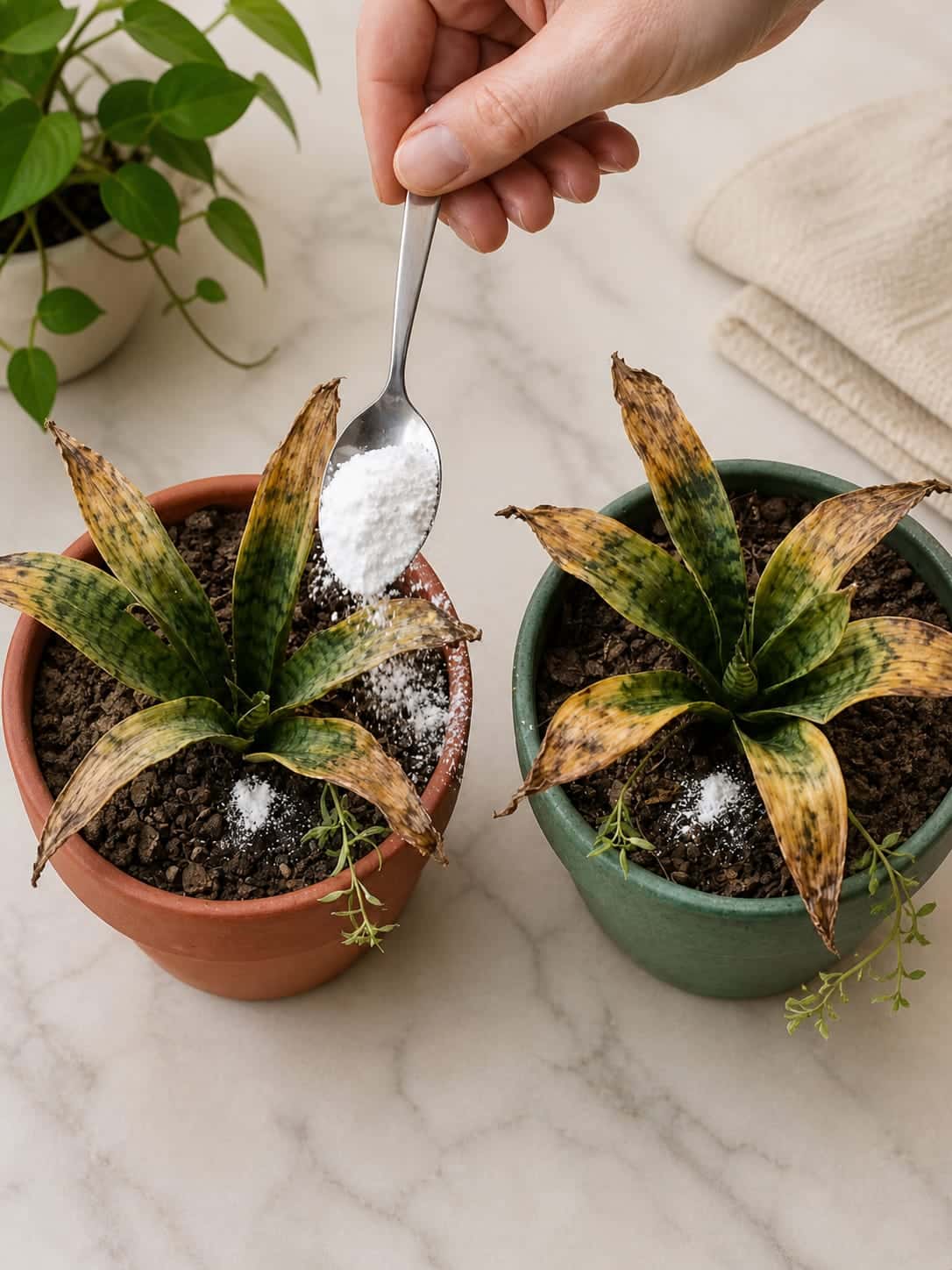
The image shows two struggling snake plants in small pots. Their leaves are still alive in the center, but the older outer leaves are yellowing, browning, and drying at the tips. A hand is sprinkling a white powder around the soil surface with a spoon. This is the kind of simple houseplant trick that catches attention immediately because it looks easy, cheap, and powerful.
For this plant-care trick, the safest and most useful “white powder” version is a very small amount of Epsom salt, also called magnesium sulfate, used carefully around the soil. Epsom salt is popular in plant-care routines because magnesium can support green leaf color when a plant is truly lacking it. But the secret is using only a tiny amount and combining it with the real rescue steps: trimming dead leaves, checking roots, improving drainage, and giving the plant better light.
This trick is not about dumping powder into the pot and expecting instant magic. It is a light rescue routine for snake plants that still have a living center. The old damaged leaves will not turn perfect again, but the plant may push healthier new growth from the middle if the roots are still alive.
What Is the White Powder in This Snake Plant Trick?
The best plant-friendly version of this trick is Epsom salt. It is a white crystalline powder often used in small amounts for plants that may need magnesium. In houseplant care, it should always be used gently because snake plants do not like too much moisture, too much fertilizer, or too many soil additives.
For a small snake plant pot, you only need a tiny pinch. A little goes a long way. The image shows a dramatic spoonful for visual effect, but in real plant care, you should use much less.
Do not use baking soda for this trick. Baking soda can change the soil environment and may stress roots if used too much. Do not use laundry powder, cleaning powder, powdered sugar, flour, or random white kitchen powders. The safe version is plain Epsom salt, used sparingly.
Why Weak Snake Plants Turn Yellow and Brown
Before using any trick, it is important to understand why snake plants decline. A yellowing snake plant is usually not begging for more products. It is usually reacting to stress.
The most common causes include overwatering, poor drainage, compacted soil, cold damage, root rot, low light, sudden sunburn, or old leaves naturally aging. Sometimes the plant has been sitting in wet soil for too long. Other times it has been left dry for months in a hot window. Both extremes can make the leaves look weak and damaged.
The white powder trick can support a recovery routine, but it cannot fix rotten roots or bad soil by itself. That is why you should use it as one step in a full rescue plan.
First, Check If the Snake Plant Can Be Saved
Look closely at the center of the plant. If the middle leaves are still firm, green, and upright, the plant has a good chance of recovery. If there are small green shoots or pups near the center, that is even better.
If the center is black, mushy, collapsing, or smells rotten, the problem is more serious. In that case, sprinkling powder on the soil will not be enough. You will need to remove the plant from the pot, inspect the roots, cut away rot, and repot the healthy parts.
The plants in the image still have green centers, which makes them good candidates for a gentle rescue routine.
What You Need
- Plain Epsom salt
- A small spoon
- Clean scissors
- Fresh cactus or succulent soil
- Perlite or pumice if the soil is heavy
- A pot with drainage holes
- Room-temperature water
- Bright indirect light
The most important item is not the white powder. It is drainage. Snake plants recover much better when their soil is light, airy, and allowed to dry between waterings.
Step 1: Remove the Worst Dead Leaves
Start by trimming the leaves that are completely brown, crispy, or dead. Use clean scissors and cut near the base. Do not pull hard because you may damage the crown or roots.
If a leaf is half green and half brown, you can trim only the dead tip. Follow the natural shape of the leaf so the cut looks neat. The yellow and brown parts will not turn green again, so do not wait for old damage to disappear.
Removing the worst leaves helps the plant look cleaner and gives you a better view of the healthy center.
Step 2: Check the Soil Moisture
Touch the soil before adding anything. If the soil is wet, do not sprinkle Epsom salt and do not water. Let the plant dry first.
Snake plants prefer a dry-down period. Their thick leaves store water, and their roots can suffer when the soil stays damp for too long. If you add moisture or powder to already soggy soil, you may make the problem worse.
The best time to use this trick is when the top few inches of soil are dry and the plant is not sitting in water.
Step 3: Use Only a Tiny Pinch of White Powder
Sprinkle a tiny pinch of Epsom salt around the soil surface. For a small pot, use about 1/8 teaspoon or less. For a medium pot, use no more than 1/4 teaspoon.
Do not pile the powder directly against the crown. Keep it lightly scattered around the soil. The powder should look like a dusting, not a thick snow layer.
The plants in the image show visible white powder for the photo, but the real trick works best when used lightly.
Step 4: Water Lightly Only If the Soil Is Dry
After sprinkling the powder, water only if the soil is dry enough for watering. Use a small amount of room-temperature water and pour slowly around the soil.
The water helps dissolve the Epsom salt and carry it into the root zone. But do not flood the pot. A weak snake plant needs careful moisture, not a heavy soak unless the soil is extremely dry and fast-draining.
After watering, let the pot drain completely. Empty the saucer after a few minutes.
Step 5: Move the Plant to Better Light
Snake plants can survive low light, but recovery is much easier in bright indirect light. Place the plant near a bright window, but avoid harsh direct sun while it is stressed.
If the plant has been in a dark corner for months, move it gradually. Sudden strong sun can burn weak leaves.
Good light helps the plant produce new growth. Without light, even the best trick will not do much.
Step 6: Wait and Watch the Center
After using the white powder trick, do not keep repeating it every few days. Wait. Watch the center of the plant, not the old damaged leaves.
The old yellow leaves will not become perfect again. The sign of success is fresh green growth from the middle or new pups appearing near the base.
If the center stays firm and new leaves slowly emerge, the plant is recovering.
Continue to Page 2
Continue to page 2 for more details about this article and the key points many readers miss on the first page.