Jade plants have a special kind of beauty. Their thick, rounded leaves look like little green coins, their woody stems give them a miniature tree shape, and their glossy surface makes them feel calm, clean, and elegant. A healthy jade plant can sit on a wooden table, near a bright window, and instantly make the room feel warmer. But when a jade plant starts looking dull, wrinkled, slow, or tired, many plant owners panic because they do not know whether to water more, water less, feed it, repot it, or leave it alone.
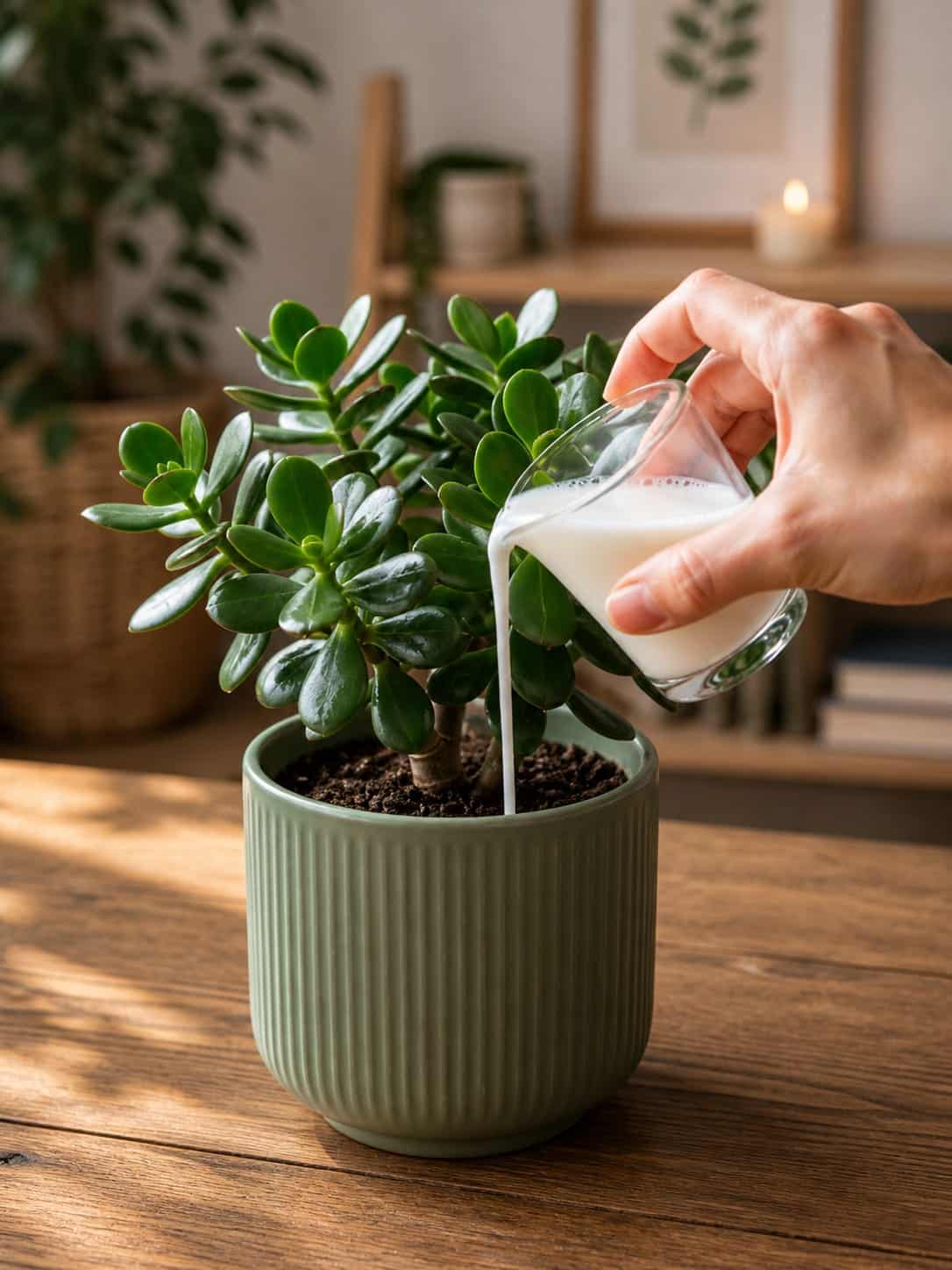
The image shows a beautiful jade plant in a soft green ribbed pot. A hand is pouring a smooth white liquid into the soil. The plant looks healthy, compact, and glossy, while the warm indoor background gives the whole scene a natural home-garden feeling. This is the perfect visual for a simple plant-care trick: a gentle milky rice water pour for jade plants.
Rice water is one of the most popular natural plant tricks because it is easy to make, mild when diluted, and uses something many people already have in the kitchen. When rice is rinsed or soaked, the water becomes cloudy and pale, almost like milk. That cloudy water can be used carefully as an occasional soil tonic for some houseplants. For jade plants, the key word is carefully. Jade plants are succulents. They store water in their leaves and stems, so they do not like constantly wet soil. A rice water trick can be useful only when it is light, diluted, fresh, and used rarely.
This trick is not about drowning the jade plant in thick rice liquid. It is about giving the soil a gentle refresh while keeping the plant’s dry-loving nature in mind. Used correctly, rice water can become a simple monthly plant-care ritual that supports a jade plant’s glossy leaves, steady growth, and healthy root zone.
What Plant Is in the Image?
The plant in the image looks like a jade plant, also known as Crassula ovata. Jade plants are popular indoor succulents with thick oval leaves and sturdy stems. They are often associated with good luck, money, and prosperity because their rounded leaves resemble coins.
Jade plants are not thirsty tropical plants. They are succulents, which means they prefer a dry-down period between waterings. Their leaves store moisture, so watering too often can quickly lead to root rot, soft stems, yellowing leaves, or leaf drop.
That is why any homemade plant tonic for jade must be used differently than it would be used for pothos, peace lily, or philodendron. A jade plant needs a gentle touch, fast-draining soil, and careful timing.
What Is the White Liquid Being Poured?
The best plant-friendly version of the white liquid in the image is diluted rice water. Rice water has a cloudy, milky appearance after rice has been rinsed or soaked. It is often used as a mild natural tonic for indoor plants.
For jade plants, the safest version is plain, unsalted, unseasoned rice rinse water that has been diluted with clean water. It should be thin, fresh, and free from cooked rice pieces. You should never pour thick rice paste, rice porridge, milk, cream, or sugary liquid into jade plant soil.
The liquid should look lightly cloudy, not heavy or sticky.
Why Rice Water Is Popular for Houseplants
Rice water became popular because it feels simple and sustainable. Instead of pouring rice rinse water down the sink, plant lovers use it as a light soil refresh. It gives the feeling of feeding plants with something natural and gentle.
Many gardeners like rice water because it may contain small amounts of starches and trace nutrients released during rinsing or soaking. For houseplants, it is usually used as a mild supplement, not as a full fertilizer.
The visual is also powerful. A white pour into dark soil looks dramatic and clean. It makes a simple plant-care step feel like a special secret.
Why Jade Plants Need a Special Rice Water Routine
A jade plant is not like a peace lily. A peace lily may enjoy consistently lightly moist soil. A jade plant does not. If you pour rice water too often, the soil can stay damp, the roots can suffer, and the plant can decline.
Jade plants need a dry cycle. Their soil should dry out well before watering again. This is especially important if the plant is in a ceramic pot, a large pot, or a room with low light.
So the rice water trick must follow the jade plant’s normal watering schedule. You only use it when the plant actually needs water. You do not add it just because the trick looks pretty.
What This Trick Can Do
This trick can be used as a gentle soil tonic for a jade plant that is healthy but looking a little dull, slow, or tired. It may support fresh growth when combined with bright light, correct watering, and well-draining soil.
It can also make plant care feel more intentional. When you prepare rice water, check the soil, pour slowly, and watch the plant afterward, you become more aware of what your jade plant needs.
But this trick will not fix root rot, pest damage, severe dehydration, or poor light. If a jade plant is dying, the first step is diagnosis, not pouring a homemade mixture into the pot.
Important Warning: Do Not Use Milk
The white liquid in the image might look like milk, but milk is not the best choice for jade plant soil. Milk can sour, smell, attract pests, and create unpleasant residue in indoor pots. It is too risky for a succulent potting mix.
For this trick, use diluted rice water instead. It gives the same milky visual effect without the problems that dairy can cause.
Never pour cow’s milk, cream, yogurt, sweetened milk, condensed milk, or plant-based milk into jade plant soil. These liquids can spoil and cause more harm than good.
How to Make Gentle Rice Water for Jade Plants
The safest rice water is made from rinsing plain uncooked rice.
Ingredients
- One tablespoon of uncooked white rice
- One cup of clean water for rinsing
- One extra cup of plain water for dilution
- A clean bowl or jar
- A strainer
Method
- Place one tablespoon of uncooked rice in a clean bowl.
- Add one cup of room-temperature water.
- Swirl the rice gently for 30 to 60 seconds.
- Strain out the rice completely.
- Mix the cloudy rice water with one cup of plain water.
- Use the diluted rice water fresh.
This creates a light milky liquid that is much safer than thick soaked or fermented mixtures. For jade plants, light is always better.
Should You Use Cooked Rice Water?
It is better to avoid cooked rice water for jade plants. Water from cooked rice can be thicker and starchier, especially if it was boiled down. Thick starch can sit in the soil and attract pests or mold.
If you only have cooked rice water, dilute it heavily and make sure it contains no salt, oil, butter, spices, or seasonings. But for the safest version, use fresh uncooked rice rinse water instead.
Simple rinse water is cleaner and easier to control.
Should You Ferment Rice Water?
Fermented rice water is popular in some plant-care routines, but it is not the best choice for jade plants indoors. Fermented mixtures can smell strong, attract gnats, and become too intense for small pots.
Jade plants prefer clean, dry, low-fuss care. A fresh diluted rice rinse is better than a fermented tonic.
If the rice water smells sour, throw it away. Do not pour it into an indoor jade pot.
Step 1: Check the Soil First
Before using rice water, check the soil. This is the most important step. Push your finger into the potting mix or use a wooden skewer. If the soil still feels damp, wait.
For jade plants, the soil should be dry at least a few inches down before watering again. In smaller pots, the whole pot may dry faster. In larger ceramic pots, the lower soil may stay damp even when the top looks dry.
Never use rice water on already wet jade plant soil. That can push the plant toward root rot.
Step 2: Look at the Leaves
Jade leaves can tell you a lot. Firm, plump leaves mean the plant is holding water well. Slightly wrinkled or thinner leaves may mean the plant is ready for a drink. Soft yellow leaves can mean too much water.
If the leaves are plump and the soil is still moist, skip the rice water. If the leaves are slightly less firm and the soil is dry, it may be a good time to water.
The plant in the image looks healthy and plump, so it would only need a small amount of diluted rice water, not a heavy soak.
Step 3: Pour Slowly Around the Soil
Pour the diluted rice water directly onto the soil, not over the leaves. In the image, the liquid is being poured close to the soil line, which is the right idea.
Use a slow, controlled pour. For a small to medium jade plant, you may only need a few tablespoons to one-quarter cup, depending on pot size and how dry the soil is.
If you are watering thoroughly, let water flow through the drainage holes. But if the pot is decorative and you are not sure about drainage, use a much smaller amount.
Step 4: Let the Pot Drain Completely
Drainage is essential for jade plants. After pouring rice water, the pot should never sit in a puddle. If there is a saucer underneath, empty it after watering.
Standing water is one of the fastest ways to damage jade roots. A jade plant can survive being dry for a while, but it may not recover from soggy soil and rotten roots.
If your pot has no drainage hole, be extremely careful. In general, jade plants do best in pots with drainage.
Step 5: Place the Jade Plant in Bright Light
Jade plants need bright light to stay compact and healthy. They can handle bright indirect light and, when acclimated, some gentle direct sun. Without enough light, they may stretch, lean, drop leaves, or grow weak stems.
After using the rice water trick, keep the plant in a bright spot so it can use the moisture properly. A jade plant in a dark room will dry slowly and grow weakly.
The warm light in the image suits the plant-care mood perfectly, but the real plant needs strong natural brightness, not just decoration.
How Often Should You Use Rice Water on Jade Plants?
Use rice water only once every four to six weeks during active growth, and only when the soil is dry enough for watering. Do not use it every week.
During winter, skip the trick or use it even less. Jade plants grow more slowly in cooler, darker months and need less water.
A safe routine is simple: plain water most of the time, diluted rice water occasionally.
Best Season for This Trick
Spring and summer are the best seasons to use rice water on jade plants because that is when they are usually growing more actively. During active growth, the plant can use moisture and mild nutrients more efficiently.
In fall and winter, jade plants often slow down. Watering should be reduced, and homemade tonics should be used rarely or not at all.
Always follow the plant’s growth and soil dryness, not just the calendar.
Can Rice Water Make Jade Leaves Shinier?
Rice water is for the soil, not for polishing leaves. If you want jade leaves to look glossy, wipe them gently with a soft damp cloth. Dust can dull the leaves and reduce light absorption.
Do not pour rice water over the leaves. Starchy residue on leaves can attract dust and look cloudy when it dries.
For shine, clean the leaves. For soil refresh, use diluted rice water.
Can Rice Water Make Jade Plants Grow Faster?
Rice water may support growth as part of good care, but it will not make a jade plant explode with new leaves overnight. Jade plants grow steadily and sometimes slowly indoors.
The biggest growth boosters are bright light, proper watering, a snug pot, and healthy roots. A mild rice water tonic is only a small support step.
If your jade plant is not growing, check light first. Most slow indoor jade plants simply need more brightness.
Can Rice Water Save a Dying Jade Plant?
Rice water cannot save a jade plant that has root rot, mushy stems, or severe pest damage. If the plant is dying, inspect it first.
If stems are soft and black, remove the plant from the pot and check the roots. If roots are rotten, cut away damaged parts and save healthy stems as cuttings if needed.
If the plant is just slightly wrinkled from dryness, plain water may be enough. Rice water can be used later once the plant is stable.
Signs Your Jade Plant Likes the Routine
A happy jade plant will show firm leaves, steady color, and compact growth. New leaves may appear at the tips. The stems may gradually thicken over time.
After using rice water, watch the plant for a few weeks. If it stays firm and healthy, the routine is probably gentle enough.
If leaves yellow, drop, or become soft, reduce watering and stop using rice water until you understand the problem.
Continue to Page 2
Continue to page 2 for more details about this article and the key points many readers miss on the first page.