Signs You Used Too Much Rice Water
Too much rice water can create problems, especially in succulent soil. Watch for warning signs like:
- Soil staying wet too long
- White or sticky residue on the soil
- Fungus gnats around the pot
- Sour smell from the soil
- Yellow leaves
- Soft stems
- Sudden leaf drop
- Mold on the soil surface
If any of these appear, stop using rice water. Let the soil dry, improve airflow, and consider repotting if the soil smells bad or stays soggy.
Best Soil for Jade Plants
Jade plants need fast-draining soil. Regular indoor potting soil can hold too much moisture by itself. A better mix includes gritty and airy materials.
A simple jade plant soil mix can include:
- Two parts cactus or succulent soil
- One part perlite
- One part pumice or coarse sand
This helps water move through the pot quickly and keeps roots from sitting in moisture too long.
Why the Pot Matters
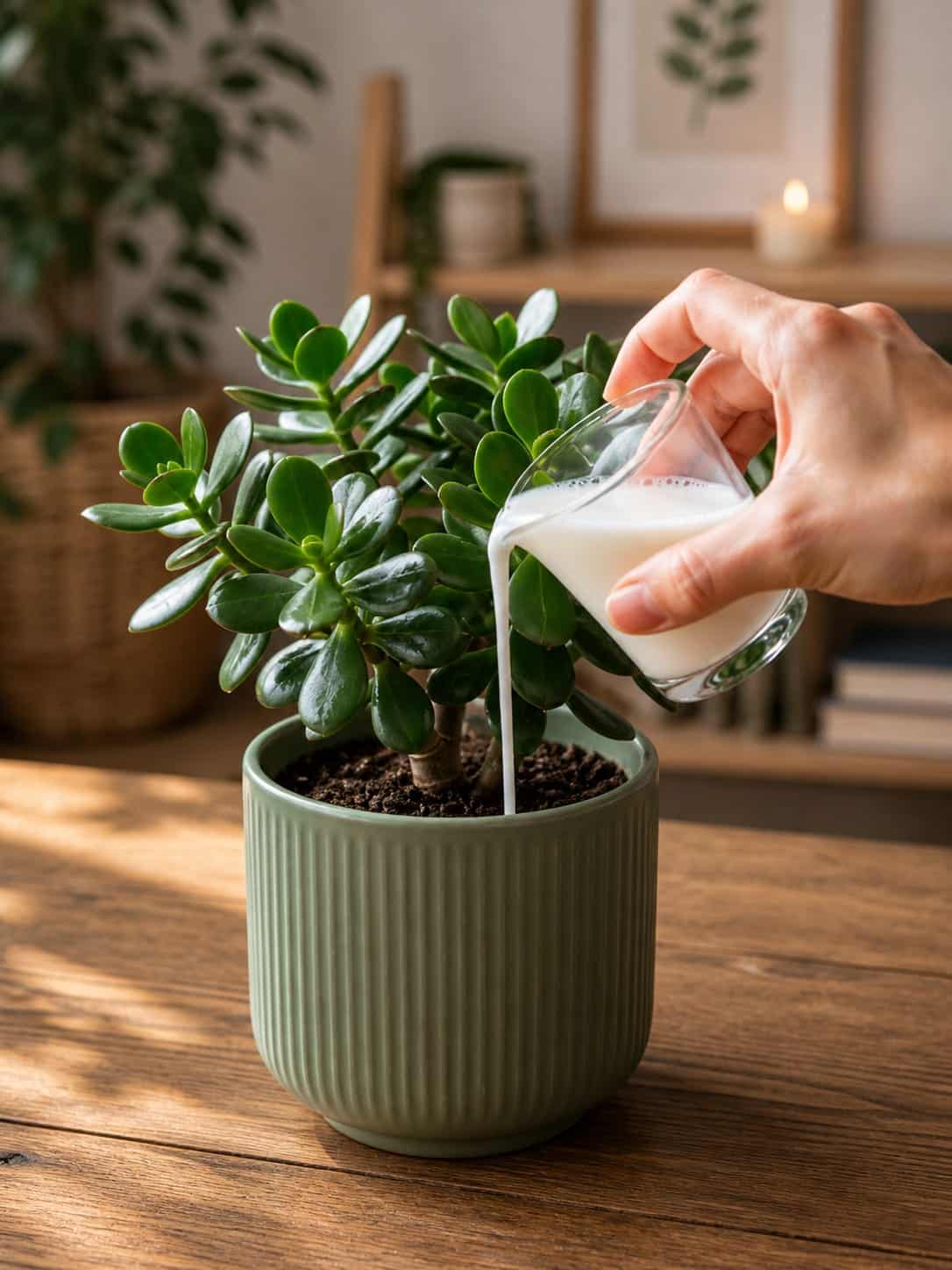
The plant in the image is in a beautiful ribbed ceramic pot. Ceramic pots look elegant, but they may hold moisture longer than terracotta. If the pot has drainage, it can work well. If it does not, watering must be extremely careful.
Terracotta pots are often excellent for jade plants because they breathe and dry faster. Ceramic and plastic pots can also work, but you must adjust watering.
The most important rule is simple: the pot should have drainage holes.
How Much Water Does a Jade Plant Need?
Jade plants should be watered deeply but infrequently when grown in proper fast-draining soil. Let the soil dry well between waterings. The exact schedule depends on light, pot size, temperature, season, and soil mix.
In a bright warm room, a jade plant may need water more often. In a low-light room or winter season, it may need very little.
Do not water on a strict weekly schedule. Check the soil first.
What If Jade Leaves Are Wrinkled?
Wrinkled jade leaves usually mean the plant is using stored water. If the soil is dry, it may be time to water. Use plain water or a small amount of diluted rice water if it is time for the trick.
If the soil is wet and the leaves are wrinkled, the roots may be damaged and unable to absorb water. In that case, do not add more liquid. Check the roots.
The same symptom can have different causes, so always check the soil.
What If Jade Leaves Are Yellow?
Yellow jade leaves often mean overwatering, poor drainage, or low light. If yellow leaves appear after using rice water, you may have used too much or watered too soon.
Let the soil dry and move the plant to brighter light. If the pot has no drainage or the soil smells bad, repot into a dry succulent mix.
Do not keep adding homemade tonics to a yellowing jade plant until the watering issue is fixed.
What If Jade Leaves Fall Off?
Jade leaves can fall from sudden watering changes, low light, cold drafts, or root problems. A few old leaves dropping occasionally is normal, but sudden heavy leaf drop is a warning.
If leaves are firm and dropping, the plant may have experienced shock. If leaves are soft and yellow before dropping, suspect overwatering. If leaves are shriveled and falling, suspect underwatering or root damage.
Rice water is not the first solution. Diagnosis comes first.
Can You Use Rice Water on Jade Cuttings?
Use caution. Fresh jade cuttings should not be watered heavily. After cutting a jade stem or leaf, let the cut end callus before planting. This may take a few days.
Once planted in dry or barely moist succulent mix, water very lightly. Rice water is not necessary for fresh cuttings and may increase moisture too much.
Wait until the cutting has rooted and started growing before using any gentle tonic.
Can You Add Cinnamon to Rice Water?
For jade plants, keep the recipe simple. Rice water alone is enough. Adding cinnamon, coffee, banana peel, eggshell powder, and other ingredients all at once can make the mixture unpredictable.
Jade plants prefer simple care. Too many tricks can create soil buildup and stress.
Use one gentle trick at a time and watch the plant’s response.
Can You Use Rice Water With Fertilizer?
Do not combine rice water and fertilizer in the same watering. Jade plants do not need heavy feeding, and too much can harm the roots.
If you fertilize, use a diluted succulent fertilizer during the growing season. On fertilizer months, skip the rice water.
A simple schedule might be: plain water most of the time, diluted fertilizer occasionally during growth, and rice water as a rare natural tonic.
Can You Use Rice Water on Other Succulents?
You can use it very carefully on some succulents, but many do not need it. Succulents are more sensitive to overwatering than many leafy houseplants.
If you use rice water on succulents, dilute it heavily and apply only when the soil is fully dry. Never use thick or fermented mixtures.
For cacti and tiny succulents, plain water is often the safer choice.
Can You Use Rice Water on Other Houseplants?
Yes, diluted rice water is often used on leafy houseplants such as pothos, philodendron, spider plant, peace lily, monstera, and syngonium. These plants usually tolerate more moisture than jade plants, but the same rules apply: use fresh, diluted, strained rice water only when the plant needs watering.
Plants in low light or heavy soil should receive rice water less often.
Always avoid sticky, sour, or fermented liquid indoors unless you know exactly what you are doing.
Why the Image Works So Well
This image is visually strong because it combines a healthy jade plant, a clean white pour, a beautiful green pot, and warm natural light. The white liquid stands out against the dark soil, and the jade leaves look glossy and full.
It tells a simple story in one second: a gentle homemade tonic is being poured into the plant to keep it lush and healthy.
For content, this kind of image is perfect because the action is clear and the plant is easy to recognize.
How to Recreate This Trick for Photos
If you want a similar image style for a blog, social post, or plant-care tutorial, use:
- A healthy jade plant
- A ribbed ceramic or terracotta pot
- A small glass cup or pitcher
- Diluted rice water
- A warm wooden table
- Soft window light
- Plants and shelves in the background
- A slow pour close to the soil
Keep the scene simple and natural. The plant should be the star, and the milky liquid should look gentle, not messy.
Quick Rice Water Recipe for Jade Plants
- Add one tablespoon of uncooked rice to a bowl.
- Pour in one cup of clean water.
- Swirl for 30 to 60 seconds.
- Strain out all rice grains.
- Dilute the cloudy water with one cup of plain water.
- Use only when the jade plant soil is dry.
- Pour slowly around the soil.
- Let the pot drain completely.
- Repeat only once every four to six weeks during active growth.
Common Mistakes to Avoid
- Using milk instead of rice water
- Using thick cooked rice water
- Using salted or seasoned rice water
- Using fermented rice water indoors
- Pouring rice water on wet soil
- Watering jade plants too often
- Using a pot without drainage
- Letting water sit in the saucer
- Pouring rice water over the leaves
- Expecting instant new growth overnight
Short Caption for This Trick
“Don’t pour milk on your jade plant. Use diluted rice water instead! Rinse plain rice, strain the cloudy water, dilute it, and pour a small amount into dry jade plant soil for a gentle monthly refresh.”
Frequently Asked Questions
Is rice water good for jade plants?
Rice water can be used occasionally on jade plants if it is fresh, strained, diluted, and applied only when the soil is dry. It should not be used too often.
Can I pour milk on my jade plant?
No. Milk can sour, smell, and attract pests. Use diluted rice water if you want the milky-looking plant trick.
How often should I use rice water on jade plants?
Use it once every four to six weeks during active growth. In winter, use it rarely or skip it.
Should rice water be diluted?
Yes. Dilution makes it safer for indoor pots, especially for succulents like jade plants.
Can I use cooked rice water?
It is better to use uncooked rice rinse water. Cooked rice water can be thicker and may contain salt or starch that is too heavy.
Can rice water cause fungus gnats?
It can if used too often, too thick, or on wet soil. Always strain, dilute, use fresh, and let the soil dry between waterings.
Can rice water save a dying jade plant?
No. If the jade plant has root rot or soft stems, you need to inspect roots, remove damaged parts, and repot. Rice water is only a gentle support trick.
Should I pour rice water on jade leaves?
No. Pour it into the soil only. Wipe leaves with plain water if they are dusty.
What is the best light for jade plants?
Jade plants need bright light. Bright indirect light with some gentle direct sun is usually ideal once the plant is acclimated.
Why are my jade leaves soft?
Soft leaves can mean overwatering or root problems. Check the soil and roots before adding more water or rice water.
Final Thoughts
The milky pour trick in the image is beautiful, but the safe version for jade plants is not milk. It is diluted rice water, used lightly and only when the plant truly needs watering. Jade plants are succulents, so they prefer dry soil between drinks and can suffer if they are watered too often.
To try this trick, rinse a small amount of plain uncooked rice, strain the cloudy water, dilute it with clean water, and pour a small amount around the soil. Let the pot drain completely and return the plant to bright light. Use the trick rarely, not as a daily or weekly habit.
The real secret to a glossy jade plant is simple care: bright light, fast-draining soil, a pot with drainage, and patient watering. Rice water can be a gentle extra, but it should never replace the basics.
So the next time your jade plant looks a little dull, skip the milk and reach for a mild rice water rinse instead. Used correctly, this simple white pour can become a lovely natural refresh for one of the most beautiful indoor succulents.