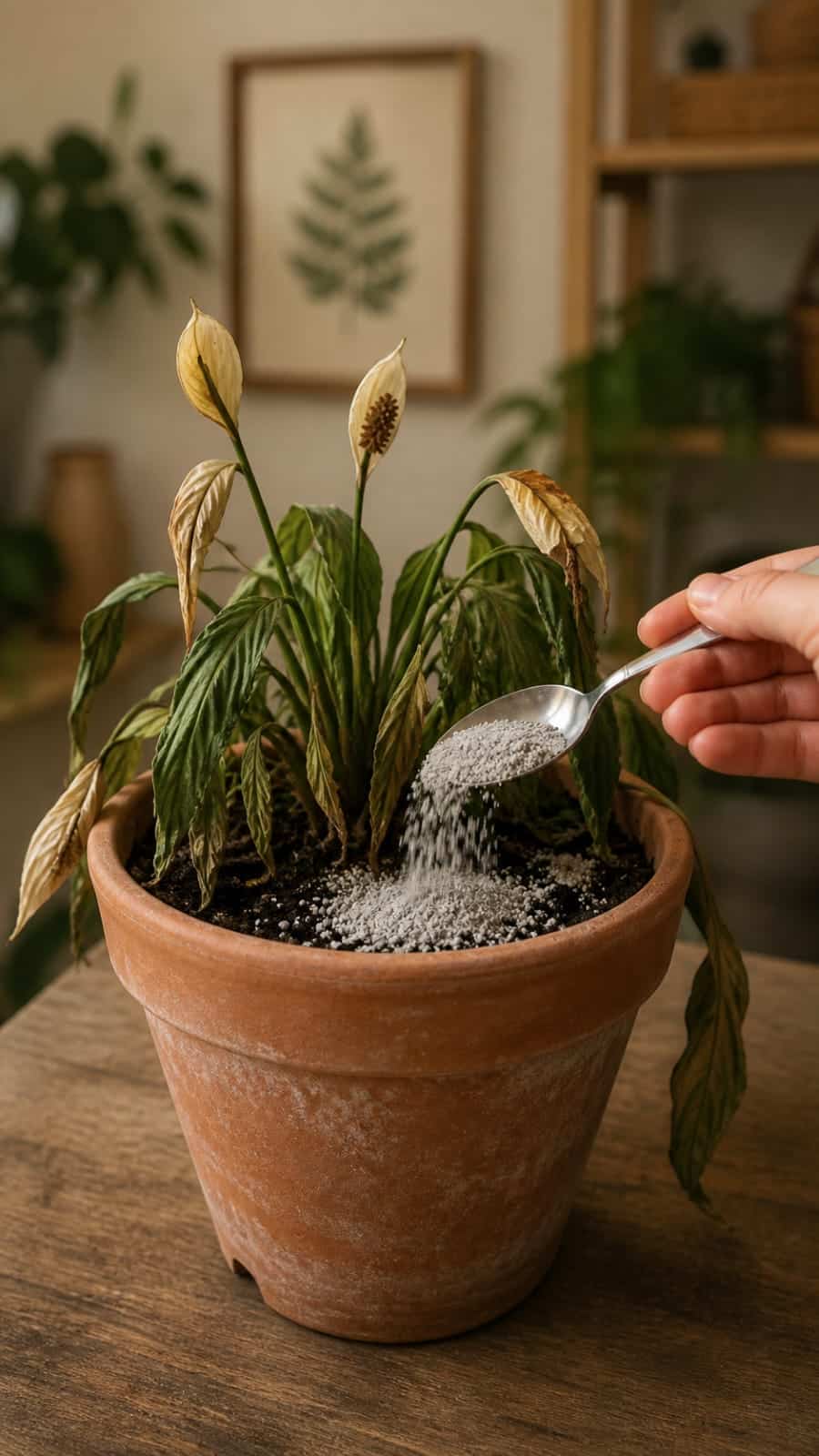
Peace lilies are some of the most expressive houseplants you can grow. When they are happy, their leaves stand tall, glossy, and deep green, and their white flowers rise above the foliage like little flags of freshness. But when something goes wrong, they show it quickly. The leaves droop, the flowers brown, the stems bend, and the whole plant can look like it is giving up.
The image shows a tired peace lily in a terracotta pot. The leaves are limp, wrinkled, and hanging downward. Some white flowers have turned brown and dry. A hand is sprinkling a gray-white granular powder over the soil with a spoon. This is a strong rescue image because it shows a plant that looks stressed, but still alive.
For this trick, the safest and most useful white-gray ingredient is perlite. Perlite is a lightweight volcanic mineral used in potting soil to improve drainage and airflow. It looks like small white or pale gray granules. When a peace lily is drooping because the soil is compacted, heavy, or staying wet too long, perlite can help the root zone breathe again.
This is not a magic powder that instantly lifts the leaves in one hour. The real trick is using perlite to loosen the soil, reduce sogginess, and give damaged roots a better environment. Peace lilies love moisture, but they do not love suffocating wet soil. When the roots cannot breathe, the plant wilts even if the pot is wet.
What Plant Is in the Image?
The plant in the image looks like a peace lily, also known as Spathiphyllum. Peace lilies are loved for their glossy green leaves and white spathe flowers. They are common indoor plants because they tolerate medium light and can recover well when cared for correctly.
A healthy peace lily should have flexible but upright leaves, fresh green growth, and white flowers that slowly age to cream, then brown. Some browning flowers are normal as blooms get old. But when the whole plant droops, the leaves wrinkle, and the flowers dry at the same time, the plant is stressed.
The most common reason is watering imbalance. Sometimes the plant is too dry. Sometimes it is too wet. The tricky part is that both problems can look similar from above.
What Is the White-Gray Powder?
The white-gray granules in this rescue trick are best described as fine perlite. Perlite is not fertilizer. It does not feed the plant directly. Instead, it improves the structure of the soil.
Peace lily roots need moisture and oxygen. If the soil becomes dense, muddy, compacted, or old, water can sit around the roots too long. The roots weaken, and the plant droops. Perlite creates small air pockets in the mix, helping water drain better and oxygen reach the roots.
This makes perlite a perfect ingredient for a peace lily that looks wilted from heavy, tired soil.
Why Peace Lilies Droop
Peace lilies droop for several reasons, but the biggest ones are underwatering, overwatering, poor drainage, old compacted soil, low humidity, cold drafts, and root stress.
If the soil is completely dry and pulling away from the pot, the peace lily is thirsty. If the soil is wet, heavy, sour-smelling, or muddy, the plant may be suffering from too much moisture and not enough air.
The plant in the image looks like it could be suffering from root stress. The leaves are limp and tired, and the terracotta pot suggests the soil may have dried and compacted, or it may have been watered unevenly. Perlite helps in both cases because it improves the soil texture and makes future watering easier to control.
The Real Trick: Help the Roots Breathe
The biggest secret behind this trick is simple: a drooping peace lily often does not need “more powder.” It needs better roots. And roots need air.
When soil becomes too dense, roots cannot breathe properly. Even if you water the plant, the roots may not absorb water well. This is why a plant can look thirsty while the soil still feels damp.
Perlite helps by opening the soil. It creates space. It makes the potting mix lighter. It helps water move through instead of sitting around the roots. That is why this white mineral can be a useful rescue ingredient.
Important: Do Not Use Random White Powders
Do not use salt, sugar, flour, baking soda, cement powder, laundry powder, or cleaning powder on a peace lily. These can damage the roots or attract pests.
For this trick, use horticultural perlite. It is sold for plants and potting mixes. It is lightweight, white to gray, and looks like small airy granules.
If you want the image-style rescue, perlite is the safe choice.
How to Use Perlite on a Drooping Peace Lily
There are two ways to use perlite. The quick method is a top-soil rescue. The stronger method is a full repot. If the peace lily is badly drooping, the full repot is usually better.
Quick Top-Soil Method
- Remove old dead flowers and yellow leaves.
- Check the soil moisture with your finger.
- Loosen the top one to two inches of soil gently.
- Sprinkle a thin layer of perlite over the soil.
- Mix the perlite into the loosened top layer.
- Water only if the soil is dry enough.
- Let extra water drain completely.
This method helps the top layer breathe and reduces surface compaction. It is useful if the plant is only mildly stressed.
Full Root Rescue Method
- Remove the peace lily from the pot.
- Shake away heavy or soggy old soil.
- Trim black, mushy, or smelly roots.
- Mix fresh potting soil with perlite.
- Repot the plant into the lighter mix.
- Water gently and let it drain.
- Place the plant in bright indirect light.
This method is better when the plant looks very weak, like the one in the image.
The Best Perlite Mix for Peace Lilies
A simple peace lily rescue mix can be made with:
- Two parts high-quality indoor potting mix
- One part perlite
- A small handful of orchid bark if the soil is very heavy
This creates a mix that holds moisture but does not become swampy. Peace lilies do not want cactus soil that dries too fast, but they also do not want dense mud. The goal is moisture plus air.
If your peace lily is in old soil that has become hard, dusty, or sour-smelling, repotting into this mix can make a big difference.
Step 1: Remove the Dead Flowers
The brown flowers in the image should be removed. Peace lily flowers naturally age and turn brown, but leaving old blooms on the plant wastes energy and makes the plant look worse.
Cut each brown flower stem near the base using clean scissors. Do not just pull hard, because that can damage the crown of the plant.
Removing spent flowers helps the peace lily focus on leaves and roots while it recovers.
Step 2: Check the Soil Before Watering
Before adding water, feel the soil. This step decides everything.
If the soil is dry several inches down, the plant needs water. If the soil is wet and the plant is still drooping, the roots may be struggling from too much moisture or poor oxygen.
This is where perlite becomes useful. It helps correct the soil structure so future watering does not suffocate the roots.
Step 3: Loosen the Top Layer
If you are not repotting immediately, gently loosen the top layer of soil with a spoon, chopstick, or small fork. Do not stab deeply into the roots. Just break the crusty surface.
Old soil can become compacted like a hard blanket. Water then runs around the root ball instead of soaking evenly, or it stays trapped in dense areas. Loosening the surface helps air enter and helps perlite mix in better.
This small step makes the trick more effective than simply dumping granules on top.
Step 4: Sprinkle the Perlite
Take one to two tablespoons of perlite for a medium pot. Sprinkle it evenly over the soil surface. For a large pot, use a little more. For a small pot, use less.
The image shows a dramatic spoonful, but in real care, you do not need a mountain of perlite. A light layer mixed into the top soil is enough for the quick method.
Perlite is very lightweight, so pour gently to avoid dust.
Step 5: Mix It Into the Soil
After sprinkling, gently mix the perlite into the top layer. Try to blend it with the existing soil instead of leaving it as a pile on top.
This creates small air pockets and improves the texture of the upper root zone. If the soil is very compacted, this may only be a temporary fix, and a full repot may still be needed.
For a peace lily that is severely drooping, repotting gives the roots the best chance.
Step 6: Water Correctly After the Trick
If the soil was dry, water the plant slowly after mixing in the perlite. Let water run through the drainage hole. Then empty the saucer.
If the soil was damp or wet, do not water immediately. Let the plant dry slightly and recover airflow first.
This is very important. Perlite helps drainage, but it cannot protect the plant if you keep pouring water into already wet soil.
Step 7: Place It in Bright Indirect Light
Peace lilies do best in bright indirect light. They can tolerate lower light, but they recover more slowly there. A stressed peace lily needs enough light to rebuild energy.
Place it near a bright window with filtered light. Avoid hot direct sun, which can burn the leaves. Avoid dark corners, where the soil stays wet too long and the plant weakens.
Good light helps the roots and leaves recover together.
How Often Should You Use This Trick?
You do not need to keep sprinkling perlite every week. Perlite does not disappear quickly. Once it is mixed into the soil, it continues helping with airflow.
Use the top-soil method once if the surface is compacted. If the plant still struggles, do a full repot with a proper perlite-rich mix.
Repeated sprinkling without fixing the root zone will not solve the real problem.
Can Perlite Save a Dying Peace Lily?
Perlite can help if the problem is heavy soil, poor drainage, or root suffocation. It gives roots a better environment. But it cannot revive roots that are already completely rotten.
If the roots are mushy and black, you must cut away the rot. If the crown is rotten, the plant may be difficult to save.
Perlite works best when there are still healthy roots left.
Signs the Peace Lily Needs Repotting
Your peace lily may need a full repot if:
- The soil smells sour
- The soil stays wet for many days
- The leaves droop even when soil is damp
- The pot has no drainage
- Roots are circling tightly
- Water runs straight through without soaking
- There is mold on the surface
- The plant keeps yellowing
In these cases, sprinkling perlite on top is not enough. The roots need fresh, airy soil.
How to Repot a Peace Lily With Perlite
Choose a pot with drainage holes. Use a pot only one size larger than the current root ball. A huge pot holds too much wet soil and can make root problems worse.
Remove the peace lily gently. If the roots are tightly packed, loosen them with your fingers. Trim any rotten roots. Add fresh potting mix blended with perlite. Set the plant at the same depth it was growing before.
Water lightly after repotting and let it drain. Keep the plant in bright indirect light and avoid fertilizing for a few weeks.
What If the Leaves Stay Droopy After Repotting?
Peace lilies may droop for a few days after repotting because their roots were disturbed. This is normal. Keep the plant in stable light, avoid overwatering, and give it time.
Do not keep adding more tricks every day. Too many changes can stress the plant further.
Watch the newest leaves. If new growth starts standing better, the plant is improving.
Should You Cut Off Drooping Leaves?
Do not remove every drooping leaf immediately. If a leaf is green, it can still help the plant make energy. Remove only leaves that are fully yellow, brown, crispy, or mushy.
If a leaf is limp but still green, wait. It may lift again after the roots recover.
Peace lilies are dramatic plants. They can look terrible one day and better a few days later when the root zone improves.
Why Peace Lily Flowers Turn Brown
Peace lily flowers naturally turn brown as they age. This is normal. But if flowers brown quickly, the plant may be stressed by underwatering, overwatering, low humidity, too much direct sun, or fertilizer buildup.
Cut brown flowers at the base. This keeps the plant clean and encourages it to put energy into fresh growth.
Do not worry about old flowers. Focus on the roots and leaves.
Continue to Page 2
Continue to page 2 for more details about this article and the key points many readers miss on the first page.