Snake plants are famous for surviving almost anything, but even they have limits. Too much water, no drainage, cold drafts, poor soil, or months of neglect can turn strong green leaves into yellow, crispy, curled, or brown pieces. When a snake plant reaches that stage, many people think it is finished. But if even one firm section is still alive near the base, there may still be a way to save part of it.
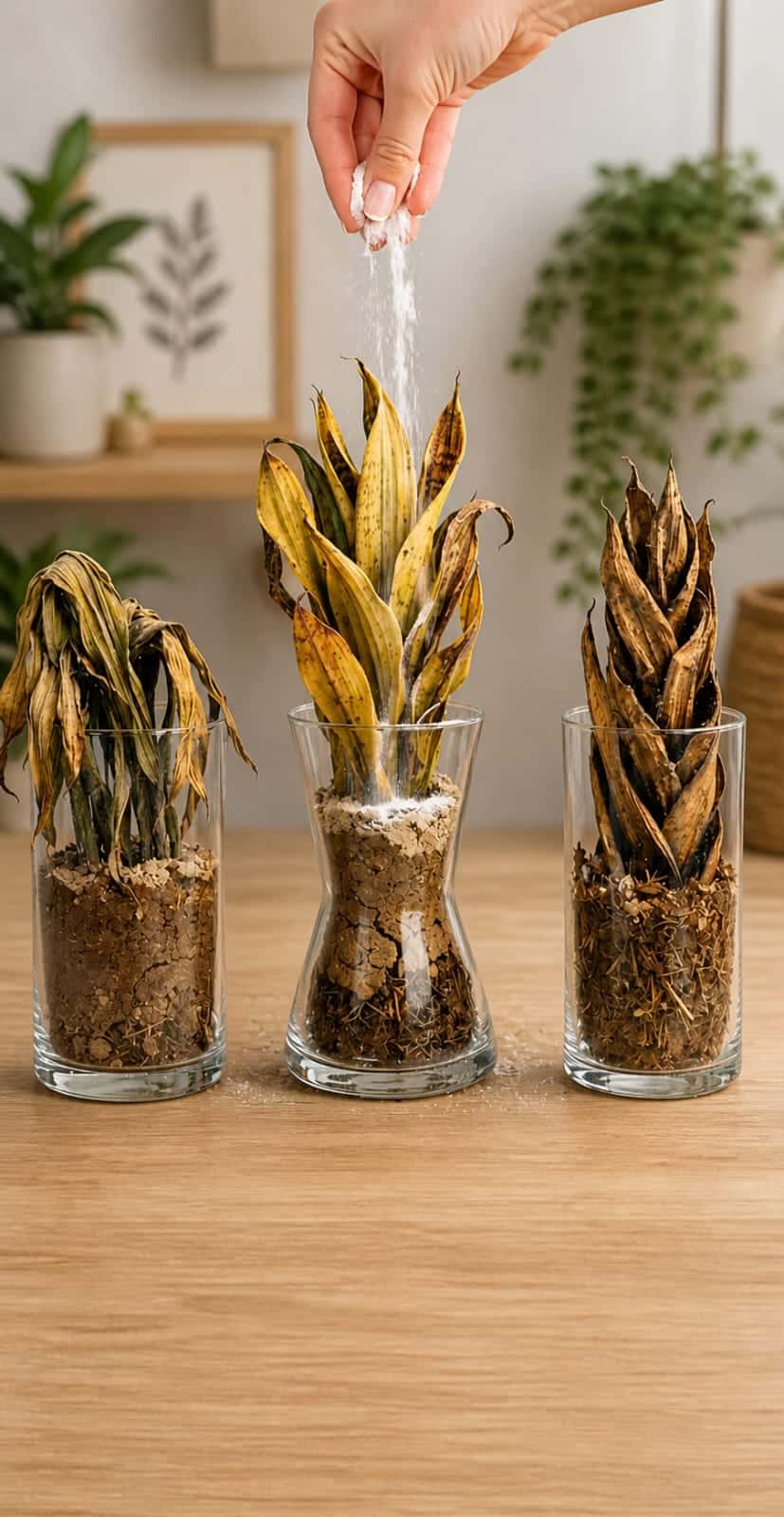
The image shows three tired snake plant sections standing in clear glass containers filled with dry chunky material. The leaves are yellow, brown, curled, and damaged. A hand is sprinkling a fine white powder over the center plant. This creates a dramatic rescue idea: a white powder trick for struggling snake plant cuttings.
For this image, the best plant-care version of the white powder is rooting hormone powder. Rooting hormone is commonly used when trying to encourage cuttings to form new roots. It will not magically turn dead leaves green again, but it can help a still-living cutting start over if the base is firm and not rotten.
This trick is not about pretending that dry, dead leaves can come back to life. They cannot. The real trick is saving the living tissue before the whole plant is gone. With clean cutting, drying, rooting hormone powder, and a loose dry medium, a snake plant cutting may produce roots and eventually grow a new shoot.
What Is Happening in the Image?
The image shows snake plant leaves that are badly stressed. Some are yellow, some are brown, and some are curled inward. This usually means the plant has suffered serious damage. The most common causes are overwatering, root rot, underwatering for too long, poor drainage, cold damage, or a mix of these problems.
The clear glass containers make the scene look like a rescue experiment. Instead of a normal pot, the cuttings are placed in a dry-looking medium where the base can stay supported while new roots hopefully form.
The hand sprinkling white powder suggests a rooting treatment. This is useful when the goal is not to revive the old damaged leaves, but to encourage any healthy remaining tissue to root again.
The Real Trick: Rooting Hormone Powder
Rooting hormone powder is a white or pale powder used on cuttings to encourage root development. Gardeners often use it for stem cuttings, leaf cuttings, woody cuttings, and plants that are slow to root.
For snake plants, rooting hormone can be used on clean, firm leaf cuttings or rhizome sections. It helps give the cutting a better chance, especially when the plant is weak or slow to recover.
But it only works if the cutting is still alive. If the leaf is completely dry, mushy, rotten, or hollow, no powder can bring it back.
Important Truth: Dead Leaves Will Not Turn Green Again
This is the most important part of the trick. Yellow, brown, crispy snake plant leaves will not become green again. Once the tissue is dead, it is dead.
The purpose of the rooting powder trick is to save what is still alive. A snake plant can sometimes regrow from a firm leaf section, a healthy rhizome, or a small living base. The old ugly leaves may need to be cut away, but the plant can start fresh from new roots and new shoots.
So the goal is not to repair every damaged leaf. The goal is to create a new plant from the living parts.
How to Know If a Snake Plant Cutting Can Still Be Saved
Before using rooting powder, check the cutting carefully. A saveable cutting should feel firm, not mushy. It may be yellow or damaged at the top, but the lower part should still have some strength. If you press the base and it collapses, smells bad, or feels slimy, it is probably rotten.
Look for these good signs:
- The base is firm
- There is no bad smell
- The leaf still has some thickness
- The cutting is not fully crispy from top to bottom
- There is a firm rhizome or root nub attached
- At least one section still looks slightly alive
If the whole cutting is dry like paper, rooting hormone will not help.
Step 1: Remove the Cutting From Wet or Bad Soil
If the snake plant came from a pot with soggy soil, remove it immediately. Wet soil is one of the main reasons snake plants rot. Shake away the old soil and inspect the roots or base.
If roots are black, mushy, or smelly, trim them away with clean scissors. Keep only firm tissue. If the base is still solid, the cutting may be worth saving.
Do not place a rotten cutting into new soil without cleaning it first. Rot can continue spreading.
Step 2: Cut Away the Dead Parts
Use clean scissors or a sharp knife to remove fully dead sections. Cut back until you reach firm tissue. If the leaf tip is crispy and brown but the lower part is firm, trim off the dead tip.
If the base is damaged, make a clean cut above the rotten area. The cut surface should look firm and fresh, not mushy or dark.
Always clean your blade before and after cutting. This helps prevent spreading bacteria or rot from one cutting to another.
Step 3: Let the Cutting Dry and Callus
This step is essential for snake plants. After cutting, let the wound dry before placing it in any medium. Lay the cutting in a dry, shaded, airy place for two to five days.
The cut end should form a dry callus. This helps reduce the risk of rot when the cutting is placed into soil or propagation mix.
Do not rush this step. A fresh wet cut placed straight into damp soil can rot quickly.
Step 4: Dust the Base With Rooting Hormone Powder
Once the cut end has dried, lightly dip or dust the base with rooting hormone powder. You only need a thin coating. More powder does not mean faster roots.
If you are using a small spoon or your fingers, sprinkle the powder gently around the base. Avoid coating the entire leaf. Focus on the part that will sit in the propagation medium.
Tap off extra powder. A light dusting is enough.
Step 5: Use a Dry, Airy Propagation Medium
Snake plant cuttings need a medium that supports them without staying wet. The image shows a dry chunky material, which fits the idea well.
Good options include:
- Perlite
- Pumice
- Dry cactus mix
- Coarse sand mixed with perlite
- Small orchid bark mixed with succulent soil
Avoid heavy garden soil. Avoid dense indoor potting mix by itself. Snake plant cuttings need air around the base.
Step 6: Place the Cutting Upright
Place the treated base into the medium about one to two inches deep. Keep the cutting upright. If it falls over, use small stones, perlite, or a support stick to hold it in place.
Make sure the bottom end goes into the medium. Snake plant leaf cuttings have direction. If you plant them upside down, they may not root properly.
If you cut a leaf into sections, mark the bottom before cutting so you know which end goes down.
Step 7: Do Not Water Immediately
After placing the cutting in the medium, wait a few days before watering. This is especially important if the cutting was previously rotting or stressed.
When you do water, use only a small amount. The medium should become barely moist, not wet. Snake plant cuttings can rot if kept damp for too long.
Rooting powder helps only if the environment is right. Too much water ruins the trick.
Step 8: Keep It in Bright Indirect Light
Place the cuttings in bright indirect light. Avoid harsh direct sun, especially while they are weak. Strong sun can dry them further and burn damaged tissue.
A bright windowsill with filtered light is ideal. Low light will slow rooting, while direct hot sun can stress the cutting.
Stable warmth also helps. Keep the cuttings away from cold windows and drafts.
Step 9: Wait Patiently
Snake plants are slow. Rooting can take several weeks or even a few months. Do not pull the cutting out every few days to check roots. That can break new root tips.
Instead, watch for firmness. If the cutting stays firm and does not rot, that is a good sign. Later, you may see a new pup emerging from the base.
The old leaf may never look perfect, but new growth is the real victory.
How Often Should You Add Rooting Powder?
Use rooting hormone powder only once when preparing the cutting. Do not keep sprinkling it on the plant every week.
Rooting hormone is for the cut base, not for repeated soil feeding. Once the cutting is placed in the medium, leave it alone and focus on proper moisture and light.
Too much handling can damage the cutting.
Can You Sprinkle Rooting Powder on Top of Soil?
For best results, rooting hormone should touch the cut base of the plant. Sprinkling powder randomly on top of the soil is less useful.
The image shows powder falling over the plant and medium, but the real-life version should be more targeted. Dust the cut end, then place the cutting into the medium.
This makes the trick more effective and less wasteful.
What If You Do Not Have Rooting Hormone?
You can still propagate snake plant cuttings without rooting hormone. Snake plants can root in the right conditions if the cutting is healthy enough.
Use the same steps: cut cleanly, let the end callus, place it in airy medium, water lightly, and wait. Rooting hormone simply gives extra support.
If the cutting is very weak, rooting hormone may improve the chance, but it is not required.
Can Cinnamon Replace Rooting Hormone?
Cinnamon is often used as a dry dusting around cut plant tissue because it may help keep the surface dry and clean. But cinnamon is not the same as rooting hormone. It does not contain the same rooting compounds.
If your goal is root encouragement, use rooting hormone powder. If your goal is drying and protecting a cut surface, cinnamon can be used lightly.
Do not confuse the two tricks. They are different.
Can You Use Baking Powder or Baking Soda?
No. Do not use baking powder or baking soda on snake plant cuttings for rooting. These are not rooting hormones and can affect the plant tissue or soil environment.
The white powder in this trick should be rooting hormone powder. Random kitchen powders can harm the plant or do nothing useful.
Use the right powder for the right purpose.
Can You Use Salt?
No. Salt can damage roots and plant tissue. Never sprinkle salt onto snake plant cuttings or soil.
It may look like white powder in a photo, but it is not a plant rescue ingredient.
Salt belongs in food, not in your snake plant propagation jar.
Can You Use Sugar?
No. Sugar can attract pests, mold, and fungus gnats. It does not help snake plant cuttings root.
Cuttings need clean, dry, airy conditions. Sugar creates the opposite environment.
Do not add sweet powders or sweet water to snake plant cuttings.
Continue to Page 2
Continue to page 2 for more details about this article and the key points many readers miss on the first page.