Why Clear Glass Containers Can Be Risky
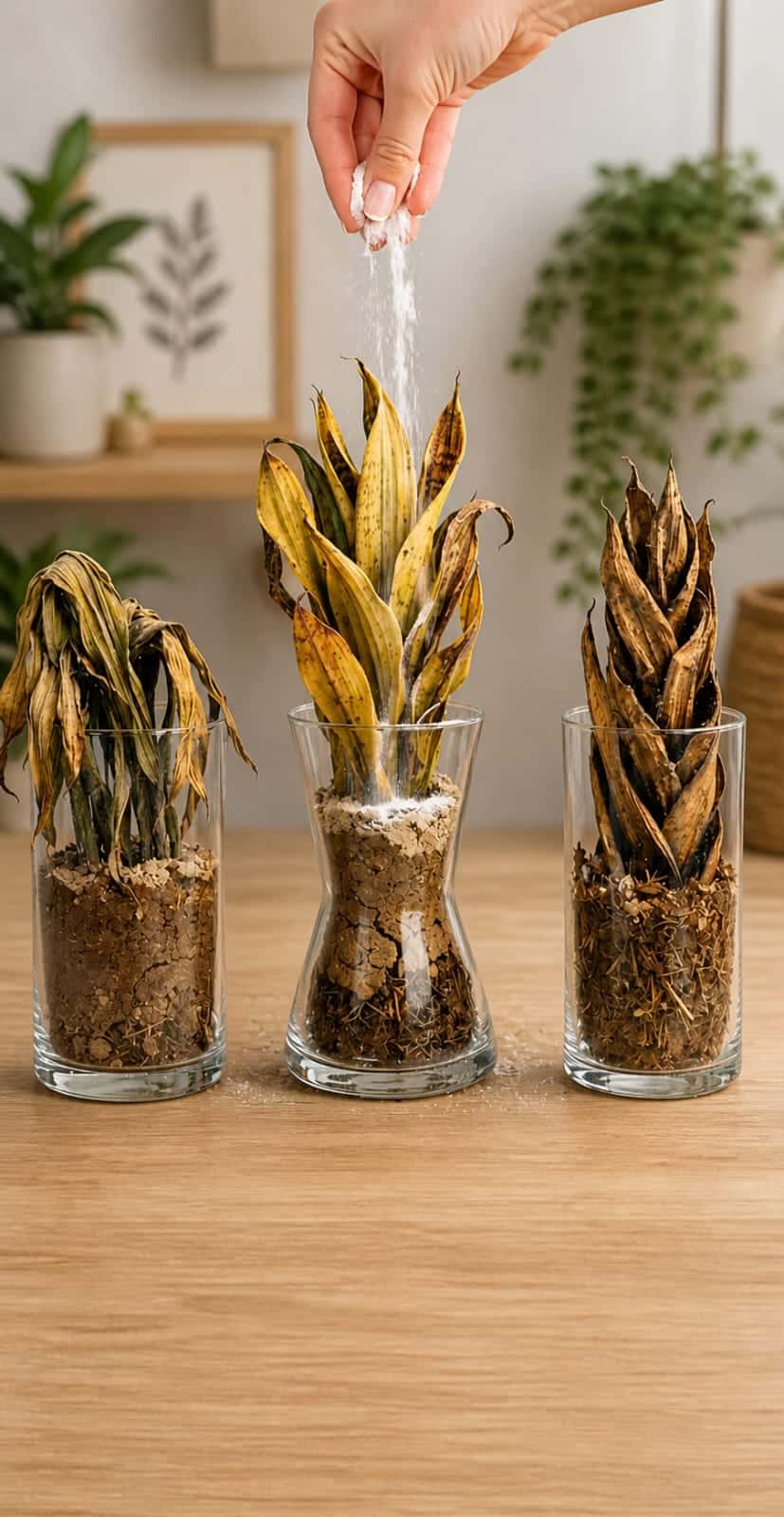
The clear glass containers in the image look beautiful for a photo, but they are not always the best long-term propagation pots. Glass usually has no drainage holes, which means water can collect at the bottom and cause rot.
If you use glass, add only tiny amounts of water and keep the medium mostly dry. Better yet, use a small nursery pot with drainage, then place it inside a decorative glass container for the photo.
Snake plants hate trapped moisture. Drainage is safer.
Best Container for Snake Plant Cuttings
A small terracotta pot, plastic nursery pot, or propagation tray with drainage holes is better than a sealed glass vase. The container should allow extra water to leave.
Terracotta is especially useful because it dries faster. This helps protect cuttings from rot.
If you love the glass look, use it only temporarily or make sure the medium stays very dry.
Should You Propagate Snake Plant in Water?
Snake plant cuttings can root in water, but water propagation has risks. If the cutting is already weak, yellow, or rotting, water may make it worse.
For damaged cuttings like the ones in the image, dry propagation in perlite, pumice, or cactus mix is usually safer. It reduces the chance of more rot.
Water propagation works best with healthy, firm cuttings.
How to Propagate Snake Plant in Soil
Soil propagation is simple but slow. Cut a firm leaf into sections, let the cut ends callus, dust with rooting hormone, and place the bottom end into a dry succulent mix.
Water lightly after a few days and keep the cutting in bright indirect light. Then wait.
New pups may take a long time to appear, but they will usually come from the base, not from the old leaf tip.
What If the Cutting Turns Mushy?
If a cutting turns mushy, it is rotting. Remove it immediately so rot does not spread. Cut away the mushy part if there is still firm tissue above it. Let the new cut dry and callus again before trying to root it.
If the whole cutting is mushy, discard it.
Do not keep adding powder to rotten tissue. Powder cannot fix rot once the tissue has collapsed.
What If the Cutting Turns More Yellow?
Some yellowing may continue if the cutting was already badly stressed. If the base stays firm, keep waiting. If the base becomes soft, the cutting is failing.
Snake plant cuttings often use stored energy while rooting. The old leaf may not look attractive, but it can still produce roots if it remains firm.
Focus on the base, not the beauty of the old leaf.
What If the Cutting Dries Out Completely?
If the cutting becomes thin, crispy, and papery from top to bottom, it is too far gone. A completely dried cutting cannot root.
To prevent this, keep the cutting in bright indirect light, not hot direct sun. Water very lightly when the medium has been dry for a while, but never keep it wet.
The balance is dry enough to avoid rot, but not so dry that the living tissue shrivels completely.
Can a Yellow Snake Plant Cutting Grow New Green Leaves?
The old yellow leaf will not turn green again, but a rooted cutting may eventually produce new growth. New pups can emerge green and healthy if the cutting successfully roots.
If the original snake plant was variegated with yellow edges, leaf cuttings may sometimes produce pups without the same variegation. To keep the exact variegation, rhizome division is more reliable than leaf cuttings.
Still, a new green pup is better than losing the plant completely.
What Is the Best Part to Save?
The best part to save is the firm rhizome or base. Snake plants grow from rhizomes under or near the soil. If the rhizome is firm and healthy, it can produce new shoots.
Leaf cuttings can work, but rhizome sections usually have a stronger chance because they already contain growth points.
If your dying snake plant has any firm underground section left, focus on saving that first.
How to Save a Snake Plant Rhizome
Remove the plant from the pot and clean the rhizome. Cut away rotten roots and mushy sections. Keep only firm, pale, tan, or orange rhizome pieces.
Let the cut rhizome dry for a day or two. Dust the cut areas lightly with rooting hormone or cinnamon. Then plant it shallowly in dry succulent mix.
Wait several days before watering. Keep it warm and bright.
Why Snake Plants Rot So Easily
Snake plants are succulents. They store water in their thick leaves and rhizomes. Because of this, they do not need frequent watering. If their soil stays wet, the roots and rhizomes can rot.
Many snake plants die from kindness. Owners water them too often because they want to help. But for snake plants, too much water is often worse than too little.
When rescuing cuttings, dry care is usually safer than wet care.
Best Soil Mix for Rooted Snake Plant Cuttings
Once the cuttings root, move them into a fast-draining mix. A good snake plant soil mix can include:
- Cactus or succulent soil
- Perlite
- Pumice
- Coarse sand
- Small bark pieces
The final mix should drain quickly and dry between waterings. Heavy soil can restart the rot problem.
When to Move the Cutting Into a Real Pot
Wait until the cutting has roots or a new pup before moving it into a permanent pot. If you disturb it too early, you may break tiny new roots.
Once rooted, choose a small pot with drainage holes. Snake plants prefer snug pots. A huge pot holds too much soil and stays wet too long.
Start small and upgrade later as the plant grows.
How Long Does Snake Plant Propagation Take?
Snake plant propagation is slow. Roots may take four to eight weeks or longer. New pups can take several months.
Damaged cuttings may take even longer because they are already weak. Patience is part of the trick.
Do not throw away a firm cutting just because nothing happens quickly.
How to Water During Propagation
Water very lightly. Let the medium dry between waterings. If you are using perlite or pumice, add only enough water to slightly moisten the lower area, then let it dry again.
If you are using a pot with drainage, water lightly around the cutting and let extra drain away. If you are using glass with no drainage, use only a tiny amount.
Never keep snake plant cuttings sitting in wet medium.
Should You Fertilize Snake Plant Cuttings?
No. Do not fertilize unrooted cuttings. They do not have enough roots to use fertilizer properly. Fertilizer can stress or burn weak tissue.
Wait until the cutting has rooted and started producing new growth. Even then, use a very diluted succulent fertilizer only during active growth.
Rooting comes first. Feeding comes later.
Can You Use Aloe Gel With Rooting Powder?
Some plant lovers use aloe gel as a natural rooting support. You can use either aloe or rooting hormone, but do not overload the cutting with many products at once.
For this white powder image, rooting hormone powder is the cleanest match. If using aloe, apply a thin coating to the cut end before placing it in medium.
Keep the routine simple so the cutting does not stay wet or sticky.
Can You Use Honey?
Honey is sometimes used in plant tricks, but for snake plant cuttings it can be sticky and may attract pests if overused. It is not the best match for this dry rescue method.
Rooting hormone powder is more direct and cleaner for the image shown.
Avoid sticky ingredients around weak cuttings.
Why the Cutting Should Stay Upright
Snake plant leaves have a natural direction. The base is where roots form. If a leaf section is upside down, it may fail to root.
Keeping the cutting upright also prevents moisture from collecting in folds and damaged areas. It allows air to move around the leaf.
Support the cutting gently, but do not bury it too deeply.
What If the Cutting Is Too Damaged?
If all three cuttings look completely dead, the best option may be to discard them and start fresh with a healthier cutting. No trick can revive fully dead tissue.
But if one cutting has a firm base, try saving that one. You do not need every piece to survive. One healthy section can become a new plant.
Plant rescue is often about finding the one living part and giving it the right conditions.
How to Prevent This From Happening Again
Once your snake plant recovers, prevent future damage by changing the care routine.
- Use a pot with drainage holes
- Use cactus or succulent soil
- Water only when soil is fully dry
- Keep the plant in bright indirect light
- Avoid cold drafts
- Do not let water sit in the saucer
- Do not mist the leaves heavily
- Check roots if leaves yellow suddenly
Snake plants are easy when kept dry, bright, and stable.
Best Light for Rescued Snake Plants
Snake plants can tolerate low light, but they recover better in bright indirect light. A struggling cutting needs energy, and light helps it produce that energy.
Do not place a damaged cutting in a dark corner. It may survive for a while, but it will root more slowly.
Bright filtered light is the best rescue position.
Why the Image Works as a Plant Trick
This image works because it shows a dramatic before-rescue moment. The plant looks almost lost, but the white powder suggests one last attempt to save it. The clear glass containers make the root zone visible, and the hand action makes the trick easy to understand.
It creates curiosity: Can this powder bring the plant back?
The honest answer is: it can help a living cutting root, but it cannot revive dead leaves. That makes the trick both useful and believable.
How to Recreate This Trick for Plant Content
To create a similar plant-care photo or tutorial, use:
- Damaged but firm snake plant cuttings
- Clear glass containers or small nursery pots
- Dry perlite, pumice, or cactus mix
- White rooting hormone powder
- A hand sprinkling or dipping the cut base
- Soft indoor light
- A clean wooden table
- Blurred houseplants in the background
For real care, apply the powder to the cut base rather than wasting it over the leaves.
Quick White Powder Snake Plant Rescue Routine
- Remove the damaged snake plant from old soil.
- Cut away mushy, rotten, or fully dead tissue.
- Keep only firm leaf or rhizome sections.
- Let cut ends dry and callus for two to five days.
- Dust the cut base lightly with rooting hormone powder.
- Place the cutting upright in dry perlite, pumice, or cactus mix.
- Wait a few days before watering.
- Keep the medium barely moist, never soggy.
- Place in bright indirect light.
- Wait patiently for roots or new pups.
Common Mistakes to Avoid
- Trying to revive completely dead leaves
- Using salt, sugar, flour, or baking soda as the white powder
- Planting fresh cuts before they callus
- Keeping cuttings too wet
- Using glass containers with too much water
- Planting leaf sections upside down
- Using heavy garden soil
- Fertilizing unrooted cuttings
- Pulling cuttings out too often to check roots
- Expecting new growth in a few days
Short Caption for This Trick
“Before throwing away a dying snake plant, check for firm living tissue. Cut away the rot, let the base dry, dust it with rooting hormone powder, and place it in dry airy mix. The old leaves will not turn green again, but one firm cutting may still grow new roots and start over.”
Frequently Asked Questions
What is the white powder for snake plant cuttings?
The best version is rooting hormone powder. It is used on cuttings to encourage root development.
Can rooting hormone save a dying snake plant?
It can help a firm living cutting root, but it cannot revive fully dead or rotten tissue.
Should I sprinkle rooting powder on top of the soil?
It is better to apply it directly to the cut base of the cutting before placing it in the propagation medium.
Can yellow snake plant leaves turn green again?
No. Yellow or brown damaged leaves will not turn green again. The goal is to grow new roots and new shoots.
How long does snake plant propagation take?
Roots can take several weeks, and new pups may take months. Snake plants are slow.
Should I water snake plant cuttings right away?
No. Let cut ends callus first, then water lightly after planting. Keep the medium barely moist, not wet.
Can I use cinnamon instead of rooting hormone?
Cinnamon can help keep cut surfaces dry, but it is not the same as rooting hormone. For rooting support, use rooting hormone powder.
Can I root damaged snake plant cuttings in water?
You can, but damaged cuttings often rot in water. Dry propagation in perlite or cactus mix is usually safer.
What if the cutting becomes mushy?
It is rotting. Remove it, cut away the mushy part if any firm tissue remains, let it callus again, and retry in a drier medium.
What is the best soil for rooted snake plant cuttings?
Use a fast-draining succulent mix with perlite, pumice, coarse sand, or bark. Avoid heavy wet soil.
Final Thoughts
The white powder trick in the image is a powerful rescue idea for snake plant cuttings that look almost finished. The honest version is rooting hormone powder. It will not turn dead leaves green, and it will not repair rotten tissue. But if part of the plant is still firm and alive, rooting powder can help that cutting start again.
The full rescue depends on the right steps: cut away dead or rotten parts, let the wound callus, dust the base lightly, use a dry airy medium, avoid overwatering, and wait patiently. Snake plants are slow, but they are also surprisingly resilient when given the right conditions.
Do not use random white powders. Do not use salt, sugar, flour, or baking soda. Do not keep the cuttings soggy. And do not expect a miracle overnight.
Instead, treat this as a last-chance propagation method. One firm base, one clean cut, one light dusting of rooting powder, and one patient wait may be enough to turn a dying snake plant into a new beginning.