Few plants look as heartbreaking as a rose bush that has suddenly collapsed. One week it may be full of bright petals, fresh leaves, and cheerful stems. Then after a hot afternoon, a missed watering, or several days in dry soil, the flowers hang their heads, the leaves curl, and the whole plant looks like it has given up.
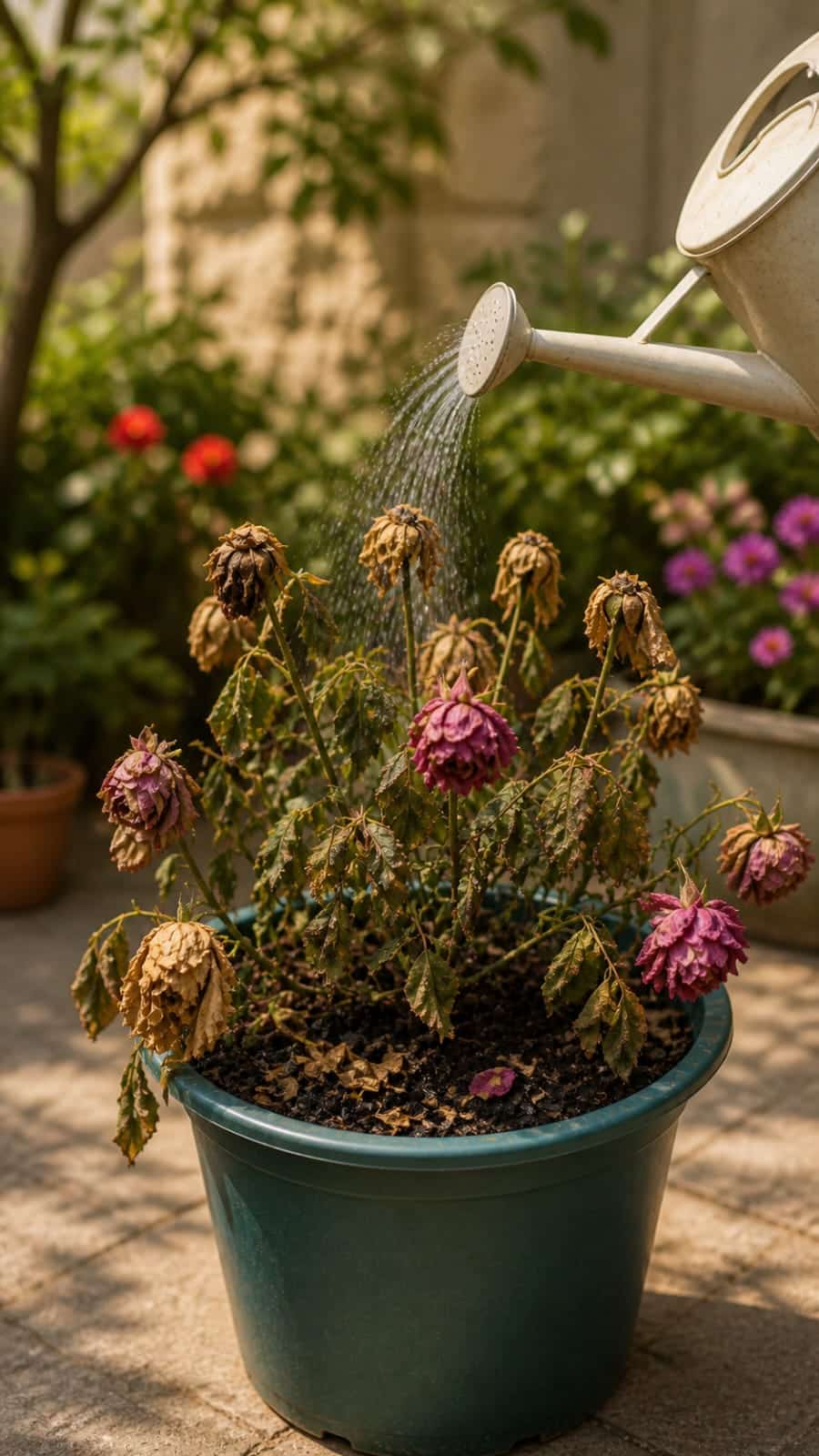
The image shows exactly that moment: a potted rose bush sitting outdoors, covered in wilted flowers and drooping leaves. A watering can is showering water over the tired plant. The blooms are still visible, but many petals are dry, brown, and curled. The plant is not dead yet, but it is clearly stressed.
This is where the deep-soak rescue trick comes in. For wilted potted roses, the most important “trick” is not a strange powder, not a harsh fertilizer, and not a kitchen ingredient poured randomly into the pot. The real trick is giving the roots a slow, complete drink while protecting the plant from more heat stress.
A potted rose dries out faster than a rose planted in the ground. When the soil becomes too dry, water can run off the surface without reaching the root ball. The plant may look watered, but the center of the pot can remain dry. A quick splash from above is often not enough. A stressed rose needs a deep, patient soak that reaches every part of the root zone.
What Plant Is in the Image?
The plant in the image appears to be a potted rose bush. It has multiple flower heads, thorny-looking stems, and compound leaves. Some blooms are pink, while others have dried to tan or brown. The plant is growing in a large green plastic container outdoors, likely on a patio or garden terrace.
The rose looks severely wilted, but not necessarily dead. Some stems still appear flexible, and a few flower heads still hold color. That means the plant may still have living roots and stems. With quick care, it may recover enough to grow new leaves and eventually bloom again.
However, the old dried flowers will not become fresh again. The goal is not to revive dead petals. The goal is to save the root system and encourage new growth.
The Real Trick: A Slow Deep Soak
The best rescue trick for this image is a slow deep soak. Roses in pots need water to reach the full root ball, not just the top layer of soil. When soil dries out badly, it can become hydrophobic, meaning it repels water. Water then slides down the sides of the pot or runs out the drainage holes without soaking the roots properly.
That is why a weak rose may still droop after you water it. The water may not have reached the dry center of the pot.
The deep-soak trick fixes this by watering slowly, pausing, watering again, and sometimes soaking the pot from below so the root ball can absorb moisture evenly.
Why Potted Roses Wilt So Fast
Potted roses are more vulnerable than garden roses because their roots are trapped in a limited amount of soil. On hot days, the pot heats up. The soil dries quickly. The leaves lose water through evaporation. The flowers collapse first, then the leaves, then the stems.
Plastic pots can also heat up in the sun. Dark pots may become especially warm. Once the root ball dries too far, the plant cannot pull up enough water to support its leaves and flowers.
This is why container roses need steady watering, especially during heat, wind, and blooming season.
Step 1: Move the Rose Out of Harsh Sun
Before watering, move the pot to a cooler place if possible. Choose bright shade, morning sun, or filtered light. Do not leave a collapsed rose sitting in burning afternoon sun while you try to rescue it.
Heat makes the plant lose water faster. If the leaves are already drooping, direct sun can push the plant deeper into stress.
A shaded recovery spot gives the roots time to rehydrate without the leaves losing moisture too quickly.
Step 2: Remove the Worst Dead Flowers
The dried flowers in the image should be removed. Brown, crispy blooms will not recover. They continue pulling energy from the plant and can make the rose look worse than it is.
Use clean scissors or pruners and cut dead flowers back to a healthy leaf set. Do not cut the plant too aggressively during emergency rescue. Remove only the spent blooms and clearly dead flower heads first.
This helps the plant focus on survival instead of trying to support old flowers.
Step 3: Check the Soil Before Watering
Push your finger into the soil two to three inches deep. If the soil is dry, dusty, hard, or pulling away from the pot edge, the rose needs a deep soak. If the soil is wet and the plant is still wilting, the problem may be root rot, heat shock, or damaged roots.
Do not assume every wilted rose needs more water. Most wilted potted roses are dry, but some are wilting because the roots have been sitting in soggy soil and can no longer breathe.
The soil check tells you which rescue path to take.
Step 4: Water Slowly From the Top
Use a watering can with a gentle rose head, like the one in the image. Water slowly over the soil, not only over the leaves and flowers. The leaves may enjoy a light rinse, but the roots are what need rescue.
Pour water around the entire surface of the pot. Pause after the first round. Let the water sink in. Then water again.
This pause-and-repeat method is important because dry soil often needs time to absorb water. A quick pour may run out before it reaches the roots.
Step 5: Use the Bottom-Soak Method if the Soil Is Very Dry
If the water runs straight through the pot or pools on top without soaking in, use a bottom soak.
Place the pot in a shallow tray, tub, or basin filled with a few inches of water. Let the pot sit for 20 to 30 minutes. The dry root ball will slowly pull water upward through the drainage holes. After soaking, remove the pot and let it drain completely.
Do not leave the pot sitting in water all day. The goal is to rehydrate the soil, not drown the roots.
Step 6: Let the Pot Drain Fully
After deep watering, let extra water drain out. If the pot has a saucer, empty it. Roses like moisture, but they do not like stagnant water around their roots.
A deep soak should be followed by drainage. This gives the roots both water and oxygen.
If the pot has no drainage holes, the rose is at risk. A container rose should always have drainage holes.
Step 7: Do Not Fertilize Immediately
A wilted rose may look like it needs food, but fertilizer is not the first step. A stressed, dehydrated plant can be damaged by fertilizer, especially if the roots are dry or weak.
Wait until the rose has rehydrated and started showing signs of recovery. This may take several days to a week. Once new growth appears, you can use a gentle rose fertilizer or compost tea at half strength.
Water first. Feed later.
Step 8: Prune Lightly After Recovery Begins
Once the rose has perked up a little, prune more carefully. Remove dead blooms, fully brown stems, and crispy leaves. Cut back to living green tissue.
Do not cut the whole plant down immediately unless stems are clearly dead. Some drooping stems may recover after proper watering.
Wait 24 to 48 hours after the deep soak before deciding what is truly dead.
Step 9: Add Mulch to the Pot
After the rose is watered and draining well, add a thin layer of mulch on top of the soil. This can be fine bark, composted leaves, straw, or coconut husk chips.
Mulch helps keep moisture in the pot and protects the roots from heat. Keep mulch slightly away from the main stems so moisture does not sit directly against them.
For potted roses in summer, mulch can make a big difference.
Step 10: Create a Better Watering Routine
After rescue, do not wait until the rose collapses again. Potted roses need regular moisture during warm weather. Check the soil daily in summer. Water when the top inch or two begins to dry.
In hot weather, a potted rose may need water every day. In cooler weather, it may need much less. The pot size, soil mix, sunlight, and wind all change the watering schedule.
The best rule is simple: check the soil, then water deeply when needed.
What If the Rose Does Not Perk Up?
If the rose does not improve after a deep soak and shade, check the roots. Carefully slide the plant from the pot. Healthy roots are firm and usually pale or tan. Rotten roots are black, mushy, and may smell bad.
If roots are rotten, trim away damaged parts and repot into fresh, well-draining soil. If roots are dry and wrapped tightly around the pot, the plant may be root-bound and unable to absorb water properly.
A badly root-bound rose needs a larger pot and fresh soil.
Signs Your Rose Is Dehydrated
A dehydrated potted rose may show:
- Drooping flower heads
- Soft, limp leaves
- Dry soil pulling away from the pot edge
- Brown petal edges
- Wrinkled leaves
- Stems bending downward
- Soil that repels water
If these signs appear and the soil is dry, the deep-soak trick is the right first move.
Signs Your Rose Is Overwatered
An overwatered rose may also droop, but the soil will feel wet or sour. Other signs include:
- Yellowing leaves
- Wet soil that does not dry
- Black or mushy roots
- Bad smell from the pot
- Leaves dropping while soil is damp
- Fungus gnats around the soil
If these signs are present, do not keep watering. Improve drainage and inspect the roots.
Why Watering Over the Leaves Is Not Enough
The image shows water showering over the rose from above. This looks beautiful and can cool the plant briefly, but the root zone matters most. Leaves cannot replace root watering.
When rescuing a wilted rose, direct most of the water toward the soil. A gentle overhead rinse can remove dust and cool the foliage, but avoid leaving the plant wet overnight because damp leaves can encourage fungal problems.
Morning watering is best because the leaves have time to dry during the day.
Best Time of Day to Rescue-Water Roses
The best time to water a wilted rose is early morning or late afternoon. Morning is ideal. Watering during the hottest part of the day can waste water through evaporation, and wet leaves under strong sun may become stressed.
If the plant is severely collapsed, water immediately and move it into shade. Emergency rescue matters more than perfect timing.
After the emergency, return to morning watering whenever possible.
Should You Cut Off All Wilted Flowers?
Yes, if the flowers are brown, dry, or finished. Wilted blooms use energy and can invite disease if they stay damp and decaying on the plant.
Cut them back cleanly. If a flower is only slightly drooping but still fresh, you can wait and see if it recovers after watering.
Most dried blooms will not recover, so removing them helps the plant look better and grow stronger.
How Much Water Does a Potted Rose Need?
A potted rose needs enough water to moisten the full root ball. This is usually more than a quick splash. Water should move through the pot and out the drainage holes.
However, the plant should not remain in standing water. Deep watering and good drainage must work together.
If the pot is large and the weather is hot, the rose may need a full watering can. If the pot is small, it may need less but more often.
Why the Pot Size Matters
Roses have active root systems. If the pot is too small, the roots dry out quickly and become crowded. A small pot can make even a strong rose wilt in hot weather.
If your rose dries out every few hours, it may need a larger container. Choose a pot with drainage holes and enough depth for roots.
A bigger pot holds moisture more evenly and protects roots from temperature swings.
Best Soil for Potted Roses
Potted roses need rich but well-draining soil. The mix should hold moisture without becoming swampy.
A good container rose mix can include:
- High-quality potting mix
- Compost
- Perlite or pumice for drainage
- Fine bark for structure
- A small amount of slow-release rose fertilizer after recovery
Do not use heavy garden soil alone in pots. It can compact and suffocate roots.
Should You Repot a Wilted Rose?
Do not repot in the middle of extreme wilting unless the soil is clearly bad or the roots are rotting. First, move the plant to shade and water properly. Let it stabilize.
Repot later if the plant is root-bound, the soil is compacted, or the pot has poor drainage.
Repotting is stressful, so it is best done after the emergency has passed.
Can You Add Sugar Water?
No. Sugar water is not a good rescue for potted roses. It can attract ants, encourage microbial imbalance, and does not fix dehydration. Plants make their own sugars through photosynthesis.
A wilted rose needs plain water first, not sweet water.
Keep the rescue simple and clean.
Can You Add Fertilizer Water?
Not immediately. Fertilizer can burn dry roots. If the rose is collapsed from dehydration, plain water is safest.
Once the plant recovers and starts pushing fresh growth, you can feed lightly. Use a rose fertilizer according to label directions or a mild organic feed.
Never feed a plant that is badly wilted and dry.
Can You Use Rice Water?
Rice water is sometimes used as a mild plant tonic, but it is not the first rescue step for a wilted rose. If the rose is dehydrated, it needs a deep soak with plain water. If the roots are stressed, it needs drainage and root care.
After the plant stabilizes, occasional diluted rice water may be used by some gardeners, but it should not replace proper watering and feeding.
For this image, the real trick is deep soaking.
Can You Use Banana Peel Water?
Banana peel water is popular online, but it is not an emergency wilt cure. It can become fermented or attract pests if used incorrectly.
A drooping rose needs hydration and root recovery first. Save homemade nutrient waters for healthy plants, and use them carefully.
Do not pour random kitchen mixtures onto a stressed rose.
Can You Mist the Rose?
Misting may briefly cool the leaves, but it will not rescue a dehydrated root ball. Roses need water at the roots. Misting can also encourage fungal problems if leaves stay wet too long.
If the plant is heat-stressed, move it to shade and water the soil deeply. That is more effective than misting.
Use overhead watering in the morning only if leaves can dry quickly.
How Long Until the Rose Perks Up?
If the rose is simply dehydrated, some leaves may perk up within a few hours. Severely wilted flowers may not recover. The plant may look better by the next day, but damaged petals and leaves will still need removal.
If roots are damaged, recovery may take weeks. The plant may drop old leaves before producing new ones.
Do not expect a perfect rose bush overnight. Look for firm stems and new growth.
What If the Flowers Stay Brown?
Brown flowers are finished. Cut them off. This is normal after heat stress or dehydration.
Removing dead flowers encourages the plant to direct energy into roots and new shoots. Once the rose recovers, it can produce fresh buds later.
The old blooms are not the goal. The living crown and roots are the goal.
What If Leaves Fall After Watering?
A stressed rose may drop damaged leaves even after proper watering. This does not always mean the rescue failed. The plant may shed leaves it can no longer support.
Keep the soil evenly moist, not soggy, and wait for new growth. If stems remain green and firm, the rose may still recover.
Patience is important after severe wilting.
Continue to Page 2
Continue to page 2 for more details about this article and the key points many readers miss on the first page.