How to Tell If Stems Are Alive
Gently scratch a tiny area of bark on a stem with your fingernail. If you see green underneath, that stem is alive. If it is brown, dry, and brittle all the way through, it may be dead.
Prune dead stems back to living tissue. Do not cut every stem at once unless you are sure it is dead.
A rose can regrow from living stems after stress.
Should You Move the Rose Permanently?
If the rose wilted because it was sitting in intense afternoon sun, consider moving it permanently to a spot with morning sun and afternoon shade, especially during hot months.
Roses like sun, but potted roses can overheat more easily than roses in the ground. In very hot climates, afternoon shade can save container roses.
The right location prevents repeated collapse.
How to Protect Potted Roses During Heat Waves
During hot weather, potted roses need extra attention. Move them out of harsh afternoon sun, water early, and check soil daily. Group pots together to reduce heat stress and add mulch to keep roots cooler.
You can also place the pot inside a larger decorative container to shade the root zone, but make sure water can still drain.
Heat protection is easier than emergency rescue.
Why Mulch Helps Container Roses
Mulch slows evaporation from the soil surface. It keeps the root zone cooler and helps water last longer. For container roses, this is especially helpful in summer.
Use a thin layer, not a thick pile. Keep mulch away from the main stems to prevent rot.
A small mulch layer can reduce how often your rose wilts between waterings.
When to Feed After Rescue
Wait until the rose shows new growth before feeding. This may take one to three weeks depending on the damage. Once new leaves appear, use a balanced rose fertilizer or a gentle organic feed.
Feed lightly at first. A weak plant does not need a strong dose.
After feeding, water well according to the fertilizer directions.
How to Deadhead Roses Correctly
Cut the faded flower stem back to just above a healthy leaf set. Use clean, sharp pruners. Make the cut at a slight angle.
Deadheading encourages fresh growth and keeps the plant tidy. For a stressed rose, deadheading also removes parts that are no longer useful.
Do not leave rotting flowers sitting in the plant canopy.
What If the Soil Is Hard Like a Brick?
If the soil is hard, compacted, and difficult to wet, loosen the top layer gently with a small fork. Then use the slow watering method. If the root ball remains hard, bottom soak the pot briefly.
Later, repot into fresh soil with compost and drainage material. Hard soil makes it difficult for roots to breathe and drink.
A rose cannot thrive in a compacted pot for long.
Can This Trick Work for Mini Roses?
Yes. Mini roses in small pots often wilt quickly because their soil dries fast. Use the same deep-soak method, but with less water and careful drainage.
Mini roses also need bright light and regular deadheading. Many mini roses fail indoors because they do not get enough sunlight.
If growing mini roses indoors, place them near the brightest window possible.
Can This Trick Work for Garden Roses?
Yes, but garden roses need deep watering at the root zone rather than container soaking. Water slowly at the base of the plant. Avoid shallow daily sprinkling, which encourages weak surface roots.
For roses in the ground, a long slow soak once or twice a week is often better than frequent light watering, depending on weather and soil.
The same idea applies: deep roots need deep water.
Why the Image Works as a Plant Trick
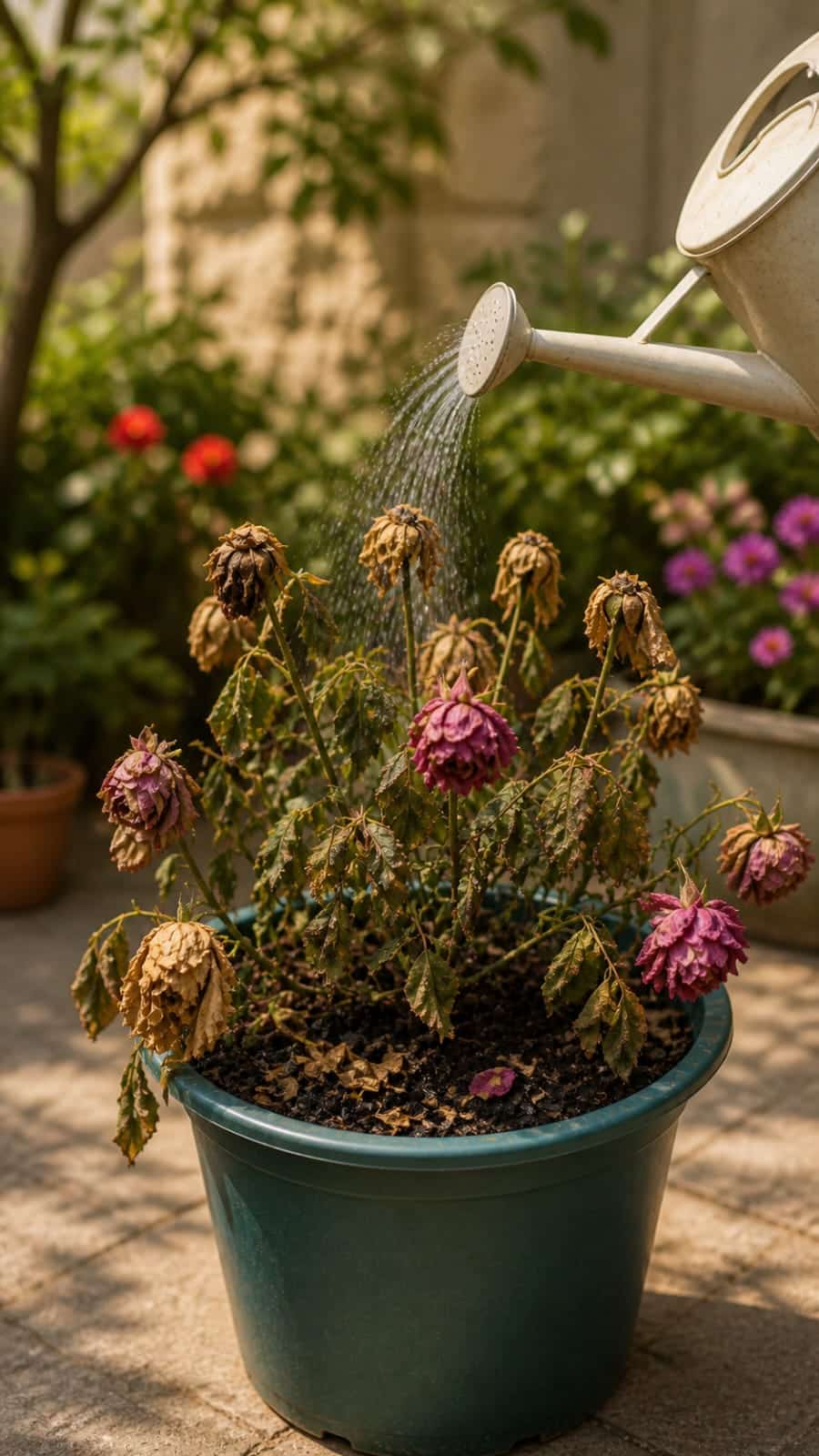
The image is powerful because it shows a dramatic rescue moment. A wilted rose bush looks nearly lost, while the watering can suggests immediate action. The viewer understands the message instantly: this plant is thirsty, and water may save it.
It is simple, visual, and emotional. Unlike complicated plant tricks, this one is grounded in a real need. A dehydrated potted rose often can recover if watered deeply and moved out of heat.
The best plant tricks are not always strange. Sometimes the most powerful trick is doing the basic thing correctly.
How to Recreate This Trick for Content
To create a similar plant-care image or tutorial, use:
- A wilted but still living potted rose
- A large container with drainage
- A watering can with a gentle shower head
- Morning or late afternoon light
- A patio or garden background
- Some dried flowers visible for drama
- Water aimed mostly at the soil
- A shaded recovery area nearby
The key visual is the contrast between the tired plant and the gentle water shower. It should feel like a rescue, not like flooding.
Quick Deep-Soak Rose Rescue Routine
- Move the wilted rose into bright shade.
- Remove fully dead brown flowers.
- Check the soil two to three inches deep.
- If dry, water slowly over the whole soil surface.
- Pause and water again so the root ball absorbs moisture.
- If water runs off, bottom soak the pot for 20 to 30 minutes.
- Let the pot drain completely.
- Keep the rose out of harsh sun for 24 to 48 hours.
- Prune dead leaves and stems after recovery begins.
- Resume a steady watering routine.
Common Mistakes to Avoid
- Giving only a quick splash of water
- Watering leaves but not the soil
- Leaving the pot in standing water
- Fertilizing while the plant is collapsed
- Keeping the rose in hot afternoon sun
- Ignoring compacted soil
- Letting the pot dry out completely again
- Removing all stems before checking if they are alive
- Using sugar water or random kitchen mixtures
- Repotting during peak heat unless necessary
Short Caption for This Trick
“A wilted potted rose usually does not need a fancy ingredient first. It needs a slow deep soak. Move it to shade, water the soil slowly, pause, water again, and let the pot drain completely. Cut off dead blooms after it recovers and keep the soil evenly moist.”
Frequently Asked Questions
Can a wilted potted rose recover?
Yes, if the stems and roots are still alive. A dehydrated rose can often recover after a slow deep soak and shade. Dead flowers and crispy leaves may not recover, but new growth can appear later.
Should I water a wilted rose immediately?
If the soil is dry, yes. Water slowly and deeply. If the soil is wet, do not add more water until you check for root problems.
Why is my rose wilting even after watering?
The root ball may still be dry inside, the soil may repel water, or the roots may be damaged. Try slow watering or bottom soaking if the soil is dry. Check roots if the soil is wet.
Should I cut off wilted rose flowers?
Yes, remove flowers that are brown, dry, or finished. This helps the plant focus on recovery and new growth.
Can I fertilize a wilted rose?
Do not fertilize immediately. Water and stabilize the plant first. Feed only after new growth appears.
How long does it take for a wilted rose to recover?
If it is only thirsty, it may perk up within hours or by the next day. If roots are damaged, recovery can take weeks.
Should I water roses from above or at the soil?
Water mostly at the soil. A gentle overhead rinse is fine in the morning, but the roots need the real drink.
Can too much water make roses wilt?
Yes. Overwatered roses can wilt because roots cannot breathe. Wet soil plus drooping leaves may mean root stress or rot.
What is the best pot for roses?
Use a large pot with drainage holes. The pot should be deep enough for roots and large enough to hold moisture evenly.
How do I stop potted roses from wilting again?
Check soil regularly, water deeply when needed, mulch the surface, protect the pot from extreme heat, and keep the rose in a bright location with enough airflow.
Final Thoughts
The watering can rescue in the image is one of the most honest and useful plant tricks for a potted rose. When a rose collapses from heat and dry soil, a quick splash is not enough. It needs a slow deep soak that reaches the entire root ball.
Move the plant to shade, remove dead blooms, water slowly, pause, water again, and let the pot drain. If the soil has become too dry to absorb water, bottom soak the pot briefly. Then protect the rose from harsh sun while it recovers.
Do not rush to fertilize. Do not pour sugar water or random kitchen mixtures into the pot. Do not keep watering if the soil is already wet. The real trick is understanding what the roots need.
Old brown flowers will not come back, but the plant can. If the roots and stems are still alive, a wilted potted rose can push new growth and bloom again with steady care. Sometimes the simplest rescue is the strongest one: water deeply, drain well, and give the rose time to breathe.