Best Watering Routine After the Perlite Trick
Water when the top inch or two of soil feels dry. Peace lilies like moisture, but they do not want to sit in soggy soil.
When watering, water thoroughly enough to moisten the root ball, then let the pot drain completely. Empty the saucer every time.
Do not water a little bit every day. That keeps the surface wet and can weaken roots.
Can You Bottom Water a Peace Lily?
Yes, bottom watering can help if the soil has become very dry and water is running off the surface. Place the pot in a shallow tray of water for 15 to 20 minutes, then remove it and let it drain fully.
This helps the root ball absorb moisture evenly. But do not leave the pot sitting in water for hours.
Bottom watering is useful for dry soil, not soggy soil.
Can You Use Rice Water With Perlite?
Do not combine too many tricks while the plant is stressed. If your peace lily is drooping badly, focus on roots, drainage, and plain water first.
Once the plant is stable and growing again, you can occasionally use a gentle diluted rice water tonic if you like. But during rescue, keep the routine simple.
Perlite and proper watering are enough for the recovery stage.
Can You Use Coffee Grounds Instead?
No, coffee grounds are not the right rescue ingredient for this situation. They can compact, mold, and hold moisture when used heavily in indoor pots.
A drooping peace lily with stressed roots needs airflow, not a dense layer of organic material.
Use perlite for structure. Save coffee grounds for compost, not direct indoor pot rescue.
Can You Use Ash?
Do not use wood ash on a peace lily rescue pot. Ash can be very alkaline and may disturb the soil balance. Peace lilies prefer a mild, rich, evenly moist potting mix, not a strong alkaline treatment.
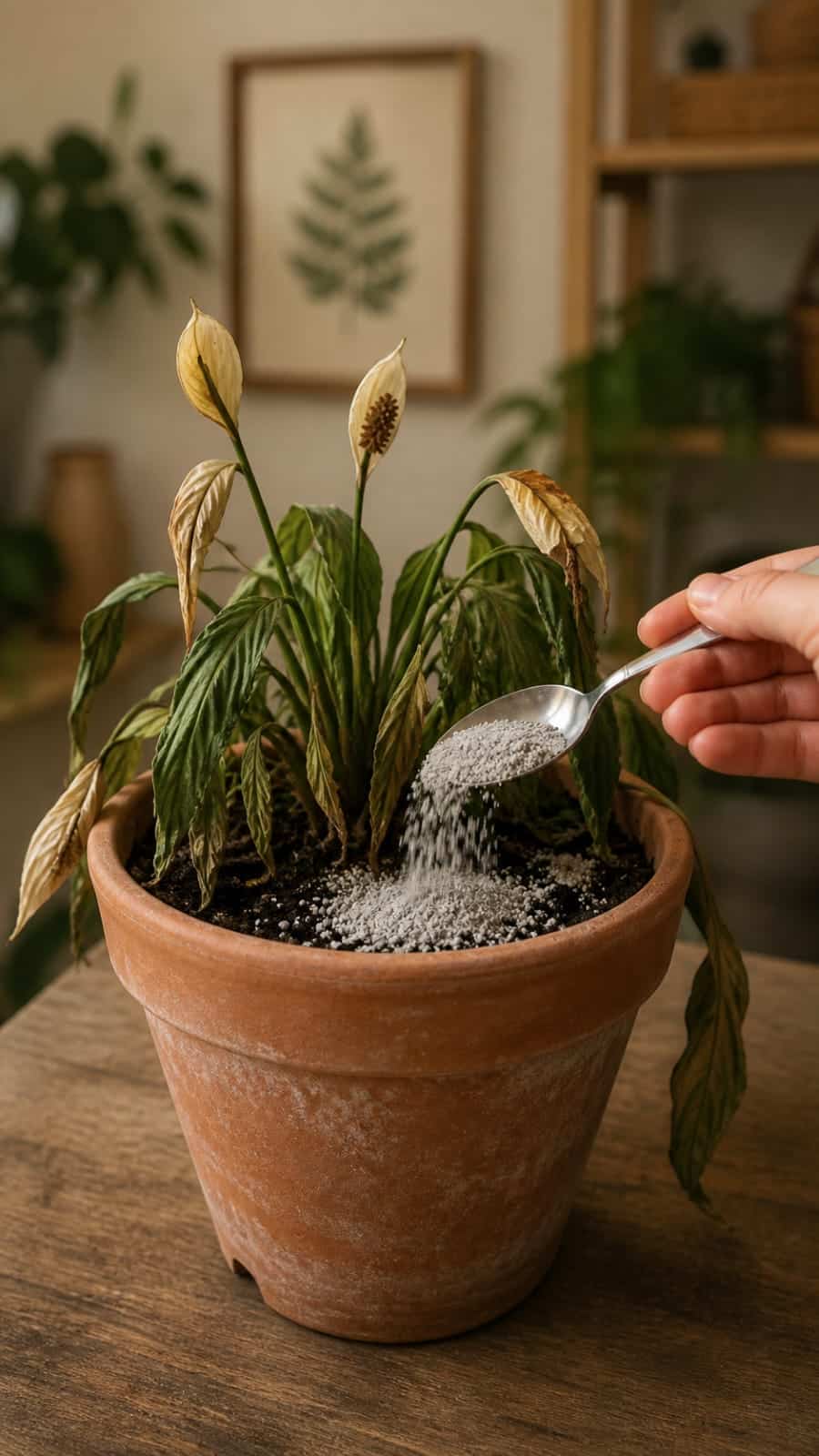
The gray-white look in the image may remind people of ash, but perlite is much safer for indoor plant care.
Choose perlite, not ash.
Can You Use Sand?
Coarse horticultural sand can improve drainage when mixed into potting soil, but fine sand can compact and make drainage worse. Perlite is lighter and easier to use for indoor peace lilies.
If using sand, make sure it is coarse and clean. But for this trick, perlite is the better choice.
Can You Use Diatomaceous Earth?
Diatomaceous earth is used mainly for pests, especially crawling insects and fungus gnats. It is not the best choice for fixing heavy soil or drooping roots.
If your peace lily has fungus gnats, dry the top soil slightly and use pest control carefully. But if the issue is wilt from root stress, perlite is more useful.
Different white powders have different purposes.
Signs the Perlite Trick Is Working
You may notice the leaves becoming less limp over several days. The soil may feel lighter and dry more evenly. New leaves may emerge stronger. The plant may stop yellowing as quickly.
Do not expect old brown flowers to become white again. Remove them. Do not expect damaged leaves to become perfect. Look for fresh growth instead.
Recovery is shown by new healthy leaves, not old damaged ones.
Signs the Plant Is Still in Trouble
If the peace lily continues collapsing, the roots may be badly damaged. Warning signs include:
- Sour smell from the soil
- Black mushy roots
- Soft crown at the base
- Leaves yellowing rapidly
- Soil staying wet too long
- Mold on the surface
- Stems turning mushy
If you see these signs, remove the plant from the pot and inspect the roots immediately.
Should You Fertilize a Drooping Peace Lily?
No. Do not fertilize a badly drooping peace lily right away. Stressed roots are sensitive, and fertilizer can burn them.
Wait until the plant is stable and producing new growth. Then use a gentle diluted houseplant fertilizer during the growing season.
During rescue, focus on air, moisture balance, and light.
How to Keep Peace Lilies From Drooping Again
Once the plant recovers, keep the care routine steady. Peace lilies like consistency.
- Use a pot with drainage
- Use airy potting mix with perlite
- Water when the top soil begins to dry
- Keep in bright indirect light
- Remove old flowers
- Keep away from cold drafts
- Do not let the pot sit in water
- Repot when soil becomes old and compacted
This routine prevents most future problems.
Why Terracotta Helps
The plant in the image is in a terracotta pot. Terracotta can be helpful because it breathes and allows moisture to evaporate. This can reduce the risk of soggy soil.
However, terracotta also dries faster. If the soil becomes too dry, the peace lily can wilt. That means you still need to check moisture regularly.
Terracotta plus perlite is a good combination if you water carefully.
Best Light for Peace Lily Recovery
A recovering peace lily should be placed in bright indirect light. A spot near a window with filtered light is ideal.
Direct hot sun can burn the leaves. A dark corner can slow recovery and keep the soil wet too long.
Bright indirect light gives the plant energy without adding heat stress.
How Long Recovery Takes
A mildly drooping peace lily can perk up within a day or two if the issue was dryness. A plant with root stress can take weeks to recover. If it needs repotting, it may look worse for a few days before improving.
Be patient. Do not keep changing treatments. Let the plant adjust to the new airy mix and stable watering.
Peace lilies can recover beautifully when the roots are still alive.
Quick Perlite Rescue Recipe
- Remove brown flowers and dead leaves.
- Check if the soil is dry, damp, or soggy.
- Loosen the top layer of soil gently.
- Sprinkle one to two tablespoons of perlite.
- Mix it into the top soil.
- If the soil is dry, water lightly and drain fully.
- If the soil is wet, wait before watering.
- Move the plant to bright indirect light.
- Repot fully if the soil smells bad or stays wet.
Common Mistakes to Avoid
- Using ash instead of perlite
- Using salt, sugar, flour, or baking soda
- Sprinkling powder but not checking roots
- Watering more when the soil is already wet
- Keeping the pot in standing water
- Leaving brown flowers on the plant
- Repotting into heavy soil again
- Using a pot with no drainage
- Fertilizing while the plant is stressed
- Keeping the plant in a dark corner
Short Caption for This Trick
“A drooping peace lily often needs air around its roots, not more water. Mix a light sprinkle of perlite into the top soil or repot with fresh potting mix and perlite. It helps heavy soil breathe, drains better, and gives tired roots a chance to recover.”
Frequently Asked Questions
What is the white-gray powder for a drooping peace lily?
The safest version is perlite, a lightweight mineral that improves soil airflow and drainage.
Can perlite save a peace lily?
Perlite can help if the plant is suffering from heavy, compacted, or soggy soil. If roots are rotten, you must remove the rot and repot.
Should I sprinkle perlite on top or mix it in?
Mix it gently into the top layer for a quick fix. For a serious rescue, repot the plant with fresh soil mixed with perlite.
Can I use ash instead?
No. Ash can be too alkaline and may stress the plant. Perlite is safer.
Can I use baking soda?
No. Baking soda is not a peace lily rescue powder.
Why is my peace lily drooping even though the soil is wet?
The roots may be suffocating or rotting. Wet soil with drooping leaves often means poor drainage or root damage.
Should I water after adding perlite?
Only if the soil is dry. If the soil is already damp or wet, wait.
Do brown peace lily flowers turn white again?
No. Brown flowers are finished. Cut them off near the base.
What soil is best for peace lilies?
A rich but airy indoor potting mix with added perlite works well. It should hold moisture but drain freely.
How long does a peace lily take to recover?
If it was dry, it may perk up quickly. If roots were stressed, recovery can take several weeks.
Final Thoughts
The white-gray sprinkle in the image is best turned into a safe and useful peace lily trick with perlite. Perlite is not a fertilizer and not a magic cure, but it can make a big difference when the real problem is heavy soil and tired roots.
A drooping peace lily needs careful diagnosis. If the soil is dry, water it. If the soil is wet, check the roots and improve drainage. If the soil is compacted, loosen it or repot with fresh mix and perlite. Remove dead flowers, give bright indirect light, and avoid fertilizing until the plant stabilizes.
Do not use random white powders. Do not use ash, salt, sugar, flour, or baking soda. Use horticultural perlite and focus on the root zone.
With airy soil, balanced moisture, and patience, a tired peace lily can slowly lift its leaves again and return to the lush, elegant plant everyone loves.