Orchids are among the most beautiful indoor flowering plants you can grow. Their elegant blooms, glossy green leaves, and sculptural aerial roots make them a favorite for bright windowsills, living rooms, bedrooms, offices, plant shelves, and indoor garden displays. A healthy orchid can bloom for weeks or even months, then rest quietly before producing a new flower spike.
But many orchid owners face the same frustrating problem: the orchid stops blooming. The leaves remain green, the roots may look alive, but the plant refuses to produce new buds. Sometimes the flower spike dries out. Sometimes buds appear and fall before opening. Sometimes the orchid looks healthy but simply stays frozen for months.
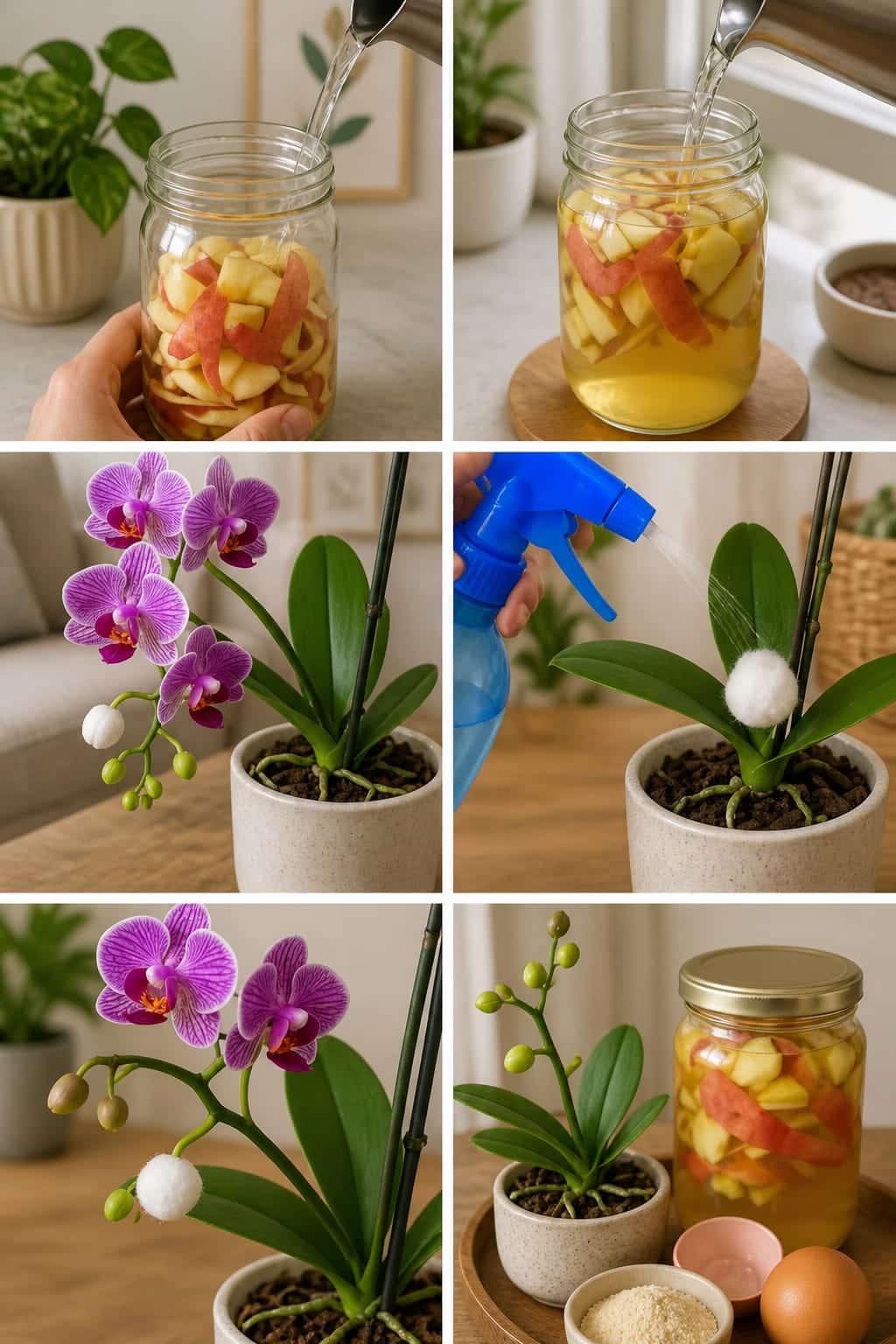
The image shows a homemade orchid care method made with chopped apple peels soaked in water, then used around a blooming orchid. It also shows a cotton ball being placed near the orchid and misted, suggesting a gentle humidity and aroma-support method. The final panel shows the apple peel infusion beside an orchid, along with ingredients such as egg and powder, suggesting a natural indoor plant care routine focused on flowering support.
This trick is best explained as a diluted apple peel water orchid tonic. Apple peel water is a mild homemade plant infusion made by soaking clean apple peels in water, then straining and diluting the liquid before applying it carefully to the orchid potting mix. The goal is not to force flowers instantly. The goal is to provide a gentle organic root-zone refresh while supporting a healthier orchid care routine.
However, orchids are sensitive plants. They do not grow like ordinary houseplants in dense soil. Their roots need airflow, drainage, and clean moisture. That means apple peel water must be used carefully. It should be fresh, strained, diluted, and applied only occasionally. Never pour fermented, sticky, sugary, or thick fruit water into an orchid pot.
This guide explains how to make apple peel water safely, how to use it on orchids, when to avoid it, how the cotton ball method works, what mistakes to avoid, and how to combine this natural trick with proper orchid care for better roots, stronger leaves, and improved blooming potential.
What Plant Is in the Image?
The plant in the image appears to be a Phalaenopsis orchid, also called a moth orchid. This is the most common orchid grown indoors because it adapts well to home conditions and produces long-lasting flowers.
Phalaenopsis orchids usually have broad green leaves, thick aerial roots, and tall flower spikes. Their flowers can be white, purple, pink, yellow, striped, spotted, or mixed-color. The orchid in the image has beautiful purple-pink blooms and healthy green leaves, which means it is already in a strong blooming stage.
Because this orchid is blooming, it should not receive strong fertilizer or heavy homemade treatments. Blooming orchids prefer stability. Any natural plant tonic should be gentle and diluted.
What Is the Apple Peel Orchid Trick?
The apple peel orchid trick is a homemade plant care method where clean apple peels are soaked in water to create a mild fruit infusion. This liquid is then strained, diluted, and used sparingly as a root-zone rinse for orchids.
Apple peels contain small amounts of natural sugars, organic acids, and trace nutrients. When used very weakly, apple peel water may lightly support microbial activity in the potting mix and refresh the root zone. It is not a complete fertilizer, but it can be used as an occasional natural orchid tonic.
The trick may support:
- Healthier root-zone conditions
- Gentle organic soil activity
- Cleaner plant maintenance
- Better hydration routine
- Leaf freshness
- Bloom support when overall care is correct
- Reduced waste from fruit peels
But this trick must be used carefully. Too much fruit water can attract fungus gnats, create sour smells, encourage mold, and clog orchid bark.
Why Apple Peels Are Used for Orchids
Apple peels are often used in homemade garden tonics because they are easy to find and contain gentle organic compounds. Gardeners like them because they are mild compared with stronger ingredients such as garlic, onion, coffee, or concentrated fertilizer.
In a very diluted form, apple peel water may help refresh the growing medium and support beneficial microbes. For orchids, this can be useful only when the potting mix is airy and healthy.
Apple peel water should never be used as a thick, fermented liquid. Orchids need oxygen around their roots. Anything sticky or sugary can become a problem in a small indoor pot.
Important Warning: Do Not Use Sweet or Fermented Apple Water
This is the most important rule. Apple peel water must be fresh and weak. If it smells sour, fizzy, alcoholic, or rotten, do not use it. Fermented fruit water may contain active microbes and acids that can stress orchid roots.
Do not use:
- Fermented apple peel water
- Apple juice
- Sweetened apple drink
- Apple cider vinegar
- Apple syrup
- Cooked apple water with sugar
- Rotten fruit water
- Fruit scraps left soaking for days
The safe version is a short fresh soak, followed by straining and dilution.
How to Make Safe Apple Peel Water for Orchids
This recipe is designed for indoor orchids and is much gentler than a strong fruit ferment.
Ingredients
- Peels from 1 clean apple
- 1 liter clean water
- Glass jar
- Fine strainer
- Clean watering cup
Step-by-Step Method
- Wash the apple very well to remove dust, wax, or residue.
- Peel the apple and use only the clean peels.
- Place the peels in a clean glass jar.
- Add 1 liter of room-temperature water.
- Let the peels soak for 6 to 12 hours only.
- Strain the liquid completely.
- Discard the peels.
- Dilute the strained liquid before using on orchids.
Do not leave the apple peels soaking for several days. A short infusion is safer for indoor plant care.
The Correct Dilution for Orchids
After straining the apple peel water, dilute it before applying it to the orchid.
Use this safe ratio:
1 part apple peel water + 4 parts clean water
For example:
- ¼ cup apple peel water
- 1 cup clean water
If your orchid is small, growing in moss, recently stressed, or not actively growing, dilute even more:
1 part apple peel water + 6 parts clean water
The final liquid should look almost like plain water with only a very light tint.
How to Apply Apple Peel Water to Orchids
Apply the diluted apple peel water only through the potting mix. Keep it away from the leaves, crown, flowers, and buds. Orchids are vulnerable to crown rot if liquid sits in the center of the plant.
Application Steps
- Make sure the orchid is in a pot with drainage holes.
- Check that the roots are healthy.
- Apply only when the orchid actually needs watering.
- Pour the diluted liquid slowly through the bark mix.
- Avoid the crown and leaves.
- Let the pot drain completely.
- Empty the saucer or decorative pot.
- Return the orchid to bright indirect light.
This treatment replaces one normal watering. Do not water again immediately afterward.
How Often Should You Use Apple Peel Water?
Apple peel water should be used occasionally, not weekly. For orchids, once every six to eight weeks during active growth is enough.
A safe schedule:
- Spring: one weak application if roots are healthy
- Summer: one weak application during active growth
- Fall: use rarely, especially if buds are forming
- Winter: avoid or use only if the orchid is actively growing
- During heavy bloom: avoid strong treatments
If your orchid is already blooming beautifully, it may be better to wait until the flowers fade before using any homemade tonic.
What Is the Cotton Ball Method in the Image?
The image shows a cotton ball placed near the orchid and misted with a spray bottle. This may represent a gentle humidity support method or a way to keep the apple peel infusion near the plant without pouring too much into the pot.
For orchids, humidity is important. Dry indoor air can cause buds to dry, flowers to fade faster, and leaves to lose firmness. However, misting the orchid directly can sometimes leave water in the crown or on flowers. The cotton ball method can provide a small local moisture source without soaking the plant.
How to Use the Cotton Ball Method Safely
This method should be simple and clean.
Steps
- Use a clean cotton ball.
- Moisten it with plain water or very diluted apple peel water.
- Place it near the pot, not inside the crown.
- Keep it away from direct contact with flowers.
- Remove it after a few hours.
- Do not leave wet cotton sitting for days.
Do not leave a wet cotton ball on the orchid leaves or in the crown. It can cause rot or mold if forgotten.
Should You Spray Apple Peel Water on Orchid Leaves?
No. Do not spray apple peel water on orchid leaves, buds, or flowers. Fruit-based water can leave residue and may attract pests. If you want to clean orchid leaves, use plain water on a soft cloth.
If there are mineral spots on the leaves, a very weak lemon-water wipe can be used occasionally, but apple peel water is better kept for the potting mix only.
Can Apple Peel Water Make Orchids Bloom?
Apple peel water may support general plant health, but it does not directly force orchids to bloom. Orchids bloom when the full care routine is correct.
Phalaenopsis orchids usually need:
- Bright indirect light
- Healthy roots
- Proper watering
- Fresh orchid bark
- Good drainage
- Weak balanced orchid fertilizer
- A slight nighttime temperature drop
- Time to rest between blooming cycles
Apple peel water can be a small support step, but healthy roots and proper light are far more important for reblooming.
Why Orchids Stop Blooming
Many orchids stop blooming after they finish their store-bought flower display. This is normal. The plant needs a rest period to grow roots and leaves before it can bloom again.
Common reasons orchids do not rebloom include:
- Too little light
- Weak or rotten roots
- Old decomposed bark
- Overwatering
- No nighttime temperature drop
- Not enough recovery time
- Too much fertilizer
- Stress from repotting or moving
Before using any homemade orchid tonic, check the basics. If the orchid needs more light or fresh bark, apple peel water will not solve the issue alone.
Continue to Page 2
Continue to page 2 for more details about this article and the key points many readers miss on the first page.