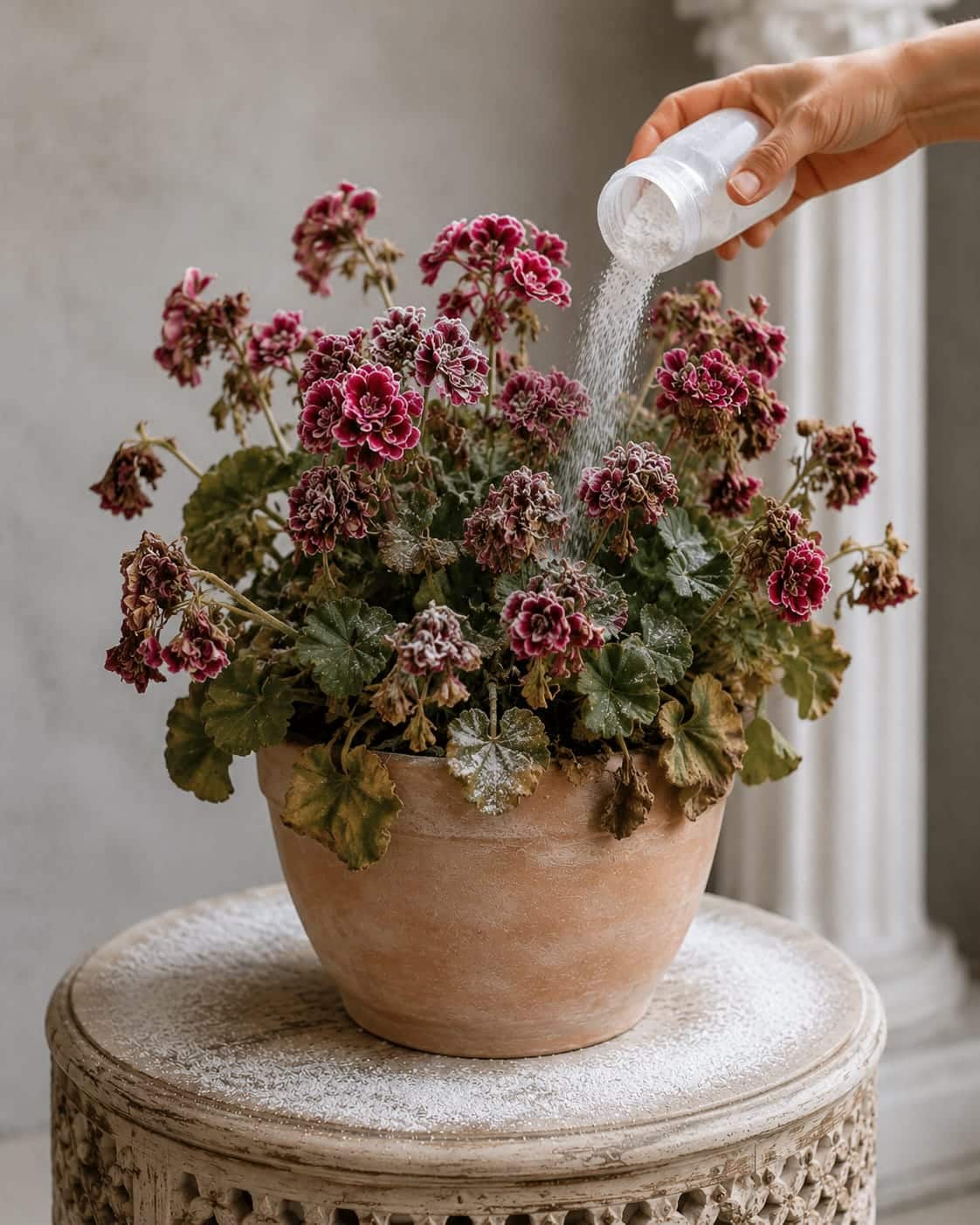
Geraniums are usually the kind of plant that makes a home feel alive. They sit proudly on balconies, porches, patios, windowsills, and garden tables with their rounded leaves and bright clusters of flowers. When they are healthy, they bloom generously and seem almost effortless. Their flowers can be red, pink, salmon, white, purple, burgundy, or beautifully edged like the pink-and-white blooms in the image. A full geranium has that classic cottage-garden charm that makes even a simple clay pot look romantic.
But when a geranium becomes tired, the change can be dramatic. The leaves begin to brown. The flower heads droop. The stems look dry. The plant may still have blooms, but they look dusty, faded, and exhausted. The soil may smell stale. The pot may develop a white mineral crust. The lower leaves may yellow and crisp around the edges. Instead of looking fresh and abundant, the plant starts to look like it is slowly giving up.
In the image, a hand is sprinkling a white powder over a struggling potted geranium. The plant still has deep pink blooms, but many flowers are fading, and several leaves are browned or dry. This kind of white-powder trick is often shown as a simple household remedy. Depending on the context, the powder may be baking soda, Epsom salt, powdered fertilizer, crushed eggshell, or another kitchen ingredient. For a weak geranium with tired flowers and browned leaves, one of the safest interpretations is baking soda used very lightly around the potting surface — not as a fertilizer, but as a mild soil-surface freshener and hygiene trick.
However, this is where smart gardeners must be careful. Baking soda is not plant food. It does not make geraniums bloom overnight. It does not repair dead leaves. It does not replace fertilizer, sunlight, pruning, drainage, or fresh soil. If used too heavily, it can raise soil alkalinity, create sodium buildup, damage roots, and stress the plant. The correct version of this trick is not to dump powder all over the flowers and leaves. The correct version is to use a tiny amount only on the soil surface when needed, then follow with proper geranium recovery care.
This guide explains how to use the trick safely, what it can and cannot do, when to avoid it, and how to bring a tired geranium back with a full recovery routine.
What Plant Is Shown in the Image?
The plant appears to be a geranium, more accurately a pelargonium, which is commonly sold and grown as a geranium. It has rounded, scalloped leaves and clustered flowers, which are typical of many zonal geraniums. The blooms in the image are pink with pale edging, giving them a decorative, old-fashioned look.
The plant is not dead, but it is clearly stressed. Several flower clusters are spent. Many leaves are dull, browned, or crispy. The soil surface and pot area show signs of dryness and possible residue. This is the kind of plant that does not need one dramatic “miracle” ingredient. It needs a careful cleanup, a watering reset, better airflow, possible repotting, and only a very gentle household treatment if appropriate.
What Is the White Powder Trick?
The white powder in the image could represent several common garden tricks, but for tired potted geraniums, many gardeners use a tiny amount of baking soda as a surface freshener. Baking soda, or sodium bicarbonate, is often used around the home to reduce odors and help clean surfaces. In gardening, it is sometimes used in very diluted sprays or tiny surface applications, but it must be handled carefully because it contains sodium and can affect soil balance.
For geraniums, the safest use is not as a regular fertilizer. It is a very occasional soil-surface refresh method used when the top of the soil smells stale, looks slightly musty, or has mild surface issues. Even then, it should be used in tiny amounts.
The important thing to remember is this: baking soda is not a bloom booster. It is not the same as fertilizer. It does not provide nitrogen, phosphorus, potassium, magnesium, iron, or the balanced nutrients geraniums need for real growth. It should never become part of a frequent feeding schedule.
What Baking Soda May Help With
When used carefully and rarely, baking soda may help freshen the surface of a pot that smells musty or has a slightly sour top layer. It may also help discourage some surface-level fungal growth when the real problem is corrected at the same time, such as too much moisture or poor airflow.
Used cautiously, baking soda may help with:
- Reducing stale odors from the soil surface
- Freshening the top layer of old potting mix
- Discouraging mild surface mustiness
- Helping clean up a neglected pot temporarily
- Supporting a cleaner recovery routine when combined with pruning and better care
But these are surface-level benefits. They do not mean baking soda is curing the plant from the inside. The plant’s real recovery depends on healthy roots, enough sunlight, correct watering, good drainage, and balanced nutrition.
What Baking Soda Cannot Do
Baking soda is often exaggerated in online gardening tricks. It is important to be realistic, especially with a stressed geranium.
Baking soda cannot:
- Revive dead leaves
- Bring back dried flower heads
- Replace fertilizer
- Fix root rot
- Correct poor drainage
- Make a geranium bloom overnight
- Repair sunburned leaves
- Solve severe fungal disease
- Remove pests hiding under leaves
- Improve a plant kept in low light
If a geranium is weak because the roots are rotting, baking soda on the soil surface will not save it. If the leaves are brown because the plant was underwatered for weeks, baking soda will not turn them green again. If the flowers are spent, they must be removed. A tired geranium needs a full care reset.
The Biggest Warning About Baking Soda
Baking soda contains sodium. Plants do not like sodium buildup in their root zone. Too much sodium can interfere with water uptake and nutrient balance. In a garden bed with lots of soil, a tiny amount may disperse more easily. In a container, everything is concentrated. That is why potted plants are more vulnerable to overuse.
Too much baking soda can cause:
- Leaf browning
- Root stress
- Soil imbalance
- Salt buildup
- Reduced nutrient absorption
- Worse wilting
- Dry-looking edges on leaves
- Plant decline over time
This is why you should never pour a heavy layer of baking soda into a geranium pot. You should never use it weekly. You should never apply it as if it were plant food. A tiny amount, used rarely, is the only safe approach.
The Safest Way to Use Baking Soda Around a Tired Geranium
The safest version of the trick is a very light soil-surface sprinkle followed by gentle watering. The goal is not to coat the whole plant. The goal is to freshen the top layer while you correct the actual care problems.
What You Need
- Baking soda
- A small measuring spoon
- Room-temperature water
- Clean scissors or pruners
- A small hand fork or chopstick
Safe Amount
For a medium pot, use only 1/4 teaspoon of baking soda. For a large patio pot, use no more than 1/2 teaspoon. For a small pot, use just a pinch.
This is much less than what most people imagine. With baking soda, less is safer.
Step-by-Step Method
Step 1: Remove Dead Flowers First
Before using any powder, clean the plant. The geranium in the image has many spent flower heads. These should be removed. Deadheading is one of the most effective ways to help geraniums redirect energy.
Follow each faded bloom cluster down to where the flower stem meets the main plant. Snap it off gently or cut it with clean scissors. Do not only remove the petals. Remove the entire spent flower stem.
This immediately improves airflow and makes the plant look healthier.
Step 2: Remove the Worst Brown Leaves
Brown, crispy leaves will not turn green again. Remove the worst ones. If a leaf is mostly brown, yellow, or dry, pinch it off at the base. If a leaf is only slightly damaged but still mostly green, leave it for now so the plant can keep photosynthesizing.
Do not strip the plant bare. A stressed geranium still needs leaves to recover.
Step 3: Check the Soil Moisture
Push your finger into the top inch of soil. If the soil is wet or soggy, do not water yet and do not apply baking soda. If the soil smells sour or feels heavy, the plant may need repotting instead of a powder trick.
If the soil is dry on top and only slightly moist below, you can continue.
Step 4: Loosen the Top Layer
Use a small fork, chopstick, or your fingers to gently loosen the top half inch of soil. Do not dig deeply into the roots. The goal is to break crusting and allow better air movement.
If the top layer is full of dead petals, old leaves, mold, or mineral crust, remove that debris before applying anything.
Step 5: Sprinkle a Tiny Amount
Sprinkle only a tiny amount of baking soda on the soil surface. Keep it away from the main stem. Do not sprinkle it directly on flowers or leaves. The image looks dramatic, but in real plant care, the powder belongs on the soil, not on the plant.
Use:
- Small pot: one tiny pinch
- Medium pot: 1/4 teaspoon
- Large patio pot: up to 1/2 teaspoon
Do not exceed this amount.
Step 6: Water Lightly
Water gently around the soil surface to help the baking soda dissolve and spread lightly. Do not drench the plant unless the soil is dry and the pot drains well. Let any excess water drain fully.
Never let the pot sit in standing water.
Step 7: Wait and Watch
Do not repeat the treatment for at least 6 to 8 weeks. Watch the plant’s new growth. If the new leaves look healthier after cleanup, improved watering, and better light, the plant is recovering.
If the plant worsens, stop using baking soda and check the roots.
A Safer Alternative: Baking Soda Water for Surface Freshening
If you prefer not to sprinkle dry powder, you can make a very weak baking soda water solution.
Ingredients
- 1 quart room-temperature water
- 1/8 teaspoon baking soda
How to Use It
- Mix until fully dissolved.
- Pour a small amount around the soil edge.
- Keep it off leaves and flowers.
- Let the pot drain completely.
- Use only once every 6 to 8 weeks if needed.
This is not a fertilizer. It is only a mild surface refresh. If your soil is healthy, you may not need it at all.
When You Should Not Use Baking Soda
There are many times when baking soda is the wrong choice. Do not use it if the plant is already suffering from root stress or salt buildup.
Avoid baking soda if:
- The soil has a white mineral crust
- The potting mix smells sour
- The plant is wilting in wet soil
- The pot has no drainage holes
- The geranium was recently fertilized heavily
- The leaves have severe brown edges
- The plant is newly repotted
- The soil is already alkaline
- The plant has root rot
- You have used baking soda recently
In these cases, baking soda may make the problem worse.
What the Geranium Actually Needs to Recover
The geranium in the image does not only need a powder. It needs a recovery routine. The plant is showing signs of exhaustion, old blooms, and leaf stress. A full reset will help much more than any single ingredient.
A tired geranium needs:
- Deadheading
- Removal of dead leaves
- Correct watering
- Drainage check
- Bright light
- Fresh air
- Balanced fertilizer
- Possible repotting
- Pest inspection
Why Deadheading Is More Important Than the Powder
Geraniums bloom in clusters. Once a cluster fades, the plant may begin putting energy into seed formation. Removing old flower heads tells the plant to keep producing new blooms instead.
Deadheading can make a huge difference. It keeps the plant tidy, reduces disease risk, improves airflow, and encourages new buds.
To deadhead properly:
- Find a faded flower cluster.
- Follow the stem down to its base.
- Snap or cut the flower stem off.
- Remove fallen petals from the soil.
- Repeat every few days during bloom season.
This simple habit often helps geraniums more than any kitchen remedy.
Why the Leaves Are Turning Brown
The browned leaves in the image may have several possible causes. Brown leaves are a symptom, not a diagnosis.
Common causes include:
- Underwatering
- Overwatering
- Hot sun combined with dry roots
- Fertilizer burn
- Old soil
- Poor drainage
- Cold damage
- Pests
- Fungal issues
- Natural aging of older leaves
Baking soda will not fix all of these. If the leaves are brown because of dry soil, the plant needs better watering. If they are brown because of fertilizer burn, the soil needs flushing. If they are brown because of root rot, the plant needs repotting.
Continue to Page 2
Continue to page 2 for more details about this article and the key points many readers miss on the first page.