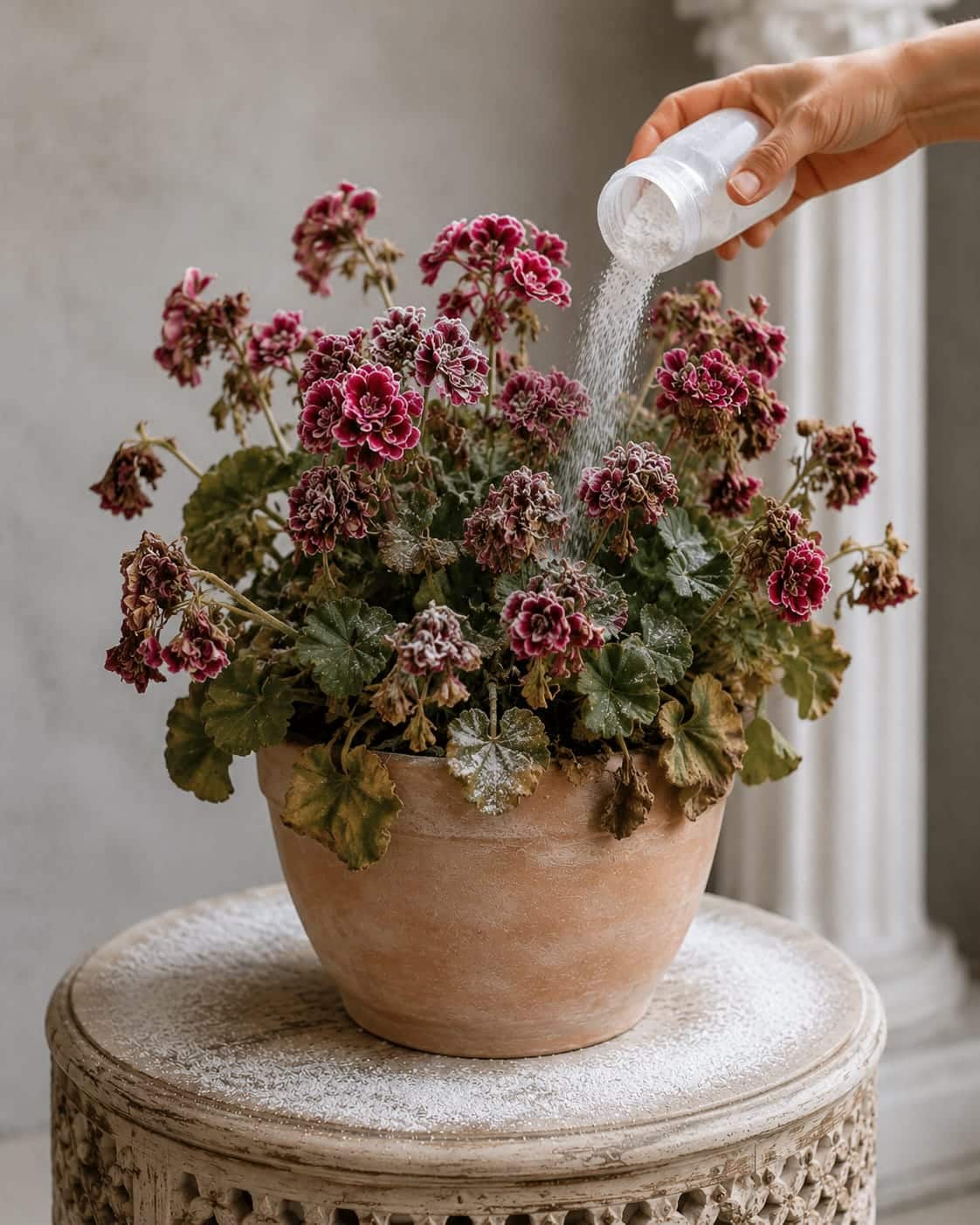
How to Water a Struggling Geranium
Geraniums like a deep drink followed by a drying period. They do not like constantly wet soil. They also do not like being left bone-dry for too long.
Water when the top inch of soil feels dry. Pour water slowly until it begins to drain from the bottom. Then stop. Empty the saucer. Let the pot dry slightly before watering again.
Avoid sprinkling a little water every day. Shallow watering creates weak roots and uneven moisture. A deep, proper watering is better.
How to Know If You Are Overwatering
Overwatering is one of the most common geranium problems. A plant can wilt even when the soil is wet because damaged roots cannot absorb water properly.
Signs of overwatering include:
- Yellow leaves
- Soft stems
- Wet soil for several days
- Sour smell
- Wilting despite moist soil
- Brown mushy roots
- Fungus gnats
If you see these signs, do not add baking soda. Let the soil dry, improve drainage, and check the roots.
How to Know If You Are Underwatering
Underwatered geraniums often have crispy leaves, dry soil, and drooping flower stems.
Signs of underwatering include:
- Dry, pulling soil
- Lightweight pot
- Crispy leaf edges
- Drooping flowers
- Leaves that feel papery
- Rapid wilting in warm weather
If underwatering is the issue, the plant needs a thorough drink, not baking soda.
How to Check the Roots
If a geranium keeps declining, check the roots. Slide the plant gently out of the pot. Healthy roots should be firm and light-colored. Rotten roots are brown, black, mushy, or smelly.
If roots are healthy, focus on pruning, light, and watering. If roots are rotten, remove damaged roots and repot into fresh soil.
When Repotting Is Better Than Baking Soda
Sometimes the best cure is fresh potting mix. If the soil is old, compacted, salty, sour, or full of dead debris, a tiny sprinkle will not solve the problem.
Repot if:
- The soil smells bad
- Water drains slowly
- The plant has been in the same pot for years
- The potting mix is compacted
- The roots are crowded
- There is heavy white crust on the soil
- The plant keeps declining despite good care
Fresh soil gives roots a cleaner, airier environment.
How to Repot a Weak Geranium
- Remove dead flowers and leaves.
- Slide the plant out of the pot.
- Shake away loose old soil.
- Trim dead or mushy roots.
- Choose a pot with drainage holes.
- Add fresh, well-draining potting mix.
- Place the plant at the same depth.
- Fill gently around the roots.
- Water lightly.
- Keep in bright, gentle light while it recovers.
After repotting, wait a few weeks before using fertilizers or household treatments.
Best Soil for Geraniums
Geraniums need a light, well-draining potting mix. Heavy garden soil is not ideal for pots. It compacts too much and can suffocate roots.
A good geranium mix should be:
- Loose
- Well-draining
- Moderately fertile
- Able to dry slightly between waterings
- Light enough for root oxygen
If your mix is dense, add perlite. If it is old and broken down, replace it.
Best Light for Geranium Recovery
Geraniums need bright light to bloom well. Most outdoor geraniums like several hours of sun. Indoors, they need the brightest window available. A geranium in low light may survive, but it will become weak and bloom poorly.
If the plant has been stressed, do not move it suddenly into harsh afternoon sun. Increase light gradually. Morning sun is often ideal. In very hot climates, afternoon shade may protect the leaves from scorching.
How to Feed Geraniums Properly
Because baking soda is not fertilizer, your geranium still needs real nutrition. Use a balanced liquid fertilizer or a flowering plant fertilizer during active growth.
A simple feeding routine:
- Feed every 2 to 4 weeks during active growth
- Use half strength if the plant is weak
- Do not fertilize bone-dry soil
- Do not overfeed
- Flush the pot occasionally with plain water
If the plant is very stressed, wait until you see new growth before feeding strongly.
What About Epsom Salt Instead?
If the white powder is meant to be Epsom salt, the method is different. Epsom salt is magnesium sulfate, not baking soda. It can help if the plant has a magnesium deficiency, but it is still not a complete fertilizer.
A safe Epsom salt method for geraniums is:
- 1 tablespoon Epsom salt
- 1 gallon water
Dissolve fully and water the soil once every 4 to 6 weeks during active growth. Do not sprinkle heavily on flowers or leaves.
Do not use baking soda and Epsom salt together unless you know exactly what problem you are treating. Too many household treatments can stress the plant.
What About Powdered Fertilizer?
If the white powder is a powdered fertilizer, follow the label exactly. Do not guess. Fertilizer burn can cause brown leaves and root damage. Geraniums respond better to moderate, consistent feeding than to heavy doses.
Never pour fertilizer powder directly onto leaves and blooms. Apply it to the soil according to instructions and water it in properly.
Common Pests on Geraniums
A tired geranium may also be dealing with pests. Before applying any soil trick, inspect the plant carefully.
Look for:
- Aphids on new growth
- Spider mites under leaves
- Whiteflies flying when disturbed
- Caterpillar damage
- Mealybugs in leaf joints
- Sticky residue on leaves
If pests are present, treat them directly. Baking soda on the soil will not remove insects hiding on the plant.
How to Improve Airflow
Dense, tired geraniums can trap humidity and dead material inside the plant. This encourages fungal problems. After removing spent flowers and dead leaves, the plant will have better airflow.
Place the pot where air can move gently around it. Avoid crowding it tightly between other plants. Do not keep it in a damp, stagnant corner.
Should You Spray Geranium Leaves With Baking Soda?
Some gardeners use baking soda sprays for leaf issues, but this must be done carefully. Too strong a mixture can damage leaves, especially in sun. For a weak geranium, avoid spraying unless you are treating a specific fungal issue and know the correct dilution.
For most home gardeners, it is safer to improve airflow, remove diseased leaves, water at the soil level, and avoid wetting foliage.
How to Prevent Future Geranium Decline
Once your geranium recovers, prevention is easier than rescue.
- Deadhead weekly
- Remove yellow leaves early
- Water deeply but not constantly
- Use a pot with drainage
- Feed moderately during growth
- Keep the plant in bright light
- Refresh old soil
- Watch for pests
- Avoid heavy household treatments
Geraniums are forgiving, but they respond best to steady care.
Simple Weekly Geranium Care Routine
Every Few Days
- Check soil moisture
- Remove faded flowers
- Look for yellow or brown leaves
- Inspect for pests
Once a Week
- Turn the pot for even growth
- Clean up fallen petals
- Check drainage
- Loosen the top soil if crusty
Every 2 to 4 Weeks
- Feed lightly with balanced fertilizer
- Prune leggy stems
- Check whether the plant needs more sun
Only Occasionally
- Use a tiny baking soda surface refresh only if needed
- Use Epsom salt only if magnesium support is needed
- Flush the pot with plain water if mineral buildup appears
Quick Recipe Card: Baking Soda Soil Freshener for Geraniums
Use only for mild surface freshness, not as fertilizer.
Dry Method
- Small pot: one tiny pinch
- Medium pot: 1/4 teaspoon
- Large pot: 1/2 teaspoon maximum
Sprinkle lightly on the soil surface only. Keep away from stems, leaves, and flowers. Water gently afterward. Use no more than once every 6 to 8 weeks.
Diluted Method
- 1 quart water
- 1/8 teaspoon baking soda
Dissolve completely. Pour a small amount around the soil edge. Drain fully. Use rarely.
Short Caption for This Trick
For a tired geranium with stale soil, remove dead flowers and brown leaves first, then sprinkle only a tiny pinch of baking soda on the soil surface — not on the flowers or leaves. Use about 1/4 teaspoon for a medium pot, water it in gently, and do not repeat for 6 to 8 weeks. Baking soda is not fertilizer and can harm roots if overused, so rely mostly on bright light, proper watering, drainage, deadheading, and balanced feeding to bring the plant back.
Frequently Asked Questions
Can I sprinkle baking soda on geraniums?
You can use a tiny amount on the soil surface occasionally, but do not sprinkle it on the flowers or leaves. Use it rarely and only in very small amounts.
Is baking soda a fertilizer for geraniums?
No. Baking soda is not fertilizer. It does not provide the balanced nutrients geraniums need for growth and blooming.
How much baking soda should I use?
Use only a pinch for a small pot, 1/4 teaspoon for a medium pot, and no more than 1/2 teaspoon for a large patio pot.
How often can I use baking soda?
No more than once every 6 to 8 weeks, and only if needed. Frequent use can cause sodium buildup and soil imbalance.
Will baking soda make geraniums bloom?
No. Blooming depends on sunlight, pruning, deadheading, watering, and balanced fertilizer. Baking soda does not directly produce flowers.
Why are my geranium leaves brown?
Brown leaves can be caused by underwatering, overwatering, heat stress, fertilizer burn, old soil, poor drainage, pests, or natural aging.
Should I remove dead geranium flowers?
Yes. Deadheading spent flower clusters is one of the best ways to encourage more blooms.
Can baking soda hurt geraniums?
Yes. Too much can create sodium buildup, raise soil alkalinity, and stress roots. Use very little, or skip it entirely if the plant is already struggling with root problems.
What is better than baking soda for weak geraniums?
Fresh soil, correct watering, bright light, good drainage, deadheading, pest control, and balanced fertilizer are more important.
Should I repot a tired geranium?
Repot if the soil is compacted, sour, crusty, or staying wet too long. Repotting often helps more than household powders.
Final Thoughts
The image of white powder falling over a tired geranium is eye-catching because it suggests a fast, simple rescue. It makes the solution look easy: open a container, sprinkle the powder, and watch the plant come back. But real plant care is more delicate than that. A weak geranium does not recover because of one dramatic sprinkle. It recovers when the gardener corrects the conditions that made it weak in the first place.
Baking soda can be used as a tiny, occasional soil-surface freshener, but it must be respected. It is not fertilizer. It is not a bloom booster. It is not a cure for root rot or brown leaves. Too much can harm the plant, especially in a container where sodium and minerals build up quickly.
The safest way to use this trick is to clean the plant first. Remove dead flowers. Trim brown leaves. Check soil moisture. Make sure the pot drains. Loosen the top layer. Then, only if needed, apply a tiny pinch of baking soda to the soil surface and water it in gently. After that, leave the plant alone and focus on proper care.
Geraniums are resilient. Even a tired plant can push out new leaves and fresh flower buds when given the right conditions. Bright light, deep but controlled watering, fresh air, good soil, and regular deadheading are the real secrets. Household tricks can support the process only when they are gentle and occasional.
So if your geranium looks like the one in the image, do not panic and do not pour on a heavy dose of powder. Start with cleanup. Read the soil. Check the roots. Improve the light. Feed correctly. Use baking soda only as a tiny side step, not the main treatment. With patience and steady care, your geranium can move past its tired stage and return to the full, colorful, blooming plant that makes patios and windowsills feel warm and alive.