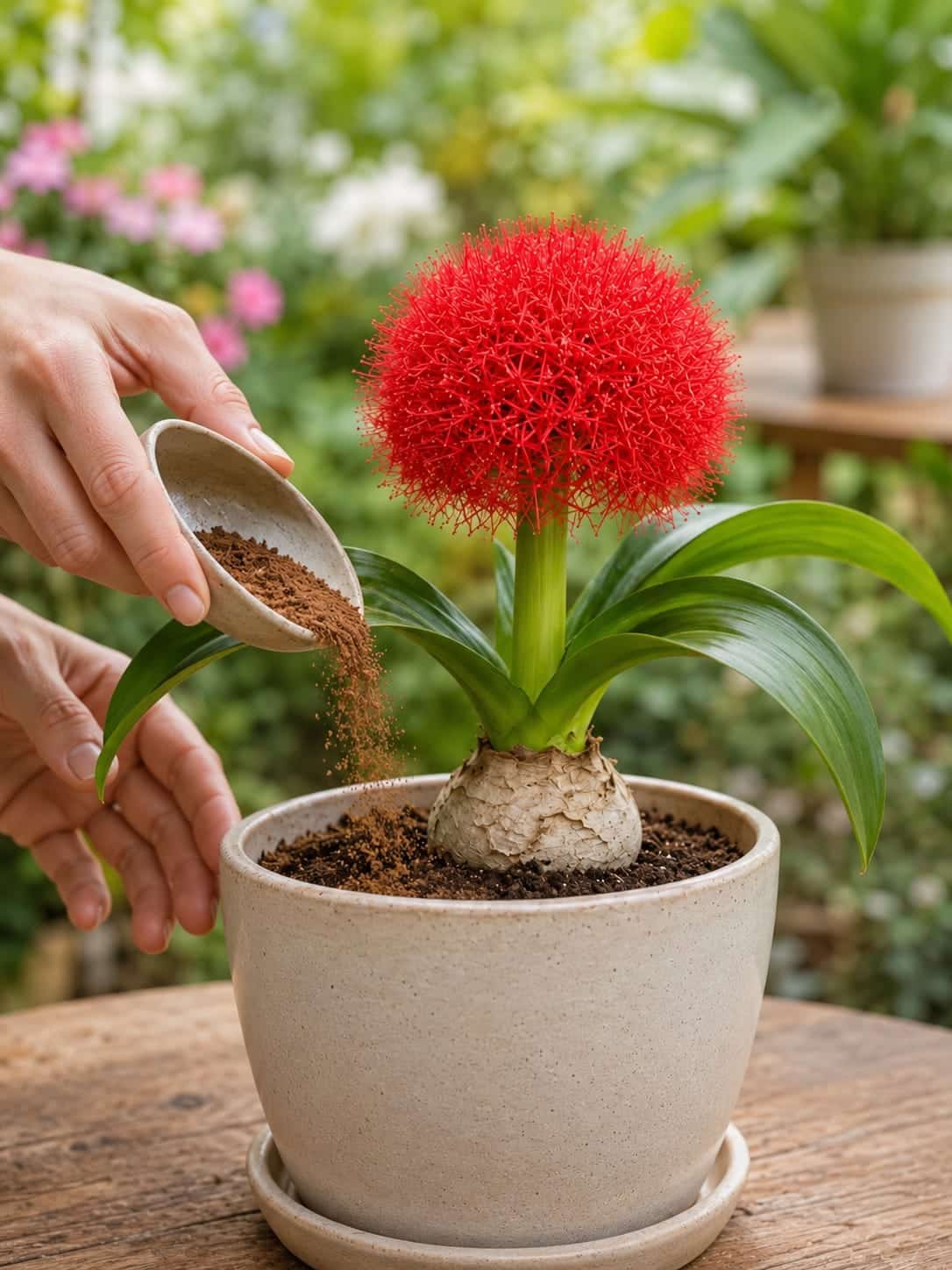
Some plants do not need hundreds of flowers to steal attention. They only need one unforgettable bloom. The plant in the image is a perfect example. With its thick green leaves, round bulb-like base, and dramatic red globe flower, this looks like a blood lily, also called Scadoxus multiflorus or sometimes African blood lily. It is one of those plants that looks almost unreal when it blooms. The flower head appears like a bright red firework, made from dozens of tiny star-like blooms gathered into one round ball.
Because blood lilies grow from bulbs, they need a different kind of care than ordinary leafy houseplants. Their roots and bulb base can be sensitive to excess moisture, heavy soil, and rot. When the soil stays wet too long, the bulb can soften. When organic debris sits around the crown, fungus can appear. When the potting mix becomes stale, the plant may slow down or decline after flowering.
In the image, a hand is sprinkling a brown powder around the soil surface. This powder looks like cinnamon, a popular natural plant-care ingredient. Gardeners often use cinnamon because it is dry, aromatic, and traditionally used as a mild surface-cleaning powder around cuttings, bulbs, and soil. It is not a fertilizer, and it will not magically force blooms, but it can be useful when applied correctly.
The smart way to use cinnamon around a blood lily is very simple: sprinkle a tiny amount on the soil surface only, keep it away from the bulb neck and leaves, and use it as part of a careful care routine. The goal is to keep the top layer cleaner and drier, not to feed the plant heavily.
What Is the Cinnamon Trick for Blood Lily?
The cinnamon trick means applying a very light dusting of ground cinnamon around the top of the potting mix. Gardeners use it around bulb plants because cinnamon may help keep the soil surface fresh and discourage mild surface fungal growth. It is especially popular after repotting, trimming damaged roots, or cleaning old potting mix away from a bulb.
However, cinnamon must be used with restraint. A thick layer can form a crust, repel water unevenly, or irritate tender plant tissue. Blood lilies do not want their bulb covered in powder. They want loose, airy soil, bright filtered light, careful watering, and a clean crown.
What Cinnamon Can Help With
- Keeping the soil surface drier and cleaner
- Reducing musty smells on the top layer of soil
- Discouraging mild surface mold
- Helping after a small cut, nick, or cleaned bulb area
- Supporting a cleaner recovery environment after repotting
Cinnamon is best used as a surface-care helper. It is not a complete treatment for serious disease. If the bulb is already soft, mushy, or rotting, cinnamon alone will not save it. The bulb must be removed, inspected, cleaned, and repotted properly.
What Cinnamon Cannot Do
- It cannot replace fertilizer.
- It cannot repair a rotten bulb.
- It cannot force a blood lily to bloom.
- It cannot fix soggy soil.
- It cannot save a plant in a pot without drainage.
- It cannot reverse dead leaves.
- It cannot correct low light.
Think of cinnamon as a small hygiene trick, not the main secret. The real secret is protecting the bulb from excess moisture.
How to Use Cinnamon Safely on Blood Lily
What You Need
- Plain ground cinnamon
- A small spoon or pinch bowl
- Clean fingers or a soft brush
- Well-draining potting mix
- A pot with drainage holes
Step 1: Check the Plant First
Before sprinkling anything, look at the blood lily carefully. The leaves should be firm and green. The bulb base should feel solid, not soft. The soil should not smell sour. If the bulb feels mushy or the pot smells rotten, do not use cinnamon as a quick cover-up. The plant needs repotting and root inspection.
Step 2: Remove Surface Debris
Clear away fallen leaves, dead flower bits, old mulch, and any soggy organic material from the soil surface. Bulb plants dislike damp debris sitting against the crown. A clean surface allows better airflow and reduces the chance of rot.
Step 3: Keep the Bulb Neck Exposed
Blood lilies should not have their bulb buried too deeply. The top of the bulb or neck should usually sit slightly above or near the soil surface, depending on the plant and potting setup. Do not pile soil, mulch, or cinnamon directly against the bulb neck.
Step 4: Sprinkle Only a Tiny Amount
Use only a light dusting. For a medium pot like the one in the image, about 1/8 teaspoon to 1/4 teaspoon is enough. Sprinkle it around the outer soil surface, not directly into the center of the plant.
The soil should look lightly dusted, not buried under a brown blanket.
Step 5: Do Not Water Immediately Unless the Soil Is Dry
If the soil is already moist, do not water after applying cinnamon. Let the surface stay dry. If the soil is dry and the plant needs water, water gently around the edge of the pot, not over the bulb crown.
Step 6: Repeat Rarely
Do not apply cinnamon every week. Use it only when needed, such as after cleaning the pot surface, after repotting, or when you notice mild surface mustiness. Once every 6 to 8 weeks is more than enough, and many plants will not need it that often.
Best Soil for Blood Lily
Blood lilies grow from bulbs, so drainage is extremely important. A heavy, soggy mix can cause bulb rot. The soil should hold a little moisture but still drain quickly.
A good mix can include:
- 2 parts high-quality potting mix
- 1 part perlite or pumice
- 1 part orchid bark or coarse material
This creates air pockets around the roots and helps prevent the bulb from sitting in wet soil for too long.
How to Water Blood Lily Correctly
Watering is the most important part of blood lily care. During active growth, water when the top layer begins to dry. The soil should be evenly moist but never soggy. During dormancy, reduce watering significantly because the bulb is resting.
A simple rule:
- Active growth: water when the top inch feels dry.
- Flowering: keep lightly and evenly moist.
- After flowering: continue normal care while leaves remain green.
- Dormancy: water very little, just enough to prevent the bulb from shriveling.
Always empty the saucer after watering. Standing water under the pot can rot the bulb from below.
Best Light for Blood Lily
Blood lilies enjoy bright filtered light. Indoors, place them near a bright window with indirect sun. Outdoors, they often do well in bright shade or morning sun with protection from harsh afternoon rays.
Too much hot sun can scorch the leaves. Too little light can weaken the plant and reduce blooming.
Continue to Page 2
Continue to page 2 for more details about this article and the key points many readers miss on the first page.