Orchids are some of the most elegant indoor plants you can grow. Their thick green leaves, sculptural roots, and graceful flower spikes make them feel refined even before they bloom. A healthy orchid looks calm, fresh, and expensive. It can make a windowsill, table, bathroom shelf, or bright kitchen corner feel instantly more polished.
But orchids can also confuse homeowners. Unlike ordinary houseplants, many orchids do not grow in regular soil. Their roots need air, drainage, and a loose bark-based medium. When orchid roots begin to look dull, brown, mushy, dusty, or crowded in old bark, the whole plant can slow down. Leaves may lose firmness. Flowering may become weaker. New roots may stop appearing. The plant may survive, but it stops looking fresh and decorative.
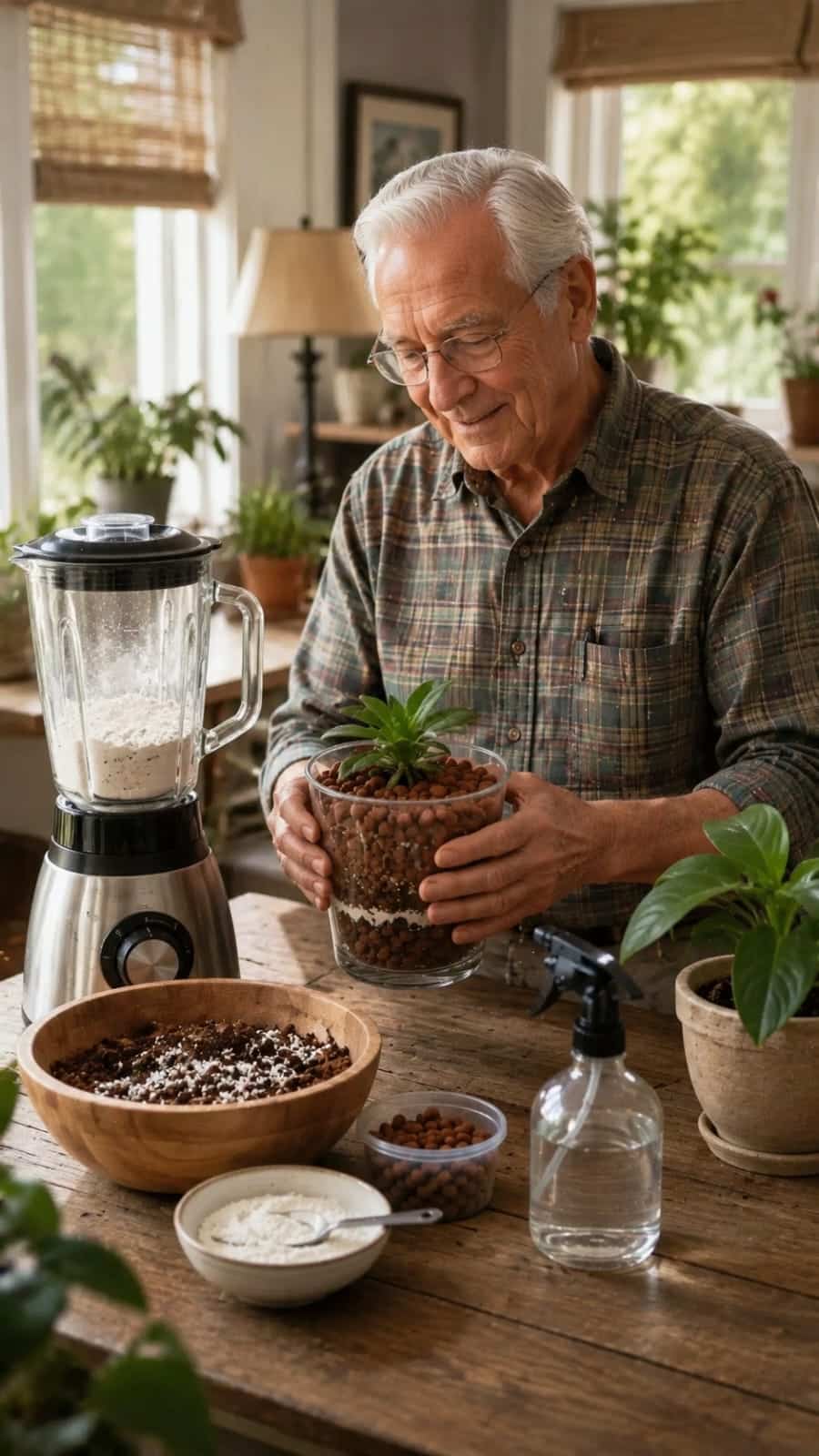
That is why many smart homeowners are interested in gentle natural support methods for orchids. In the image, we see a blender, eggshells, fine white powder, orchid bark, clay pebbles, a spray bottle, and orchids growing in clear containers. This suggests a homemade orchid-care method using finely powdered eggshells as a very mild mineral support, usually mixed lightly into the orchid medium or used sparingly around the root zone.
The idea sounds simple: save clean eggshells, dry them, grind them into a fine white powder, and use a small amount to support orchid roots. Eggshells are mostly calcium carbonate, and calcium is one of the minerals plants use for cell structure and growth. In theory, a tiny amount of fine eggshell powder can slowly contribute calcium as it breaks down over time. It may also help homeowners refresh old orchid media by encouraging a cleaner, drier, more mineral-balanced environment when used correctly.
However, orchids are sensitive plants. This is not a trick where you bury the orchid in powder or dump a spoonful directly onto wet roots. Too much powder can coat the bark, reduce airflow, create residue, alter the root environment, or make the pot look dusty and messy. The safe version is careful, light, and occasional. For orchids, the secret is not “more powder.” The secret is clean roots, airy bark, proper watering, good light, and only a tiny dusting of finely prepared eggshell powder if the plant is healthy.
This guide explains what the fine white powder is, how to make it, how to use it safely on orchids, when to avoid it, how it may support roots, and how to keep orchids cleaner, stronger, and more decorative indoors.
What Is the Fine White Powder in the Image?
The fine white powder in the image is best understood as eggshell powder. The surrounding details support this: there are broken eggshells on the table, a blender filled with a pale powder, and a small bowl of powder with a spoon. This is a common homemade plant-care idea. Eggshells are cleaned, dried, and ground into a fine powder so they can be used more evenly and break down more easily than large shell pieces.
Eggshell powder is mainly a slow-release calcium source. It does not act like an instant fertilizer. It does not provide strong nitrogen. It does not immediately force orchid roots to grow. It breaks down slowly, especially in indoor pots. That is why it should be treated as a mild mineral amendment, not a miracle plant food.
For orchids, this powder must be used differently than it might be used in garden soil. Garden soil contains microbes, moisture, and organic activity that can slowly process eggshells. Orchid bark is airy, chunky, and often dries between waterings. Eggshell powder may break down slowly in this environment, so only a small amount is needed.
Why Homeowners Use Eggshell Powder on Orchids
Many homeowners use eggshell powder because it feels natural, affordable, and easy to make from kitchen scraps. It also looks clean and simple. Instead of buying another bottle of fertilizer, they can turn something usually thrown away into a gentle plant-care ingredient.
For orchids, the possible benefits are modest but useful when the method is used correctly.
- It may provide a slow, gentle calcium source.
- It can help refresh old bark when used in tiny amounts.
- It may support stronger root and leaf tissue over time.
- It encourages a cleaner homemade plant-care routine.
- It can be mixed lightly into bark during repotting.
- It may help reduce reliance on strong fertilizers.
But the most important word is support. Eggshell powder supports good care. It does not replace good care. If an orchid is sitting in soggy bark, rotting roots, dark conditions, or a pot with poor drainage, eggshell powder will not save it. The plant needs root inspection, fresh bark, correct watering, and better light first.
Why Orchids Need a Different Approach
Many houseplants grow in potting soil. Orchids, especially common Phalaenopsis orchids, often grow in bark, sphagnum moss, LECA, or a chunky orchid mix. Their roots are thick and covered with a spongy outer layer called velamen. This outer layer absorbs moisture quickly but also needs airflow.
That means orchid roots can suffer when the potting medium becomes:
- Too compacted
- Too wet
- Too dusty
- Too old and broken down
- Too salty from fertilizer buildup
- Too coated with residue
Because of this, anything added to orchid roots must be used carefully. Fine powders can settle between bark pieces and reduce airflow if too much is used. Orchids do not want a dense, muddy root zone. They want an airy, clean, breathable environment.
The Smart Rule: Dust, Do Not Dump
If there is one rule to remember, it is this: dust, do not dump.
A tiny pinch of fine eggshell powder mixed through a large amount of orchid bark is very different from a thick white layer poured over the roots. Orchids need air. Their bark should remain open and chunky. A heavy layer of powder can clog the spaces between bark pieces.
Use eggshell powder like seasoning, not like soil. A little goes a long way.
How to Make Fine Eggshell Powder for Orchids
The image shows a blender, which is one of the easiest ways to make eggshell powder very fine. The finer the powder, the more evenly it can be used. Large eggshell chunks break down slowly and can look messy in orchid pots. Fine powder is easier to measure and mix.
Ingredients and Tools
- Clean eggshells from 4 to 6 eggs
- A pot of boiling water or hot water for cleaning
- A baking tray
- An oven, sunny windowsill, or dry warm place
- A blender, coffee grinder, or mortar and pestle
- A fine sieve
- A small clean jar for storage
Step 1: Rinse the Eggshells
After using the eggs, rinse the shells well. Remove any egg white or membrane if possible. This helps prevent odor and reduces the chance of attracting pests.
Step 2: Sanitize the Shells
Place the rinsed shells in hot water for a few minutes. Some homeowners boil them briefly. This helps clean the shells before drying. Clean shells are especially important for indoor plant use because indoor pots are more likely to attract gnats or smell if organic residue remains.
Step 3: Dry Completely
Spread the shells on a tray and let them dry completely. You can dry them in a low oven, near a sunny window, or in a warm airy spot. The shells must be fully dry before grinding. Damp shells will clump and may not grind well.
Step 4: Grind Into Powder
Place the dry shells into a blender or grinder. Blend until they become a fine powder. Let the dust settle before opening the blender lid so you do not inhale the powder.
Step 5: Sift the Powder
Use a fine sieve to remove larger pieces. Return large pieces to the blender and grind again. The goal is a soft, flour-like powder.
Step 6: Store Dry
Store the powder in a small clean jar with a lid. Keep it dry. Label it clearly so nobody mistakes it for food powder or another household ingredient.
How Much Eggshell Powder Should You Use on Orchids?
Use very little. Orchids are not garden beds. They do not need handfuls of amendment.
For a small orchid pot, use:
- 1/8 teaspoon eggshell powder mixed into the bark
For a medium orchid pot, use:
- 1/4 teaspoon eggshell powder mixed into the bark
For a large orchid pot, use:
- 1/2 teaspoon at most, mixed thoroughly into fresh bark
Do not apply large spoonfuls. Do not cover the roots in powder. Do not create a thick white layer on top of the pot. The goal is a trace amount, lightly distributed.
The Best Time to Use Eggshell Powder
The best time to use eggshell powder is during repotting or media refreshing. That way, you can mix a tiny amount evenly through the bark instead of letting it sit on top.
Good times to use it include:
- When repotting into fresh orchid bark
- When refreshing old bark that is still mostly healthy
- During spring or early summer active growth
- After removing dead roots and resetting a healthy orchid
Avoid using it when the plant is stressed, rotting, blooming heavily, or sitting in wet media.
How to Use Eggshell Powder During Orchid Repotting
Step 1: Remove the Orchid From Its Pot
Gently remove the orchid from its container. If it is in a clear pot, squeeze the sides slightly to loosen the roots. Do not yank the plant out, because healthy orchid roots can cling to the pot.
Step 2: Remove Old Broken-Down Medium
Shake away old bark or moss. If pieces are stuck to healthy roots, remove them carefully. Old bark that has become soft, sour, or compacted should be discarded.
Step 3: Inspect the Roots
Healthy orchid roots are usually firm. They may be green when wet and silvery when dry. Dead roots are brown, hollow, mushy, or papery. Trim dead roots with clean scissors.
Step 4: Prepare Fresh Orchid Mix
Use a chunky orchid mix. A simple blend can include bark, perlite, charcoal, and a small amount of sphagnum moss if your home is very dry. The medium should remain airy.
Step 5: Add a Tiny Amount of Eggshell Powder
Add only 1/8 to 1/4 teaspoon of eggshell powder to the fresh bark for a small to medium orchid. Mix it thoroughly so it lightly coats some bark pieces without forming clumps.
Step 6: Repot the Orchid
Place the orchid in the pot and arrange the roots gently. Add the bark mix around the roots. Tap the pot lightly to settle the bark, but do not pack it tightly.
Step 7: Wait Before Heavy Watering
If you trimmed roots, wait a day or two before watering heavily. Then water normally and let the pot drain completely.
Can You Sprinkle Eggshell Powder on Top of an Orchid Pot?
You can, but it is not the best method. If you sprinkle powder on the top, use only a tiny pinch and keep it away from the crown and exposed root tips. Then water carefully so it settles lightly into the bark.
However, top-sprinkling can look messy and may create white residue. Mixing it into the bark during repotting is cleaner and safer.
Can You Put Eggshell Powder Directly on Orchid Roots?
No. Do not coat orchid roots directly with eggshell powder. Orchid roots need to breathe. Powder stuck to wet roots can form a paste and interfere with airflow. If roots are damaged or freshly cut, powder may also irritate the tissue.
Keep the powder mixed into the medium, not pressed onto the roots.
Can Eggshell Powder Clean Orchid Roots?
Eggshell powder does not literally clean roots like soap. When people say it supports cleaner roots, they usually mean it may help create a fresher, more mineral-balanced environment when used with fresh bark and proper watering.
Cleaner orchid roots come mostly from:
- Removing dead roots
- Using fresh airy bark
- Avoiding soggy conditions
- Flushing fertilizer salts occasionally
- Keeping the crown dry
- Using clean tools
- Not letting old medium break down into sludge
Eggshell powder is only a small optional part of this routine.
Why Clear Pots Work Well With Orchids
The image shows orchids in clear containers. Clear pots are popular for orchids because they let you see the roots and moisture level. This helps prevent overwatering and makes it easier to identify root problems early.
Clear pots help you see:
- Green roots after watering
- Silvery roots when dry
- Condensation inside the pot
- Rotten roots
- Old compacted medium
- Root growth
For beginners, clear orchid pots can be extremely helpful. They take some of the guesswork out of watering.
Continue to Page 2
Continue to page 2 for more details about this article and the key points many readers miss on the first page.