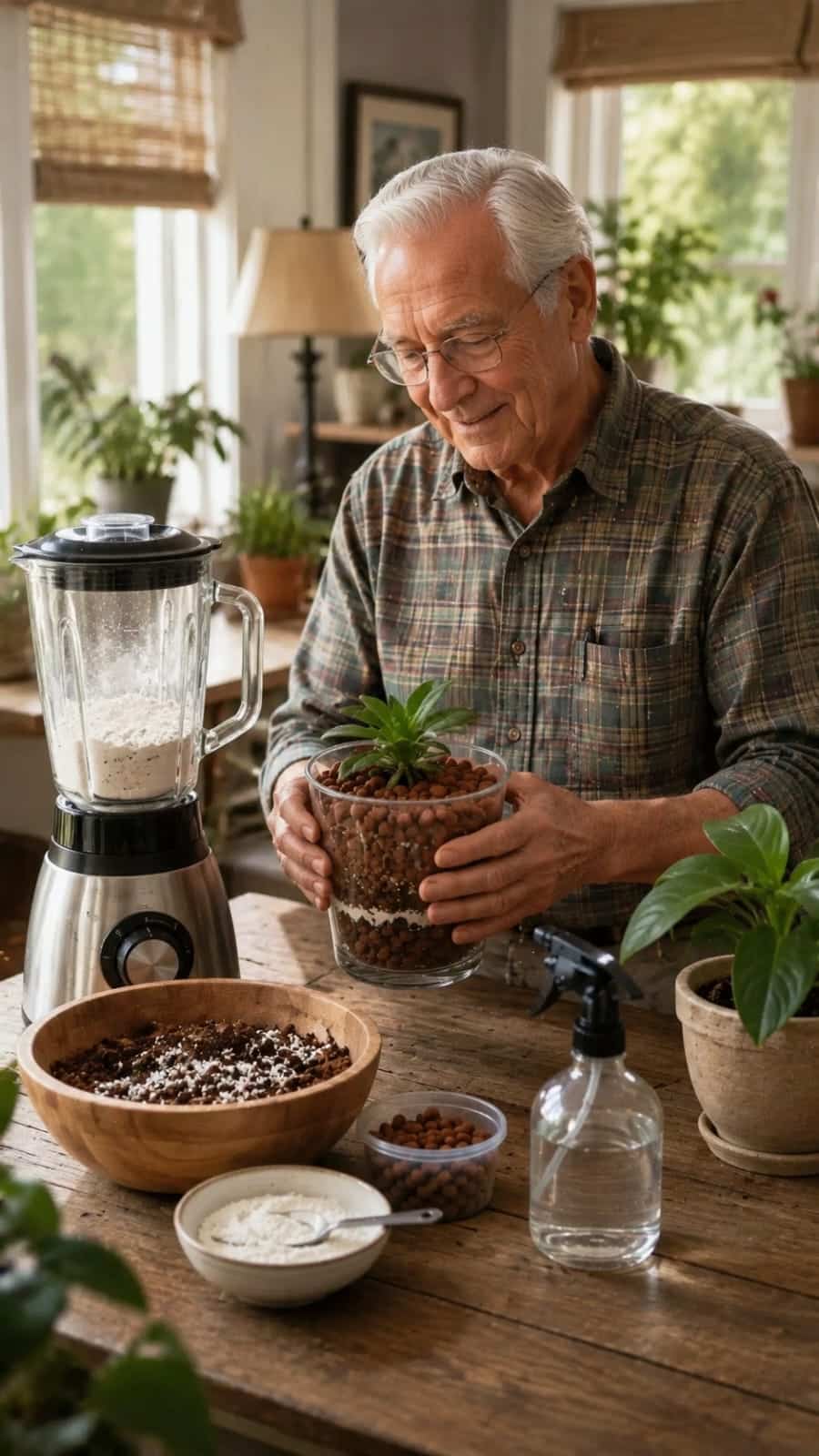
What Are the Brown Balls in the Pot?
The round brown balls in the image appear to be LECA, or lightweight expanded clay aggregate. LECA is often used for orchids and other houseplants because it provides air pockets and drainage. Some growers use LECA as a full growing medium, while others use it as a drainage layer or top dressing.
For orchids, LECA can help create a clean, airy root environment, but it must be used correctly. If water sits too high in a container without drainage, roots can still rot. If using LECA in a glass container, be especially careful not to keep the bottom constantly flooded unless you understand semi-hydroponic orchid care.
Should You Grow Orchids in Glass Containers?
Glass containers look beautiful, especially for decorative indoor displays. They allow you to see roots, bark, and layers of material. However, they can be risky if they have no drainage holes.
Orchids need excellent drainage and airflow. A glass container without drainage can trap water at the bottom. If you use glass, make sure you manage watering carefully and never let roots sit in stagnant water unless you are using a controlled semi-hydro setup.
For most homeowners, the safest option is:
- A clear plastic orchid pot with drainage holes
- Placed inside a decorative outer pot or glass cachepot
- Removed for watering and allowed to drain fully
Best Orchid Medium for Strong Roots
Eggshell powder alone will not create strong roots. The growing medium is much more important. Most common orchids need a chunky, airy mix.
Simple Orchid Bark Mix
- 4 parts medium orchid bark
- 1 part perlite
- 1 part horticultural charcoal
- Optional: a little sphagnum moss if your home is dry
This mix provides air, drainage, and a small amount of moisture retention. If your home is humid, use less moss. If your home is very dry, a little moss can help prevent the roots from drying too quickly.
How Often Should You Use Eggshell Powder?
Use it rarely. Since eggshell powder breaks down slowly, you do not need to apply it often.
A safe schedule is:
- At repotting: tiny amount mixed into fresh bark
- After 6 months: optional tiny pinch if the plant is healthy
- After that: wait until the next media refresh or repotting
Do not use it weekly. Do not add it every time you water. Do not keep dusting the top of the pot until it turns white.
When You Should Avoid Eggshell Powder
Do not use eggshell powder on every orchid automatically. Some orchids may not need it, and some situations make it a bad idea.
Avoid it if:
- The orchid roots are rotting
- The medium is soggy
- The pot has no drainage
- The plant is severely dehydrated
- The orchid is covered in pests
- The roots are freshly damaged and wet
- The bark already has heavy mineral buildup
- You recently fertilized strongly
- The plant is in full bloom and stressed
- You do not know what the white powder is
If an orchid is struggling, inspect roots first. Do not assume it needs powder.
How to Tell If Your Orchid Roots Are Healthy
Healthy roots are the foundation of orchid growth. A plant with strong roots can produce firm leaves, new spikes, and better blooms. A plant with poor roots may decline even if the leaves still look green for a while.
Healthy roots often look:
- Firm
- Plump
- Green when wet
- Silvery gray when dry
- White or pale green at active growing tips
Unhealthy roots may look:
- Brown
- Black
- Mushy
- Hollow
- Slimy
- Flat and papery
- Sour-smelling
If most roots are unhealthy, repotting and root trimming are more important than adding eggshell powder.
How to Refresh Orchid Roots Safely
If your orchid looks tired, root refreshing can make a big difference.
- Remove the orchid from the pot.
- Take away old bark or moss.
- Rinse roots gently with room-temperature water if needed.
- Trim dead roots with clean scissors.
- Let trimmed areas dry briefly.
- Repot into fresh chunky orchid mix.
- Use only a tiny amount of eggshell powder if desired.
- Water carefully after repotting.
- Place in bright indirect light.
This process gives roots a cleaner environment. The powder is optional. Fresh medium and proper watering matter most.
How to Water Orchids After Using Eggshell Powder
Watering must remain careful. Eggshell powder does not mean the orchid needs extra water.
For most Phalaenopsis orchids, water when the roots look silvery and the potting medium is nearly dry. If roots are still green and condensation is visible inside the pot, wait.
When watering:
- Use room-temperature water.
- Pour through the medium thoroughly.
- Let water drain completely.
- Do not leave the pot sitting in water.
- Keep water out of the crown.
- Do not water again until the medium approaches dryness.
If using a decorative glass container with no drainage, remove the inner pot to water, then return it only after draining.
Should You Mist Orchids?
Misting is not necessary for most indoor orchids and can cause problems if water sits in the crown or leaf joints. A spray bottle is shown in the image, but it should be used carefully.
If your home is very dry, it is better to increase humidity with:
- A humidity tray
- A room humidifier
- Grouping plants together
- Keeping orchids away from heat vents
If you mist, do it lightly in the morning and avoid soaking the crown. Good airflow is important.
Can Eggshell Powder Replace Orchid Fertilizer?
No. Eggshell powder is not a complete fertilizer. It mainly provides calcium carbonate slowly. Orchids still need small amounts of nitrogen, phosphorus, potassium, and micronutrients for balanced growth.
Use a proper orchid fertilizer at a weak strength during active growth. A common approach is “weakly, weekly,” meaning very diluted fertilizer more often, but many homeowners prefer feeding every 2 to 4 weeks at a weak dose. Always follow the product instructions and err on the side of less.
If you use eggshell powder, do not overdo fertilizer. Too many minerals can build up in the pot.
How to Fertilize Orchids Safely
Orchids are light feeders. Strong fertilizer can burn roots. Use a balanced orchid fertilizer diluted to half or quarter strength.
A simple schedule:
- Spring and summer: feed lightly every 2 to 4 weeks
- Fall: reduce feeding
- Winter: feed rarely or not at all if growth slows
- After repotting: wait a few weeks before fertilizing
Flush the pot with plain water occasionally to reduce mineral buildup.
How Eggshell Powder Can Go Wrong
Natural does not always mean harmless. Eggshell powder can cause problems when used too heavily or carelessly.
Possible problems include:
- White residue on bark
- Clogged air spaces in the medium
- Powder paste forming on wet roots
- Mineral imbalance
- Gnats if shells were not cleaned properly
- Odor if organic residue remains
- False confidence that the plant is being fed fully
To avoid these problems, clean the shells well, grind finely, use tiny amounts, and keep the orchid medium airy.
What If You Added Too Much Powder?
If you accidentally added too much eggshell powder, remove what you can from the surface. If the bark is heavily coated, repot the orchid into fresh medium. Do not wait until the roots are suffocating or the pot becomes chalky.
If the plant still looks healthy, you may simply flush the pot with room-temperature water and let it drain well. But if the medium has become dense or pasty, repotting is safer.
Can You Use Eggshell Water Instead?
Some people soak eggshells in water and use the liquid. This creates a very weak calcium water, but calcium carbonate does not dissolve quickly in plain water. Eggshell water is usually mild and not very strong.
If you want to use eggshell water:
- Use clean boiled eggshells.
- Soak in water for 24 hours.
- Strain well.
- Use only occasionally.
- Do not let it smell bad.
For orchids, eggshell powder mixed lightly into fresh bark is usually more practical than soaking shells in water.
Can You Mix Eggshell Powder With Orchid Bark?
Yes, this is the best method. Mix a tiny amount into the bark before potting. It distributes the powder better and prevents clumps.
For one medium orchid, mix:
- Fresh orchid bark
- A handful of perlite
- A few pieces of charcoal
- 1/8 to 1/4 teaspoon eggshell powder
Blend the medium lightly with your hands before placing it around the roots.
Why Stronger Orchid Growth Depends on Roots First
Many people focus on flowers, but orchid health begins with roots. If the roots are clean, firm, and active, the plant can absorb water and nutrients properly. Strong roots support strong leaves. Strong leaves store energy. That stored energy helps the orchid bloom again.
So if you want stronger growth, focus on:
- Healthy roots
- Fresh airy medium
- Correct watering
- Bright indirect light
- Gentle feeding
- Stable temperatures
- Good airflow
Eggshell powder may support this routine, but it cannot replace it.
Best Light for Orchids
Most common indoor orchids prefer bright indirect light. Too little light can prevent blooming. Too much direct sun can burn leaves.
Good orchid light is:
- Bright but filtered
- Near an east-facing window
- Near a south or west window with sheer curtain protection
- Strong enough to cast a soft shadow
- Not harsh enough to scorch leaves
Leaves can give clues. Deep dark green leaves may mean too little light. Yellowish scorched patches may mean too much sun. Medium green leaves often indicate better light balance.
How to Encourage New Orchid Roots
New roots usually appear when the orchid is in active growth and conditions are stable.
To encourage new roots:
- Give bright indirect light.
- Keep the plant warm but not hot.
- Use fresh airy bark.
- Water when nearly dry.
- Maintain moderate humidity.
- Use weak orchid fertilizer during growth.
- Avoid disturbing the plant repeatedly.
If roots are actively growing, their tips may appear bright green. This is a good sign. Avoid touching or coating active tips with powder.
How to Keep Orchids Decorative Indoors
Orchids are not only plants; they are decor pieces. A healthy orchid in a clear pot can look clean, modern, and elegant. The image shows a stylish setup with bark, powder, clay pebbles, and a green table near a window. This kind of display feels intentional and fresh.
To keep orchids decorative:
- Use clear pots inside pretty cachepots.
- Remove dead roots and dead flower spikes when needed.
- Wipe leaves gently with a damp cloth.
- Keep bark fresh and clean.
- Avoid algae buildup in decorative containers.
- Use plant supports for flower spikes.
- Keep tools and amendments tidy.
Healthy roots visible through a clear pot can be part of the beauty. Clean green and silver roots make the plant look alive and well cared for.
Should You Add Powder Before or After Watering?
If using eggshell powder during repotting, mix it into dry or slightly damp bark before placing the orchid in the pot. Then water after the plant is settled, depending on root condition.
If using a tiny surface pinch, apply it before a normal watering so it can settle lightly into the medium. Do not apply powder to soaking wet bark because it may clump.
Can Eggshell Powder Help Yellow Orchid Leaves?
Not usually. Yellow orchid leaves can happen for many reasons. One old lower leaf yellowing naturally is normal. Several yellow leaves may indicate watering issues, root damage, low light, sunburn, cold stress, or nutrient imbalance.
Do not treat yellow leaves automatically with eggshell powder. First check:
- Are the roots healthy?
- Is the medium old or rotten?
- Is the plant overwatered?
- Is it receiving enough light?
- Is it exposed to cold drafts?
- Was it recently moved?
Eggshell powder may support a healthy plant, but it is not a cure for yellow leaves.
Can Eggshell Powder Help Orchids Bloom?
Only indirectly. Calcium may support general plant health, but blooms depend more on light, maturity, root health, feeding, and temperature changes. Many Phalaenopsis orchids rebloom after receiving enough bright indirect light and a slight drop in nighttime temperature for a period.
If your orchid is not blooming, focus on:
- Better light
- Healthy roots
- Weak balanced fertilizer
- Seasonal temperature shift
- Patience after the previous bloom
Do not expect eggshell powder to create a flower spike by itself.
Can You Use Baking Soda Instead?
No. Baking soda is not a substitute for eggshell powder. It can affect pH and salt levels and may harm roots if used incorrectly. Do not sprinkle baking soda on orchids.
Can You Use Flour Instead?
No. Flour can mold, attract pests, and create a sticky mess in orchid bark. The white powder should not be kitchen flour.
Can You Use Powdered Sugar?
No. Sugar can encourage mold, bacteria, and fungus gnats. It is not orchid fertilizer.
Can You Use Diatomaceous Earth?
Diatomaceous earth is another fine white powder sometimes used for pest control, but it is different from eggshell powder. It must be used carefully and kept dry to be effective against crawling insects. It is not a root-strengthening fertilizer. Do not confuse the two.
Can You Use Bone Meal?
Bone meal is a fertilizer amendment, but it can be too strong or unsuitable for many indoor orchid setups if used carelessly. It may also attract pests or smell if not handled properly. For orchids, a proper orchid fertilizer is usually cleaner and more predictable.
Quick Safe Recipe Card
Fine Eggshell Powder for Orchids
Ingredients
- Clean eggshells
- Fresh orchid bark
- Perlite or pumice
- Optional horticultural charcoal
Instructions
- Rinse eggshells thoroughly.
- Boil or soak them in hot water to clean.
- Dry completely.
- Grind in a blender or grinder until very fine.
- Sift the powder.
- Store in a dry labeled jar.
- At repotting, mix only 1/8 to 1/4 teaspoon into the orchid bark for a small to medium pot.
- Do not coat roots directly.
- Do not create a thick surface layer.
- Use only occasionally.
Short Caption for This Orchid Trick
Smart homeowners are using finely ground eggshell powder on orchids as a tiny, slow-release calcium support, but the safe method is very light. Clean and dry the eggshells, grind them into a fine powder, then mix only 1/8 to 1/4 teaspoon into fresh orchid bark during repotting. Do not dump powder on the roots or cover the pot surface. Cleaner roots and stronger growth come mostly from fresh airy bark, correct watering, bright indirect light, and good drainage.
Frequently Asked Questions
What is the fine white powder used on orchids?
In this method, the fine white powder is best understood as finely ground eggshell powder. It is made by cleaning, drying, and grinding eggshells into a soft powder.
Is eggshell powder good for orchids?
It can be used in tiny amounts as a slow-release calcium support, but it is not a complete fertilizer and should not be overused.
How much eggshell powder should I use?
Use only 1/8 to 1/4 teaspoon for a small to medium orchid pot, mixed into fresh bark. Large pots may use up to 1/2 teaspoon at most.
Can I sprinkle eggshell powder directly on orchid roots?
No. Do not coat orchid roots directly. Mix a tiny amount into the bark instead.
Can eggshell powder make orchids bloom?
Not directly. Blooming depends more on light, healthy roots, balanced feeding, plant maturity, and temperature changes.
Can I use eggshell powder every week?
No. Use it rarely, usually at repotting or as a tiny occasional addition. Too much powder can create residue and reduce airflow.
Can I use flour or baking soda instead?
No. Flour can mold and attract pests. Baking soda can disrupt the root environment. Neither is a safe substitute.
Should orchids be grown in clear pots?
Clear pots are helpful because they let you see root health and moisture levels. They are especially useful for beginners.
What is the best medium for orchids?
A chunky orchid bark mix with perlite and charcoal is a good choice for many common indoor orchids. It should drain quickly and allow airflow.
What matters most for clean orchid roots?
Fresh airy medium, proper watering, drainage, airflow, and root inspection matter more than any powder.
Final Thoughts
The fine white powder in this orchid trick looks simple, clean, and promising. When understood correctly, it can be a small part of a thoughtful orchid-care routine. Finely ground eggshell powder may offer a gentle, slow-release calcium support, especially when mixed lightly into fresh orchid bark during repotting.
But orchids are not ordinary soil plants. Their roots need air as much as moisture. They dislike compacted, dusty, soggy conditions. That is why the powder must be used sparingly. A tiny amount mixed through bark can be acceptable. A heavy layer dumped over roots can cause problems.
The real secret to cleaner orchid roots and stronger growth is not the powder alone. It is the full care routine: fresh bark, clean tools, healthy root trimming, proper drainage, bright indirect light, careful watering, and gentle feeding. When those basics are right, a little eggshell powder may support the plant. When those basics are wrong, the powder will not fix the problem.
Use this trick wisely. Clean the shells. Dry them completely. Grind them very fine. Sift the powder. Store it dry. Use only a pinch. Keep it off the crown and away from wet root tips. Do not replace orchid fertilizer with it. Do not use it on rotting plants. Do not use unknown white powders just because they look similar.
With patience and careful care, your orchids can grow cleaner roots, firmer leaves, and stronger new growth. The plant will look fresher in its clear pot, more decorative near the window, and better prepared for future blooming. Like many smart home plant tricks, the beauty is in using a simple ingredient gently, thoughtfully, and at the right time.