Snake plants are among the most stylish indoor plants you can own. Their tall, sword-like leaves rise from the soil with a clean architectural shape that instantly makes a room feel calmer, fresher, and more intentional. They look modern beside a sofa, elegant near a sunny window, and dramatic in a colorful ceramic planter. Even one healthy snake plant can make a living room look more polished.
But when a snake plant begins to lose its strength, the change is easy to notice. The leaves may lean outward. The tips may brown. The yellow margins may fade. The plant may stop producing new shoots. The soil may look dry, tired, or compacted. Instead of standing upright like a living sculpture, the plant begins to look dull and neglected.
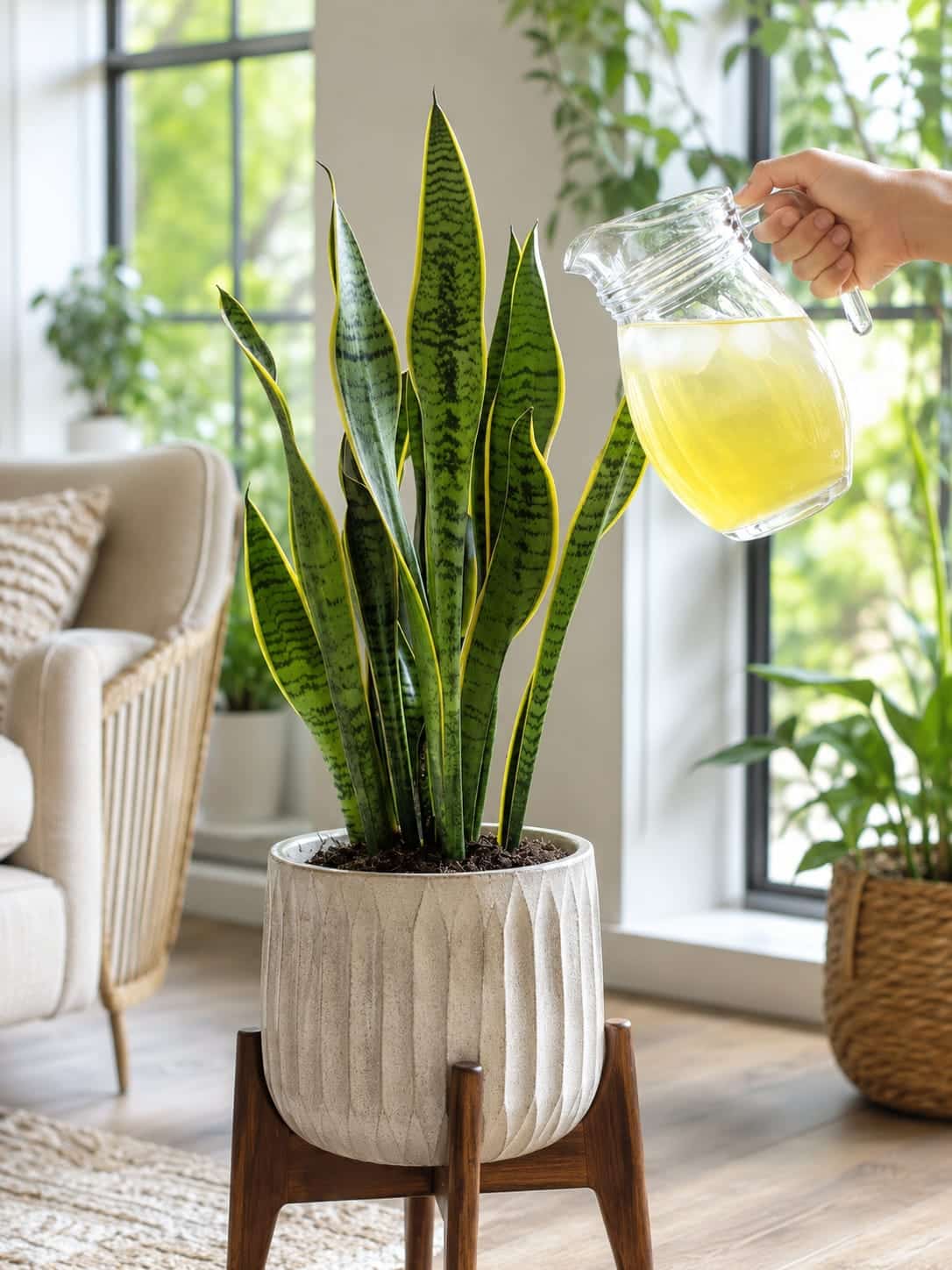
That is why many smart homeowners are interested in gentle natural tonics for snake plants. In the image, a hand is pouring a bright yellow liquid from a glass pitcher near a healthy snake plant. The plant is upright, variegated, and decorative, while the yellow liquid suggests a homemade plant-care mixture. In indoor gardening content, this kind of yellow liquid is often shown as a banana peel water, rice water, turmeric-toned tonic, or diluted kitchen-based fertilizer.
For snake plants, the safest and most realistic version of this trick is a very diluted banana peel water or mild banana-rice tonic. Banana peels contain small amounts of potassium and other minerals, and rice water can provide mild starches and trace nutrients. Used carefully, a diluted yellow tonic can support soil life and help the plant maintain steady growth during the active season.
However, snake plants are not heavy feeders. They do not want rich, wet, sugary liquid poured into the pot every few days. They are drought-tolerant plants with thick rhizomes and roots that can rot if the soil stays too moist. A homemade tonic can only help if it is weak, strained, used rarely, and applied to a plant that already has good drainage, bright indirect light, and a healthy root system.
This guide explains how to make the yellow liquid safely, how to use it on snake plants, how often to apply it, when to avoid it, and how to keep your snake plant upright, strong, and decorative indoors without accidentally overfeeding or overwatering it.
What Plant Is Shown in the Image?
The plant in the image is a snake plant, also known as Sansevieria or Dracaena trifasciata. It has tall, upright leaves with green banding and yellow edges, which means it is likely a variegated type often sold as Sansevieria laurentii.
This variety is loved because of its strong contrast. The center of each leaf has deep green markings, while the margins are edged in yellow. When the leaves stand straight, the plant looks almost sculptural. It works beautifully with modern, boho, minimal, traditional, and colorful decor styles.
A healthy snake plant should have:
- Firm upright leaves
- Clear green markings
- Bright yellow margins on variegated types
- No mushy base
- No sour smell from the soil
- Drying soil between waterings
- New shoots appearing during the growing season
The plant in the image looks strong and decorative. The goal of the yellow liquid trick is not to rescue a rotting plant, but to support an already healthy or mildly tired plant so it keeps its bold shape.
What Is the Yellow Liquid?
The yellow liquid in the image can represent several homemade plant tonics, but the most useful version for snake plants is a diluted banana peel water. Banana peels are often used in home gardening because they contain potassium, small amounts of phosphorus, calcium, magnesium, and other trace elements. When soaked in water and strained, they create a pale yellow liquid that many plant owners use as a mild natural fertilizer.
Another safe option is diluted rice water, especially if it is made from rinsed rice and used fresh. Rice water can look cloudy or pale yellow depending on the type of rice and how it is prepared. Some homeowners combine a small amount of banana peel water with rice water, but for snake plants, it must be very diluted.
The important thing to remember is that snake plants do not need strong homemade fertilizer. A thick, fermented, sugary, or unstrained kitchen liquid can attract gnats, create odor, feed mold, and keep the soil too wet. The yellow liquid should be gentle, clean, strained, and used sparingly.
Why Use a Yellow Tonic on Snake Plants?
A mild homemade tonic can be useful when a snake plant is healthy but slightly slow, pale, or sitting in older soil. It may provide a gentle nutrient boost during the growing season. It can also encourage you to water more intentionally instead of randomly pouring plain water whenever you remember.
Possible benefits of a properly diluted banana peel tonic include:
- Supporting steady root function
- Providing a mild potassium boost
- Helping maintain strong leaves
- Supporting new shoot development during active growth
- Refreshing older potting mix lightly
- Helping the plant stay decorative when combined with good care
These benefits are gentle. This tonic will not make a snake plant double overnight. It will not force new leaves in a week. It will not repair damaged leaves. It will not fix root rot. Think of it as a light seasonal support, not a miracle potion.
Why Snake Plants Need Careful Feeding
Snake plants are slow-growing and efficient. They store moisture in their leaves and underground rhizomes. They survive dry periods better than many houseplants. Because of this, they do not need frequent fertilizer.
In fact, overfeeding can cause problems. Too much fertilizer or too many homemade tonics can create salt buildup, root stress, weak growth, brown tips, or sour soil. Snake plants look strongest when their care routine is simple.
The best feeding approach is:
- Weak fertilizer
- Rare application
- Only during active growth
- Only when the plant is healthy
- Never when the soil is already wet
- Never when roots are damaged or rotting
If your plant is struggling badly, do not start with fertilizer. Start by checking the roots, light, soil, and watering habits.
The Safest Yellow Liquid Recipe for Snake Plants
This recipe creates a mild banana peel water that is safe enough for occasional snake plant use when diluted properly.
Gentle Banana Peel Water
- 1 small banana peel
- 4 cups clean water
- A glass jar with lid
- A fine strainer
How to Make It
- Wash the banana peel to remove dust or residue.
- Cut the peel into small pieces.
- Place the pieces in a clean jar.
- Add 4 cups of water.
- Let it soak for 12 to 24 hours only.
- Strain the liquid very well.
- Discard or compost the peel pieces.
- Dilute the liquid before using it on your snake plant.
Do not leave the banana peel soaking for many days indoors. Long fermentation can create a strong smell and attract pests. A short soak is cleaner and safer for indoor plants.
How to Dilute the Yellow Liquid
This is the most important step. Snake plants do not need a strong solution. After making banana peel water, dilute it before using.
Safe Dilution
- 1 part banana peel water
- 3 parts plain water
For example, mix 1/2 cup banana peel water with 1 1/2 cups plain water. This gives you 2 cups of diluted tonic.
If your snake plant is small, use even less. A small plant may only need a few tablespoons of diluted tonic. A large pot may use more, but only if the soil is dry and the pot drains well.
How to Apply the Yellow Liquid Step by Step
Step 1: Check the Soil First
Never pour any liquid onto a snake plant if the soil is already wet. Push your finger into the soil or use a wooden stick. If moisture remains below the surface, wait. Snake plants prefer to dry out between waterings.
The tonic should replace one normal watering, not be added on top of a watering schedule.
Step 2: Make Sure the Pot Has Drainage
The pot must have drainage holes. A decorative pot without drainage is risky for snake plants, especially when using homemade liquids. If water cannot escape, the roots may sit in moisture and rot.
If your plant is in a decorative cachepot, remove the inner nursery pot before watering. Let it drain fully, then place it back.
Step 3: Pour Around the Soil, Not Into the Leaves
Pour the diluted yellow liquid slowly around the soil surface. Do not pour it into the center of the plant. Do not let it collect between the leaves. Snake plant crowns should stay dry.
Water sitting inside the leaf bases can increase the risk of rot.
Step 4: Use a Small Amount
Use only enough to lightly moisten the soil. You do not need to flood the pot. If the pot is large and very dry, water until a little drains from the bottom, then stop.
Step 5: Let It Drain Completely
After applying the tonic, allow the pot to drain fully. Empty the saucer. Never leave the plant sitting in yellow liquid or runoff water.
Step 6: Wait Before Watering Again
After using the tonic, wait until the soil dries again before watering. This may take two, three, four, or more weeks depending on your room conditions.
How Often Should You Use This Trick?
Use this yellow liquid only once every 6 to 8 weeks during spring and summer. That is enough for a snake plant. Do not use it weekly. Do not use it every time you water.
A safe schedule looks like this:
- Spring: one diluted banana peel watering
- Early summer: plain water only
- Mid-summer: one diluted banana peel watering if the plant is healthy
- Late summer: plain water or very light fertilizer
- Fall and winter: no homemade tonic
Snake plants slow down in cooler, darker months. Feeding during winter can lead to buildup because the plant is not using nutrients quickly.
When This Yellow Liquid May Help
This tonic may be useful when your snake plant is healthy but growing slowly during warm months. It may also help if the soil is older but still drains well, or if the plant has not been fed for a long time.
It may be appropriate if:
- The plant has firm leaves
- The soil drains quickly
- The pot has drainage holes
- The plant receives bright indirect light
- The roots are healthy
- The plant is not newly repotted
- It is spring or summer
- The soil is dry before application
If these conditions are not true, fix the main care problem before using any homemade tonic.
When You Should Avoid the Yellow Liquid
Do not use banana peel water or any yellow tonic on a snake plant that is already stressed from overwatering. If the plant has soft leaves, mushy bases, or sour-smelling soil, extra liquid can make the problem worse.
Avoid this trick if:
- The soil is wet
- The plant has root rot
- The pot has no drainage
- The leaves are mushy at the base
- The plant smells sour
- There are fungus gnats in the soil
- The plant was recently repotted
- The room is cold or dark
- The plant is dormant
- You recently fertilized it
Homemade fertilizer should never be used to rescue a rotting plant. Rot needs dryness, trimming, fresh soil, and root inspection.
Why This Trick Helps the Plant Stay Upright
A snake plant stays upright because of healthy roots, firm rhizomes, strong leaves, and proper light. The yellow liquid does not physically hold the leaves up. It supports the plant only indirectly by providing mild nutrients when the plant is already healthy.
If your snake plant is leaning, the real causes may include:
- Low light
- Overwatering
- Root rot
- Loose soil
- A pot that is too large
- A plant that needs division
- Leaves damaged at the base
- Uneven growth toward the window
The yellow tonic can help maintain growth, but it cannot correct a plant that is leaning because the roots are failing.
How to Keep Snake Plants Upright Indoors
Give Bright Indirect Light
Snake plants tolerate low light, but they grow stronger in bright indirect light. A plant in a dim corner may survive, but it may grow slowly and lean toward the nearest window. Bright indirect light helps the leaves stay firm and upright.
Good locations include:
- Near an east-facing window
- A few feet from a south-facing window
- Near a bright filtered west window
- Beside a sunny window with sheer curtains
- Under a quality grow light
Rotate the Pot
Rotate your snake plant every week or two. This keeps all sides receiving light and prevents the plant from leaning in one direction.
Use a Heavy Stable Pot
Large snake plants can become top-heavy. A sturdy ceramic or terracotta pot helps keep the plant stable. The pot in the image is decorative and elevated on a stand, which looks beautiful, but stability is important. Make sure the stand is strong and level.
Do Not Overwater
Overwatered leaves often become soft and weak. Once the base weakens, the leaves can lean or collapse. Let the soil dry between waterings.
Use Fast-Draining Soil
A loose mix protects the roots and helps the plant stay firm. Heavy soil holds too much water and can weaken the root system.
Best Soil Mix for Snake Plants
Snake plants need soil that drains quickly and does not stay wet around the roots. A good mix is more important than any homemade tonic.
Simple Snake Plant Soil Mix
- 2 parts cactus or succulent mix
- 1 part perlite or pumice
- 1 part orchid bark or coarse grit
This mix holds enough moisture for the roots but dries fast enough to prevent rot.
If you only have regular potting soil, mix it with perlite or pumice before using it for snake plants. Do not use dense garden soil in indoor pots.
How to Water Snake Plants Correctly
The best snake plant watering routine is simple: water deeply, then wait. Do not give small sips every few days. Do not keep the top soil constantly damp. Do not water on a strict calendar.
Correct Watering Method
- Check that the soil is dry.
- Pour water slowly around the soil.
- Continue until a little water drains from the bottom.
- Let the pot drain completely.
- Empty the saucer.
- Wait until the soil dries before watering again.
In many homes, this means watering every 2 to 4 weeks in warm months and every 4 to 6 weeks in winter. But your home may be different. Always check the soil.
Can You Use Rice Water Instead?
Yes, but it should be used carefully. Fresh rice water can be used as a mild plant tonic, but it should be diluted and used rarely. Do not use salty rice water. Do not use rice water that has started to smell sour. Do not pour thick starchy water into snake plant soil often, because it can attract fungus gnats or feed mold.
Gentle Rice Water for Snake Plants
- Rinse 1/4 cup uncooked rice in 2 cups water.
- Swirl for 30 seconds.
- Strain the water.
- Dilute with an equal amount of plain water.
- Use only when the snake plant soil is dry.
Use rice water no more than once every 6 to 8 weeks, and do not use it in the same month as banana peel water.
Can You Combine Banana Peel Water and Rice Water?
You can, but for snake plants, simpler is better. If you combine them, make the mixture very weak.
Very Mild Banana-Rice Tonic
- 1/4 cup banana peel water
- 1/4 cup fresh rice water
- 2 cups plain water
Mix and use as one normal watering only when the soil is dry. This is a mild seasonal tonic, not a weekly fertilizer.
What About Lemon Water or Citrus Tonic?
Do not use lemon water on snake plants. Citrus liquids can be acidic and may irritate roots or alter the soil environment. Lemon slices or lemon water are often shown in dramatic plant tricks, but snake plants do not need citrus. It is safer to avoid acidic kitchen tonics.
What About Turmeric Water?
Turmeric can make water look bright yellow, but it is not an ideal routine fertilizer for snake plants. It can stain surfaces, leave residue, and is not necessary for healthy growth. Some gardeners use tiny amounts of turmeric on cut plant tissue, but pouring turmeric water into a snake plant pot is not recommended as a regular indoor-care method.
What About Egg Water?
Water from boiled eggs is sometimes used by gardeners after it cools, because it may contain a small amount of minerals. If you use it, make sure it is unsalted and fully cooled. However, it is not specifically needed for snake plants. A proper soil mix and correct watering matter much more.
Continue to Page 2
Continue to page 2 for more details about this article and the key points many readers miss on the first page.