What About Commercial Fertilizer?
A balanced commercial houseplant fertilizer or cactus fertilizer is often more predictable than homemade tonics. If you choose commercial fertilizer, use it at half strength during spring and summer only.
A simple schedule is:
- Feed once in spring
- Feed once in mid-summer
- Do not feed in winter
Do not combine commercial fertilizer and homemade tonic at the same time. Too much feeding can stress the roots.
How to Tell If Your Snake Plant Needs Nutrients
Snake plants rarely show dramatic hunger signs. They grow slowly by nature. However, an older plant in depleted soil may benefit from light feeding.
Possible signs include:
- Very slow growth during spring and summer
- Pale new leaves
- Weak new shoots
- Old soil that has not been refreshed for years
- No feeding for a very long time
But these signs can also be caused by low light, root problems, or poor watering. Always check the full care routine before assuming the plant needs fertilizer.
How to Tell If You Used Too Much Tonic
If you use banana peel water or rice water too often, you may notice problems. Homemade liquids can encourage microbial activity, mold, and pests if overused indoors.
Warning signs include:
- White fuzzy mold on soil
- Fungus gnats flying around the pot
- Sour smell from the soil
- Sticky or crusty soil surface
- Leaves turning yellow after application
- Soil staying wet too long
- Brown tips getting worse
If this happens, stop using the tonic. Let the soil dry. Remove the top layer if mold appears. If the smell is strong or the roots are suffering, repot into fresh dry soil.
How to Fix Soil After Overusing Homemade Tonics
If you accidentally used too much yellow liquid, do not panic. Start by letting the pot dry properly. Remove any visible fruit pieces, residue, or mold from the soil surface.
If the plant still looks healthy, flush the soil with plain water the next time it needs watering. Let the water drain fully. Then stop all feeding for several months.
If the soil smells sour or the plant becomes mushy, repot it. Remove old wet soil, inspect the roots, cut away rotten parts, and place the healthy plant in a fresh fast-draining mix.
How to Make Snake Plants More Decorative Indoors
The yellow liquid may support growth, but the decorative look comes from styling and maintenance. A snake plant looks most luxurious when the leaves are clean, upright, and displayed in the right pot.
Clean the Leaves
Dust makes snake plant leaves look dull. Wipe each leaf with a soft damp cloth. Support the leaf with one hand while wiping with the other. Avoid oily leaf shine products because they can leave residue.
Trim Damaged Tips
If the tips are brown, trim them carefully following the natural point of the leaf. Use clean scissors. Do not cut too much healthy tissue.
Remove Dead Leaves at the Base
If a leaf is yellow, soft, or fully damaged, remove it at the base. This keeps the plant looking clean and prevents decay near the crown.
Use a Decorative Pot
A beautiful pot can transform a snake plant. The image shows a bold red, blue, and black planter, which makes the plant feel like a design statement. Snake plants work well in colorful pots because their upright leaves have a strong graphic shape.
Use a Plant Stand
Raising the pot on a stand makes the plant feel more intentional and decorative. It also helps the tall leaves become part of the room’s vertical design.
Best Pot Colors for Snake Plants
Snake plants look good in many pot colors because their leaves have strong contrast. Choose a pot that matches your decor style.
- White: clean and modern
- Black: dramatic and elegant
- Terracotta: warm and natural
- Red: bold and artistic
- Blue: fresh and contemporary
- Beige: calm and neutral
- Gold: luxurious and bright
If the pot is very colorful, keep the surrounding decor simple so the plant does not look cluttered.
Why the Plant in the Image Looks So Strong
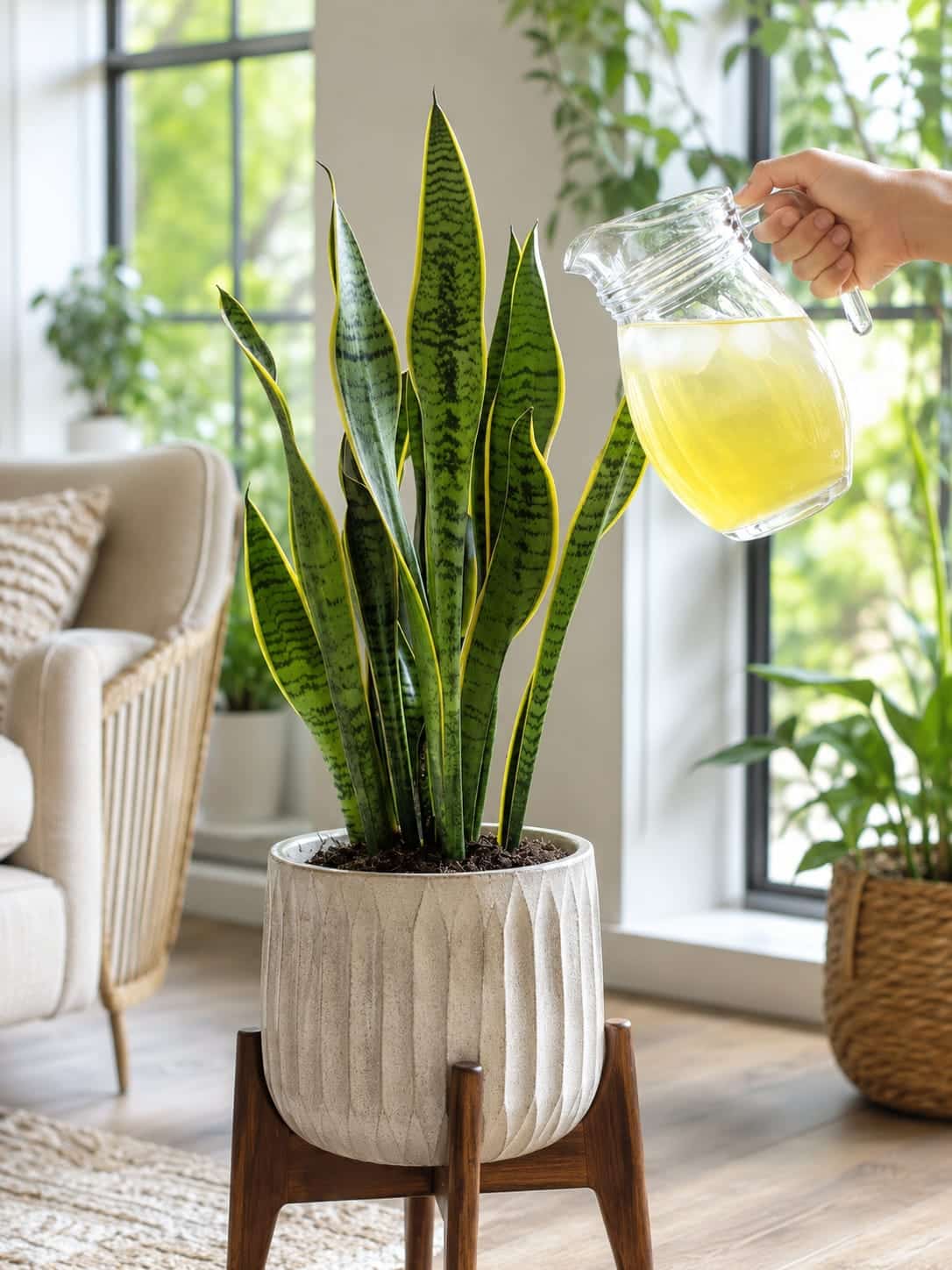
The plant in the image looks strong because the leaves are upright, the light is bright, and the pot makes the plant stand out. The bright window gives the plant enough light to maintain its shape. The tall leaves create height. The colorful planter adds personality.
This is a good reminder that plant beauty is not only about fertilizer. The full look comes from:
- Good light
- Correct watering
- Healthy roots
- Clean leaves
- A strong pot choice
- Balanced placement in the room
The yellow tonic is only one small part of the routine.
What to Do If Your Snake Plant Is Leaning
If your snake plant is leaning, do not immediately pour fertilizer on it. First, find the cause.
If the Soil Is Wet
Stop watering. Check the roots. Wet soil plus leaning leaves can mean rot.
If the Plant Is Reaching Toward Light
Move it closer to a brighter window and rotate the pot weekly.
If the Pot Is Too Loose
Add fresh dry soil around the base and gently firm the plant in place. Do not pack the soil too tightly.
If the Leaves Are Too Heavy
Divide the plant if it is overcrowded. A crowded snake plant may push itself unevenly out of the pot.
If the Base Is Mushy
Remove affected leaves and inspect the rhizome. Do not use tonic until the plant is healthy again.
Should You Stake a Snake Plant?
You can use temporary support if the plant is leaning after repotting, but staking should not be the long-term solution. A healthy snake plant should stand upright on its own. If it cannot, the issue is usually light, roots, soil, or watering.
Use a soft tie and a bamboo stake only while the plant settles. Do not tie leaves tightly.
How to Encourage New Shoots
New shoots, also called pups, appear from the rhizomes. To encourage pups, focus on the basics.
- Give bright indirect light
- Use a snug pot
- Allow soil to dry between waterings
- Feed lightly in spring and summer
- Keep the plant warm
- Avoid disturbing the roots too often
A mild yellow tonic may support this process, but it cannot replace light. Light is one of the biggest drivers of growth.
How to Use the Yellow Liquid Without Attracting Gnats
Fungus gnats are a common concern with homemade plant tonics. They are attracted to moist organic soil. To avoid them:
- Strain the tonic very well
- Do not leave banana pieces in the pot
- Use the tonic rarely
- Let soil dry between waterings
- Do not use fermented liquid indoors
- Use a fast-draining soil mix
- Remove any moldy topsoil quickly
The liquid should be clean and thin, not chunky or sugary.
Can You Store Banana Peel Water?
It is best to use banana peel water fresh. If you must store it, keep it in the refrigerator for no more than 24 hours. If it smells sour, fizzy, or rotten, discard it.
Do not keep homemade plant tonic sitting at room temperature for days. It can ferment and become unpleasant indoors.
Quick Recipe Card
Yellow Snake Plant Tonic
Ingredients
- 1 small banana peel
- 4 cups water
Instructions
- Wash and chop the banana peel.
- Soak in 4 cups water for 12 to 24 hours.
- Strain very well.
- Mix 1 part banana peel water with 3 parts plain water.
- Apply to dry soil only.
- Pour around the soil, not into the plant crown.
- Let the pot drain fully.
- Use once every 6 to 8 weeks in spring or summer.
Short Caption for This Trick
To keep a snake plant upright, strong, and decorative, use a very diluted banana peel water only as an occasional seasonal tonic. Soak one banana peel in 4 cups of water for 12 to 24 hours, strain it well, then dilute 1 part tonic with 3 parts plain water. Pour only onto dry soil, keep it out of the leaf crown, and let the pot drain completely. Use every 6 to 8 weeks during spring or summer only. This supports healthy growth, but the real secret is bright indirect light, fast-draining soil, and careful watering.
Frequently Asked Questions
What is the yellow liquid for snake plants?
It is often shown as banana peel water, rice water, or a mild homemade plant tonic. For snake plants, diluted banana peel water is one of the safer yellow tonic options when used rarely.
Is banana peel water good for snake plants?
It can be used occasionally as a mild nutrient support, but it must be diluted and strained. Snake plants do not need frequent feeding.
How often should I use banana peel water?
Use it only once every 6 to 8 weeks during spring or summer. Do not use it in winter or every time you water.
Can yellow tonic make snake plants grow faster?
It may support growth slightly if the plant is healthy, but it will not cause instant growth. Bright light, good soil, and correct watering matter more.
Can I pour banana peel water on wet soil?
No. Only use it when the soil is dry and the plant is ready for watering.
Can banana peel water cause fungus gnats?
Yes, if it is too strong, unstrained, fermented, or used too often. Always strain it well and use it rarely.
Can I spray this yellow liquid on snake plant leaves?
No. Apply it to the soil only. Snake plant leaves do not need sugary or nutrient sprays.
Can I use rice water on snake plants?
Fresh diluted rice water can be used rarely, but it should not be salty, sour, or thick. Use it no more than once every 6 to 8 weeks.
Why is my snake plant leaning?
Leaning can be caused by low light, overwatering, root rot, loose soil, or an unstable pot. Check these before using fertilizer.
What is the best way to keep snake plants upright?
Give bright indirect light, use fast-draining soil, water only when dry, rotate the pot, and keep the roots healthy.
Final Thoughts
The yellow liquid trick looks simple and attractive. It suggests that a homemade kitchen tonic can help a snake plant stay upright, strong, and beautiful indoors. When used correctly, a very diluted banana peel water can be a gentle seasonal support. It may provide small amounts of nutrients and help refresh the soil during active growth.
But the real secret is restraint. Snake plants are not hungry tropical plants that need constant feeding. They are tough, slow-growing, drought-tolerant plants that prefer dry periods, airy soil, and bright indirect light. Too much homemade tonic can do more harm than good, especially if it keeps the soil wet or attracts fungus gnats.
Use the yellow liquid only when the plant is healthy, the soil is dry, and the season is right. Strain it carefully. Dilute it well. Pour it around the soil, not into the crown. Let the pot drain fully. Then wait until the soil dries before watering again.
If your snake plant is weak, leaning, yellowing, or mushy, do not rely on the tonic first. Check the roots. Check the pot drainage. Check the light. Check your watering routine. A snake plant with healthy roots and proper light will naturally stand taller and look more decorative.
With the right balance, your snake plant can remain one of the most elegant indoor plants in your home. Its upright leaves, bold variegation, and sculptural form make it a natural decor piece. A mild yellow tonic may support that beauty from time to time, but simple care is what keeps the plant truly strong.