Orchids have a way of looking elegant even when they are not at their best. Their thick leaves, exposed roots, and sculptural shape make them feel special on a windowsill, shelf, or plant table. But when an orchid begins to weaken, the change can feel discouraging. The leaves may droop. The roots may turn dull or brown. The bark may smell old. The plant may stop sending new roots. Flower spikes may disappear for months. Instead of looking fresh and graceful, the orchid starts to look tired, neglected, and uncertain.
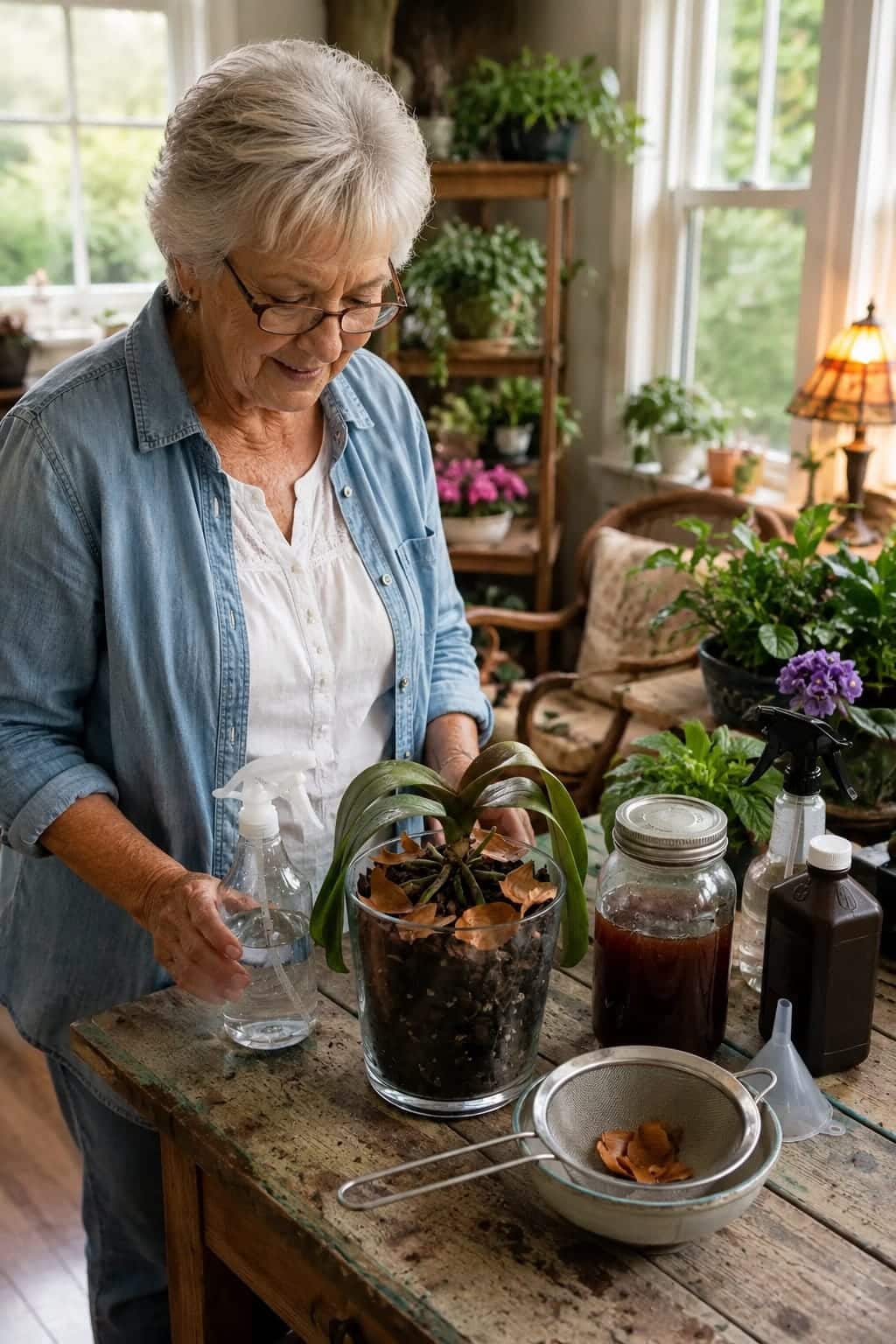
That is why many smart homeowners look for gentle, natural ways to support weak orchids indoors. In the image, we see an orchid sitting in a clear pot with bark, onion or garlic skins on top, a spray bottle, a strainer, a jar of dark homemade liquid, and a bottle labeled with a peroxide‑style treatment. The setup suggests a careful plant recovery station: cleaning, straining, spraying, and treating the orchid without using harsh chemicals. The main idea behind the title is garlic water, a simple homemade infusion that some plant owners use as a mild natural rinse or support spray when orchids look weak, stale, or stressed.
Garlic water is popular because garlic has a strong reputation in home gardening. It is often used in folk plant care as a natural pest‑repelling ingredient, a mild cleansing rinse, or a way to freshen the root zone. Some growers use it when they suspect fungus gnats, old bark odors, weak roots, or general plant decline. The scent of garlic is strong, and the liquid feels powerful, so it is easy to imagine that it can “wake up” a tired orchid.
But orchids are delicate. Garlic water must be used carefully. A weak orchid does not need a strong, spicy, concentrated bath. It does not need chopped garlic pieces sitting in the bark. It does not need daily spraying. A strong garlic mixture can irritate roots, leave odor, attract problems, or stress the plant further. The smart method is gentle: make a weak garlic infusion, strain it completely, dilute it, test it, and use it only as an occasional support treatment while also fixing the real causes of orchid decline.
The truth is simple: garlic water can be a helpful supporting step, but it is not the main cure. The real recovery plan for a weak orchid is fresh air around the roots, clean bark, correct watering, bright indirect light, root inspection, and stable indoor conditions. Garlic water may help refresh the plant‑care routine, but it cannot rescue rotting roots if the orchid remains in soggy old medium. It cannot make an orchid bloom if the plant has no healthy roots. It cannot replace proper orchid fertilizer. It works best as one small part of a careful recovery routine.
In this guide, you will learn what garlic water is, how to make it safely, how to use it on weak orchids, when to avoid it, how to inspect orchid roots, how to refresh the growing medium, and how to help your orchid recover indoors without overdoing homemade remedies.
What Is Garlic Water for Orchids?
Garlic water is a mild infusion made by soaking crushed or sliced garlic in water, then straining and diluting the liquid before using it on plants. For orchids, it is usually used as a gentle rinse, root‑zone support, or occasional spray. It is not a complete fertilizer. It is not a pesticide replacement for serious infestations. It is not a guaranteed bloom booster. It is best understood as a homemade plant‑care tonic that may help support a cleaner growing environment when used sparingly.
The liquid can be clear, pale yellow, or slightly amber depending on how it is prepared. If the infusion is left too long, it may become strong, dark, smelly, or fermented. That is not ideal for indoor orchids. A fresh, mild garlic water is safer than a strong fermented solution.
Garlic water is commonly used by plant owners for three reasons. First, it has a strong odor that may discourage some pests. Second, garlic contains sulfur compounds that people associate with cleansing and natural plant defense. Third, making the solution encourages the plant owner to inspect and care for the orchid more intentionally.
For orchids, the third benefit may be the most important. When someone prepares garlic water, strains it, checks the roots, refreshes the bark, and waters carefully, the orchid often improves because the entire care routine improves — not because garlic alone performed a miracle.
Why Weak Orchids Need Gentle Care
A weak orchid is often already stressed. The roots may be damaged. The leaves may be dehydrated. The potting medium may be old. The plant may have been overwatered or underwatered. In that condition, strong treatments can make things worse.
Orchids, especially common Phalaenopsis orchids, have thick roots covered in a spongy layer called velamen. This layer absorbs water quickly, but it also needs air. If the roots stay wet too long, they can rot. If the bark becomes compacted, roots suffocate. If the plant is sprayed constantly, water can sit in the crown and cause rot. If strong homemade liquids are poured into the pot too often, residue can build up.
That is why any orchid recovery trick must be gentle. The goal is not to shock the plant into growth. The goal is to create conditions where the roots can breathe, recover, and begin growing again.
What a Weak Orchid Looks Like
Before using garlic water, it helps to identify the kind of weakness you are dealing with. Not all weak orchids have the same problem.
A weak orchid may show:
- Limp leaves
- Wrinkled leaves
- Yellowing lower leaves
- Brown or black roots
- Hollow roots
- Mushy roots
- Old bark that smells sour
- No new roots for months
- No flower spikes for a long time
- Bud drop
- Soft crown or stem base
- Tiny flying fungus gnats around the pot
Some of these problems are minor. Others are serious. Garlic water may be safe for a mildly tired orchid, but a badly rotting orchid needs root trimming, fresh medium, and careful drying before any tonic is used.
When Garlic Water May Help
Garlic water may be useful as a supporting treatment when the orchid is weak but not severely rotting. It may help freshen the care routine and provide a mild natural rinse around the root zone.
It may be appropriate when:
- The orchid has slightly tired leaves but still has firm roots.
- The bark is older but not rotten.
- The plant has been sitting in stale conditions.
- You suspect minor surface pests or gnats.
- The orchid needs a gentle root‑zone refresh.
- You are repotting and want a mild rinse for the pot or medium.
- The plant is not currently in severe bloom stress.
Garlic water should be weak and occasional. It is not something to use every few days.
When You Should Not Use Garlic Water
Do not use garlic water just because an orchid looks bad. First, find the cause of the problem. A homemade tonic can be risky if the plant is already in a fragile state.
Avoid garlic water if:
- The crown is mushy or rotting.
- The roots are mostly black and soft.
- The orchid is sitting in wet, sour‑smelling bark.
- The plant has just been heavily fertilized.
- The orchid is severely dehydrated and rootless.
- The plant is in full bloom and dropping buds.
- The leaves have sunburn or heat damage.
- You have not strained the garlic mixture.
- The mixture smells rotten or fermented.
- You plan to spray it into the crown or leaf joints.
If the orchid has rot, garlic water is not the first step. Remove rotten roots, refresh the medium, and stabilize watering first.
The Safest Garlic Water Recipe for Orchids
This recipe is intentionally mild. Orchids do not need a strong garlic solution. A weak infusion is safer for indoor use.
Ingredients
- 1 small garlic clove
- 2 cups room‑temperature water
- 1 clean glass jar
- 1 fine strainer or coffee filter
- 1 spray bottle or small watering cup
Instructions
- Peel one small garlic clove.
- Crush it lightly with the side of a knife.
- Place it in a clean jar.
- Add 2 cups of room‑temperature water.
- Let it sit for 2 to 4 hours.
- Strain the liquid very well.
- Dilute the strained liquid with another 2 cups of plain water.
- Use immediately.
This creates a mild garlic water suitable for occasional orchid support. Do not leave garlic soaking for days. Do not use several cloves in a small amount of water. Do not use garlic powder with salt or seasoning. Do not add oil. Do not add vinegar.
Why the Garlic Must Be Strained Completely
Straining is not optional. Garlic pieces left in orchid bark can smell, decay, attract gnats, and create messy organic buildup. Orchids need clean, airy bark. Bits of garlic stuck between bark pieces are not helpful.
Use a fine strainer, cheesecloth, or coffee filter. The final liquid should contain no visible pieces. If you see chunks or cloudy particles, strain again.
How to Use Garlic Water on a Weak Orchid
Step 1: Inspect the Orchid First
Before applying anything, look at the orchid carefully. Check the leaves, crown, roots, and potting medium. If the pot is clear, observe the roots through the sides. Healthy roots are firm and may be green when wet or silvery when dry. Rotten roots look brown, black, mushy, or hollow.
If the plant is severely rotting, skip the garlic water and repot first.
Step 2: Check the Potting Medium
Old bark breaks down over time. It becomes soft, compacted, and moisture‑retentive. This can suffocate roots. If the bark smells sour or looks like soil, garlic water will not fix it. The orchid needs fresh medium.
Step 3: Prepare a Mild Garlic Water
Use the weak recipe above. Do not use strong dark liquid. Do not use fermented garlic water. Fresh and mild is safer.
Step 4: Test on a Small Area
If this is your first time using garlic water, test it lightly. Apply a small amount to part of the medium or one exposed root area, then wait 24 hours. If the plant shows no negative reaction, you can continue with a gentle application.
Step 5: Apply to the Medium, Not the Crown
Pour a small amount through the bark or spray lightly on the root zone. Avoid spraying into the crown, leaf joints, or center of the plant. Water trapped in the crown can cause rot.
Step 6: Let the Pot Drain Fully
If you pour garlic water through the pot, let it drain completely. Never let the orchid sit in garlic water. Empty the saucer or outer pot.
Step 7: Wait Before Repeating
Do not repeat quickly. Use garlic water once, then watch the plant for one or two weeks. If the orchid improves, it is likely because the overall care routine is better. If it worsens, stop using the tonic.
How Often Should You Use Garlic Water?
For orchids, garlic water should be rare. Use it no more than once every 4 to 6 weeks, and only when there is a reason. Many orchids will never need it.
A safe routine might be:
- One mild application during a recovery check
- Wait at least one month
- Use again only if the plant is healthy and the medium is drying properly
- Stop once new roots begin growing strongly
Do not use garlic water weekly. Do not use it every watering. Do not combine it with fertilizer on the same day.
Can You Spray Garlic Water on Orchid Leaves?
It is better to avoid spraying orchid leaves heavily with garlic water. The scent can linger indoors, and moisture on leaves or in joints may cause problems if airflow is poor.
If you are using garlic water for a very light pest‑repelling spray, mist only the top and underside of leaves lightly in the morning, then wipe away excess moisture. Do not spray open flowers. Do not spray buds. Do not spray the crown.
For weak orchids, root‑zone care is usually more important than leaf spraying.
Can You Soak Orchid Roots in Garlic Water?
A short, very mild root rinse may be acceptable for some growers during repotting, but soaking roots for a long time is not recommended. Orchid roots need oxygen, and weak roots can be sensitive.
If you choose to rinse roots:
- Use very diluted garlic water.
- Dip or rinse briefly for a few minutes only.
- Do not soak for hours.
- Do not soak damaged mushy roots.
- Let roots air briefly before repotting.
For most homeowners, pouring a small amount through the bark is safer than soaking the entire root system.
What About the Dark Liquid in the Jar?
The image shows a jar of dark liquid. This could represent a stronger garlic infusion, compost tea, onion‑skin water, or another homemade plant tonic. For indoor orchids, dark homemade liquids should be used cautiously. Dark does not mean stronger in a good way. It may mean the mixture is concentrated, fermented, or full of organic particles.
Weak orchids do not need heavy, dark, organic liquids. These can leave residue in bark and attract gnats. If you make garlic water, keep it light, fresh, strained, and diluted.
What About Onion Skins on the Orchid Bark?
The image appears to show papery skins on top of the orchid bark. Some people use onion skins or garlic skins in homemade plant tonics because they contain small amounts of minerals and plant compounds. However, placing skins directly on orchid bark is not ideal indoors.
Papery skins can trap moisture, mold, or attract gnats if the pot stays damp. They can also make it harder to see the bark and roots. If you want to use onion or garlic skins, it is better to make a mild strained infusion and remove the solids.
For orchids, keep the top of the pot clean and airy.
What About Hydrogen Peroxide?
The image includes a bottle that looks like a peroxide‑type product. Some orchid growers use diluted hydrogen peroxide to clean cuts or treat minor root issues, but it must be used carefully. Hydrogen peroxide can damage delicate tissue if used too strongly or too often. It can also harm beneficial microbes.
Do not mix garlic water and hydrogen peroxide together. Do not create random chemical combinations. If you use peroxide, use it only for a specific purpose, such as cleaning tools or treating a small rotten spot, and follow safe dilution practices.
For most weak orchids, the best first step is not peroxide or garlic. It is root inspection and fresh medium.
The Real Orchid Recovery Method
Garlic water is only one small support. A weak orchid needs a full recovery plan.
Step 1: Remove the Orchid From Its Pot
If the plant is declining, remove it gently from the pot. This lets you see the roots clearly. If the orchid is in a clear pot and roots look healthy, you may not need to remove it immediately. But if there is a sour smell or visible rot, inspection is necessary.
Step 2: Remove Old Medium
Shake away old bark or moss. Old medium can hold too much moisture. If bark has broken down into small dark pieces, replace it.
Step 3: Trim Dead Roots
Use clean scissors. Remove roots that are mushy, black, hollow, or papery. Keep firm roots even if they are not perfectly green.
Step 4: Let the Plant Breathe
After trimming, let the orchid sit for a short time in a clean airy spot. This helps cut areas dry slightly.
Step 5: Repot in Fresh Orchid Bark
Use chunky orchid bark, perlite, and optional charcoal. Do not use dense potting soil.
Step 6: Water Carefully
After repotting, water lightly depending on root condition. Let the pot drain fully. Keep the plant in bright indirect light.
Step 7: Use Garlic Water Only If Needed
If you still want to use garlic water, apply a very mild strained solution after the plant has stabilized. Do not overwhelm freshly trimmed roots.
Continue to Page 2
Continue to page 2 for more details about this article and the key points many readers miss on the first page.