Best Potting Mix for Recovering Orchids
A weak orchid needs air around the roots. The potting mix should be chunky and fresh.
Simple Recovery Mix
- 4 parts medium orchid bark
- 1 part perlite
- 1 part horticultural charcoal
- Optional: a small amount of sphagnum moss for dry homes
If your home is humid or you tend to overwater, use less moss. If your home is very dry, a little moss can help hold moisture. The goal is balance: moisture without suffocation.
Why Clear Pots Help Weak Orchids
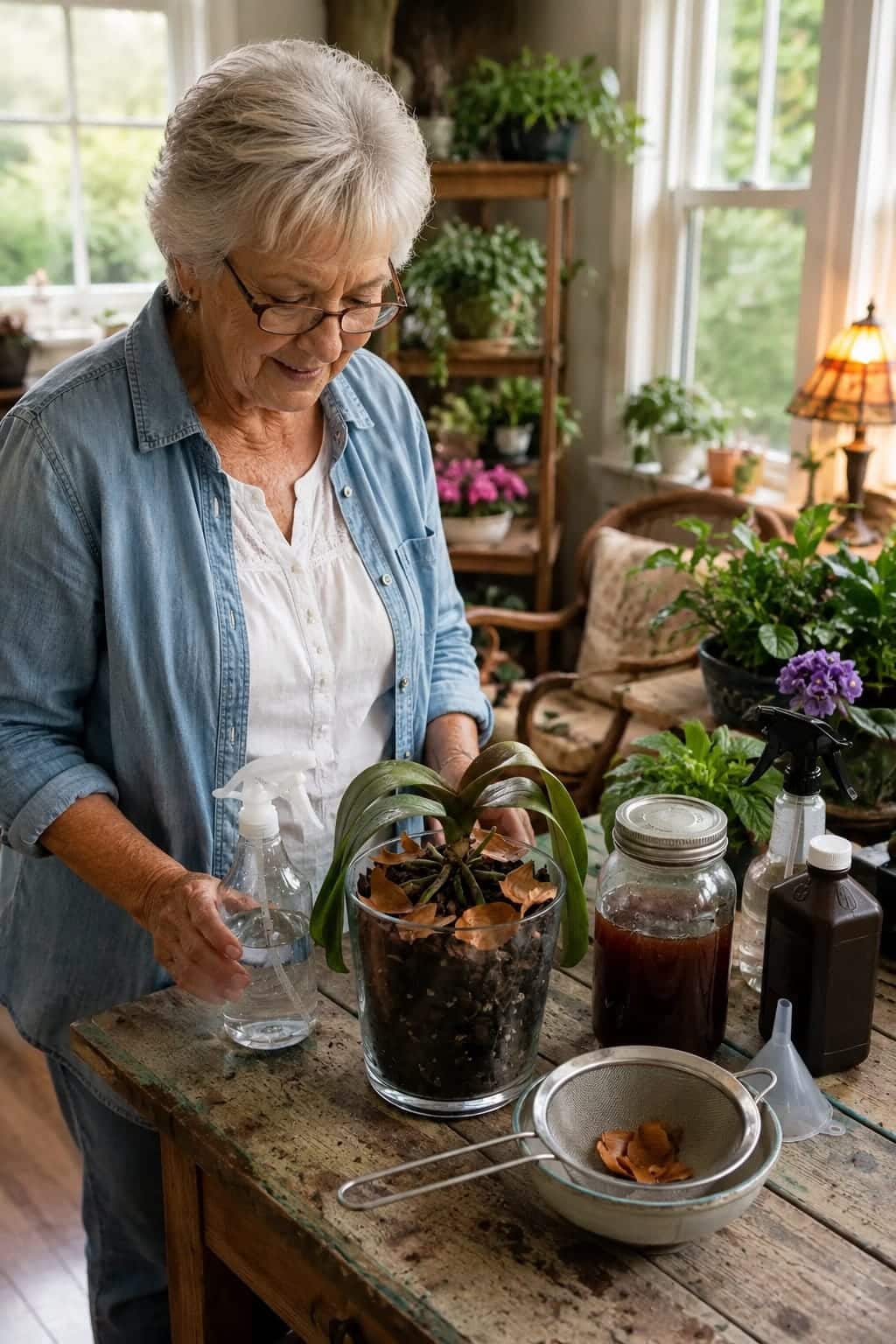
The image shows a clear container, which is useful for orchid recovery. Clear pots let you see root color and moisture. This helps prevent overwatering.
With clear pots, you can observe:
- Green roots after watering
- Silvery roots when dry
- Condensation inside the pot
- Rotten roots
- New root tips
- Old bark breakdown
For beginners, clear orchid pots are one of the best tools. They make orchid care less mysterious.
How to Water a Weak Orchid Correctly
Weak orchids are often damaged by poor watering. Some are overwatered until the roots rot. Others are underwatered because the owner is afraid of rot. The right method depends on the root condition and medium.
For most orchids in bark:
- Check the roots and bark.
- Water when the roots turn silvery and the bark is nearly dry.
- Use room‑temperature water.
- Pour water through the pot.
- Let it drain completely.
- Do not let water sit in the crown.
- Do not leave the pot standing in water.
If the plant has very few roots, water more cautiously. A rootless orchid cannot absorb much water through dead roots, so constant soaking only increases rot risk.
How Light Helps Orchid Recovery
Weak orchids need bright indirect light to recover. Without enough light, the plant cannot produce energy for new roots and leaves. But direct harsh sun can burn stressed leaves.
Good light for recovery:
- Near an east‑facing window
- Near a bright north‑facing window
- Filtered south or west light
- Bright room with no harsh midday sun
- Grow light if natural light is weak
Leaves should be medium green. Very dark green leaves may suggest low light. Yellow patches or crispy burns may suggest too much direct sun.
How Humidity Affects Weak Orchids
Orchids like moderate humidity, but humidity without airflow can cause fungal problems. If your home is very dry, use a humidity tray or humidifier. Do not constantly mist the crown.
Good humidity support:
- Humidity tray with pebbles and water below the pot
- Small room humidifier nearby
- Grouping plants together
- Keeping orchids away from heat vents
- Good airflow around leaves and roots
A spray bottle can be useful, but it should not be used to soak the plant repeatedly.
Can Garlic Water Remove Pests?
Garlic water may discourage some pests because of its odor, but it is not a guaranteed pest treatment. If your orchid has scale, mealybugs, spider mites, or severe fungus gnats, you need a proper pest plan.
For pests:
- Isolate the orchid.
- Identify the pest.
- Remove visible insects manually.
- Use appropriate treatment such as insecticidal soap or alcohol swabs for mealybugs.
- Refresh the medium if gnats are breeding in wet bark.
- Improve watering habits.
Garlic water may be used as a mild support, but it should not replace targeted treatment.
Can Garlic Water Help Orchid Roots Grow?
Garlic water does not directly create roots. New orchid roots grow when the plant has energy, warmth, moisture balance, and healthy conditions. Garlic water may support a cleaner environment, but root growth depends mostly on care.
To encourage new roots:
- Use fresh airy bark.
- Keep the plant warm.
- Provide bright indirect light.
- Water correctly.
- Maintain moderate humidity.
- Avoid disturbing the plant repeatedly.
- Feed lightly only when active growth begins.
When new root tips appear, they are often pale green or bright green. Protect them. Do not coat them with strong homemade liquids.
Can Garlic Water Make Orchids Bloom?
Garlic water is not a bloom booster. A weak orchid should not be pushed to bloom before it has healthy roots and leaves. Flowering takes energy. If the plant is weak, recovery matters more than flowers.
Once the orchid is healthy, blooming depends on:
- Strong roots
- Firm leaves
- Enough bright indirect light
- Weak balanced fertilizer during growth
- A slight nighttime temperature drop for many Phalaenopsis orchids
- Patience
Do not use garlic water expecting instant flower spikes.
How to Know If Your Orchid Is Recovering
Recovery can be slow. Orchids do not always bounce back quickly. Look for small signs of progress.
Good recovery signs include:
- Leaves becoming firmer
- New root tips appearing
- Existing roots staying firm
- No sour smell from the pot
- New leaf growth
- Stable color
- No further yellowing or collapse
Do not expect flowers immediately. Roots come first. Leaves come next. Flowers come later.
How to Avoid Overusing Homemade Orchid Tricks
One of the biggest mistakes in plant care is using too many remedies at once. A weak orchid may be given garlic water, banana water, rice water, peroxide, cinnamon, fertilizer, and misting all in the same week. This overwhelms the plant and makes it impossible to know what helped or harmed.
Use one change at a time. The best recovery routine is simple:
- Fresh bark
- Clean roots
- Correct watering
- Bright indirect light
- Stable warmth
- Optional mild garlic water only occasionally
Simple care is usually better than constant experiments.
Common Mistakes With Garlic Water
Mistake 1: Making It Too Strong
More garlic is not better. Strong garlic water can irritate roots and leave odor. Use one small clove and dilute well.
Mistake 2: Leaving Garlic Pieces in the Pot
Garlic chunks can rot and attract pests. Always strain completely.
Mistake 3: Spraying the Crown
Water in the crown can lead to rot. Keep the center of the orchid dry.
Mistake 4: Using It Every Week
Frequent garlic water can create residue and stress. Use rarely.
Mistake 5: Using It on Rotten Roots
Rotten roots need trimming and fresh medium. Garlic water alone will not solve root rot.
Mistake 6: Mixing It With Other Treatments
Do not mix garlic water with peroxide, fertilizer, vinegar, soap, or oils. Use simple, separate treatments only when needed.
What to Do If Garlic Water Smells Too Strong
If the garlic water smells overpowering, dilute it more or discard it. Indoor orchids do not need a strong garlic bath. A mild scent is enough. If the liquid smells rotten, fermented, sour, or unpleasant, do not use it.
Fresh garlic water should be made and used the same day.
Can You Store Garlic Water?
It is best not to store garlic water for long. Make it fresh and use it immediately. If you must store it, keep it in the refrigerator for no more than 24 hours. Discard it if the smell changes.
Never keep garlic water at room temperature for days. It can ferment and become unsafe for indoor plant use.
Quick Garlic Water Recipe Card
Gentle Garlic Water for Weak Orchids
Ingredients
- 1 small garlic clove
- 2 cups water for soaking
- 2 extra cups water for dilution
Instructions
- Peel and lightly crush the garlic clove.
- Place it in a clean jar with 2 cups water.
- Soak for 2 to 4 hours.
- Strain very well through a fine strainer or coffee filter.
- Dilute with 2 more cups plain water.
- Apply lightly to the orchid bark or root zone.
- Keep it away from the crown and flowers.
- Let the pot drain completely.
- Use no more than once every 4 to 6 weeks.
Short Caption for This Orchid Trick
Smart homeowners are using mild garlic water as an occasional support rinse for weak orchids, but the safe method is gentle. Crush one small garlic clove, soak it in 2 cups of water for 2 to 4 hours, strain completely, then dilute with 2 more cups of water. Apply lightly to the bark or root zone only, never into the crown or flowers. Garlic water may help freshen the root environment, but real orchid recovery comes from clean roots, fresh airy bark, correct watering, bright indirect light, and patience.
Frequently Asked Questions
Is garlic water good for orchids?
Garlic water can be used occasionally as a mild support treatment, but it is not essential. It should be weak, strained, diluted, and used sparingly.
Can garlic water save a dying orchid?
Not by itself. A dying orchid usually needs root inspection, removal of rotten roots, fresh orchid bark, better light, and careful watering. Garlic water is only optional support.
How often should I use garlic water on orchids?
No more than once every 4 to 6 weeks, and only when needed. Do not use it weekly or at every watering.
Can I spray garlic water on orchid leaves?
You can lightly spray leaves if needed, but avoid the crown, buds, and flowers. For weak orchids, applying lightly to the bark or root zone is usually safer.
Can I leave garlic pieces in orchid bark?
No. Garlic pieces can rot, smell, and attract pests. Always strain the mixture completely.
Can garlic water remove fungus gnats?
It may discourage some pests, but it will not solve a serious fungus gnat problem. Fungus gnats usually indicate wet organic medium. Let the bark dry more and refresh old medium if needed.
Can garlic water make orchids bloom?
No. Garlic water is not a bloom booster. Healthy roots, bright indirect light, proper feeding, and stable conditions encourage future blooms.
Can I mix garlic water with fertilizer?
No. Use them separately. Do not combine homemade tonics with fertilizer or other treatments in the same application.
Can I use garlic powder instead of fresh garlic?
No. Garlic powder may contain additives or create residue. Fresh garlic, strained well, is safer.
What is the best first step for a weak orchid?
Inspect the roots. If the roots are rotten or the medium is old, repotting into fresh airy orchid bark is more important than any tonic.
Final Thoughts
Garlic water is one of those simple plant tricks that feels old‑fashioned, practical, and powerful. It uses a common kitchen ingredient and turns it into a gentle orchid‑care support. For smart homeowners who enjoy natural plant care, it can be a useful occasional rinse when an orchid looks tired or the root zone needs freshening.
But the smartest approach is careful, not dramatic. Orchids are sensitive. They need air around their roots, clean bark, proper drainage, and stable care. A strong garlic mixture, garlic chunks in the pot, or constant spraying can create more problems than benefits. The safe version is mild, strained, diluted, and rare.
If your orchid is weak, start with the roots. Remove old bark. Trim dead roots. Repot into a fresh chunky mix. Give bright indirect light. Water only when the medium is nearly dry. Keep the crown dry. Avoid constant experiments. Once the plant is stable, a small amount of mild garlic water may be used as a support treatment.
Recovery takes time. A weak orchid may need weeks or months to grow new roots and firm leaves. Do not rush it into blooming. Let the plant rebuild itself first. When the roots are clean and strong, the leaves will look better. When the leaves are strong, the plant can store energy. When the plant has enough energy, it can bloom again.
Used wisely, garlic water can be part of a thoughtful orchid recovery routine. Used carelessly, it can become another stress. The difference is moderation. One small clove, plenty of water, careful straining, gentle application, and patience — that is the smart homeowner’s way to use this natural orchid trick indoors.