Geraniums are the kind of houseplants that can instantly make a room feel warmer, brighter, and more alive. Their rounded leaves, strong stems, and cheerful flower clusters bring a classic cottage-garden feeling indoors, even when they are growing in a simple terracotta pot beside a sunny window. When a geranium is healthy, it looks generous. It pushes out new leaves, forms tight clusters of buds, and opens bright blooms that can last for weeks with the right care.
But geraniums can also become tired. They may stop blooming, stretch toward the window, drop yellow leaves, or grow tall and sparse instead of compact and bushy. Sometimes the soil surface becomes damp and stale. Sometimes tiny gnats appear. Sometimes the plant looks green but refuses to produce new flowers. When this happens, many smart homeowners start looking for gentle, natural ways to refresh the plant and support stronger growth without relying only on chemical fertilizers.
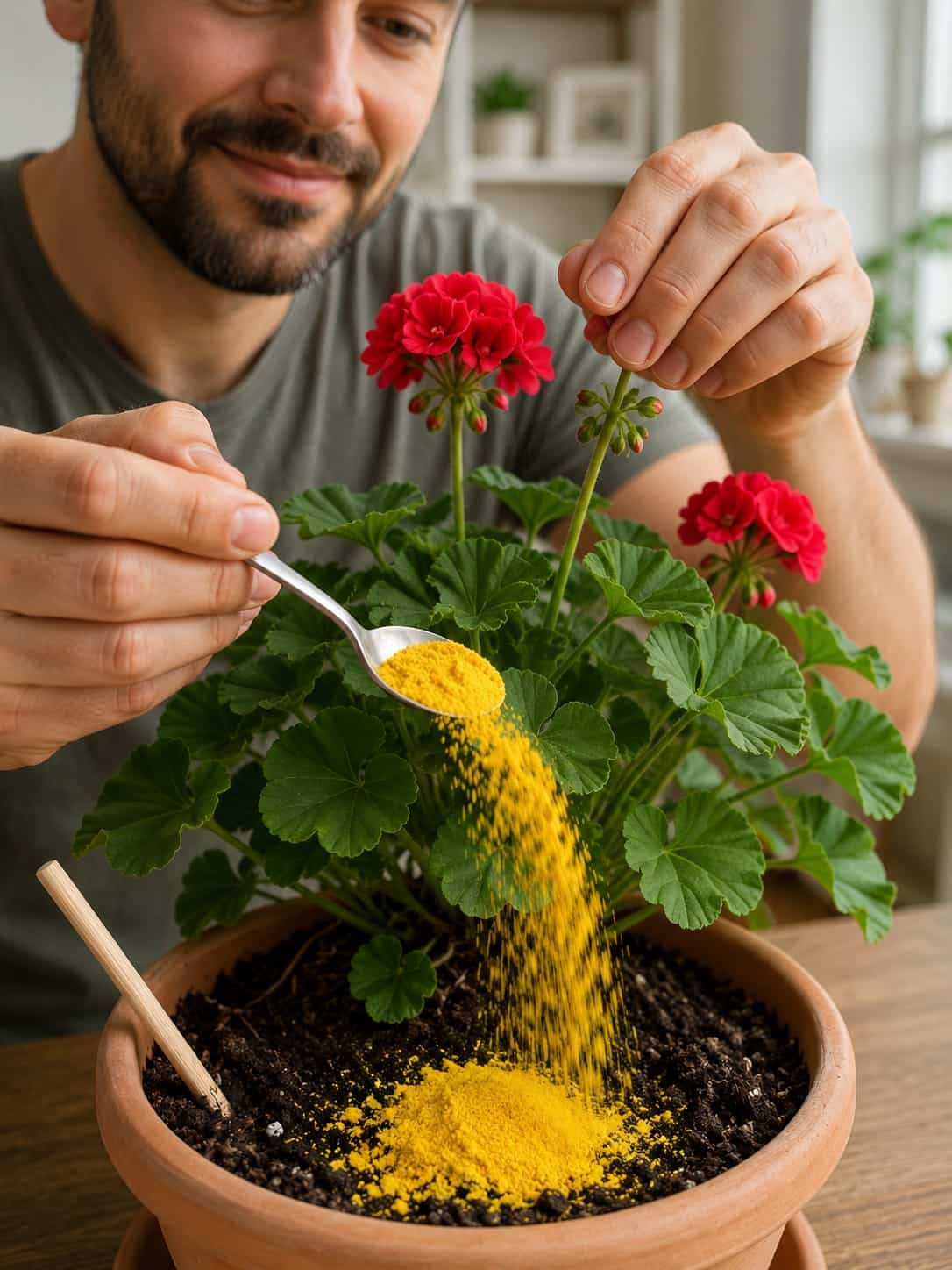
In the image, a homeowner is sprinkling a bright yellow powder onto the soil of a blooming geranium. The powder looks like turmeric powder, a common kitchen spice often used in home gardening tricks because of its natural color, strong earthy scent, and traditional reputation as a cleansing ingredient. In plant care, turmeric is sometimes used in very small amounts around the soil surface or on cut stems because gardeners believe it may help keep the area cleaner and discourage certain surface problems. However, it is important to use this trick carefully. Turmeric is not a complete fertilizer. It does not replace proper light, watering, pruning, or balanced plant food. Used too heavily, it can cake on the soil, hold moisture, stain surfaces, and possibly stress the plant.
The safest way to understand this trick is this: a tiny amount of yellow powder can be used as an occasional soil-surface refresh around a healthy or recovering geranium, but the real secret to fuller growth and more flowers is still the full care routine. Geraniums bloom best when they get strong light, proper watering, regular deadheading, gentle feeding, and pruning that encourages branching. The yellow powder is only a supporting trick, not the main reason the plant becomes beautiful.
This guide explains how smart homeowners can use a turmeric-style yellow powder safely around geraniums, how much to use, when to avoid it, what to do before sprinkling anything on the soil, and how to combine this trick with proven geranium care so the plant stays blooming, bushy, and decorative indoors.
What Is the Yellow Powder Being Sprinkled on the Geranium?
The bright yellow powder in the image looks most like turmeric powder. Turmeric is a common kitchen spice with a strong golden color. In many home-gardening videos and natural plant-care tips, turmeric is used in tiny amounts as a soil-surface powder, a cut-stem dusting powder, or a mild homemade plant-care ingredient.
For geraniums, turmeric should not be treated as a miracle fertilizer. It does not contain the complete balance of nutrients a flowering plant needs. Geraniums require light, water, air, and nutrients such as nitrogen, phosphorus, potassium, and trace minerals. A spoon of turmeric cannot provide all of that in a reliable way.
What turmeric can do in a plant-care routine is more limited. It can act as a dry, natural surface dusting ingredient when used sparingly. It may help make the soil surface feel fresher, and many gardeners like using it after light cleanup or pruning. But it should never be piled thickly around the plant, mixed heavily into the roots, or used repeatedly as if it were fertilizer.
The safest version of this trick is to use only a pinch, sprinkle it thinly on the soil surface away from the main crown, and then return to normal geranium care. The plant’s health will come from the basics, not from the powder alone.
Why Geraniums Need More Than a Simple Powder
Geraniums are strong plants, but they are not magic. They bloom because they have enough energy, and they get that energy mostly from light. They become bushy because they are pruned, pinched, and grown in good conditions. They stay healthy because their roots are not drowning. They keep flowering because old blooms are removed and the plant is lightly fed during active growth.
A yellow powder sprinkled on the surface may look dramatic in a photo, but it is only one small part of a larger routine. If a geranium is sitting in a dark corner, turmeric will not make it bloom. If the soil is soggy, turmeric will not fix root rot. If the plant is leggy because it has never been pinched, turmeric will not make it instantly bushy. If the pot has no drainage, turmeric will not save the roots.
Smart homeowners use tricks like this only after the real needs of the plant are handled. They check the light. They check the soil. They remove dead flowers. They trim weak stems. They water correctly. Then, if the plant is stable, they may use a tiny amount of yellow powder as an occasional natural refresh.
Why Geraniums Stop Blooming Indoors
Before using any yellow powder trick, it helps to understand why geraniums stop blooming. Indoor geraniums often decline because indoor conditions are less intense than outdoor sunlight. They may look alive, but they may not receive enough light to flower heavily.
Common reasons geraniums stop blooming include:
- Too little bright light
- Too much water
- Old flowers not removed
- Weak or stretched stems
- Too much nitrogen fertilizer
- Old compacted soil
- Root crowding
- Low air circulation
- Cold drafts or heat stress
- Lack of pruning
If you want geraniums to bloom indoors, start with light. A bright window is essential. Geraniums grown indoors usually need the sunniest spot available, especially in winter. Without enough light, the plant may stay green but produce few flowers.
Why Bushiness Matters for Geraniums
A bushy geranium looks fuller, healthier, and more decorative. Instead of one or two tall stems with flowers at the top, a bushy geranium has multiple growing points. This gives the plant a rounded shape and creates more places for flowers to form.
Bushiness does not happen by accident. It happens when the plant receives strong light and is pinched or pruned correctly. Each time you pinch back a growing tip, the plant is encouraged to branch. More branches can mean more leaves, more buds, and a fuller display.
A yellow powder does not directly make a geranium bushy. But if the powder trick encourages you to groom the plant, check the soil, and care for it more intentionally, it becomes part of a helpful routine. The true bushiness comes from pruning and light.
How Turmeric Powder Is Commonly Used in Plant Care
In home plant care, turmeric powder is usually used in small amounts. Gardeners may dust it on cuttings, sprinkle it lightly on soil, or use it around the surface after removing dead leaves. The idea is to keep the plant area cleaner and fresher.
For geraniums, the safest uses are:
- A tiny pinch on the soil surface after cleanup
- A light dusting away from the crown
- A small amount near a pruned area, not packed into the stem
- An occasional surface refresh, not a feeding routine
The unsafe uses are:
- Pouring spoonfuls onto the soil
- Covering the roots with powder
- Mixing large amounts into potting mix
- Using it every week
- Applying it to wet, soggy soil
- Sprinkling it over leaves and flowers
- Using it as the only fertilizer
The image shows a generous-looking amount of yellow powder falling from a spoon. For real plant care, use much less than the image suggests. Photos often exaggerate the amount for visual effect. Your plant does not need a pile of powder.
How Much Yellow Powder Should You Use?
Use less than you think. For a medium indoor geranium pot, a safe amount is about one small pinch, not a heaping spoonful. If you want to measure it, use roughly 1/8 teaspoon or less for a medium pot. For a small pot, use only a dusting. For a large pot, you can use up to 1/4 teaspoon, but even that should be spread thinly.
The goal is not to create a yellow layer. The goal is to lightly dust the surface in a few spots.
A good rule: if the soil surface looks covered in bright yellow powder, you used too much. The powder should disappear visually into the top of the soil after gentle mixing or after the next careful watering.
Where to Sprinkle It
Sprinkle the powder on the soil surface around the plant, but avoid piling it directly against the main stems or crown. Geranium stems need airflow at the base. Any powder, mulch, or damp material packed tightly around stems can create problems.
Apply it:
- On the outer soil surface
- Away from the crown
- In a very thin layer
- After removing dead leaves and old flowers
- When the soil surface is dry or slightly dry
Avoid applying it:
- On leaves
- On open flowers
- Inside flower clusters
- Against soft stems
- On wet or soggy soil
- Into standing water
Step-by-Step: How to Use the Yellow Powder Trick Safely
Step 1: Inspect the Geranium First
Before sprinkling anything, look closely at the plant. Are the leaves firm and green? Are the stems strong? Is the soil wet or dry? Are there pests? Are there dead flowers that need to be removed?
If the plant is severely wilted, rotten, or pest-infested, do not begin with turmeric. Fix the main issue first.
Step 2: Remove Old Flower Heads
Geraniums bloom better when spent flower clusters are removed. Follow the old flower stem down to where it joins the main stem and pinch or cut it off. Do not just remove the petals. Removing the whole spent flower stalk helps redirect energy into new growth and buds.
Step 3: Trim Yellow or Dead Leaves
Remove yellow, crispy, or damaged leaves. Dead leaves sitting on the soil can hold moisture and attract pests. A clean pot surface is always better before using any powder.
Step 4: Check Soil Moisture
Touch the soil. If it is wet, wait. Do not add powder to soggy soil. If the top soil is dry or slightly dry, it is safer to use a small dusting.
Step 5: Use Only a Pinch
Take a tiny pinch of turmeric powder or yellow plant-care powder. Sprinkle it lightly over the outer soil surface. Do not dump a spoonful into one spot.
Step 6: Keep It Away From the Crown
Leave a small clear space around the main stems. This helps prevent moisture and powder from collecting at the base of the plant.
Step 7: Lightly Scratch the Surface
Use a wooden stick or your fingertip to lightly mix the powder into the very top layer of soil. Do not dig deeply. Do not disturb the roots.
Step 8: Wait Before Watering
If the plant does not need water yet, wait. If the plant is due for watering, water gently around the soil after the powder has been lightly worked in. Avoid splashing powder onto leaves.
Step 9: Repeat Rarely
Use this trick no more than once every 4 to 6 weeks, and only during active growth. If the plant is healthy, you may not need to repeat it at all.
Why You Should Not Use Too Much
Too much powder can create problems. A thick layer of turmeric can cake on the soil surface, especially after watering. It can stain the pot, table, saucer, and hands. It can hold moisture against the soil surface. It can make it harder to judge whether the soil is dry. It may also affect the tiny microbial balance in the pot if overused.
In plant care, natural does not always mean harmless. Even kitchen ingredients must be used carefully. A pinch can be harmless as part of a routine. A pile can become a problem.
Can Turmeric Powder Fertilize Geraniums?
Turmeric powder is not a complete fertilizer for geraniums. It does not provide the balanced nutrition that flowering plants need for steady blooming. Geraniums need a proper combination of nutrients, especially during active growth and flowering.
If your geranium is hungry, use a balanced flowering houseplant fertilizer at a gentle dose. You can also refresh the potting mix if the soil is old. Do not rely on turmeric as the main food source.
Think of turmeric as a surface-care trick, not a feeding program.
What Geraniums Really Need to Keep Blooming
If you want flowers, focus on these essentials:
- Bright light
- Proper watering
- Regular deadheading
- Good drainage
- Light feeding during active growth
- Pruning for branching
- Fresh air around the plant
- A pot that is not too large
When these needs are met, a geranium can bloom indoors for a long time. The yellow powder may be interesting, but it is not the star of the show. The care routine is.
Best Light for Indoor Geraniums
Geraniums need strong light to bloom well indoors. A bright window is usually necessary. South- or west-facing windows can work well if the plant does not overheat. East-facing windows are gentler and can also work, especially in bright climates. North-facing windows are often too dim for heavy blooming.
Good light signs include:
- Compact growth
- Strong stems
- Many buds
- Bright green leaves
- Flowers that open fully
Low-light signs include:
- Long stretched stems
- Few flowers
- Pale leaves
- Weak growth
- Plant leaning toward the window
If your geranium is not blooming, move it gradually to a brighter location before trying more feeding tricks.
How to Water Geraniums Indoors
Geraniums like to dry slightly between waterings. They do not like constantly wet soil. Overwatering is one of the fastest ways to weaken an indoor geranium.
Watering Method
- Touch the top inch of soil.
- If it feels dry, water deeply.
- Pour water onto the soil, not over flowers.
- Let water drain from the bottom.
- Empty the saucer after 10 to 15 minutes.
- Wait until the top dries again before watering.
A terracotta pot, like the one in the image, can help because it allows moisture to evaporate through the sides. This reduces the risk of soggy soil, but it also means the plant may dry faster.
How to Make Geraniums Bushier
If your geranium is tall and sparse, pruning is the answer. Pinching and trimming encourage side shoots. More side shoots create a fuller plant.
How to Pinch a Geranium
- Find a growing tip at the end of a stem.
- Use clean fingers or scissors.
- Pinch off the top small section above a leaf node.
- Leave healthy leaves below the cut.
- Wait for side shoots to appear.
Do this during active growth. Do not pinch every stem at once if the plant is weak. Start with a few stems, let the plant respond, then continue shaping gradually.
How to Deadhead Geraniums for More Flowers
Deadheading is one of the most important habits for blooming geraniums. Old flower heads should be removed before they drain energy from the plant.
Deadheading Steps
- Find a faded flower cluster.
- Follow its stem down to the main stem.
- Pinch or cut the entire flower stalk off.
- Remove fallen petals from the soil.
- Repeat weekly during bloom season.
This keeps the plant neat and encourages new buds.
Best Soil for Geraniums
Geraniums need well-draining soil. Heavy soil can stay too wet and suffocate roots. A good indoor potting mix with added perlite works well.
Simple Geranium Soil Mix
- 2 parts quality potting mix
- 1 part perlite
- Optional: 1 part fine bark or compost
The mix should hold some moisture but drain freely. If water sits on top for a long time, the soil is too dense.
Should You Repot a Geranium Before Using Yellow Powder?
If the plant is healthy and the soil is good, you do not need to repot. But if the soil is old, compacted, sour-smelling, or full of roots, repotting may help more than any powder.
Repot if:
- The pot dries out too quickly because it is root-bound
- The soil stays wet too long
- The plant has stopped growing
- Roots are circling tightly
- The soil smells bad
- Water runs straight through without soaking
Choose a pot only one size larger. A pot that is too large can hold excess water and cause root problems.
How to Feed Geraniums Correctly
Geraniums bloom best with gentle, regular feeding during active growth. Use a balanced fertilizer or a flowering plant fertilizer at half strength. Do not overfeed.
A safe indoor schedule:
- Feed every 3 to 4 weeks during spring and summer
- Use half-strength fertilizer
- Water first if the soil is very dry
- Do not fertilize a stressed or newly repotted plant immediately
- Reduce feeding in winter
Too much fertilizer can cause salt buildup, weak growth, or fewer flowers. More is not always better.
Can You Combine Turmeric Powder With Fertilizer?
Do not use multiple treatments at the same time. If you sprinkle a tiny amount of turmeric powder, wait before fertilizing. If you recently fertilized, skip the powder. Keeping the routine simple helps prevent root stress.
A good schedule would be:
- Week 1: Plain watering
- Week 2: Light fertilizer if needed
- Week 3: Plain watering
- Week 4 or later: Tiny turmeric dusting if desired
There is no need to combine everything in one day.
Continue to Page 2
Continue to page 2 for more details about this article and the key points many readers miss on the first page.