Some houseplants are beautiful because of their leaves. Others are beautiful because of their shape. But an orchid cactus becomes unforgettable when it blooms. One day it looks like a simple trailing cactus with long, flat, green stems. Then suddenly, almost dramatically, it opens huge jewel-colored flowers that look far too glamorous for such an easygoing plant. The blooms can be pink, red, orange, white, yellow, coral, or two-toned, and they often look like tropical fireworks on the end of arching stems.
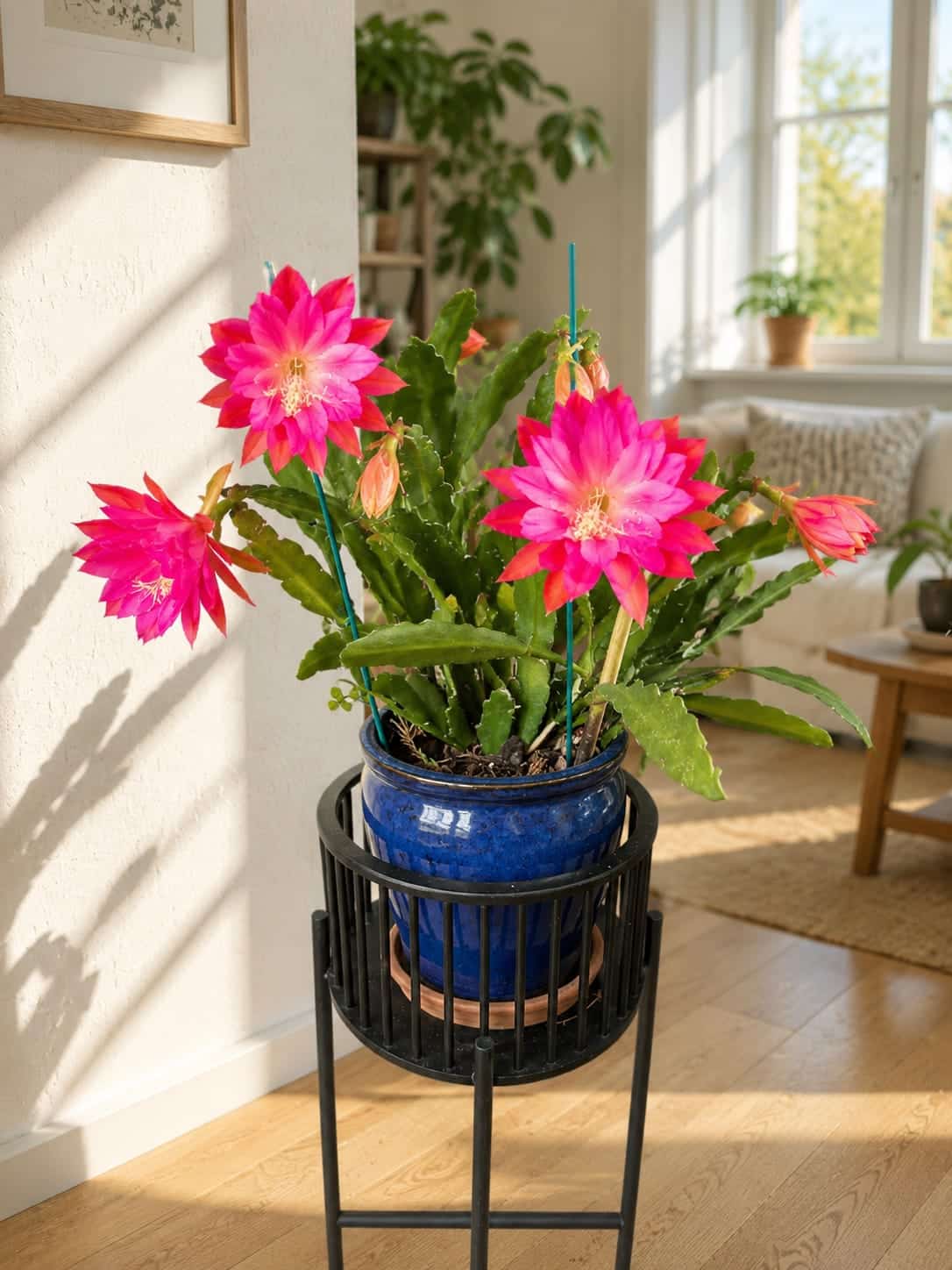
In the image, a stunning orchid cactus is placed near a bright window in a warm indoor room. It sits in a glossy blue pot on a raised stand, with bold pink blooms facing the light. The plant is not hidden in a dark corner. It is displayed where natural light can reach it, where the flowers can open fully, and where the plant becomes part of the room’s decor. This is exactly why smart homeowners are positioning orchid cactus plants near bright windows: the right light can help support stronger growth, better bud development, bigger blooms, and a more dramatic indoor display.
Orchid cactus, often called Epiphyllum or epiphytic cactus, is different from the desert cactus many people imagine. It does not want to bake all day in harsh direct sun. In nature, many epiphytic cacti grow in filtered forest light, often attached to trees where they receive bright but softened light. Indoors, that means they usually perform best near a bright window where they get plenty of indirect light and maybe a little gentle morning sun, but not hours of burning afternoon sun.
That balance is the secret. Too little light, and the orchid cactus may grow long, weak stems with few or no flowers. Too much harsh sun, and the stems can scorch, wrinkle, yellow, or develop stressed patches. But when you find the sweet spot near a bright window, the plant can become one of the most rewarding flowering houseplants you own.
This guide explains how to position an orchid cactus near a window, what kind of light it needs, how to encourage bigger blooms, how to water and feed it, how to support heavy flowers, how to avoid bud drop, and how to turn it into a dramatic indoor focal point without stressing the plant.
What Is an Orchid Cactus?
Orchid cactus is a common name used for several epiphytic cactus plants, especially those in or related to the Epiphyllum group and many popular hybrids. These plants are called orchid cactus because their flowers can look as elegant and exotic as orchids, even though the plant itself is a cactus. Unlike round desert cacti covered in spines, orchid cacti usually have long, flat, leaflike stems. These stems are actually modified cactus stems, not true leaves.
The plant in the image has long green flattened stems with scalloped edges and large pink flowers. This is the classic look people love. The plant can be grown in a pot, hanging basket, plant stand, or decorative container. When mature and well cared for, it can produce large blooms that create a bold indoor display.
Orchid cactus plants are especially popular because they combine two things homeowners love: they are relatively easy to care for, and they can bloom spectacularly. They do not need constant pampering, but they do need the right light and seasonal rhythm.
Why Window Placement Matters So Much
Light is one of the biggest factors in orchid cactus blooming. A plant can survive in lower light, but survival is not the same as performance. If you want those large dramatic blooms, the plant needs enough energy. Light gives it that energy.
When an orchid cactus receives bright indirect light, it can photosynthesize strongly, build healthy stems, and store enough energy to produce flower buds. When it sits in a dim corner, it may remain green for a long time but fail to bloom well. Many homeowners say, “My orchid cactus looks alive, but it never flowers.” Often, the reason is not the pot, not the fertilizer, and not a secret ingredient. It is simply not receiving enough bright light.
Positioning it near a bright window can change that. The plant receives stronger natural light during the day, the stems become firmer, and the plant has a better chance of forming buds during the correct season.
The Best Window for Orchid Cactus Indoors
The best window depends on your home, climate, and how intense the sun is. In general, orchid cactus plants like bright indirect light with gentle sun, not harsh burning sun.
East-Facing Window
An east-facing window is often ideal. It provides gentle morning sunlight, which is bright but usually not too hot. Morning sun can help encourage strong growth and flowering without scorching the stems.
South-Facing Window
A south-facing window can work well if the light is filtered. Use sheer curtains, place the plant a few feet back, or position it where it receives bright light but not intense direct midday sun. In cooler climates, a south window may be excellent. In hot climates, it may be too strong without protection.
West-Facing Window
A west-facing window can be risky because afternoon sun is often hotter and harsher. If this is your only bright window, place the plant slightly away from the glass or use a sheer curtain.
North-Facing Window
A north-facing window may be too dim for reliable blooming unless the room is very bright or you supplement with a grow light. The plant may survive, but it may not produce the big dramatic flowers you want.
How Close Should the Orchid Cactus Be to the Window?
The plant should be close enough to receive strong natural light but far enough away to avoid heat stress and sunburn. In the image, the orchid cactus is near the window but not pressed directly against the glass. This is a good arrangement. The plant receives bright light, but the room softens the exposure.
A good rule is to place the plant where it gets bright light for most of the day and gentle direct sun for a short period, if possible. If the window is very hot, move the plant back. If the stems stretch toward the light and blooming is poor, move it closer.
Watch the plant. It will tell you what it needs.
Signs the Light Is Just Right
When an orchid cactus is receiving good light, it usually looks strong and balanced. The stems are green, firm, and healthy. The plant may produce new growth and, during the right season, buds.
Good-light signs include:
- Firm green stems
- Steady new growth
- More bud formation during bloom season
- Compact but graceful growth
- Large flowers that open fully
- No scorched patches
- No extreme stretching toward the window
If your plant looks like the one in the image, with full green growth and big open blooms, the light is likely working well.
Signs the Plant Needs More Light
If the orchid cactus is not receiving enough light, it may stay alive but refuse to bloom. The stems may become weak, thin, or overly long. The plant may lean strongly toward the window.
Low-light signs include:
- No blooms for years
- Weak floppy growth
- Thin pale stems
- Long stretched sections
- Slow growth
- Plant leaning toward the light
- New growth that looks soft or narrow
If you see these signs, gradually move the plant closer to a brighter window. Do not move it suddenly from a dark corner into intense direct sun. Increase light slowly.
Signs the Plant Is Getting Too Much Sun
Although orchid cactus plants need brightness, they can burn. Their flat stems can become damaged by harsh direct sun, especially through glass.
Too-much-sun signs include:
- Yellowing stems
- Red or bronze stress color
- Dry scorched patches
- Wrinkled stems despite watering
- Brown sunburn marks
- Stems that feel thin or dehydrated
If this happens, move the plant away from the glass or add a sheer curtain. Damaged areas may not fully heal, but new growth can be healthier once the light is corrected.
Why Bright Windows Encourage Bigger Blooms
Flowers require energy. Big flowers require even more energy. An orchid cactus needs enough stored strength to create buds, expand petals, and hold large blooms open. Bright indirect light helps the plant build that energy through photosynthesis.
When a plant receives poor light, it may prioritize survival over flowering. It may grow stems but skip blooms. When it receives good light, it can support both growth and flowering.
That is why window placement is so powerful. It does not force the plant unnaturally. It simply gives the plant the energy conditions it needs to perform.
The Role of Seasonal Changes
Orchid cactus blooming is often influenced by seasonal changes. Many varieties bloom in spring or early summer after experiencing a cooler, slightly drier rest period. This does not mean the plant should be neglected. It means it benefits from a natural rhythm.
During active growth, the plant needs bright light, water, and light feeding. During the rest period, it may need slightly cooler temperatures and less water. This seasonal shift can help encourage buds.
Smart homeowners often place orchid cactus plants near bright windows because windows naturally provide seasonal cues: changing day length, cooler night temperatures, and brighter spring light.
How to Encourage More Blooms Step by Step
Step 1: Place the Plant in Bright Indirect Light
Start by giving the plant the right location. A bright east window or filtered south window is usually ideal. This is the foundation of flowering.
Step 2: Let the Plant Mature
Young orchid cactus plants may not bloom heavily. A mature plant with strong stems is more likely to produce flowers.
Step 3: Avoid Constant Moving
Once buds form, avoid moving the plant repeatedly. Sudden changes in light, temperature, or orientation can cause bud drop.
Step 4: Water Correctly
Keep the plant evenly but lightly moist during active growth. Let the top layer of mix dry slightly between waterings. Do not keep it soggy.
Step 5: Feed During Active Growth
Use a diluted balanced fertilizer or bloom-support fertilizer during the growing season. Avoid heavy feeding in winter rest periods.
Step 6: Provide a Rest Period
In fall or winter, reduce watering slightly and keep the plant cooler if possible. This can help prepare it for blooming.
Step 7: Support Heavy Flowering Stems
Large blooms can pull stems downward. Use stakes or gentle supports if needed, as seen in the image.
Why the Plant Stand Helps
The orchid cactus in the image is raised on a black plant stand. This is not only decorative; it is practical. Raising the plant improves visibility, airflow, and display. It also lets trailing stems and flowers hang naturally.
A stand helps by:
- Lifting flowers closer to eye level
- Keeping stems from dragging on the floor
- Improving airflow around the pot
- Making the plant a focal point
- Protecting furniture from moisture
- Helping light reach more of the plant
For a dramatic indoor display, a raised stand is one of the best styling choices.
Why the Blue Pot Works So Well
The glossy blue pot in the image creates contrast with the pink flowers and green stems. This is a smart decor choice. Orchid cactus blooms are bold, so the container should support the display rather than disappear completely.
Blue works especially well with pink, red, and orange flowers because it creates a vibrant color contrast. A decorative pot can make an orchid cactus look intentional, not just like a plant sitting randomly in the room.
However, the decorative pot must still allow proper drainage. If the blue pot is a cover pot, the inner pot should have drainage holes and should not sit in standing water.
Drainage Is Essential
Orchid cactus plants like more moisture than desert cactus, but they still hate soggy roots. Drainage is critical. A beautiful pot without drainage can quickly become a problem.
Use a pot with:
- Drainage holes
- A saucer that can be emptied
- Loose potting mix
- No standing water at the bottom
If using a decorative cover pot, remove the inner pot when watering, let it drain fully, then return it to the cover pot.
Continue to Page 2
Continue to page 2 for more details about this article and the key points many readers miss on the first page.