Best Soil Mix for Orchid Cactus
Orchid cactus plants are epiphytic, so they prefer a loose, airy, well-draining mix. Regular heavy garden soil is not ideal. A mix that holds some moisture but drains quickly works best.
Simple Orchid Cactus Mix
- 2 parts high-quality potting mix
- 1 part orchid bark
- 1 part perlite or pumice
- Optional: a small amount of compost or worm castings
This gives the roots air while still holding enough moisture for healthy growth. The mix should not become dense or muddy.
How to Water Orchid Cactus Near a Window
Plants near bright windows may dry faster than plants in darker corners. Sunlight, warmth, and airflow all affect moisture. That means you should not water strictly by calendar. Check the soil instead.
Watering Steps
- Touch the top inch of the potting mix.
- If it feels slightly dry, water thoroughly.
- Let water run out of the drainage hole.
- Empty the saucer after watering.
- Wait until the top layer begins to dry again.
During active growth and flowering, the plant may need more regular watering. During cooler rest periods, it needs less.
Do Not Let the Plant Sit Bone Dry During Budding
While orchid cactus can tolerate short dry periods, it should not be allowed to stay bone dry when buds are forming. Severe dryness can cause buds to shrivel or drop. Keep moisture consistent but not excessive.
The goal is balance: never soggy, never completely neglected.
Why Bud Drop Happens
Bud drop is frustrating. The plant forms buds, you get excited, and then the buds fall before opening. This can happen for several reasons.
Common causes include:
- Sudden change in location
- Too little water during bud formation
- Overwatering and root stress
- Cold drafts
- Hot dry air
- Low light
- Sudden temperature swings
- Moving or rotating the plant after buds form
Once buds appear, keep care steady. Do not move the plant from room to room unless necessary.
Should You Rotate Orchid Cactus?
During regular growth, rotating the pot occasionally can help the plant grow evenly. But once flower buds form, avoid frequent rotation. Some blooming plants are sensitive to changes in light direction. Keeping the plant stable can reduce the risk of bud drop.
Before buds form, rotate every week or two. After buds form, leave it alone as much as possible.
How to Support Heavy Blooms
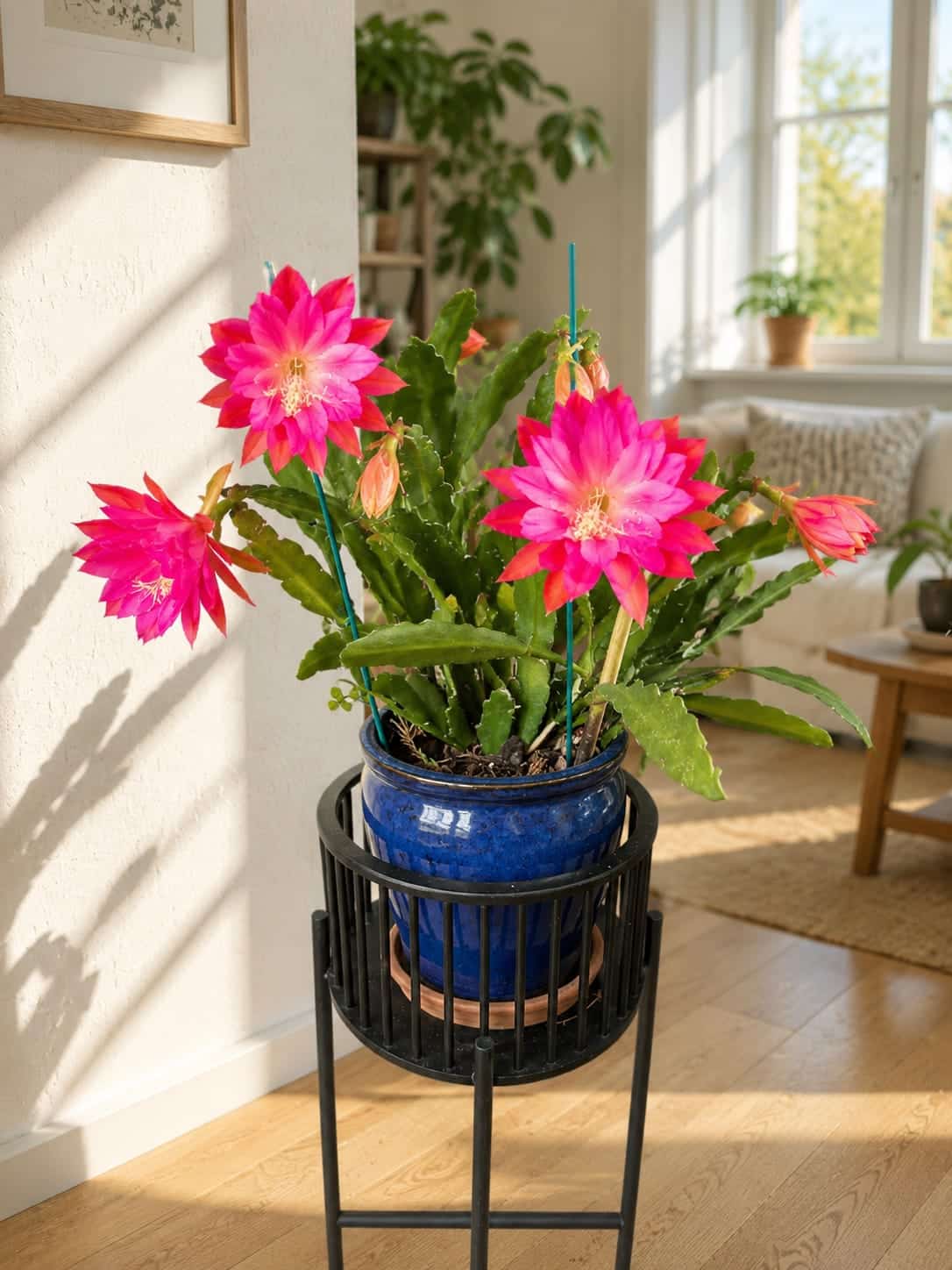
The image shows tall support stakes near the plant. This is smart because orchid cactus flowers can be large and heavy. Some stems arch gracefully, but others may bend too much under the weight of blooms.
Use supports carefully:
- Use thin bamboo or plastic stakes
- Insert them without damaging roots
- Tie stems loosely with soft plant ties
- Support flower stems before they bend too far
- Do not tie tightly around soft stems
The goal is to guide and support, not force the plant into an unnatural shape.
How to Feed Orchid Cactus for Bigger Blooms
Light is the foundation, but feeding also helps. Orchid cactus plants benefit from light fertilizing during active growth. Use a diluted fertilizer rather than a strong dose.
Feeding Routine
- Feed during spring and summer growth
- Use half-strength balanced houseplant fertilizer
- Switch to a bloom-support formula before bloom season if desired
- Do not overfertilize
- Reduce or stop feeding during winter rest
Too much fertilizer can cause weak growth or salt buildup. More feeding does not always mean more flowers.
Can Homemade Fertilizers Help Orchid Cactus Bloom?
Some homeowners use mild homemade tonics like banana peel water, rice water, or compost tea. These can be used occasionally, but they should not replace proper fertilizer and care. Orchid cactus plants need balanced nutrition, not random strong mixtures.
If using homemade tonics, keep them mild, fresh, strained, and occasional. Avoid sugar, milk, oil, salt, or strong fermentation indoors.
The most reliable bloom boosters remain: bright indirect light, seasonal rest, proper watering, and balanced feeding.
Temperature for Blooming
Orchid cactus plants usually prefer comfortable indoor temperatures. They do not like frost. However, a cooler rest period can help promote blooming for many types.
A good indoor rhythm is:
- Warm, bright conditions during active growth
- Slightly cooler nights during rest period
- No freezing temperatures
- Protection from cold drafts
- Protection from heat vents
Do not place the plant directly beside a heater, radiator, or air conditioner.
Humidity and Airflow
Because orchid cactus plants come from more humid environments than desert cacti, they appreciate moderate humidity. However, they still need airflow. Stagnant damp air can encourage fungal issues.
Good indoor conditions include:
- Normal to moderate household humidity
- Air movement around the plant
- No constant wet leaves
- No crowded damp corner
If your home is very dry, group plants nearby or use a pebble tray. Avoid misting heavily when flowers are open.
Should You Mist Orchid Cactus?
Light misting is not usually necessary if the plant is watered correctly. If you mist, do it in the morning so moisture dries before night. Avoid spraying open flowers heavily because water can spot or shorten bloom life.
Humidity is helpful, but wet, stagnant conditions are not.
How Long Do Orchid Cactus Blooms Last?
Bloom duration depends on the variety and conditions. Some flowers last only a day or two, while others may last several days. Even short-lived blooms are worth it because they are so dramatic.
To help blooms last longer:
- Keep the plant out of harsh hot sun
- Water consistently
- Avoid moving the plant
- Protect from drafts
- Do not spray blooms heavily
What to Do After the Flowers Fade
After blooming, remove faded flowers gently. Do not pull hard if they resist. Let them dry slightly, then pinch or trim them off. This keeps the plant tidy and prevents old flowers from rotting.
After flowering, return to normal care. Continue bright light and moderate watering during active growth. The plant may produce new stems after blooming.
Should You Prune Orchid Cactus?
Yes, pruning can help shape the plant and remove damaged growth. However, do not overprune right before bloom season because flowers often form on mature stems.
Prune to:
- Remove damaged stems
- Control size
- Improve shape
- Take cuttings for propagation
- Remove weak or diseased sections
Use clean scissors or pruners. Let cuttings callus before propagating.
How to Propagate Orchid Cactus
Orchid cactus is easy to propagate from stem cuttings.
Propagation Steps
- Cut a healthy stem section about 4 to 6 inches long.
- Use clean scissors.
- Let the cutting dry and callus for several days.
- Plant in a loose cactus-orchid mix.
- Keep lightly moist, not wet.
- Place in bright indirect light.
- Wait for roots to form.
This is a great way to create new plants from a mature specimen.
How to Style Orchid Cactus Indoors
The image is a great example of styling. The plant is near light, lifted on a stand, and paired with a colorful pot. The blooms become part of the room’s personality.
Styling Ideas
- Use a plant stand to raise the blooms
- Choose a pot color that contrasts with the flowers
- Place near sheer curtains for soft light
- Use simple furniture so the plant stands out
- Let stems arch naturally
- Use discreet supports for heavy flowers
- Place it where blooms can be seen from across the room
Orchid cactus has a dramatic shape, so give it space. Do not crowd it behind other decor.
Why Smart Homeowners Use It as a Focal Plant
Many houseplants blend quietly into the background. Orchid cactus does not. When it blooms, it becomes a focal point. The large flowers draw attention immediately, especially in bright colors like the pink blooms in the image.
It works beautifully in:
- Living rooms
- Sunrooms
- Bright bedrooms
- Entryways with windows
- Plant corners
- Home offices
- Covered balconies
A blooming orchid cactus can replace a bouquet because the flowers are so showy. But unlike cut flowers, the plant can bloom again with proper care.
Common Mistakes With Orchid Cactus Near Windows
Mistake 1: Putting It in Harsh Afternoon Sun
Bright light is good, but scorching sun is not. Use filtered light if the window is intense.
Mistake 2: Keeping It Too Far From the Window
A dark room may keep the plant alive, but it may not bloom. Move it closer to bright light.
Mistake 3: Overwatering Like a Tropical Fern
Orchid cactus likes more moisture than desert cactus, but it still needs drainage and air.
Mistake 4: Treating It Like a Desert Cactus
Do not leave it bone dry for too long during active growth and budding.
Mistake 5: Moving It After Buds Form
Sudden changes can cause bud drop. Keep it stable.
Mistake 6: Using Heavy Soil
Dense soil can suffocate roots. Use an airy mix.
Mistake 7: Forgetting Support
Large blooms can bend stems. Use gentle stakes when needed.
Quick Care Recipe for Bigger Blooms
Orchid Cactus Bloom Support Routine
- Place near a bright east or filtered south window
- Give bright indirect light daily
- Protect from harsh afternoon sun
- Use loose, well-draining potting mix
- Water when the top layer begins to dry
- Do not let the pot sit in water
- Feed lightly during active growth
- Provide a cooler, slightly drier rest period
- Avoid moving the plant after buds form
- Support heavy flowering stems
Short Caption for This Trick
Smart homeowners are placing orchid cactus near bright windows because strong indirect light helps the plant build energy for bigger, more dramatic blooms. The key is balance: give bright filtered light or gentle morning sun, but avoid harsh afternoon rays that can scorch the flat cactus stems. Use a well-draining mix, water when the top layer begins to dry, feed lightly during active growth, and keep the plant stable once buds appear. With the right window placement, orchid cactus can become a stunning indoor focal point covered in bold tropical flowers.
Frequently Asked Questions
Does orchid cactus need direct sunlight?
Orchid cactus likes bright light, but not harsh direct sun for long periods. Gentle morning sun or filtered bright light is best indoors.
What window is best for orchid cactus?
An east-facing window is often ideal. A filtered south-facing window can also work. West-facing windows may need a sheer curtain.
Why is my orchid cactus not blooming?
Common reasons include too little light, no seasonal rest period, immature plant, inconsistent watering, or moving the plant after buds form.
Can orchid cactus burn in the sun?
Yes. Harsh direct sun can scorch the flat stems. If stems turn yellow, red, or develop dry patches, the light may be too intense.
How often should I water orchid cactus?
Water when the top layer of mix begins to dry. Water more during active growth and less during cooler rest periods.
What soil does orchid cactus need?
Use a loose, airy, well-draining mix with potting soil, orchid bark, and perlite or pumice.
Should I fertilize orchid cactus?
Yes, lightly during active growth. Use diluted fertilizer and avoid heavy feeding during rest periods.
Why are my orchid cactus buds dropping?
Bud drop can happen from sudden movement, water stress, low light, temperature swings, drafts, or root problems.
Can I grow orchid cactus in a hanging basket?
Yes. Hanging baskets work well because the stems can trail naturally. Just make sure the plant still receives bright indirect light.
How do I make orchid cactus look more decorative indoors?
Use a raised stand, a colorful pot, gentle supports, bright window placement, and enough surrounding space for the stems and blooms to show.
Final Thoughts
Positioning an orchid cactus near a bright window is one of the simplest and smartest ways to help it become a showpiece. This plant does not need complicated tricks to look dramatic. It needs the right place, the right light, and steady care. When those basics come together, the reward can be spectacular: huge colorful blooms that make the entire room feel brighter.
The plant in the image shows exactly why homeowners love orchid cactus. The bright pink flowers, glossy blue pot, raised stand, and warm window light all work together. The plant is not just surviving; it is being displayed. It has enough light to support bloom energy, enough space to spread, and enough height to show off its flowers.
For best results, place your orchid cactus near an east-facing or filtered bright window. Protect it from harsh afternoon sun. Use loose, well-draining soil. Water when the top begins to dry. Feed lightly during active growth. Give it a seasonal rest. Do not move it constantly once buds appear. Support heavy blooms if needed.
With patience, your orchid cactus can become more than a houseplant. It can become a living centerpiece. The flat green stems may look simple most of the year, but when the blooms open, they bring color, drama, and elegance that few indoor plants can match. That is why smart homeowners give orchid cactus a bright window spot: because the right light can turn a quiet cactus into one of the most unforgettable flowering displays in the home.