Orchids have a way of making any indoor space feel elegant. Even a small orchid on a wooden table can change the mood of a room. Its glossy leaves, sculptural roots, and tall flower spike create a calm, expensive-looking display that feels fresh and refined. But orchids can also make homeowners nervous. They look delicate, and when leaves start to droop, roots turn pale, or buds stop opening, many people wonder what went wrong.
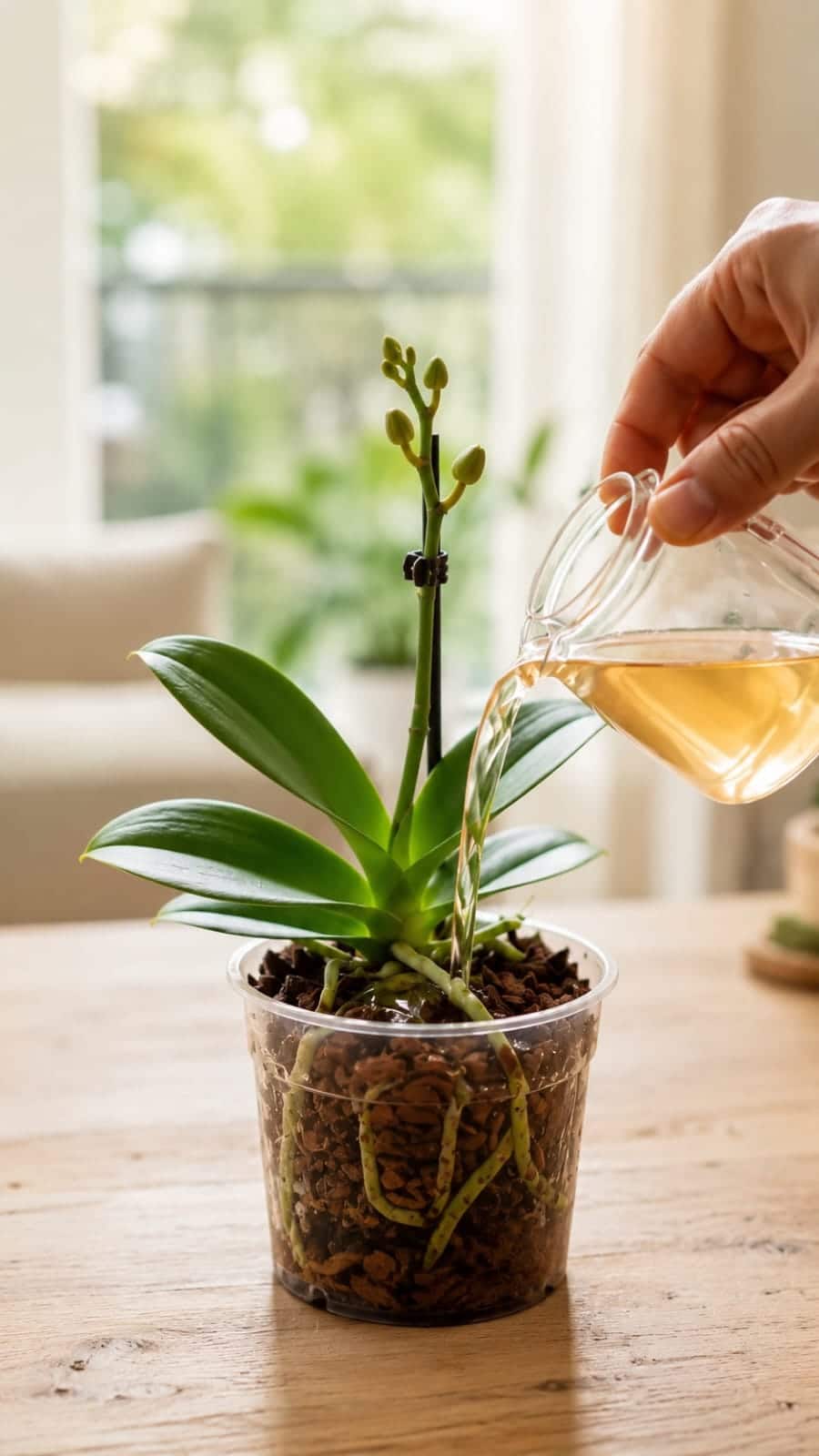
In the image, a healthy orchid is growing in a clear plastic pot filled with chunky bark. A hand is pouring a light golden liquid around the root zone. The plant has firm green leaves, visible roots, and a flower spike with developing buds. This scene suggests a popular indoor orchid trick: using a mild homemade golden tonic, often made from soaked banana peel, rice water, diluted compost tea, or another gentle kitchen-based infusion, to support orchid roots and encourage healthier growth.
The idea is simple and appealing. Instead of using strong fertilizer every time, some homeowners prepare a weak natural liquid and pour it gently through the bark when the orchid is due for watering. The goal is not to force instant flowers. The goal is to give the roots a light support drink while keeping the orchid’s care routine calm, clean, and consistent.
But orchids are not ordinary houseplants. They do not grow well in heavy soil. Their roots need air. Their potting medium must drain quickly. Their crown must stay dry. And their roots can be damaged if homemade tonics are too strong, too sticky, too fermented, or used too often. So this trick can be useful only when it is done gently.
Smart homeowners do not pour thick kitchen mixtures into orchid bark. They do not use sugary liquids. They do not leave banana pieces, rice grains, tea leaves, or food scraps in the pot. They do not pour tonic into a pot that is already wet. They use a weak, strained liquid, apply it only when the orchid is ready for watering, and let the pot drain completely.
This article explains how to use a gentle golden orchid tonic safely, what it may help with, what it cannot fix, how to make a mild version at home, when to avoid it, and how to combine it with the real orchid-care basics that lead to strong roots, shiny leaves, and future blooms.
What Is the Golden Liquid Being Poured on the Orchid?
The golden liquid in the image could represent several popular homemade orchid tonics. Many indoor plant lovers make light amber or yellowish liquids from simple ingredients such as banana peels, rice rinse water, diluted compost tea, or weak soaked vegetable scraps. For orchids, the safest version is usually a very mild, strained, diluted liquid used as an occasional root-zone rinse.
For a WordPress-style plant care trick, the most practical and gentle interpretation is a banana peel and rice water orchid tonic. Banana peel water is often used by plant lovers because banana peels are associated with potassium, and potassium is commonly linked with flowering and general plant strength. Rice water is popular because it is mild and easy to prepare, though it should always be diluted and used fresh. Together, when strained and diluted, they create a light golden liquid similar to the one shown in the image.
However, it is important to be honest: homemade tonics are not magic fertilizers. They do not contain perfectly measured nutrients. They cannot replace proper orchid fertilizer forever. They cannot save rotten roots. They cannot force buds overnight. They are best used as a gentle occasional support for an orchid that is already growing in the right conditions.
Why Orchid Roots Need Special Care
Orchid roots are different from the roots of many common houseplants. Most popular indoor orchids, especially Phalaenopsis orchids, are epiphytes. In nature, they often grow attached to trees, with their roots exposed to air, rain, and filtered light. Their roots are designed to absorb moisture quickly, then dry again.
This is why orchids are usually grown in bark, not dense potting soil. The bark creates air pockets around the roots. When you water, moisture flows through the pot and wets the roots. Then the bark slowly dries, allowing oxygen to return.
If you pour thick or sticky homemade liquids into orchid bark, the roots may become coated. The bark may stay too wet. The pot may begin to smell sour. Fungus gnats or mold may appear. That is why every homemade orchid tonic must be thin, fresh, strained, and diluted.
What This Tonic May Help With
A gentle golden tonic can be useful as part of a broader orchid care routine. It may support the plant by adding a mild nutrient boost and encouraging the homeowner to water more carefully. It can also be a nice occasional alternative between regular fertilizer applications.
This trick may help:
- Refresh the orchid root zone during active growth
- Support healthy leaves when the plant is already stable
- Encourage a more consistent watering routine
- Provide a mild homemade supplement between fertilizer feedings
- Support orchids that are producing new roots or buds
- Make orchid care feel more natural and intentional
But the word “support” matters. This tonic supports good care. It does not replace good care.
What This Tonic Cannot Do
Many plant tricks online make huge promises, but orchids need realistic care. A homemade tonic cannot overcome poor growing conditions.
This tonic cannot:
- Repair dead roots
- Reverse crown rot
- Save an orchid sitting in soggy bark
- Make a flower spike appear overnight
- Turn yellow leaves green again
- Replace bright indirect light
- Replace proper drainage
- Replace balanced orchid fertilizer completely
- Fix pest infestations
If an orchid is weak, the first step is always to check the roots and potting medium. A tonic should never be used to hide a deeper problem.
The Safest Homemade Golden Orchid Tonic
The safest version of this trick is weak, fresh, and fully strained. The final liquid should look like pale tea, not thick juice. It should not smell sour. It should not contain floating food pieces. It should flow through the bark easily.
Ingredients
- 1 small piece of banana peel, about 2 inches long
- 2 tablespoons uncooked rice
- 3 cups room-temperature water
- Clean jar
- Fine strainer or cheesecloth
- Extra plain water for dilution
Step 1: Rinse the Banana Peel
Rinse the banana peel well before using it. This removes dust, residue, and any surface dirt. Use only a small piece. More is not better for orchids.
Step 2: Rinse the Rice Briefly
Place the rice in a small cup and rinse it once with water. Discard that first cloudy rinse if it looks dirty. Then use clean water for the actual soak.
Step 3: Soak the Ingredients
Place the banana peel piece and rice in a jar with 3 cups of room-temperature water. Let it sit for 2 to 4 hours. Do not ferment it for days. Long fermentation can create sour liquid that may stress orchid roots indoors.
Step 4: Strain Completely
Strain the liquid through a fine strainer or cheesecloth. Remove every piece of banana peel and every grain of rice. The orchid pot should receive liquid only, never food scraps.
Step 5: Dilute Before Using
Mix 1 part tonic with 2 parts plain water. For example, combine 1 cup of strained tonic with 2 cups of water. This creates a gentle solution suitable for occasional orchid watering.
Step 6: Use the Same Day
Use the tonic fresh. Do not store it for a week. Homemade liquids can spoil quickly, especially if they contain organic material.
How to Apply the Golden Tonic to an Orchid
Step 1: Check the Roots First
Because the orchid in the image is in a clear pot, the roots are visible. This is helpful. Before watering, check root color. Healthy orchid roots are usually silvery when dry and green when wet. If the roots are already green and the bark is damp, wait.
Step 2: Use Only When the Orchid Is Due for Watering
Do not pour tonic into already wet bark. Orchids need a wet-dry rhythm. If the medium stays constantly damp, roots can suffocate or rot.
Step 3: Pour Around the Bark
Pour the diluted tonic slowly around the bark, not into the center crown. Let it run over the roots and through the potting medium.
Step 4: Let It Drain Fully
This is one of the most important steps. The pot must drain completely. Do not leave the orchid sitting in a saucer full of tonic. Standing liquid can rot roots.
Step 5: Return the Orchid to Bright Indirect Light
After watering, place the orchid back in bright indirect light. Avoid harsh direct sun while the roots are wet and the plant is adjusting.
Step 6: Repeat Rarely
Use this tonic no more than once every 4 to 6 weeks during active growth. Use plain water between applications.
Why the Clear Pot in the Image Is Useful
The orchid in the image is growing in a clear plastic pot. This is very helpful for beginners and experienced orchid growers alike. Clear pots allow you to see what is happening below the surface.
A clear pot helps you check:
- Root color
- Moisture level
- Condensation inside the pot
- Root health
- Whether the bark is breaking down
- Whether the plant needs repotting
If roots are green and the pot has moisture inside, the orchid does not need more water. If roots are silvery and the bark looks dry, it may be time to water.
Why Orchid Bark Matters
The image shows chunky bark around the orchid roots. This is ideal for many indoor orchids. Bark gives roots airflow and drainage. It also helps prevent the suffocation that can happen in dense soil.
For orchids, the potting medium should be:
- Loose
- Chunky
- Fast-draining
- Fresh-smelling
- Airy around the roots
If the bark becomes soft, sour, mushy, or compacted, the orchid may need repotting. No tonic can make old broken-down bark healthy again.
When Not to Use This Tonic
Do not use homemade golden tonic on every orchid in every situation. Sometimes plain water is safer.
Avoid this tonic if:
- The bark is already wet
- The roots are black, mushy, or rotten
- The pot smells sour
- The orchid has crown rot
- The leaves are collapsing
- The plant was recently overwatered
- The tonic smells fermented or sour
- The liquid contains banana pieces or rice grains
- The orchid is newly repotted and stressed
- The plant is in a very cold room
If an orchid is severely weak, use plain water and fix the roots before adding any homemade supplement.
Can This Tonic Help Orchid Buds?
The orchid in the image has a flower spike with developing buds. When an orchid is budding, it needs stable care. Sudden changes can cause bud drop. A mild tonic may be safe if the plant is already healthy, but this is not the time to experiment with strong mixtures.
If your orchid has buds:
- Keep watering consistent
- Avoid moving the plant repeatedly
- Protect it from drafts
- Avoid strong fertilizer
- Use only very mild tonic, if any
- Do not wet the buds or flowers
Bud development depends more on stable light, temperature, and moisture than on any one homemade ingredient.
Can This Tonic Make Orchids Bloom Again?
It may support an orchid during growth, but it will not force blooming by itself. Orchids rebloom when several conditions come together: healthy roots, enough leaves, bright indirect light, proper watering, and sometimes a natural temperature difference between day and night.
If your orchid is not blooming, ask these questions:
- Are the roots healthy?
- Does the plant have enough leaves?
- Is it receiving bright indirect light?
- Is the potting bark fresh?
- Is the plant being overwatered?
- Has it had enough time after the last bloom cycle?
The tonic can be part of the routine, but the environment controls blooming more than the drink does.
Continue to Page 2
Continue to page 2 for more details about this article and the key points many readers miss on the first page.