How Often Should Orchids Be Watered?
There is no perfect calendar for every orchid. Watering depends on temperature, pot size, bark type, humidity, and light. A small orchid in bark near a warm window may dry quickly. A larger orchid in a cool room may stay damp much longer.
The best method is to check the roots and bark.
Water when:
- Roots look silvery
- Bark feels mostly dry
- The pot feels lighter
- There is little or no condensation inside the clear pot
Wait when:
- Roots are still green
- Bark feels damp
- The pot feels heavy
- Condensation is visible inside the pot
Most indoor orchids prefer drying slightly between waterings.
Should You Pour the Tonic Over the Leaves?
No. Pour the tonic into the bark and around the roots. Do not pour it over the leaves, crown, buds, or flowers. Moisture trapped in the crown can cause rot, especially indoors where airflow may be limited.
If liquid accidentally gets into the crown, gently blot it with a paper towel.
Can You Spray This Tonic on Orchid Leaves?
It is better not to spray banana or rice water on orchid leaves. Homemade organic liquids can leave residue, attract dust, or create spots. If you want to clean orchid leaves, use plain water and a soft cloth.
For leaf shine, avoid oils, milk, mayonnaise, or strong homemade sprays. Orchids look best when leaves are clean and naturally glossy.
Can You Use Strong Fermented Tonic?
For indoor orchids, strong fermentation is risky. Fermented liquids can smell sour, attract gnats, and affect the root zone. Some outdoor gardeners use fermented plant extracts, but orchids in bark inside the home are more sensitive.
Use fresh soaked tonic instead. A short soak of a few hours is much safer than leaving banana peel and rice water for many days.
What If the Tonic Smells Bad?
Throw it away. A safe orchid tonic should smell mild and fresh. If it smells sour, rotten, alcoholic, or unpleasant, do not use it on orchids.
Bad-smelling liquid can indicate fermentation or decay. Pouring it into orchid bark may create root problems.
How to Use Regular Orchid Fertilizer With This Trick
Homemade tonic should not replace fertilizer completely. Orchids benefit from balanced orchid fertilizer during active growth. The trick is not to overdo everything at once.
A simple routine:
- Week 1: Plain water
- Week 2 or 3: Weak orchid fertilizer
- Week 4: Plain water
- Week 5 or 6: Mild homemade tonic, if desired
Do not use fertilizer and homemade tonic together in the same watering. Keep the routine simple so roots are not overwhelmed.
Best Light After Using the Tonic
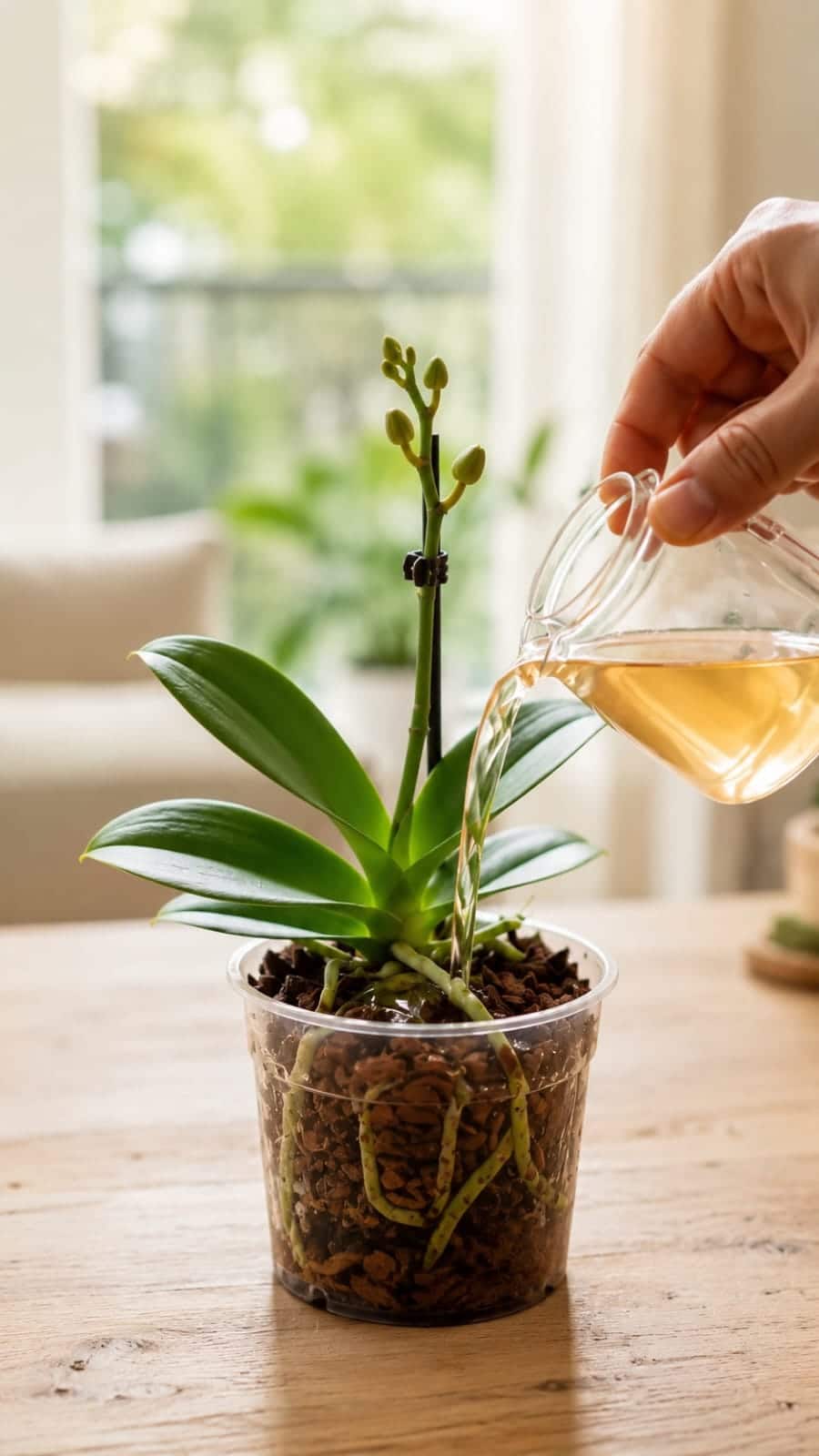
The image shows the orchid near a bright window with soft filtered light. This is ideal. Orchids need brightness, but not harsh sun. After watering, especially with any homemade tonic, keep the plant in bright indirect light and good airflow.
Good orchid light looks like:
- Bright room during the day
- Soft filtered window light
- Morning sun if gentle
- No harsh midday burn
- Leaves that are medium green, not extremely dark or yellow
Too little light can prevent blooming. Too much direct sun can burn leaves.
Signs Your Orchid Likes the Routine
A healthy orchid responds slowly but clearly. Do not expect dramatic overnight changes. Watch over several weeks.
Good signs include:
- Firm leaves
- New root tips
- Green roots after watering
- No sour smell in the pot
- Buds continue developing
- Leaves stay glossy
- Plant remains upright and stable
If the orchid continues growing steadily, your care routine is probably working.
Signs You Should Stop Using the Tonic
Stop using the tonic if the orchid shows stress after application.
Warning signs include:
- Bark smells sour
- Mold appears on the surface
- Fungus gnats increase
- Roots turn mushy
- Leaves droop after watering
- Bud drop happens suddenly
- The pot stays wet too long
If any of these happen, return to plain water and allow the orchid to dry properly. If the smell or root damage continues, repot into fresh bark.
How to Repot an Orchid With Poor Roots
If your orchid is weak, repotting may help more than tonic. Here is a safe basic method.
Step 1: Remove the Orchid From the Pot
Gently squeeze the clear pot and slide the orchid out. Be careful with roots attached to the pot wall.
Step 2: Remove Old Bark
Shake away old bark. If it smells sour or feels mushy, discard it.
Step 3: Trim Dead Roots
Use clean scissors to remove black, mushy, hollow, or rotten roots. Keep firm roots, even if they are pale.
Step 4: Choose Fresh Orchid Bark
Use fresh chunky orchid bark, possibly with perlite and charcoal. Do not use dense garden soil.
Step 5: Repot Gently
Place the orchid back into a clear pot with drainage holes. Fill around the roots with bark. Do not pack too tightly.
Step 6: Wait Before Using Tonic
After repotting, use plain water first. Wait several weeks before using any homemade tonic.
Why Smart Homeowners Like This Trick
This trick feels simple, natural, and elegant. A pale golden liquid poured from a glass pitcher looks cleaner and gentler than harsh chemical treatments. It also encourages the plant owner to slow down and care for the orchid thoughtfully.
Smart homeowners like it because:
- It uses simple kitchen ingredients
- It feels gentle and natural
- It encourages careful watering
- It can support a healthy orchid routine
- It fits beautifully into indoor plant care content
- It makes orchid care feel less intimidating
But the smartest part is knowing the limits. Natural care works best when it is mild, clean, and combined with correct orchid basics.
Quick Recipe Card
Gentle Golden Orchid Root Tonic
Ingredients
- 1 small piece banana peel
- 2 tablespoons uncooked rice
- 3 cups water
- Extra water for dilution
Instructions
- Rinse the banana peel.
- Rinse the rice briefly.
- Soak banana peel and rice in 3 cups water for 2 to 4 hours.
- Strain completely.
- Mix 1 cup tonic with 2 cups plain water.
- Use only when orchid roots are silvery and bark is mostly dry.
- Pour gently through the bark.
- Keep away from crown, leaves, buds, and flowers.
- Let the pot drain fully.
- Use no more than once every 4 to 6 weeks.
Short Caption for This Trick
Smart homeowners are using a gentle golden orchid tonic made from diluted, strained kitchen ingredients to support healthier roots and steady indoor growth. The safe method is simple: soak a tiny piece of banana peel and a little rice in water for a few hours, strain completely, dilute well, and pour only through the orchid bark when the plant is already due for watering. Never use thick, sour, fermented, or sugary liquid, and never let the orchid sit in standing water. This tonic can support good care, but strong roots, bright indirect light, fresh bark, and proper drainage are the real secrets to beautiful orchids.
Frequently Asked Questions
What is the golden liquid being poured on the orchid?
It can be understood as a mild homemade orchid tonic, often made from diluted banana peel water, rice water, or another gentle strained kitchen infusion.
Is banana peel water good for orchids?
It can be used occasionally if it is weak, fresh, strained, and diluted. It should not replace proper orchid fertilizer or basic care.
Can rice water help orchids?
Fresh diluted rice water may be used occasionally, but it must be strained and should not be allowed to ferment before use on indoor orchids.
How often should I use this tonic?
No more than once every 4 to 6 weeks during active growth. Use plain water between applications.
Can I use this tonic on a blooming orchid?
Yes, if the orchid is healthy and due for watering, but keep the liquid away from flowers, buds, and the crown.
Can this tonic make my orchid bloom?
It may support growth, but blooming depends more on healthy roots, bright indirect light, proper watering, and stable care.
Can I leave banana peel or rice in the orchid pot?
No. Never leave food scraps in orchid bark. They can rot, attract pests, and cause mold.
What if the tonic smells sour?
Do not use it. Throw it away and make a fresh mild batch if needed.
Should I spray this on orchid leaves?
No. Apply it only to the bark and root zone. Use plain water to clean leaves.
What is the best first step for a weak orchid?
Check the roots. If roots are rotten or the bark smells sour, repotting into fresh orchid bark is more important than any tonic.
Final Thoughts
The golden orchid tonic trick is beautiful, simple, and appealing. It makes orchid care feel natural and calming, especially when poured gently from a glass pitcher into a clear pot filled with bark and healthy roots. Used correctly, a mild homemade liquid can become a small part of a thoughtful orchid routine.
But the best orchid growers know that the tonic is not the miracle. The miracle is consistency. Orchids thrive when their roots can breathe, when their pot drains well, when they receive bright indirect light, when they are watered only at the right time, and when their growing medium stays fresh. A homemade tonic can support that routine, but it cannot replace it.
Use the golden liquid carefully. Keep it weak. Strain it completely. Dilute it well. Apply it only when the orchid is due for watering. Keep it away from the crown and flowers. Let the pot drain fully. Use it rarely. Watch how the plant responds.
If the orchid has firm leaves, clean bark, green roots after watering, and developing buds, you are already on the right path. With patience and gentle care, your orchid can continue to grow stronger roots, healthier leaves, and more beautiful blooms indoors.