Snake plants are famous for being tough, elegant, and almost impossible to ignore. Their tall sword-shaped leaves stand upright like living sculpture, making them one of the best indoor plants for modern homes, apartments, offices, and bright corners that need a clean decorative touch. A healthy snake plant looks bold and architectural. Its leaves are firm, patterned, glossy, and upright. But when a snake plant becomes weak, the signs are easy to notice. The leaves may lean, soften, wrinkle, yellow, or lose their strong vertical shape.
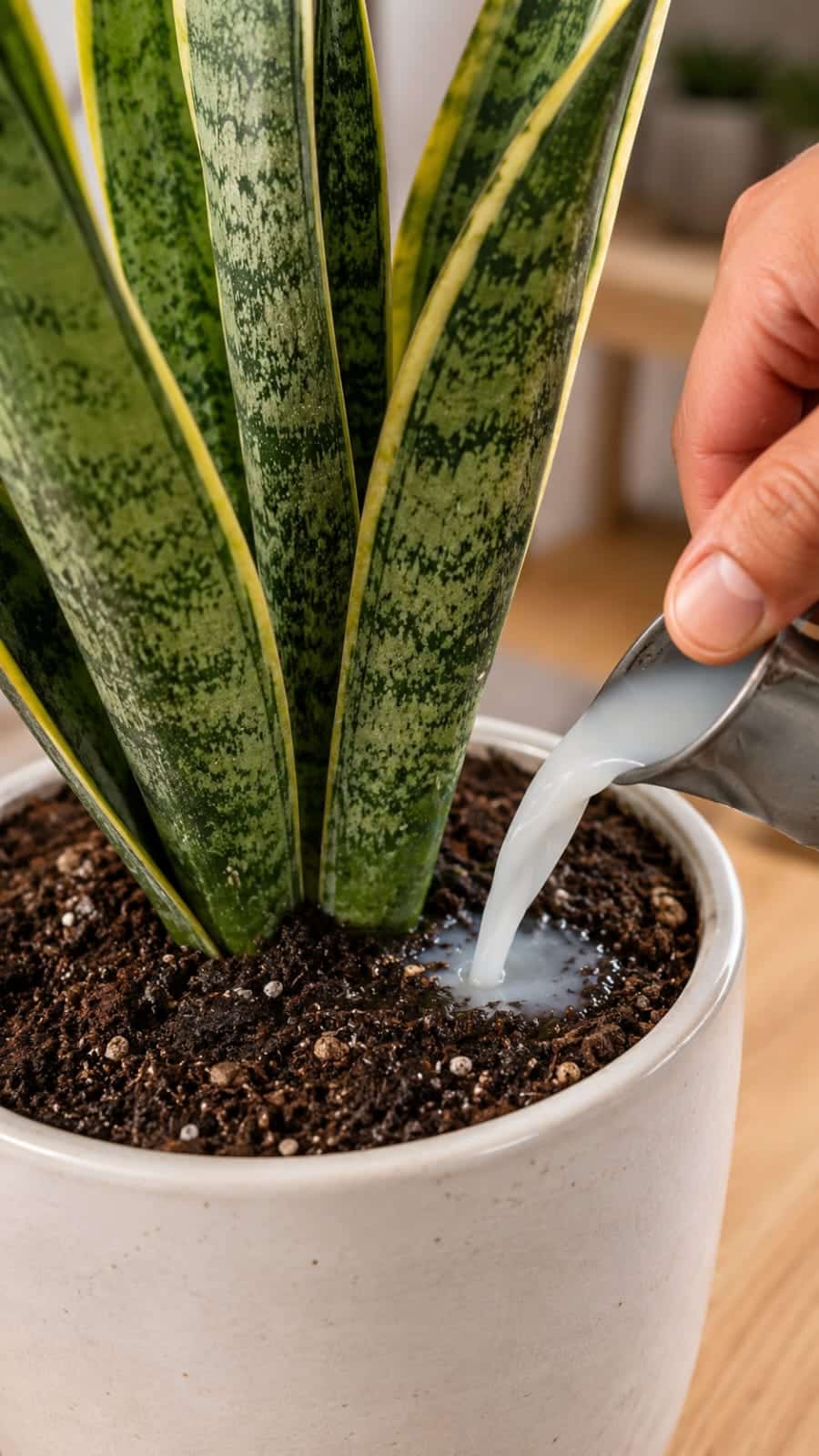
In the image, a homeowner is pouring a cloudy white liquid around the base of a snake plant. The liquid looks like a diluted milk-style tonic or a rice-water mixture. This type of “milky” plant trick is popular because it looks simple, natural, and gentle. Many homeowners like the idea of using a mild kitchen-based liquid to refresh the soil and support stronger-looking growth.
However, snake plants are succulents. They store water in their thick leaves and rhizomes, and they do not like wet soil. That means any milky tonic must be used carefully. A snake plant does not need frequent feeding, heavy watering, or rich organic liquid poured into the pot every week. Too much moisture can cause root rot. Thick milk can sour in the soil. Sugary or fatty liquids can attract fungus gnats, mold, and unpleasant smells.
The safest way to use this trick is to treat the milky liquid as a very diluted rice-water or milk-water tonic, used rarely, only when the soil is dry and the plant is actively growing. It should never be poured into already wet soil, and it should never replace proper snake plant care.
What Is the Milky Liquid in the Image?
The liquid in the image could represent two common homemade plant tonics: diluted rice water or diluted milk water. Both can look pale and cloudy when poured into soil. For snake plants, the safer option is usually diluted rice water, because it is lighter and less likely to turn sour than milk. If milk is used, it must be extremely diluted and used very rarely.
Rice water is made by rinsing uncooked rice in water and saving the cloudy liquid. Some plant lovers use it because it may contain small amounts of starches and trace minerals. Milk water is sometimes used because milk contains calcium and proteins, but it can spoil quickly in potting soil. For snake plants, milk should be treated with extra caution.
The most practical version of this trick is a gentle cloudy tonic made from:
- 1 tablespoon rice rinse water
- 1 cup plain water
- Optional: only a few drops of milk, not a full pour
This creates a very mild liquid. It should look watery, not thick. If it looks like a glass of milk, it is too strong for a snake plant.
Why Snake Plants Need Careful Watering
Snake plants are drought-tolerant. Their leaves hold moisture, and their underground rhizomes can rot if soil remains wet for too long. This is why the biggest danger with any liquid trick is overwatering.
A snake plant prefers:
- Fast-draining soil
- A pot with drainage holes
- Bright indirect light or moderate light
- Water only after the soil dries
- No standing water in the saucer
- No constant dampness around the base
If the plant is already weak from too much water, pouring a tonic on top can make the problem worse. Before using any homemade liquid, always check soil moisture first.
When This Trick May Help
A very diluted milky tonic may be useful as an occasional soil refresh for a healthy snake plant during active growth. It may help homeowners stay consistent with care and provide a tiny boost without using strong fertilizer.
It may help when:
- The snake plant is healthy but growing slowly
- The soil is completely dry
- The plant is in active spring or summer growth
- The pot drains well
- The liquid is very diluted
- You use it rarely
Think of this as a gentle support drink, not a cure. It cannot fix a snake plant that is rotting, sitting in poor soil, or kept in a dark wet corner.
When You Should Not Use It
Do not use this trick if the snake plant is already stressed from moisture. Cloudy liquid added to wet soil can increase the risk of rot and sour smells.
Avoid this trick if:
- The soil is damp
- The leaves are soft or mushy
- The base of the plant feels loose
- The pot has no drainage hole
- The soil smells sour
- Fungus gnats are present
- The room is cold or dark
- The plant was recently overwatered
- The tonic smells bad
If any of these signs appear, use plain water only and let the plant dry out properly.
How to Make a Safe Milky Tonic for Snake Plants
Ingredients
- 1 tablespoon cloudy rice rinse water
- 1 cup room-temperature water
- Optional: 3 to 5 drops of milk only
Step 1: Rinse the Rice
Place a tablespoon of uncooked rice in a small bowl. Add water, swirl gently, and pour off the first rinse if it looks dirty. Add fresh water and swirl again. This second cloudy rinse is the liquid you can use.
Step 2: Dilute It Well
Mix 1 tablespoon of rice water into 1 cup of plain water. This keeps the tonic weak enough for snake plant roots.
Step 3: Skip Milk if You Are Unsure
If you want the safest version, use rice water only. If you insist on a milk-style tonic, add only a few drops of milk to the cup of diluted rice water. Do not pour straight milk into the pot.
Step 4: Use It Fresh
Use the tonic the same day. Do not store it for days, because homemade liquids can ferment or spoil.
How to Apply It Step by Step
Step 1: Check the Soil
Push your finger or a wooden stick into the soil. If the soil is still damp below the surface, wait. Snake plants should be watered only when the soil has dried well.
Step 2: Use a Small Amount
For a medium pot, use only 1/4 to 1/2 cup of the diluted tonic. Do not flood the pot. The image shows a generous pour, but real snake plant care should be more controlled.
Step 3: Pour Around the Outer Soil
Pour the liquid around the soil, not directly into the tight center of the plant. Avoid soaking the base of the leaves.
Step 4: Let It Drain
If the pot has drainage holes, let extra liquid drain out. Empty the saucer after watering. Never allow a snake plant to sit in liquid.
Step 5: Wait Before Watering Again
After using the tonic, wait until the soil dries again before watering. This may take one, two, or even three weeks depending on your home.
How Often Should You Use This Trick?
Use this tonic rarely. Once every 6 to 8 weeks during spring or summer is enough. In winter, skip it completely unless your plant is actively growing in a warm, bright room.
Snake plants do not need frequent feeding. Too much homemade tonic can cause soil problems. Less is safer.
Continue to Page 2
Continue to page 2 for more details about this article and the key points many readers miss on the first page.