Geraniums are among the most cheerful flowering plants you can grow in pots. Their rounded leaves, colorful flower clusters, and easy balcony charm make them a favorite for windowsills, patios, terraces, porch steps, and sunny indoor corners. When they are healthy, geraniums look abundant and joyful. A full pot of red, pink, coral, salmon, or white geraniums can make even a simple balcony feel like a small European garden.
But when geraniums decline, they can look dramatic. The leaves turn yellow and brown. The flower heads dry out. Stems bend. Buds stop opening. The soil looks tired. What once looked like a bright decorative plant suddenly appears exhausted, as if it has used up all its energy.
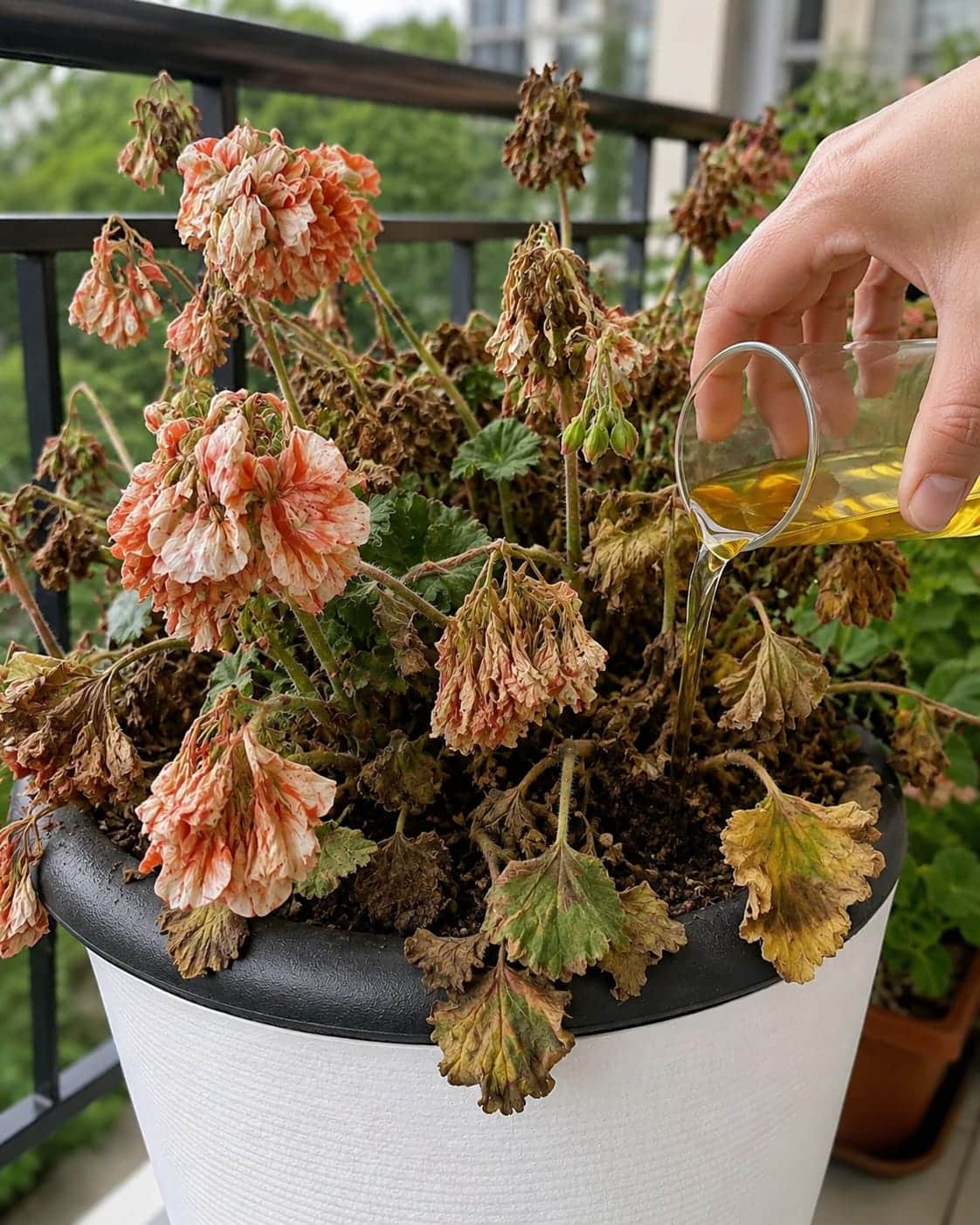
In the image, a weak potted geranium is sitting near a balcony railing. Many leaves are dry, yellow, or brown. The flowers are wilted and hanging downward. A hand is pouring a golden liquid into the soil, suggesting a homemade plant tonic meant to help the plant recover. This type of treatment is popular because it feels simple, natural, and hopeful. The golden color often suggests banana peel water, onion peel tea, diluted compost tea, or another gentle kitchen-based plant infusion.
The safest way to understand this trick is not as a miracle cure, but as a mild recovery tonic for stressed geraniums. A weak, strained, diluted golden liquid can help refresh the root zone and support new growth when the plant is still alive. But it will not revive dead stems instantly. It will not repair rotten roots. It will not replace sunlight, pruning, drainage, or proper watering.
Geranium recovery depends on three things first: removing dead growth, correcting the watering problem, and giving the plant enough bright light. After that, a gentle homemade tonic can be used as a small support step. If the plant still has green stems, firm roots, and a few healthy leaves, it may recover beautifully with patient care.
What Is the Golden Liquid Being Poured on the Geranium?
The golden liquid in the image looks like a homemade plant tea. For geraniums, a safe version can be made from banana peel water, onion peel tea, or a very weak compost-style infusion. These liquids are often used by home gardeners because they are easy to make and may provide a light nutrient boost.
For a weak geranium, the best option is a gentle banana peel and onion peel tonic. Banana peel water is often associated with potassium, which supports general plant strength and flowering. Onion peel tea can create a mild amber liquid and is often used as a gentle plant refresh. When strained and diluted, the tonic can be applied to the soil during a normal watering.
But it must be weak. Strong kitchen mixtures can sour in the pot, attract fungus gnats, and stress already weak roots. A geranium that is drying, wilting, or yellowing should not be overwhelmed with heavy liquid fertilizer. It needs calm, balanced recovery.
Why Geraniums Become Weak and Wilted
Before using any tonic, it is important to understand why a geranium declines. Many people assume a wilted geranium needs more water or more fertilizer, but that is not always true. A geranium can look wilted from both underwatering and overwatering. It can also decline from heat stress, old flowers, poor pruning, low light, compacted soil, or root problems.
The plant in the image shows several signs of stress: drooping flower heads, dry leaves, yellowing foliage, and brown edges. This could be caused by inconsistent watering, too much heat, old spent blooms left on the plant, or tired soil. The plant may still be recoverable, but the dead and weak parts need to be removed first.
1. Underwatering
Geraniums like their soil to dry slightly between waterings, but they do not want to be left bone dry for too long. If the pot becomes completely dry, the plant may wilt, leaves may crisp, and flower heads may collapse.
2. Overwatering
Overwatering is just as dangerous. If the soil stays wet for too long, roots may suffocate and rot. The leaves can yellow, stems can weaken, and the plant may droop even though the soil is wet.
3. Heat Stress
Balcony geraniums can suffer during very hot weather, especially in small pots. Strong sun, hot railings, and dry wind can cause flowers and leaves to dry quickly.
4. Old Flowers Not Removed
Geraniums bloom better when spent flower clusters are removed. If old flower heads remain on the plant, they turn brown and make the whole pot look weak.
5. Low Light
Geraniums need strong bright light to bloom well. A geranium kept in too much shade may grow weak stems and produce fewer flowers.
6. Tired Soil
Potted geraniums use up nutrients over time. Old soil can become compacted, dry unevenly, or hold too much water. This can slow growth and reduce blooming.
Can a Golden Tonic Help a Weak Geranium?
Yes, but only if the plant is still alive and the basic care problems are corrected. A mild golden tonic can support recovery by giving the plant a gentle nutrient refresh. It may help encourage new leaves and stronger blooming once the plant has been pruned and stabilized.
A golden tonic may help if:
- The plant still has green stems
- The roots are not rotten
- The pot has drainage holes
- The soil is not already soggy
- The plant receives bright light
- Dead flowers and leaves are removed
- The tonic is strained and diluted
It will not help much if the plant is sitting in wet, sour soil or if most of the stems are dead. In that case, pruning and repotting may be more important.
What This Treatment Cannot Do
It is tempting to believe that one homemade tonic can bring any plant back overnight, but geraniums recover through new growth, not instant transformation. The dried flowers in the image will not become fresh again. The brown leaves will not turn green. The goal is to help the living parts of the plant produce new healthy leaves and blooms.
This golden tonic cannot:
- Revive dead flowers
- Turn brown leaves green again
- Repair rotten roots
- Fix a pot with no drainage
- Replace pruning
- Replace sunlight
- Correct severe overwatering
- Make a dead plant bloom again
- Work instantly in one day
The tonic is a support step, not a miracle.
The Best First Step: Prune Before Feeding
Before pouring anything into a weak geranium, prune it. This is the most important recovery step. Dead flowers and damaged leaves drain energy and invite disease. Removing them helps the plant focus on new growth.
How to Prune a Weak Geranium
- Use clean scissors or pruning shears.
- Cut off all fully brown flower heads.
- Remove yellow and crispy leaves.
- Cut weak, empty flower stems back to the base.
- Trim leggy stems just above a leaf node.
- Leave any firm green stems with healthy leaves.
- Do not remove every leaf at once unless the plant is severely dead.
After pruning, the plant may look smaller, but that is good. A cleaned-up geranium recovers better than a plant covered in dead material.
Safe Golden Geranium Tonic Recipe
This recipe is mild and suitable for occasional use on stressed but living geraniums. It should be strained completely and diluted before application.
Ingredients
- 1 small piece of banana peel
- A small handful of dry onion skins, optional
- 500 ml hot water
- 2 liters clean water for dilution
- A clean jar
- A fine strainer
Step 1: Prepare the Banana Peel
Use only a small piece of banana peel, about two inches long. Cut it into small pieces. Do not use a whole peel for one small pot. Too much organic matter can make the liquid too strong.
Step 2: Add Onion Skins
If using onion skins, add only a small handful of dry outer skins. Do not use chunks of onion flesh. Onion flesh can smell strong and spoil quickly.
Step 3: Pour Hot Water Over the Ingredients
Place the banana peel and onion skins in a jar. Pour 500 ml of hot water over them. Let the mixture steep until completely cool.
Step 4: Strain Completely
Strain the liquid through a fine strainer. Remove every piece of peel and skin. Never pour food scraps into the geranium pot.
Step 5: Dilute Before Using
Add the strained golden liquid to 2 liters of clean water. The final mixture should be pale golden, not dark, thick, or strongly scented.
Step 6: Use Fresh
Use the tonic the same day. Do not store it for a week. Homemade plant liquids can ferment and become unsafe for indoor or balcony pots.
How to Apply the Golden Tonic Correctly
Step 1: Check the Soil
Before applying, touch the soil. If it is wet, do not use the tonic yet. Wait until the top inch feels dry. Applying more liquid to wet soil can worsen root stress.
Step 2: Water Around the Soil, Not Over the Flowers
Pour the diluted tonic directly onto the soil around the base of the plant. Do not pour it over leaves or flowers. Wet flowers can rot faster.
Step 3: Use a Small Amount
For a medium pot, use about 1/2 cup to 1 cup of diluted tonic. Do not flood the pot. The goal is a gentle root-zone refresh.
Step 4: Let It Drain
Make sure excess liquid drains away. If the pot sits in a saucer, empty the saucer after watering. Geranium roots should not sit in standing water.
Step 5: Wait and Observe
Do not repeat the treatment immediately. Watch the plant for 7 to 10 days. Look for new green growth near the base or along stems.
Continue to Page 2
Continue to page 2 for more details about this article and the key points many readers miss on the first page.