How to Use Banana Peels and Coffee Grounds for a Healthier Dieffenbachia Plant Without Overfeeding It
Dieffenbachia is one of those houseplants that can instantly make a room feel more alive. Its large, patterned leaves bring a tropical look indoors, and when the plant is healthy, the fresh green and cream-colored variegation can look almost painted by hand. But like many beautiful foliage plants, Dieffenbachia can also become frustrating when the leaves start yellowing, the stems look weak, or the plant stops pushing out new growth.
When this happens, many plant owners immediately search for a quick fix. One popular homemade idea is to use banana peels and coffee grounds around the plant. These kitchen leftovers are often described as natural fertilizers, and they can be useful in the garden when handled correctly. However, for a potted indoor plant like Dieffenbachia, they need to be used carefully. A handful of wet banana pieces or a thick layer of coffee grounds on top of the soil can create problems instead of solving them.
This guide explains how to use banana peels and coffee grounds in a safer, more realistic way for Dieffenbachia. The goal is not to promise overnight growth or giant leaves in a few days. A plant does not work like that. Instead, this article focuses on gentle soil support, better nutrient habits, and simple care adjustments that can help a Dieffenbachia stay healthy over time.
If your Dieffenbachia already has firm stems, healthy roots, and active growth, a small amount of well-prepared banana peel compost or diluted banana peel water may support its routine care. If the plant is struggling because of overwatering, poor drainage, root rot, cold damage, or low light, banana peels and coffee grounds will not fix the main problem. Before adding anything to the pot, it is important to understand what your plant actually needs.
What the Image Shows
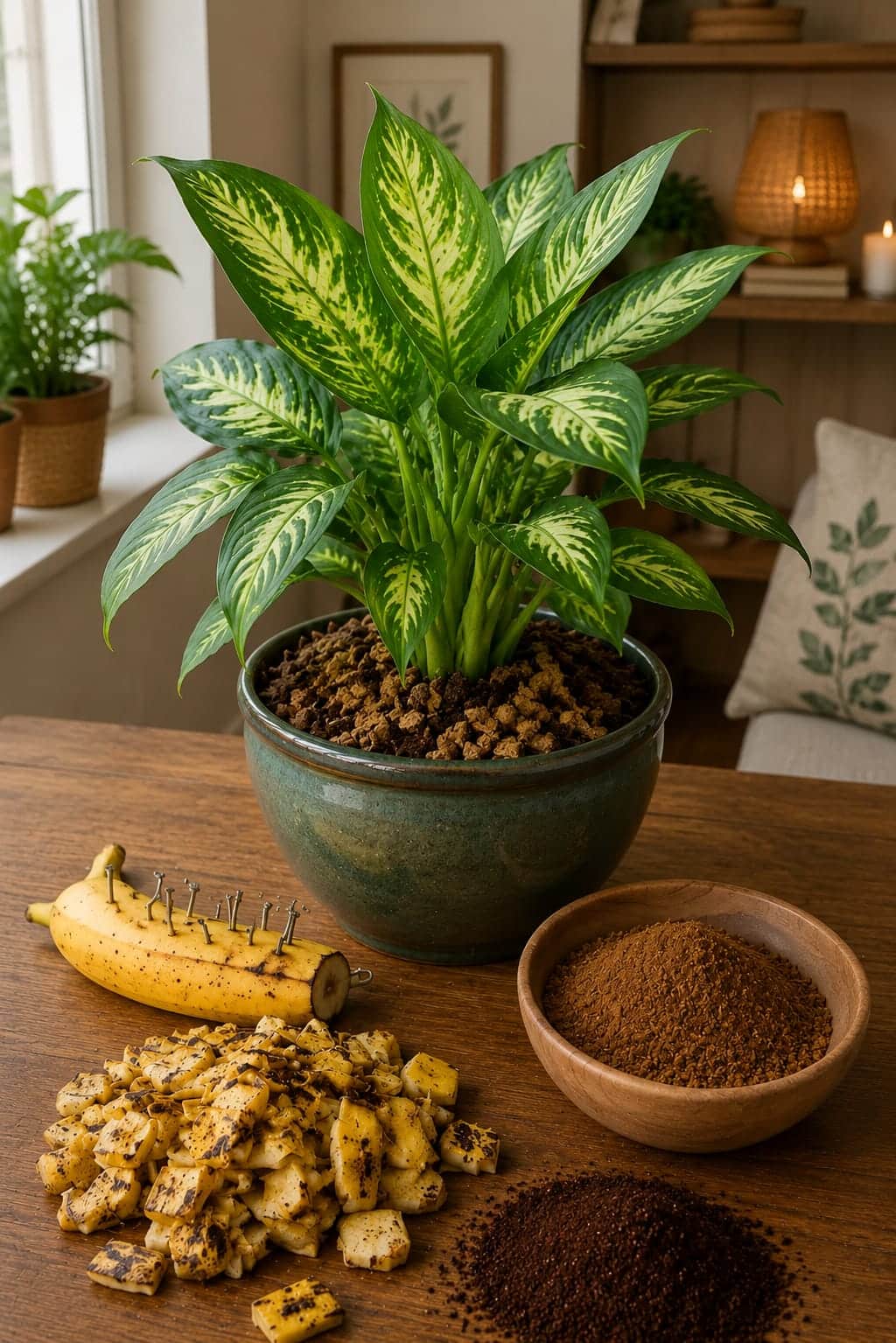
The image shows a healthy Dieffenbachia plant in a decorative pot, surrounded by banana peels, chopped banana pieces, coffee grounds, and a bowl of brown organic material. This setup suggests a natural plant-care routine using kitchen scraps as a soil amendment. It is a visually attractive idea because it feels simple, affordable, and eco-friendly.
However, there is a big difference between a good visual idea and a safe plant-care method. Banana peels and coffee grounds should not simply be dumped fresh into the pot in large amounts. Indoor pots are small, enclosed environments. What works in an outdoor compost pile may not work the same way inside a houseplant pot. In a container, organic scraps can break down slowly, attract gnats, grow mold, smell unpleasant, or create wet pockets around the roots.
That does not mean banana peels and coffee grounds are useless. It means they should be prepared properly and used in small amounts. When treated as gentle soil support instead of a miracle fertilizer, they can become part of a balanced routine.
Understanding Dieffenbachia Before Feeding It
Dieffenbachia, often called dumb cane, is grown mainly for its foliage. Unlike flowering plants that need strong bloom support, Dieffenbachia needs steady conditions for leaf and stem growth. It prefers bright indirect light, evenly moist but not soggy soil, warmth, and good drainage. It does not like sitting in water, cold drafts, or heavy feeding.
The plant stores a lot of water in its stems and leaves, which is one reason it can look lush and full when healthy. But this also means that overwatering can quickly become a problem. If the soil stays wet for too long, the roots can lose oxygen and begin to rot. Once the roots are damaged, the plant cannot properly take up water or nutrients, no matter how many homemade fertilizers are added.
This is why feeding should always come after basic care. Light, watering, drainage, and root health matter more than any banana peel or coffee ground mixture. If those basics are wrong, extra organic material may make the soil heavier and more moisture-retentive, which can worsen root stress.
Can Banana Peels Help Dieffenbachia?
Banana peels contain nutrients that plants can use after the peels break down. They are often associated with potassium, along with small amounts of other minerals. Potassium plays a role in overall plant strength, water movement, and general growth. For a foliage plant like Dieffenbachia, potassium can support healthy function, but it is not the only nutrient the plant needs.
The important phrase is “after the peels break down.” A fresh banana peel placed on top of the soil is not instantly available plant food. It must decompose first. During decomposition, microbes work on the material and gradually release nutrients. In an outdoor compost pile, this process is normal. In a small indoor pot, it can be messy and slow.
Fresh banana pieces can attract fruit flies, fungus gnats, ants, or mold. They can also hold moisture against the surface of the soil. If pushed into the potting mix, they may create soft, rotting pockets near the roots. This is why fresh banana peels should be handled carefully.
The safest way to use banana peels for Dieffenbachia is to compost them first, dry them before grinding, or make a mild banana peel water that is used occasionally. The goal is to avoid adding large pieces of fresh organic waste directly into the pot.
Can Coffee Grounds Help Dieffenbachia?
Coffee grounds are another popular kitchen ingredient used in plant care. They contain organic matter and small amounts of nutrients, especially nitrogen. Nitrogen is important for leafy growth, so it makes sense that plant owners associate coffee grounds with greener leaves. But coffee grounds can be tricky in pots.
Used in large amounts, coffee grounds can compact on the soil surface and form a dense layer. This can reduce airflow, slow water movement, and keep the soil wet for too long. Dieffenbachia roots need oxygen, so compacted or constantly damp soil is not helpful.
Another issue is that coffee grounds are often added fresh and wet. Wet coffee grounds can mold quickly. Mold on the soil surface is not always dangerous, but it is a sign that the pot may be too damp or that too much organic material has been added. For indoor plants, this can also attract fungus gnats.
If you want to use coffee grounds around Dieffenbachia, use them sparingly. They are better when composted first or mixed into a larger compost system rather than placed directly in thick layers on the pot. A tiny amount of dried coffee grounds can be mixed into the top layer of soil occasionally, but it should never become a blanket over the surface.
The Biggest Mistake: Treating Kitchen Scraps Like Instant Fertilizer
The most common mistake with banana peels and coffee grounds is using them as if they work immediately. A person sees yellow leaves, slow growth, or a tired-looking plant, then adds banana pieces and coffee grounds to the pot expecting a quick transformation. Unfortunately, this can do more harm than good.
Kitchen scraps are not the same as a balanced liquid fertilizer. They need microbial breakdown before many of their nutrients become useful to the plant. During that breakdown, they can temporarily change the moisture level, attract insects, and affect the texture of the potting mix.
For Dieffenbachia, this matters because the plant already prefers a light, well-draining potting mix. If the top of the soil becomes covered with decomposing scraps, the pot may stay wetter than it should. The plant may then show symptoms that look like nutrient deficiency, even though the real problem is root stress.
Before using any homemade plant food, ask a simple question: “Is my plant healthy enough to use this?” If the roots are healthy and the plant is growing, a gentle organic amendment may be fine. If the plant is declining, diagnose the issue first.
Signs Your Dieffenbachia Actually Needs Better Care, Not More Fertilizer
Yellow leaves are one of the main reasons people reach for fertilizer. But yellow leaves on Dieffenbachia can have many causes. Older lower leaves naturally yellow and drop over time. This is normal, especially as the plant grows taller. But if several leaves turn yellow at once, the cause may be overwatering, poor drainage, cold exposure, or low light.
Soft stems are a warning sign. If the stems feel mushy or collapse near the base, the plant may have root or stem rot. Adding banana peels or coffee grounds at this stage is not recommended. The plant needs inspection, trimming, repotting, and better drainage.
Brown leaf edges can happen from inconsistent watering, dry air, fertilizer buildup, or mineral-heavy water. Coffee grounds will not automatically solve this. In some cases, adding more organic material may make the soil hold too much moisture while the leaf edges continue to brown.
Slow growth can be caused by low light, cool temperatures, a pot that is too large, compacted soil, or seasonal changes. Dieffenbachia often grows more slowly in darker months. Feeding heavily during slow growth can stress the plant because it is not actively using nutrients.
A Safer Way to Use Banana Peels: Dry and Grind Method
One of the safer ways to use banana peels for Dieffenbachia is to dry them first. Drying reduces odor, slows mold, and makes the peels easier to use in tiny amounts. This method is more controlled than placing fresh banana chunks on the soil.
To do this, cut the banana peels into small pieces. Let them dry completely in the sun, in a dehydrator, or in a very low oven until they become crisp. Once dry, grind them into a coarse powder using a blender, grinder, or mortar and pestle. Store the powder in a dry container.
When using it on Dieffenbachia, sprinkle only a small pinch on the soil surface and gently mix it into the top layer. Do not use a thick layer. Do not bury large amounts near the roots. Water normally after application, and observe the plant over the next few weeks.
This method is not instant fertilizer. It is a mild organic soil amendment. Use it occasionally, not every week. For most indoor plants, once every four to six weeks during active growth is more reasonable than frequent applications.
A Mild Banana Peel Water Routine
Another popular method is banana peel water. This involves soaking banana peels in water and using that water on plants. For Dieffenbachia, the key is to keep the mixture mild and fresh. Strong, fermented, smelly mixtures are not ideal for indoor pots.
To make a gentle version, place one clean banana peel in a jar with water for 24 hours. After soaking, remove the peel. Dilute the liquid with more water before using it on the plant. A safe beginner approach is to use one part banana peel water with two or three parts plain water.
Use this only on a plant that is already due for watering. Do not pour it onto already wet soil. Dieffenbachia does not like soggy roots. If the soil is still moist, wait.
Banana peel water should not replace regular plant care. It should be an occasional supplement. If it smells bad, has visible fermentation, or attracts insects, do not use it indoors. Fresh and mild is better than strong and questionable.
How to Use Coffee Grounds More Safely
If you want to include coffee grounds, the safest approach is to compost them first. Composting allows the grounds to break down with other organic materials, creating a more balanced amendment. Finished compost is much safer than a pile of fresh coffee grounds sitting on a houseplant pot.
If composting is not possible, use only a very small amount of dried coffee grounds. Spread them thinly and mix them lightly into the top layer of soil. Do not create a thick crust. Do not add wet grounds straight from the coffee maker. Let them dry first.
For a medium-sized Dieffenbachia pot, a small pinch is enough. More is not better. If the soil surface becomes compacted, crusty, moldy, or starts attracting gnats, stop using coffee grounds and remove the top layer if needed.
Coffee grounds should never be used as the main fertilizer for Dieffenbachia. They are not balanced enough, and too much can alter the soil structure. Think of them as a minor organic addition, not the foundation of the feeding routine.
Should You Mix Banana Peels and Coffee Grounds Together?
Banana peels and coffee grounds can be combined in compost, but they should be used carefully in a houseplant pot. The combination can become too rich, too wet, or too attractive to pests if used fresh. For indoor Dieffenbachia, it is better to prepare them separately or compost them before use.
If you want to make a homemade soil booster, the best option is to create a small compost blend outside the pot. Mix dried banana peel powder with a small amount of dried coffee grounds and, ideally, finished compost or worm castings. Let the mixture mature rather than applying fresh scraps directly.
When ready, use only a small amount as a top dressing. Gently work it into the top inch of soil and water normally. This keeps the amendment mild and reduces the chance of mold or pests.
Never fill the pot surface with chopped banana and coffee grounds, especially indoors. It may look natural, but the plant’s root zone may not benefit from that much decomposing material at once.
The Right Soil for Dieffenbachia
Dieffenbachia grows best in a potting mix that holds some moisture but still drains well. A good indoor mix may include high-quality potting soil, perlite, orchid bark, coco coir, or a similar airy material. The goal is to keep the roots lightly moist but not suffocated.
If the soil is too dense, organic scraps will make the problem worse. Banana pieces and coffee grounds can hold extra moisture, which may push already-heavy soil into a soggy condition. Before adding amendments, check the soil texture.
If water sits on top of the pot for a long time before draining, the mix may be compacted. If the pot feels heavy for many days after watering, the soil may be holding too much moisture. If there is a sour smell, root problems may already be developing.
In these cases, repotting into a better mix is more important than feeding. A plant in healthy soil can use nutrients more effectively. A plant in poor soil will struggle even if nutrients are present.
How to Apply a Gentle Homemade Top Dressing
If your Dieffenbachia is healthy and you want to use a banana peel and coffee ground routine, keep it simple and light. Start by checking that the top of the soil is clean, not moldy, and not already covered with debris. Remove any old plant matter that is rotting on the surface.
Prepare a tiny amount of dried banana peel powder and dried coffee grounds. Use much more banana peel powder than coffee grounds if you are combining them, because coffee grounds can compact easily. A beginner-friendly mix could be one teaspoon of dried banana peel powder with a small pinch of dried coffee grounds for a medium pot.
Sprinkle this lightly over the soil surface. Do not let it touch the stems directly. Gently scratch it into the top layer of soil with a small fork or your fingers. Then water the plant only if it is due for watering.
After applying, watch the plant and the soil. If you see mold, fungus gnats, a sour smell, or overly wet soil, stop using the mixture. Remove the top layer if necessary and allow the pot to dry more properly between waterings.
Continue to Page 2
Continue to page 2 for more details about this article and the key points many readers miss on the first page.