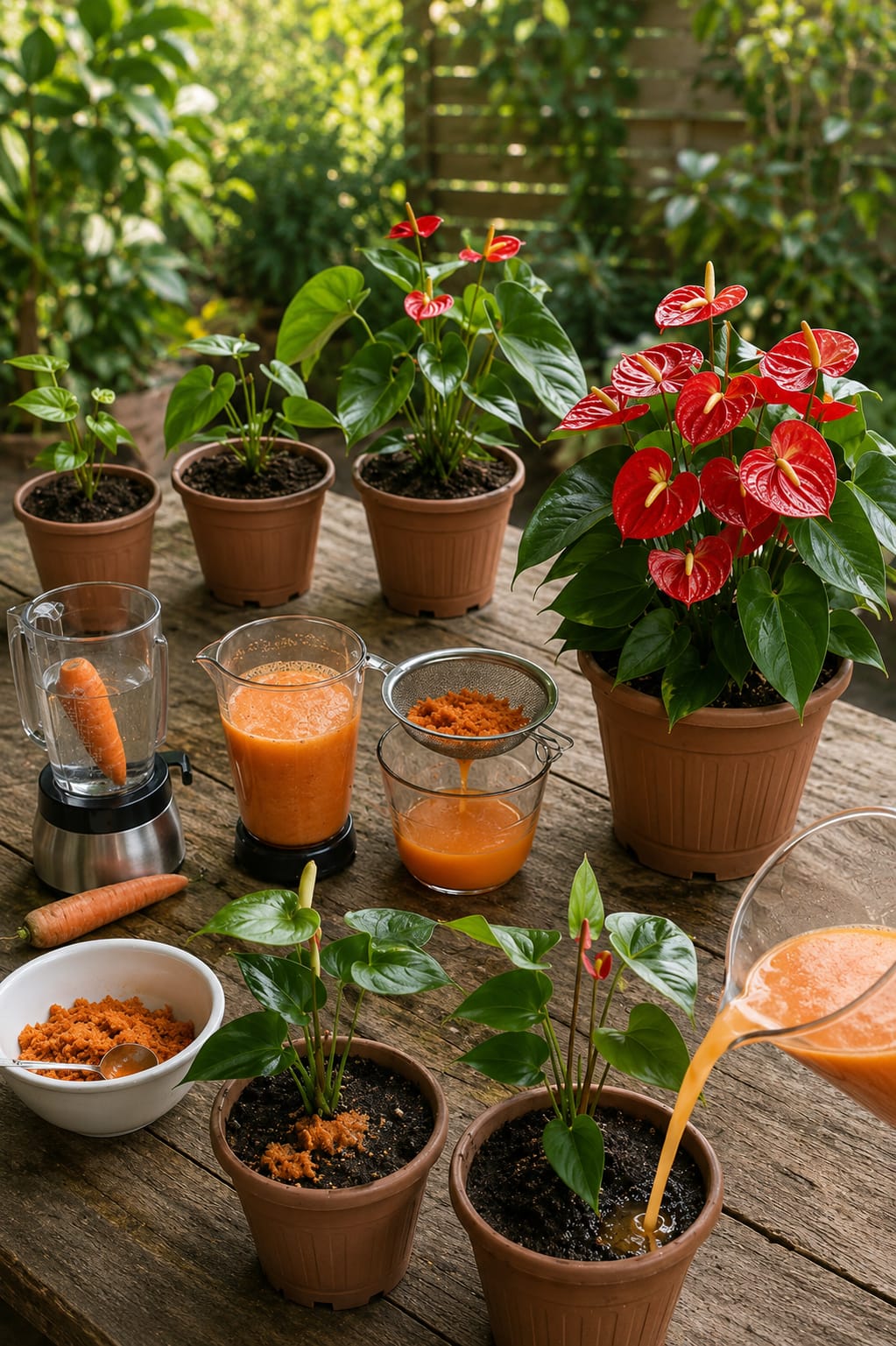
Anthuriums are among the most striking tropical houseplants you can grow at home. Their glossy green leaves and bright, heart-shaped flowers can make a balcony, patio, or indoor corner look instantly elegant. When an Anthurium is healthy, it can bloom repeatedly throughout the year, producing red, pink, white, or even purple spathes that last for weeks. But when the plant stops flowering, many people begin looking for a quick solution.
One natural idea that has become popular among plant lovers is using carrot water as a gentle homemade plant tonic. The bright orange liquid looks rich, fresh, and full of life, so it is easy to imagine it working like a “natural bomb” for flowering. But to care for Anthurium safely, it is important to use realistic expectations. Carrot water will not magically force a weak plant to bloom overnight, and it will not make an unhealthy Anthurium live for fifteen years by itself. However, when used correctly as part of a balanced care routine, it may support the plant with mild organic compounds while encouraging you to water more thoughtfully.
The real secret to a long-lived Anthurium is not one single ingredient. It is the combination of bright indirect light, airy soil, correct watering, warm temperatures, moderate humidity, clean leaves, healthy roots, and gentle feeding. A homemade carrot water routine can be one small part of that care plan, especially when the plant is already stable and actively growing.
This article explains how to use carrot water for Anthurium in a careful, realistic way. It also covers what Anthuriums truly need to flower, what mistakes to avoid, and how to build a routine that can help your plant stay beautiful for many years.
Why Anthuriums Are Loved for Their Long-Lasting Flowers
Anthuriums are famous for their shiny, heart-shaped “flowers,” but what most people call the flower is actually a modified leaf called a spathe. The true flowers are tiny and grow along the central spike, called the spadix. This structure is part of what makes Anthurium so unique. The colorful spathe can remain attractive for a long time, often several weeks, which makes the plant feel like a natural living bouquet.
With the right care, Anthuriums can flower many times in a year. They do not usually bloom because of one magic fertilizer. They bloom because the plant has enough energy, healthy roots, and suitable growing conditions. If the plant is stressed, sitting in soggy soil, placed in a dark corner, or suffering from root damage, no homemade tonic will solve the problem instantly.
This is why carrot water should be seen as a supportive routine, not a rescue treatment. It may be useful for a healthy plant, but the foundation of flowering is always proper care.
What Is Carrot Water for Plants?
Carrot water is a homemade liquid made by blending or soaking carrots in water, then straining the mixture before using it on plants. Some gardeners use it because carrots contain natural plant compounds, small amounts of minerals, and organic matter. The idea is to create a mild, natural liquid that can be applied to the soil occasionally.
For Anthurium, the most important word is “mild.” A thick, pulpy carrot mixture poured directly into the pot can create problems. It may sit on the soil, attract insects, ferment, smell unpleasant, or encourage mold. Anthuriums prefer an airy root zone, so anything that clogs the soil or keeps it too wet can be harmful.
A safer carrot water routine uses a diluted and strained liquid. The goal is not to feed the plant heavily. The goal is to give a gentle occasional boost while keeping the soil clean and breathable.
Can Carrot Water Really Help Anthurium Flower?
Carrot water may support Anthurium indirectly, but it should not be described as a guaranteed flowering miracle. Anthuriums flower best when their overall environment is right. Carrot water cannot replace light, drainage, humidity, or a proper fertilizer routine.
What carrot water can do is offer a mild organic supplement when used carefully. It may add small amounts of nutrients and organic compounds to the soil. It can also encourage a more mindful watering routine, because you are checking the plant before applying anything. But it will not force blooms on a plant that is weak, overwatered, or kept in poor light.
If your Anthurium is healthy but blooming less than usual, carrot water may be worth trying as an occasional natural support. If your plant is not flowering because it receives too little light, the real solution is to move it to brighter indirect light. If the roots are rotting, the solution is repotting and root care. If the plant is underfed for months, a balanced fertilizer may be more reliable than carrot water alone.
The Truth About “It Could Last Up to 15 Years”
Anthuriums can live for many years with proper care. Some well-maintained plants can stay alive and attractive for a decade or more, especially when they are repotted, divided, and cared for consistently. But no single homemade mixture can guarantee a plant will last fifteen years.
A long-lived Anthurium depends on stable care. The plant needs fresh, airy potting mix when the old mix breaks down. It needs protection from cold, harsh direct sunlight, and overwatering. It needs enough nutrients over time, but not too much. It also needs pest checks and occasional cleaning.
Carrot water can be part of a long-term care routine, but it is not the reason the plant lives for years. The reason is consistency. If you use carrot water carefully while also giving the plant the right environment, your Anthurium has a better chance of staying healthy for a long time.
Understanding Anthurium’s Natural Needs
Anthuriums are tropical plants. In nature, many Anthuriums grow in warm, humid forests, often with roots that enjoy airflow and organic material around them. They do not like dense, muddy soil. Their roots need oxygen as much as they need water.
This is one of the biggest care lessons for Anthurium owners. The plant likes moisture, but it does not like suffocation. A potting mix that stays wet for too long can cause root rot. Root rot then leads to yellow leaves, drooping, blackened roots, and fewer flowers.
To support flowering, the plant needs a balance between moisture and air. The soil should be lightly moist but never swampy. The pot should have drainage holes. The growing mix should include airy materials such as orchid bark, perlite, coco chips, or chunky houseplant mix.
When you understand this, you can see why thick homemade mixtures can be risky. A watery, strained carrot solution is much safer than dumping carrot pulp into the pot.
When to Use Carrot Water on Anthurium
The best time to use carrot water is when your Anthurium is actively growing. Active growth may include new leaves, new roots, fresh flower buds, or a generally firm and healthy plant. A plant that is already growing can make better use of gentle supplements.
You can use carrot water during spring and summer when growth is usually stronger. In warm homes with good light, Anthuriums may continue growing at other times of the year, but they often slow down during cooler, darker months. When the plant slows down, it needs less feeding and less frequent supplements.
Use carrot water only when the soil is ready for watering. If the potting mix is still wet, wait. Pouring any liquid into already wet soil can increase the risk of root stress. This is especially important for Anthurium because the roots dislike being constantly soaked.
When Not to Use Carrot Water
- Do not use carrot water if your Anthurium has root rot. If the plant is drooping while the soil is wet, if the roots smell bad, or if the base feels soft, the plant needs inspection and recovery, not a homemade tonic.
- Do not use carrot water if you already have fungus gnats. Organic liquids can sometimes make gnat problems worse, especially if the soil stays damp. First, reduce excess moisture and remove decaying material.
- Do not use carrot water if the soil surface has mold or a sour smell. This usually means the pot is staying too wet or there is too much organic matter breaking down. Adding more organic material may worsen the situation.
- Do not use carrot water on a plant that was recently repotted and had roots trimmed. Give the plant time to recover before adding any homemade supplement. Freshly disturbed roots are more sensitive.
How to Make a Gentle Carrot Water for Anthurium
To make a safer carrot water mixture, use one fresh carrot and clean water. Wash the carrot well to remove dirt. You can peel it if you prefer, especially if you are concerned about residue on the skin.
Cut the carrot into small pieces and blend it with about two cups of water. Once blended, strain the liquid carefully through a fine sieve or cloth. This step is very important. You do not want thick carrot pulp sitting in the soil. The liquid should be smooth and watery, not heavy like soup.
After straining, dilute the carrot liquid again. A beginner-safe dilution is one part carrot water to two or three parts plain water. This makes the mixture mild enough for occasional use.
Use the liquid fresh. Do not store it for many days, because it can ferment. Fermented organic liquids may smell bad and can attract insects. Fresh, diluted, and strained carrot water is the safest version for indoor plant use.
Step-by-Step Carrot Water Routine
Step 1: Check the Soil First
Before using carrot water, touch the soil. If the top layer is still wet, do not water. Wait until the upper part of the mix feels slightly dry. Anthurium likes moisture, but it should not sit in constant wetness.
Step 2: Check the Plant’s Condition
Look at the leaves, stems, and flowers. If the plant looks firm and healthy, you can use a mild carrot water solution. If the plant is drooping badly, yellowing quickly, or smelling rotten near the soil, do not use it. Diagnose the problem first.
Step 3: Prepare a Strained and Diluted Liquid
Blend one carrot with water, strain the mixture, then dilute it. Avoid using thick pulp. The cleaner the liquid, the lower the risk of mold or pests.
Step 4: Pour Around the Soil, Not on the Leaves
Apply the carrot water directly to the potting mix around the base of the plant. Do not pour it into the crown or over the leaves. Wet foliage can sometimes encourage spots or fungal issues, especially if airflow is poor.
Step 5: Let the Pot Drain
Water should move through the pot and drain out. Never leave the Anthurium sitting in a saucer full of liquid. Empty any excess after watering.
Step 6: Observe for One to Two Weeks
After using carrot water, watch the plant. Look for steady leaves, healthy new growth, and no bad smell from the soil. If you notice mold, gnats, or soil that stays wet too long, stop using the mixture and adjust your watering.
Continue to Page 2
Continue to page 2 for more details about this article and the key points many readers miss on the first page.