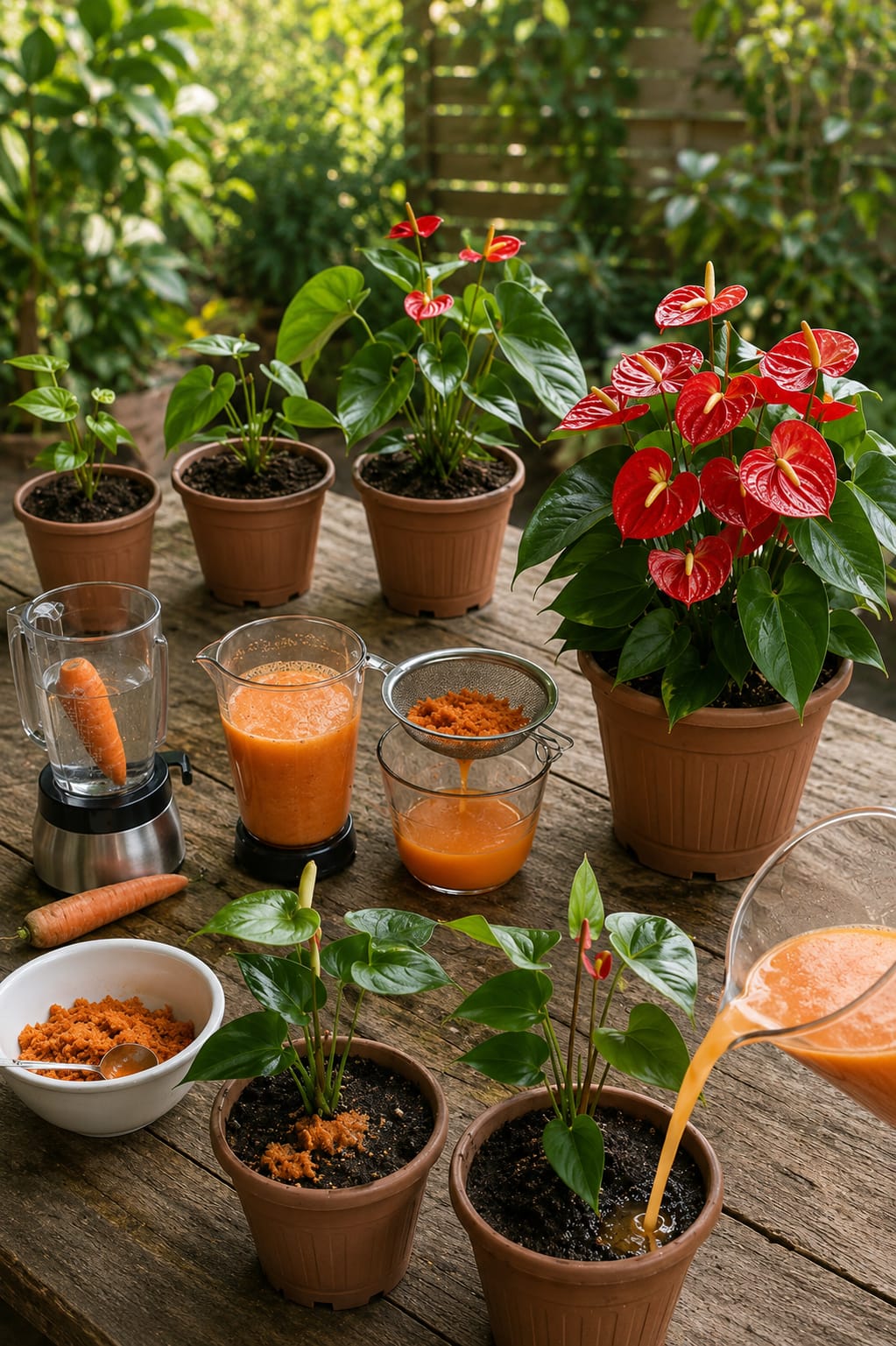
How Often Should You Use Carrot Water?
For Anthurium, once every four to six weeks during active growth is enough. This is not a weekly treatment. Using it too often can add too much organic material to the soil and may increase the risk of pests or mold.
If the plant is already receiving a balanced fertilizer, use carrot water even less often. You do not want to overfeed the plant. Anthurium responds better to gentle, consistent care than to repeated heavy applications.
During colder or darker months, reduce or stop carrot water use. If the plant is not actively growing, it does not need extra supplements. Overfeeding during slow growth can stress the roots.
Why Light Is More Important Than Any Natural Tonic
If your Anthurium is not flowering, the first thing to check is light. Anthuriums need bright indirect light to bloom well. A plant kept in a dark corner may survive, but it will often produce fewer flowers.
Place the plant near a bright window where it receives plenty of filtered light. Avoid harsh direct afternoon sun, which can burn the leaves. Morning light or bright filtered light is usually better.
If the leaves are very dark green and the plant produces no flowers, it may need brighter light. If the leaves turn pale, scorched, or develop dry patches, the light may be too intense. The goal is balance.
Carrot water cannot replace light. Nutrients only help when the plant has enough energy to grow. Light is the energy source. Feeding a plant in poor light often leads to disappointment.
The Best Soil Mix for Flowering Anthuriums
A flowering Anthurium needs a root zone that breathes. Regular dense potting soil may hold too much water, especially indoors. A better mix is chunky and well-draining.
A useful Anthurium mix can include potting soil, orchid bark, perlite, coco chips, and a small amount of compost or worm castings. The exact recipe can vary, but the goal is always the same: moisture plus airflow.
If your Anthurium has stopped flowering and the soil looks old, compacted, or sour-smelling, repotting may help more than any homemade tonic. Old mix breaks down over time and can suffocate roots.
When repotting, choose a pot with drainage holes. Do not move the plant into a much larger pot unless necessary. Oversized pots hold extra moisture and can increase the risk of root rot.
Watering Anthurium the Right Way
Watering is one of the most important parts of Anthurium care. The plant likes consistent moisture, but not soggy soil. The top layer of the potting mix should begin to dry before you water again.
When watering, water thoroughly and let excess drain. This helps hydrate the roots evenly. After that, allow the pot to drain completely before placing it back in a decorative container.
If you use carrot water, treat it as one watering session. Do not water normally and then add carrot water on top the same day. Too much liquid at once can keep the root zone wet for too long.
If your Anthurium is in a balcony or patio area, watering needs may change with temperature and wind. Outdoor air can dry pots faster, while humid or rainy conditions can keep them wet longer. Always check the soil rather than following a fixed calendar.
Humidity and Flowering
Anthuriums appreciate humidity. Dry air can cause crispy leaf edges and slower growth. Moderate humidity helps the plant look fresher and can support better overall health.
You can increase humidity by grouping plants together, using a pebble tray, or placing the plant in a naturally humid bright area. A small humidifier can also help indoors. However, humidity should not mean wet soil. These are different things.
A plant can enjoy humid air while still needing a well-draining pot. Do not try to increase humidity by watering more often. Overwatering is much more dangerous than slightly dry air.
Feeding Anthurium Beyond Carrot Water
Carrot water is not a complete fertilizer. Anthuriums still benefit from balanced nutrition during active growth. A diluted balanced houseplant fertilizer or orchid-style fertilizer can be used carefully, depending on your routine.
The safest approach is light feeding. Many Anthurium owners use fertilizer at half strength or less, especially indoors. Too much fertilizer can burn roots, cause salt buildup, and damage the plant.
If you use commercial fertilizer, do not combine it too frequently with carrot water. Keep the routine simple. For example, you might use a diluted fertilizer one month and carrot water another month, rather than using both at the same time.
Overfeeding does not make Anthurium bloom faster. It can actually slow the plant down by stressing the roots.
How to Encourage More Anthurium Blooms Naturally
To encourage flowering, start with light. Move the plant to a brighter spot with indirect light. Then check the roots and soil. Healthy roots are the foundation of flowers.
Next, keep the plant warm. Anthuriums prefer stable warmth and dislike cold drafts. Sudden cold can slow growth and reduce flowering.
Maintain a careful watering routine. Soil that is too dry for too long can stress the plant, while soggy soil can rot the roots. Both extremes can reduce blooming.
Feed gently during active growth. A mild fertilizer routine, combined with occasional natural support like diluted carrot water, can help maintain plant strength. But feeding only works if the other conditions are correct.
Finally, be patient. New flowers take time. A plant may need weeks or months of improved care before producing more blooms.
What Results Can You Expect From Carrot Water?
Realistic results are gradual. You may notice that the plant continues producing healthy leaves, holds its color well, or seems steady during the growing season. If conditions are right, it may also support future flowering indirectly.
You should not expect flowers to appear the next day. You should not expect old damaged leaves to become perfect again. Plant recovery and flowering happen through new growth.
If your Anthurium is already blooming, carrot water will not necessarily make every flower last longer. Flower longevity depends on plant health, temperature, light, humidity, and age of the bloom. But a healthy care routine can help the plant keep producing new flowers over time.
Signs Your Anthurium Is Happy
A happy Anthurium usually has firm, glossy leaves. New leaves appear from the center of the plant or from active growth points. The soil smells fresh, not sour. The roots are firm, not mushy. The plant may produce new flower buds when light and care are suitable.
Healthy flowers are usually bright, firm, and glossy. As they age, they may fade, turn greenish, or dry naturally. This is normal. Remove old flowers when they are spent so the plant can focus energy on new growth.
If your plant is stable and slowly producing new leaves or blooms, do not keep changing the routine. Consistency is one of the best things you can give an Anthurium.
Warning Signs After Using Carrot Water
- If the soil develops mold after using carrot water, the mixture may have been too thick, used too often, or applied when the soil was already wet. Remove any visible residue and allow the soil surface to dry slightly.
- If fungus gnats appear, stop using organic liquids for a while. Let the top layer dry more between waterings and consider using sticky traps to monitor the problem.
- If the plant droops after application and the soil is wet, root stress may be present. Do not add more carrot water. Check drainage, reduce watering, and inspect the roots if the problem continues.
- If there is a sour smell from the pot, the soil may be staying too wet or organic material may be decomposing badly. Repotting into fresh airy mix may be necessary.
Can You Use Carrot Pulp on Anthurium Soil?
It is better not to place thick carrot pulp directly on Anthurium soil. Pulp breaks down slowly and can attract insects or mold. It may also form a wet layer that blocks airflow.
If you want to use the leftover pulp, add it to an outdoor compost pile instead. Once fully composted, it can become part of a safer soil amendment. Finished compost is much better for plants than fresh scraps in a pot.
For indoor Anthurium care, strained liquid is safer than pulp. Even then, it should be diluted and used occasionally.
Can You Spray Carrot Water on Anthurium Leaves?
It is not recommended to spray carrot water on Anthurium leaves. The leaves are glossy and can collect residue. Organic liquid on leaves may attract dust, pests, or fungal spots if it sits too long.
If you want shiny leaves, clean them with plain water and a soft cloth. Do not use food-based liquids as leaf polish. Healthy Anthurium leaves are naturally glossy when clean and well cared for.
Apply carrot water to the soil only, and keep the leaves dry.
How to Maintain Anthurium Flowers Longer
To help Anthurium flowers last longer, keep the plant away from harsh direct sun, cold drafts, and extreme dryness. Bright indirect light is ideal. Stable moisture also helps, but avoid soggy soil.
Do not constantly move the plant while it is blooming. Sudden environmental changes can stress it. Keep temperatures stable and avoid placing it near heaters or air conditioners.
Remove spent flowers by cutting the flower stem near the base with clean scissors. This keeps the plant tidy and may help it direct energy toward new growth.
Remember that each flower has a natural lifespan. The goal is not to keep one bloom forever, but to keep the plant healthy enough to produce new blooms repeatedly.
A Monthly Anthurium Care Plan
- Once a week: Check soil moisture, water when the top layer begins to dry. Check leaves for dust, pests, or yellowing. Rotate the pot slightly to keep growth balanced.
- Once a month: Wipe leaves with a damp cloth. Inspect soil surface, remove dead leaves or old debris. If actively growing, consider a gentle feeding routine.
- Every 4–6 weeks (active growth): You may use diluted carrot water as one watering session. Do not use more often if the plant is slow, stressed, or in low light.
- Every 1–2 years: Check if the potting mix has broken down. If compacted or sour-smelling, repot into fresh airy mix. This can do more for flowering than any homemade tonic.
Common Mistakes to Avoid
- Pouring thick carrot juice directly into the pot – always strain and dilute.
- Using carrot water too often – occasional use is safer.
- Applying it to wet soil – wait until the plant actually needs water.
- Expecting instant flowers – Anthurium flowering depends on overall care, especially light and root health.
- Ignoring drainage – a pot without drainage holes is risky for Anthurium. No natural mixture can fix trapped water around the roots.
Is Carrot Water Safe for All Anthuriums?
Carrot water is generally gentle when strained, diluted, and used occasionally. However, every plant and environment is different. A plant growing in an airy mix on a warm balcony may respond differently from a plant in a dense indoor pot with low light.
Start with a small amount and observe. If the plant remains healthy and the soil stays fresh, you can continue occasionally. If the soil develops problems, stop.
Plant care should always be based on observation. Homemade routines are useful only when they fit the plant’s real conditions.
Frequently Asked Questions
Can carrot water make Anthurium bloom faster?
Carrot water may support a healthy plant, but it cannot guarantee faster blooming. Anthurium blooms best with bright indirect light, healthy roots, warmth, humidity, and gentle feeding.
How often should I use carrot water on Anthurium?
Once every four to six weeks during active growth is enough. Use it less often or stop during slow growth, cold weather, or low-light periods.
Should I use carrot juice or carrot water?
Use diluted carrot water, not thick carrot juice. Blend carrot with water, strain it well, and dilute it again before applying to the soil.
Can I leave carrot pulp on the soil?
It is better not to. Carrot pulp can mold, attract insects, and keep the soil too wet. Add pulp to compost instead.
Can carrot water save a dying Anthurium?
No. A dying Anthurium needs diagnosis first. Check for root rot, poor drainage, low light, pests, or cold damage. Carrot water is not a rescue treatment.
Why is my Anthurium not flowering?
The most common reasons are low light, unhealthy roots, overwatering, lack of nutrients, cold temperatures, or stress after repotting. Improve the growing conditions before adding supplements.
Can Anthurium live for 15 years?
With excellent long-term care, Anthurium can live for many years. Its lifespan depends on consistent care, fresh potting mix, healthy roots, and a stable environment, not one single homemade mixture.
🍃 A gentle reminder: No single homemade tonic replaces good horticulture. Light, soil, water, and patience are the true keys to thriving Anthuriums. Use carrot water as a small seasonal support, and let consistent care do the real work.