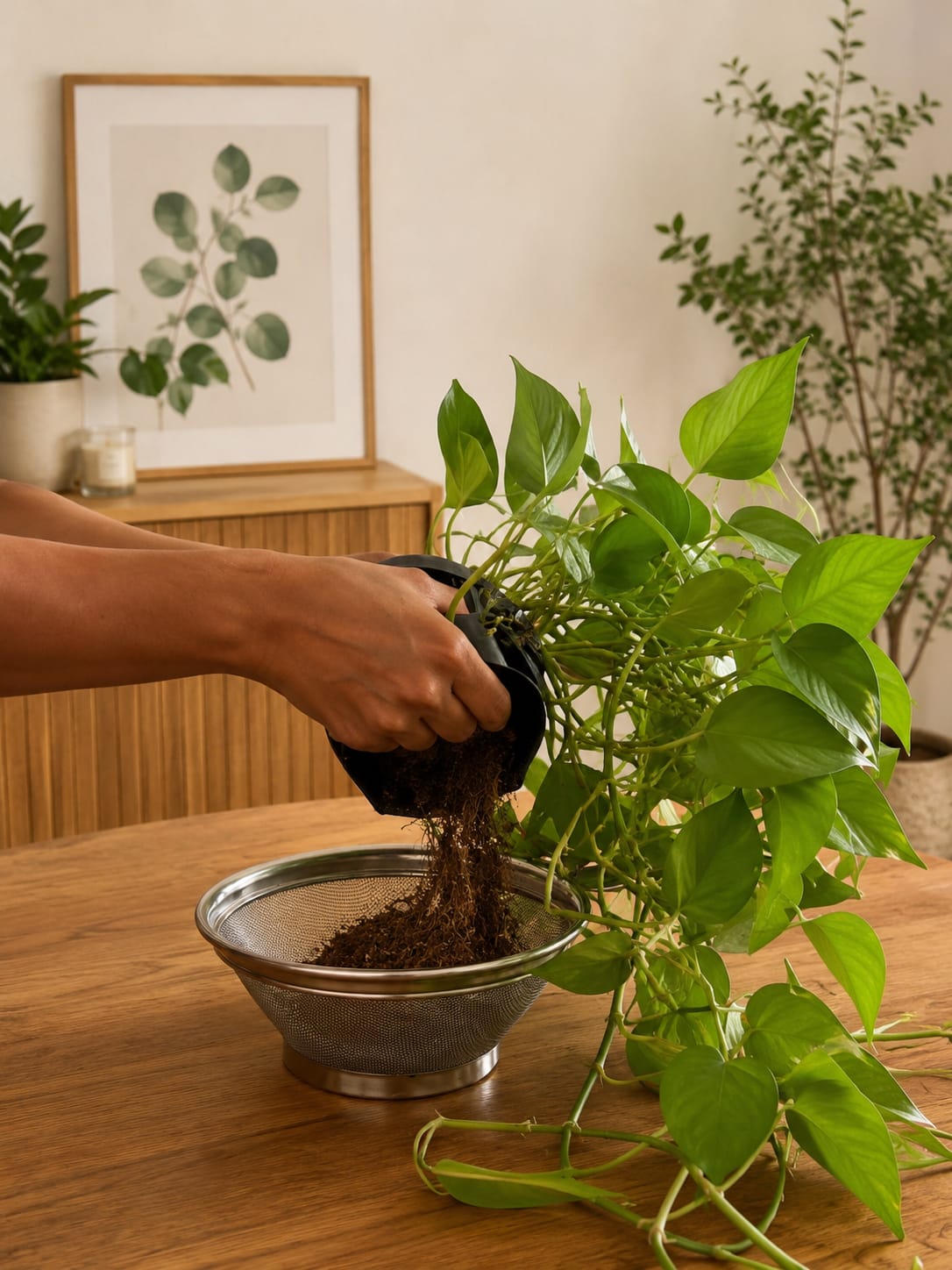
A healthy pothos can change the entire mood of a room. Its soft trailing vines, bright heart-shaped leaves, and relaxed tropical movement bring life into modern interiors without making the space feel crowded. Whether it sits on a shelf, flows from a plant stand, or trails across a bright corner, pothos has become one of the most loved indoor plants for apartment decor, minimalist homes, and wellness-inspired living spaces.
But even an easy plant like pothos can begin struggling when the root system is trapped in old compacted soil. Growth slows down, leaves become smaller, watering becomes confusing, and the plant may start looking tired even when it still has plenty of healthy vines. Many homeowners assume the problem is above the soil, but the real issue is often below the surface.
That is why a growing number of indoor plant lovers are switching pothos plants from traditional soil into a cleaner semi-hydro setup using LECA, also known as lightweight expanded clay aggregate. This method removes old soil from the roots, places the plant into clay pebbles, and creates a more breathable root environment that looks cleaner and feels more modern inside the home.
The process is simple, but the result can feel surprisingly premium. A pothos planted in LECA inside a clean inner container and placed inside a stylish ceramic cover pot looks polished, organized, and intentional. It blends plant care with luxury home decor, making the plant feel like part of the interior design instead of just another pot sitting on a table.
What Plant Is Being Repotted?
The plant appears to be a neon pothos or a bright green pothos variety. This type of pothos is popular because of its vivid lime-green leaves and fast trailing growth. Its color brings freshness into neutral interiors, especially spaces with white curtains, wood furniture, beige planters, and soft natural light.
Pothos plants are especially loved because they are:
Beginner-friendly indoor plants
Fast-growing trailing plants
Beautiful for shelves and plant stands
Easy to propagate in water
Adaptable to soil, water, and semi-hydro setups
Perfect for modern home decor and apartment styling
The bright leaf color makes neon pothos especially valuable for interior design because it adds lightness to rooms that use neutral furniture, soft walls, and minimalist decor.
Why Homeowners Are Switching Pothos Plants to LECA
Traditional soil works well when it is fresh, airy, and managed correctly. But over time, indoor potting mix can become dense and difficult to control. It may stay wet too long in some areas and dry too quickly in others. Roots can become tangled inside compacted soil, and watering may become harder to judge.
LECA offers a different kind of growing environment. Instead of organic potting mix, the plant sits among clay pebbles that support the roots while allowing more airflow. The pebbles do not break down like soil, so the setup stays cleaner and more structured over time.
Many homeowners switch pothos to LECA because it can help with:
Cleaner indoor plant care
Better root visibility during repotting
Reduced soil mess around furniture
Improved airflow around the roots
A more modern semi-hydro plant setup
A polished look for luxury indoor decor
This is why semi-hydro growing has become popular among people who want their indoor plants to look beautiful while also being easier to maintain.
What LECA Actually Does for Indoor Plants
LECA stands for lightweight expanded clay aggregate. It is made of clay that has been heated until it expands into round porous balls. These clay balls are commonly used in semi-hydroponic plant care because they hold some moisture while still allowing oxygen to reach the roots.
In a pothos setup, LECA works as a support medium rather than a traditional soil. It does not feed the plant by itself. Instead, it gives the roots structure and helps create a cleaner moisture system.
LECA can help:
- Hold the plant upright
- Allow air pockets around the roots
- Reduce soil compaction
- Create a cleaner appearance
- Support semi-hydro watering routines
- Make repotting feel less messy indoors
For homeowners focused on modern indoor gardening and clean interior styling, LECA often feels like a more premium alternative to dark potting soil.
Why Root Cleaning Is the Most Important Step
Before a pothos moves into LECA, the roots should be cleaned carefully. This step matters because old soil trapped around the root system can stay wet inside the clay pebbles and create problems later.
Cleaning the roots helps remove:
- Old compacted soil
- Dead root fragments
- Organic residue
- Hidden mushy sections
- Material that could decay in the new setup
Once the roots are clean, it becomes much easier to see the real condition of the plant. Healthy roots are usually firm, light-colored, and flexible. Weak roots may be dark, mushy, or breaking apart easily.
This is why many experienced indoor plant owners do not rush this step. A clean root system gives the pothos a better chance to adjust to semi-hydro growing.
Why Some Growers Use a Strainer During Root Cleaning
A strainer is useful because it helps support the plant while old soil and debris fall away. It also prevents large pieces of soil or root material from spreading across the work surface.
Using a strainer can make the transition cleaner by helping with:
- Separating soil from the roots
- Catching loose debris
- Supporting long vines during cleaning
- Keeping the workspace organized
- Making the repotting process easier indoors
This small detail matters for homeowners who care about clean plant maintenance, especially when repotting on a dining table, kitchen counter, or indoor work surface.
Why Healthy Roots Matter More Than Beautiful Leaves
A pothos may look full and beautiful above the pot, but its long-term health depends on what is happening below the surface. Leaves are the visible part of the plant, but roots are the foundation.
Healthy roots help pothos plants:
- Grow longer vines
- Produce larger leaves
- Maintain brighter color
- Recover after repotting
- Use water more efficiently
- Stay fuller and more attractive indoors
When roots become stressed, the plant may still look fine for a while. Eventually, though, the leaves begin to show the problem through yellowing, drooping, smaller growth, or slow development.
Why Neon Pothos Looks So Good in Modern Interiors
Neon pothos is one of the most powerful decor plants because of its bright chartreuse color. Unlike darker green plants, it reflects light and adds a fresh glow to the room.
It works especially well with:
- White walls
- Warm wood tables
- Cream ceramic planters
- Minimalist shelves
- Soft linen curtains
- Modern apartment decor
- Neutral luxury interiors
The contrast between bright green leaves and a cream ribbed planter creates a clean, expensive-looking arrangement that fits beautifully into modern home design.
Why the Inner Pot and Outer Pot Setup Works So Well
One of the smartest details in a semi-hydro pothos setup is using two containers: an inner nursery-style pot and an outer decorative cover pot.
The inner pot holds the plant and LECA. The outer pot creates the finished decor look. This system keeps the plant practical while still making the display stylish.
This setup helps because:
- The plant can be lifted out easily
- Water levels are easier to manage
- The decorative pot stays clean
- The arrangement looks more polished
- The roots have a more structured environment
For modern indoor plant styling, this two-pot method is one of the easiest ways to combine function and beauty.
Why Ceramic Cover Pots Feel More Premium
A ribbed ceramic cover pot instantly makes a pothos look more expensive. The vertical texture adds subtle design detail without competing with the plant itself. The neutral color also allows the bright leaves to stand out naturally.
Ceramic cover pots are popular in luxury indoor decor because they feel:
- Clean
- Modern
- Minimalist
- Timeless
- More intentional than plastic pots
When paired with trailing pothos vines, the result feels soft, natural, and design-forward.
Why Watering Works Differently in LECA
Watering a pothos in LECA is different from watering a pothos in soil. In soil, water spreads through organic material and slowly dries out. In LECA, moisture sits lower in the container and moves through the clay pebbles by capillary action.
This means the roots can access moisture while still receiving airflow. However, the water level should be managed carefully. Keeping the entire root system permanently submerged can increase the risk of root stress.
A balanced LECA routine usually focuses on:
- Clean water
- A controlled reservoir
- Good airflow
- Regular rinsing
- Healthy root inspection
The goal is not to drown the plant. The goal is to create steady moisture with oxygen around the roots.
Why Fresh Water Matters in Semi-Hydro Setups
Fresh water keeps the system cleaner and reduces buildup around the roots. Because LECA does not contain organic nutrients like soil, many growers eventually use a diluted hydroponic nutrient solution. But even before nutrients are considered, water quality matters.
Fresh water helps reduce:
- Stagnant odor
- Mineral buildup
- Root stress
- Cloudy residue
- Unhealthy moisture conditions
For a decorative indoor plant, clean water also supports the polished appearance of the setup.
Why LECA Can Make Plant Care Feel More Organized
One of the reasons semi-hydro setups appeal to busy homeowners is that they make plant care feel more structured. Instead of guessing whether deep soil is wet or dry, growers can create a more visible and repeatable routine.
LECA plant care often feels cleaner because:
- There is no loose soil mess
- The medium does not compact the same way
- The plant can be removed and inspected more easily
- The setup looks consistent over time
- The watering method becomes more intentional
This organized feeling is one reason semi-hydro plant care fits so well into modern homes and apartments.
Best Light for Pothos in LECA
Pothos can tolerate lower light, but brighter indirect light usually produces better growth. For neon pothos, light is especially important because the bright leaf color looks best when the plant receives enough gentle brightness.
Good lighting helps the plant maintain:
- Fuller vines
- Stronger leaves
- Brighter color
- Faster growth
- Better recovery after repotting
Harsh direct sun may scorch leaves, especially near hot windows. A bright room with filtered light is usually ideal.
Why Repotting Into LECA Can Reduce Indoor Mess
For many homeowners, the biggest benefit of LECA is not only plant health. It is cleanliness. Traditional soil can spill, stain furniture, attract gnats, or create a dusty surface around the pot.
LECA setups usually feel cleaner because the clay pebbles are contained, reusable, and visually tidy.
This makes them ideal for:
- Dining rooms
- Home offices
- Apartment shelves
- Plant stands
- Bedroom corners
- Minimalist living rooms
When the plant is part of a carefully styled room, reducing mess becomes just as important as keeping the plant alive.
Continue to Page 2
Continue to page 2 for more details about this article and the key points many readers miss on the first page.