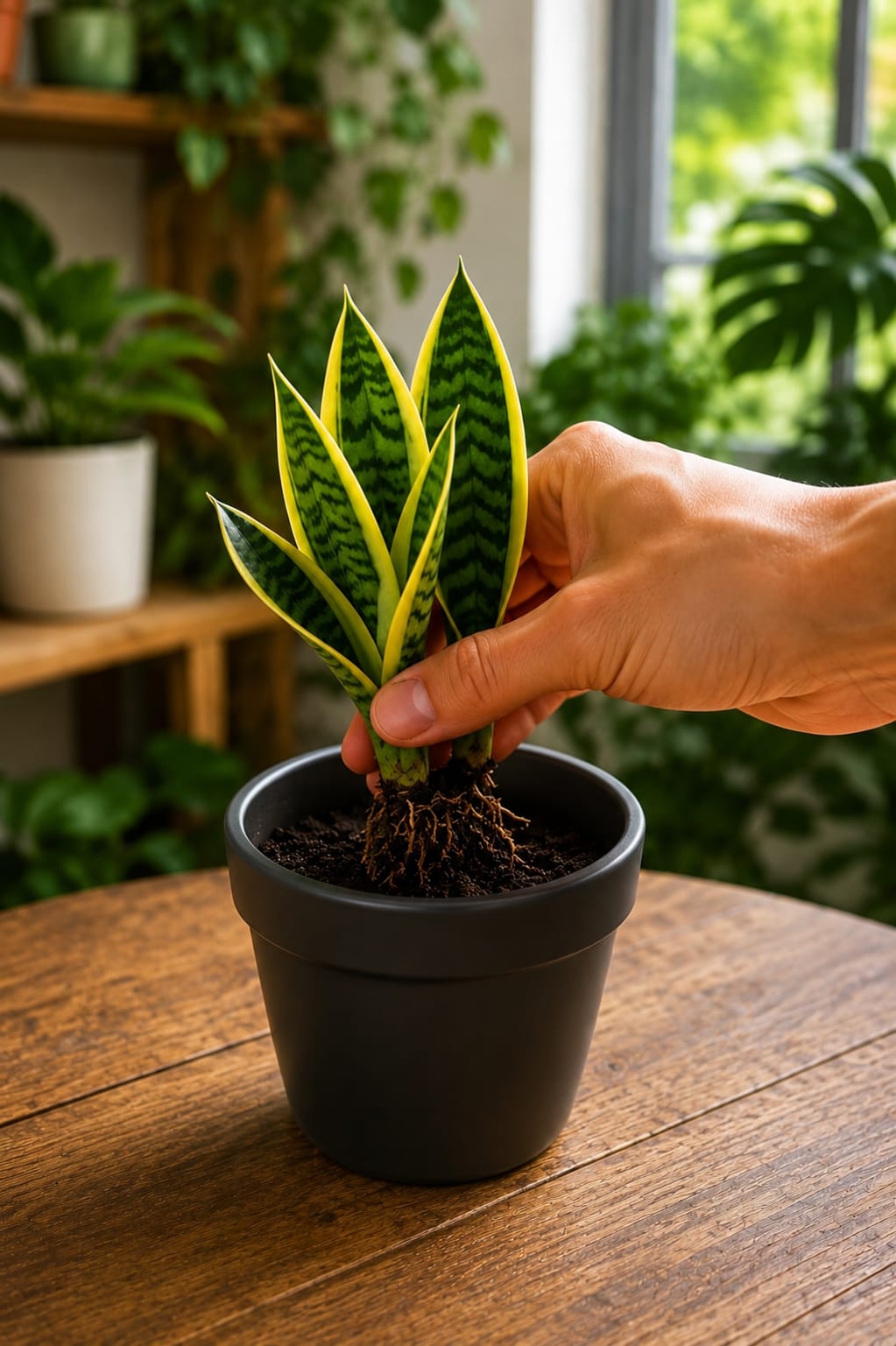
Variegated snake plants are among the most stylish indoor plants you can grow. Their upright sword-shaped leaves, deep green markings, and yellow edges make them look elegant even in the simplest pot. But the real magic begins when a snake plant starts producing small pups around the base. These baby plants can be separated, planted, and styled into a fuller indoor arrangement that looks clean, modern, and expensive.
This simple plant-care trick is about taking small snake plant offsets, planting them correctly, and finishing the pot with a neat decorative surface. Instead of cutting random leaves and hoping they root, this method focuses on planting young shoots that already have a natural growth point. That makes the final result look more balanced and gives the new plant a better chance of growing strong.
The idea is simple: choose healthy variegated snake plant pups, place them upright in a small pot with well-draining soil, keep the base stable, water carefully, and add decorative pebbles around the surface. The pebbles are not just for beauty. They help make the pot look finished, hold the small pups in place, and create a polished indoor plant display.
Why This Snake Plant Propagation Trick Works So Well
Snake plants grow from rhizomes under the soil. These rhizomes produce new shoots, often called pups or offsets. When a pup has its own base and roots, it can become a new plant. This is usually easier and more reliable than trying to grow a variegated snake plant from leaf cuttings.
Leaf cuttings can work for some snake plants, but variegated varieties may lose their yellow edges when propagated from plain leaf sections. That is why separating pups is often the better method. The baby plant keeps the same look as the mother plant because it grows from the same root system.
This method is useful because it helps you:
- Create more snake plants for free
- Keep the variegated yellow edges
- Make a small pot look fuller
- Refresh crowded mother plants
- Style baby snake plants as modern decor
- Build a neat indoor plant arrangement
What Plant This Trick Is Best For
This method is best for variegated snake plants, often known as Sansevieria or Dracaena trifasciata varieties. These plants are loved for their upright structure and strong leaf patterns. The most common decorative types have dark green bands with yellow or pale green margins.
A variegated snake plant usually has:
- Thick upright leaves
- Dark and light green marbling
- Yellow edges on many varieties
- Firm succulent-like texture
- Slow but steady growth
- Small pups appearing near the base
The pups may look like miniature versions of the adult plant. They are small, pointed, firm, and usually grow directly from the soil near the mother plant.
Why Pups Are Better Than Leaf Cuttings for Variegated Snake Plants
Many people cut snake plant leaves into pieces and plant them in soil. This can create new plants, but it has one important problem for variegated varieties: the new growth may return to plain green. That means the yellow border can disappear.
When you separate pups instead, the plant is more likely to keep its original variegated look. This is because the pup is already a complete baby plant growing from the original rhizome.
Using pups is better when you want:
- The same yellow-edged look
- Faster establishment
- A stronger starting plant
- Less risk of rotting cut leaf sections
- A more natural-looking arrangement
When to Separate Snake Plant Pups
The best time to separate snake plant pups is when they are large enough to handle and preferably have their own roots. A tiny pup with no root system can still survive sometimes, but it is more delicate. Waiting a little longer usually gives better results.
A pup is ready when:
- It is several centimeters tall
- The leaves feel firm
- It has a visible base
- It is not soft or yellowing
- It has some roots attached
- It can stand upright with support
Spring and summer are ideal seasons because snake plants grow more actively in warm weather. Propagation can still be done indoors at other times, but growth may be slower.
Best Soil for New Snake Plant Pups
Soil is one of the most important parts of this trick. Snake plants hate soggy conditions. Their roots need oxygen, and their bases can rot if the mix stays wet for too long. A fast-draining soil mix is the safest choice.
A good soil mix can include:
- Cactus or succulent potting mix
- Perlite for drainage
- Pumice for airflow
- Coarse sand for structure
- Small bark pieces to reduce compaction
Avoid heavy garden soil, dense clay soil, or any mix that holds water for many days. Baby snake plants need moisture to establish, but they should never sit in mud.
Choosing the Right Pot
A small pot is better than a large pot when planting snake plant pups. If the pot is too large, the soil may stay wet for too long around the small roots. That increases the risk of root rot.
The best pot should be:
- Small to medium in size
- Stable enough to hold upright pups
- Designed with drainage holes
- Filled with fast-draining soil
- Not too deep for tiny plants
A black, white, terracotta, or neutral ceramic pot can all look beautiful. For a modern decor style, use a matte black pot with light pebbles. For a warm natural look, use terracotta with beige stones. For a clean minimalist look, use a white ceramic pot with smooth cream pebbles.
Step-by-Step Method to Plant Snake Plant Pups
- Choose healthy pups from a mature snake plant.
- Remove the mother plant gently from the pot if needed.
- Separate the pup with roots attached.
- Let any cut area dry for a short time if it was freshly divided.
- Fill a small pot with fast-draining soil.
- Make small holes in the soil for each pup.
- Place each pup upright with the base slightly covered.
- Press the soil gently around the base for support.
- Add decorative pebbles around the surface.
- Water lightly and place in bright indirect light.
The pup should be stable but not buried too deeply. If the base is covered too much, moisture can collect around the crown and cause problems.
Why Decorative Pebbles Help the Arrangement
Decorative pebbles make small snake plant pups look more finished. Without them, a pot of tiny pups can look unfinished or sparse. A ring of smooth stones instantly gives the pot a clean, styled appearance.
Pebbles can help by:
- Keeping the surface neat
- Supporting small pups
- Reducing soil splash
- Adding contrast to green leaves
- Making the pot look more decorative
- Creating a polished indoor display
Use only a light layer. A very thick stone layer can trap moisture and make it harder to check the soil. Snake plants need airflow around the base, so the stones should decorate the surface without suffocating it.
How to Water Newly Planted Snake Plant Pups
Watering is where many people make mistakes. Newly planted pups need some moisture, but they do not want wet soil every day. Snake plants store water in their leaves, so they prefer to dry between waterings.
A safe watering routine is:
- Water lightly after planting if the soil is dry.
- Let the soil dry before watering again.
- Use a small amount of water for tiny pots.
- Avoid pouring water into the leaf centers.
- Never let the pot sit in standing water.
- Water less in winter or low light.
If the leaves become soft at the base, the soil may be too wet. If the leaves wrinkle slightly and the soil is completely dry, the plant may need water.
Best Light for Snake Plant Pups
Snake plants can tolerate lower light, but baby pups grow better in bright indirect light. Light helps them develop stronger leaves and better color. Variegated snake plants especially need good light to maintain their yellow edges and compact shape.
Good locations include:
- Near an east-facing window
- On a bright shelf away from harsh sun
- A few feet from a sunny window
- A bright office desk
- A living room table with filtered light
Avoid placing fresh pups in harsh direct sun right away. Strong sunlight can stress young plants, especially if they were recently separated.
Want the full truth and the practical next steps?
Page 2 continues with the real explanation, the key details many readers skip, and the simple takeaways that make this guide more useful.