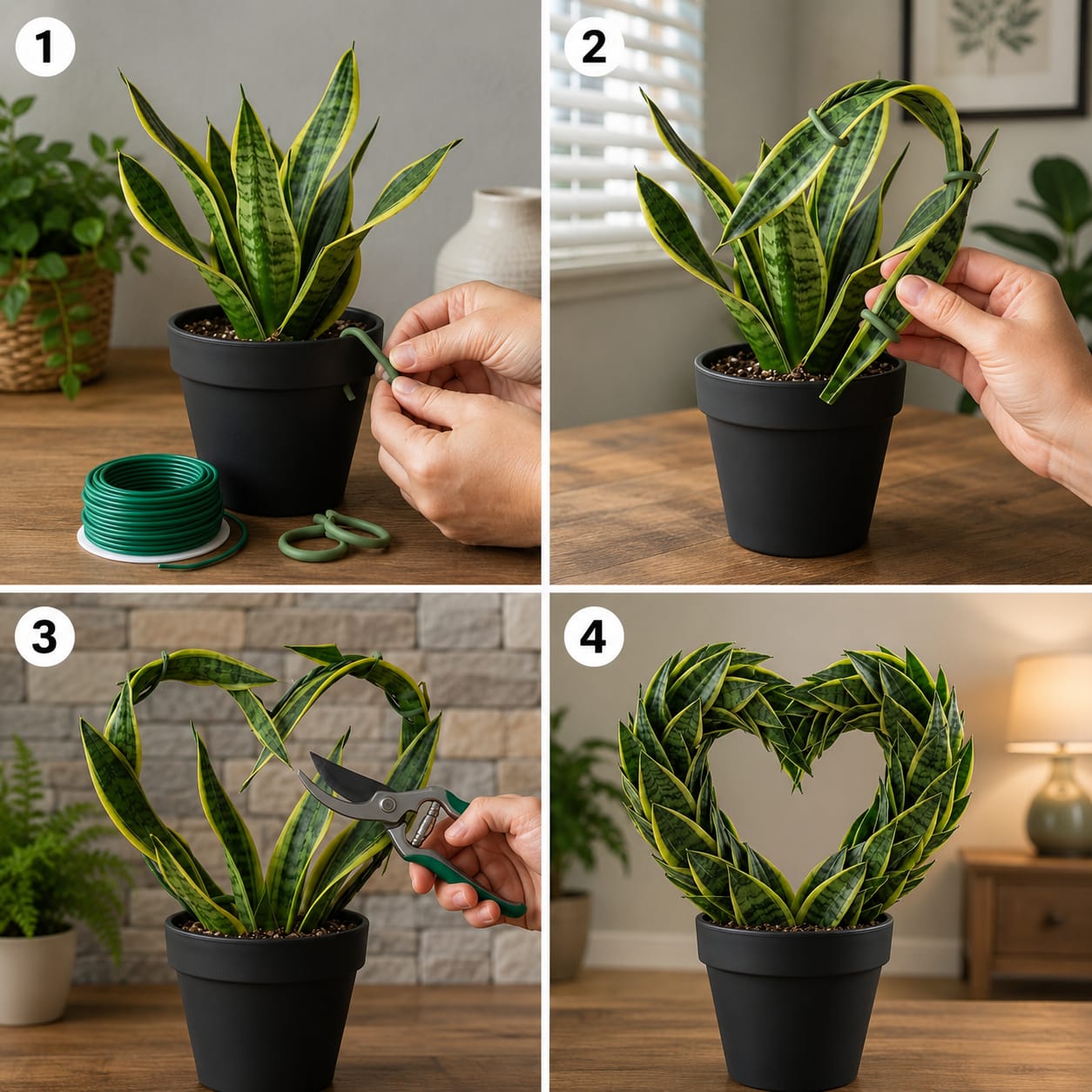
A snake plant is already one of the most stylish indoor plants you can grow. Its upright leaves, clean sword-like shape, and deep green patterns make it look modern even in a very simple pot. But when the leaves are gently trained into a heart shape, the plant becomes more than a houseplant. It turns into living decor.
This snake plant heart decor trick is a creative way to style a healthy snake plant without needing flowers, expensive planters, or complicated craft materials. The idea is simple: use soft plant ties to gently bend flexible snake plant leaves into a curved heart shape, then allow the plant to become a sculptural centerpiece for a table, shelf, windowsill, bedroom corner, or gift display.
The most important word here is gently. Snake plant leaves are firm and succulent-like, but they can still crack, crease, or snap if they are forced too quickly. This method should only be done with flexible leaves and soft ties. It is a styling trick, not a harsh plant-training method. The goal is to shape the plant slowly while keeping it healthy, clean, and elegant.
When done carefully, this heart-shaped snake plant display can look expensive, romantic, and surprisingly artistic. It works beautifully for modern indoor decor, Valentine-style plant gifts, apartment styling, office desks, boho shelves, minimalist corners, and anyone who wants a houseplant arrangement that feels personal and unique.
Why Snake Plants Are Perfect for Creative Indoor Styling
Snake plants, also known as Sansevieria or Dracaena trifasciata, have a naturally architectural shape. Their leaves grow upright from the base, forming strong vertical lines that suit many interior styles. Unlike trailing plants, they do not need much space. Unlike flowering plants, they still look decorative even when they are not blooming.
This makes snake plants excellent for creative plant styling. Their leaves can create height, structure, symmetry, and bold shapes. Some varieties have yellow edges, silver-green patterns, dark green bands, or compact rosettes. These patterns make the heart shape even more eye-catching because the curved leaves show off their color and texture from different angles.
Snake plants also tolerate normal indoor conditions better than many houseplants. They do not need constant watering, they can handle bright indirect light, and they are suitable for beginners. That low-maintenance nature makes them a good choice for a decorative project, as long as the plant is healthy before you begin.
What the Heart Decor Trick Does
This trick uses soft flexible ties to guide the leaves into a heart shape. The leaves are not cut, glued, or damaged. Instead, a few longer leaves are gently curved toward each other and held in place with soft plant ties until they form a rounded heart outline above the pot.
The method is mainly decorative, but it can also help create a neater shape if the plant has leaves growing outward. It turns a normal snake plant into a sculptural indoor arrangement.
This trick can help you create:
- A romantic plant centerpiece
- A creative houseplant gift
- A luxury-looking table display
- A unique bedroom plant arrangement
- A modern shelf decoration
- A decorative plant for small apartments
- A living heart-shaped accent for special occasions
The best part is that it does not require expensive materials. A healthy snake plant, a soft plant tie, patience, and a clean pot are enough to create the look.
What You Need
You do not need many supplies for this project. The simpler the materials, the cleaner the final display will look.
- A healthy snake plant with flexible outer leaves
- Soft green plant ties, coated wire, or foam plant ties
- Clean scissors or pruning shears
- A stable pot
- Optional decorative stones or top dressing
- Optional plant stand, tray, or ceramic outer pot
Soft plant ties are important because they reduce pressure on the leaves. Thin wire, rough string, fishing line, or tight plastic bands can cut into the leaves and leave marks. A soft tie supports the shape without damaging the plant tissue.
Choose the Right Snake Plant
Not every snake plant is ideal for this trick. The best plant has several healthy leaves, including a few longer leaves that are flexible enough to bend slightly. Very short leaves will not create a full heart. Very stiff leaves may crack if forced.
Choose a snake plant with:
- Firm healthy leaves
- No mushy base
- No major yellowing
- No signs of rot
- Several outer leaves long enough to curve
- A stable root system
- A pot that does not tip over easily
A compact snake plant can still work, but the heart will be smaller. A taller snake plant creates a more dramatic heart shape. Variegated snake plants with yellow edges look especially beautiful because the yellow border outlines the heart like a natural ribbon.
Do Not Force the Leaves
This is the most important rule. Snake plant leaves can bend a little, but they are not vines. They are thick, water-storing leaves. If you force them too far, they can crease, split, or snap.
Before shaping, gently test the leaf with your fingers. If it bends slightly without resistance, it may be suitable. If it feels very rigid, choose another leaf or keep the design smaller.
Avoid bending leaves that are:
- Very old and stiff
- Already cracked
- Soft or mushy
- Yellowing at the base
- Recently damaged
- Growing from a weak crown
The heart should look soft and natural, not forced. A slightly open heart shape is better than a perfect heart made by damaging the plant.
Step 1: Prepare the Plant
Start by cleaning the plant and checking its condition. Remove dry debris from the soil surface. Wipe dusty leaves with a slightly damp cloth. Make sure the soil is not soggy and the plant is standing firmly in the pot.
If the pot feels unstable, place it inside a heavier decorative container. A heart-shaped top can make the plant visually heavier, so the base needs to be steady.
Do not water heavily right before shaping. Leaves that are very full of moisture can be more rigid, and wet soil can make the pot messy while you work. Slightly dry soil is easier to handle.
Step 2: Select the Leaves for the Heart
Look for two longer outer leaves on opposite sides of the plant. These leaves will become the main sides of the heart. They should be healthy and long enough to curve upward and inward.
The best leaves for shaping are usually the ones that naturally lean outward. These already have a direction that helps form the curve. Leaves that grow straight in the center are better left alone because they help keep the plant looking full.
Try to keep the center leaves upright. This gives the arrangement a fuller base and makes the heart look like it is rising naturally from the plant.
Step 3: Create the First Curve
Take one selected outer leaf and gently guide it upward and inward. Do not bend it sharply at one point. Instead, create a wide, smooth curve along the full length of the leaf.
Use a soft plant tie to hold the curved leaf in place. The tie should be loose enough that it does not pinch. You should be able to slide it slightly with your fingers. If the tie leaves a deep mark, it is too tight.
The first side of the heart does not need to be perfect. It simply creates the direction for the final shape.
Step 4: Shape the Second Side
Now take a leaf from the opposite side and gently guide it toward the first leaf. This second leaf creates the other half of the heart. Curve it slowly until the two leaves form a rounded top and an open center.
Use another soft tie to connect or support the two leaves. You can attach the leaves together near the top curve, or use separate ties lower down to hold each leaf in place.
The heart should look balanced from the front. Step back and look at it before tightening anything. Adjust gently until the shape feels natural.
Step 5: Trim Only If Necessary
In most cases, trimming is not needed. The best version of this decor trick keeps the plant intact. But if there is a dry, damaged, or broken tip that ruins the clean look, it can be trimmed carefully with clean scissors.
Never cut healthy leaves just to force the heart shape. Snake plant leaves do not regrow from a trimmed tip in the same way a stem plant does. A cut leaf will keep the cut mark. For a luxury-looking display, it is better to work with the natural leaf length.
If trimming is necessary, cut only dry or damaged parts and keep the cut neat.
Step 6: Hide the Ties
The best plant styling looks intentional but not messy. After shaping the heart, adjust the ties so they are hidden behind leaves or placed where they blend in. Green soft ties are ideal because they disappear into the foliage.
Avoid using bright-colored rubber bands unless you want a playful look. For elegant indoor decor, subtle materials look more expensive.
You can also tuck the ends of the ties behind the leaves so the heart appears clean from the front.
Step 7: Style the Pot
The pot matters almost as much as the plant. A heart-shaped snake plant can look playful in a basic nursery pot, but it looks more premium when paired with a stylish container.
Good pot choices include:
- Matte black ceramic pot
- White minimalist planter
- Terracotta pot for a warm natural look
- Stone-textured planter
- Small woven basket cover
- Round low bowl planter
- Neutral cement-style pot
For a romantic look, use a white or blush-toned pot. For a modern luxury look, choose matte black or charcoal. For a cozy boho style, place the pot in a natural basket.
Step 8: Add a Clean Top Dressing
A top dressing can make the display look finished. Use a thin layer of decorative stones, pumice, orchid bark, or small pebbles over the soil surface. This hides messy soil and makes the arrangement look more styled.
Good top dressing options include:
- White stones for a clean luxury look
- Black lava rock for contrast
- Natural tan pebbles for warmth
- Fine orchid bark for a natural look
- Pumice for drainage-friendly styling
Keep the layer thin. Snake plants do not like trapped moisture around the base. A thick decorative layer can hide wet soil and make overwatering harder to notice.
How to Keep the Heart Shape Looking Good
The heart shape may shift as the leaves continue to grow or as the ties loosen. Check the plant every couple of weeks and adjust gently. Do not tighten the ties more and more. Instead, reposition them if needed.
To maintain the shape:
- Check ties every two weeks
- Loosen ties if they press into leaves
- Rotate the pot for even light
- Keep the plant in bright indirect light
- Avoid overwatering
- Remove dust from leaves
- Keep the pot stable
If a leaf starts to show stress, release it. The health of the plant is more important than the shape.
Best Light for a Snake Plant Heart Display
Snake plants can tolerate lower light, but they look best in bright indirect light. Good light helps the leaves stay firm, colorful, and upright. A heart-shaped display needs healthy leaves, so lighting matters.
Best placement options include:
- Near an east-facing window
- A few feet from a bright south-facing window
- Near filtered afternoon light
- On a bright office desk
- On a shelf close to natural light
- In a living room with soft daylight
Avoid harsh direct sun if the plant is not used to it. Strong sun can scorch the leaves and ruin the polished look.
Watering After Shaping
Watering should stay simple. Snake plants store moisture in their leaves and do not need frequent watering. After shaping, do not water more just because the plant has been styled. Too much water is still the biggest danger.
A good watering routine is:
- Let the soil dry before watering
- Water deeply when the mix is dry
- Allow excess water to drain
- Never let the pot sit in water
- Water less in winter or low light
If the leaves become soft at the base, stop watering and check for rot. A decorative shape cannot save a plant with damaged roots.
Continue to Page 2
Continue to page 2 for more details about this article and the key points many readers miss on the first page.