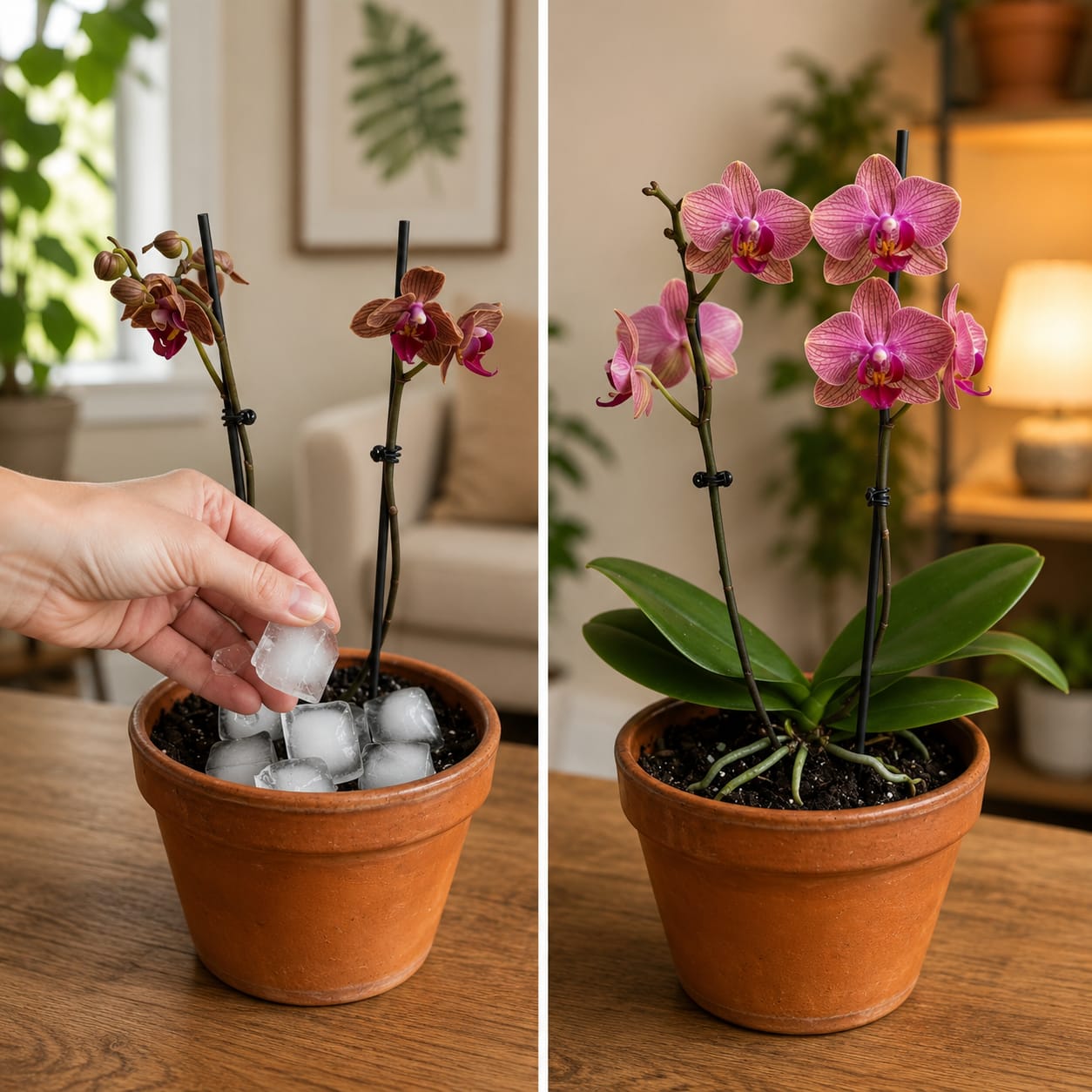
Orchids are some of the most elegant indoor plants a homeowner can place on a windowsill, coffee table, kitchen counter, office desk, or balcony corner. Their glossy leaves, tall flower spikes, and delicate blooms instantly make a room feel more refined. Even a simple terracotta pot can look expensive when an orchid is healthy, upright, and covered with fresh flowers.
But orchids also have a reputation for being difficult. Many people love the look of orchids but feel unsure about watering them. Too much water can cause root rot. Too little water can make the leaves wrinkle and the flower buds dry out. This is why the ice cube watering trick became so popular. The idea is simple: instead of pouring a large amount of water into the pot, a few ice cubes are placed on top of the growing medium so they melt slowly and release moisture gradually.
This method is often used as a beginner-friendly way to control watering. It can help prevent the common mistake of soaking the pot too often, especially with orchids grown indoors in decorative containers. However, it should be used carefully. Orchids are tropical plants, and very cold water sitting directly against roots or leaves can stress them. The trick works best when the ice cubes are placed on the surface of the potting medium, away from the crown, leaves, and exposed roots.
The real value of this method is not magic. It is measurement. Ice cubes give a controlled amount of water. For homeowners who accidentally overwater orchids, this can make orchid care feel simpler, cleaner, and more predictable.
What Plant This Trick Is Best For
This watering method is most often used for moth orchids, also known as Phalaenopsis orchids. These are the common orchids sold in supermarkets, garden centers, flower shops, and home decor stores. They usually have broad green leaves, arching flower stems, and blooms that last for weeks or even months when cared for properly.
Phalaenopsis orchids are popular because they look luxurious but can adapt well to normal indoor conditions. They do not grow in regular soil. Instead, they usually grow in bark, moss, coconut husk, charcoal, or a special orchid mix that allows air to move around the roots.
This is important because orchid roots are different from the roots of many houseplants. They need moisture, but they also need air. If the potting medium stays wet for too long, the roots can suffocate and rot. That is why careful watering matters so much.
What the Ice Cube Trick Is Supposed to Do
The ice cube trick is designed to make watering easier by slowing down the release of water. Instead of pouring water all at once, the ice melts gradually. This gives the orchid medium time to absorb moisture without flooding the pot immediately.
The trick may help with:
- Reducing accidental overwatering
- Giving a measured amount of water
- Keeping the pot surface cleaner
- Making orchid care easier for beginners
- Preventing water from rushing through too quickly
- Supporting a more consistent watering routine
- Helping decorative orchid pots stay neater indoors
For many people, the biggest problem with orchids is not forgetting them. It is loving them too much. They water too often, keep the roots wet, and then wonder why the plant declines. A small number of ice cubes can act like a built-in measuring tool.
Why Orchids Are Easy to Overwater
Orchids are often sold in pretty containers, but those decorative pots can hide what is happening around the roots. A pot may look dry on top while the lower bark or moss is still damp. If more water is added too soon, the root zone can become constantly wet.
Overwatering can lead to:
- Soft brown roots
- Yellow leaves
- Drooping leaves
- Bud drop
- Mushy crowns
- Bad smell from the pot
- Fungus or mold on the medium
- Flower spikes weakening early
Orchid roots should not sit in stagnant water. They like a cycle of moisture and air. The medium should become damp, then gradually dry. This drying period helps roots stay healthy.
How to Use Ice Cubes Safely Around Orchids
The safest way to use this trick is to treat ice cubes as a measured watering tool, not as a dramatic plant treatment. The ice should never be piled against the leaves, crown, or exposed aerial roots.
A safer method is:
- Use only two or three small ice cubes for a standard orchid pot.
- Place them on top of the bark or moss, not touching the leaves.
- Keep them away from the central crown of the plant.
- Let them melt naturally.
- Check that excess water can drain away.
- Repeat only when the medium has dried enough.
If the orchid is in a very small pot, one ice cube may be enough. If the orchid is in a larger pot, more water may be needed, but it is still better to start small and observe the plant.
Where Not to Place the Ice
Placement matters. Ice cubes should not sit directly on orchid leaves, flower stems, or exposed roots. Very cold contact can stress plant tissue. The cubes should rest on the potting medium only.
Avoid placing ice:
- Inside the crown of the orchid
- Against the base of the leaves
- On top of exposed green or silver roots
- Directly against flower stems
- In a pot with no drainage
- On a plant already showing root rot
The crown is especially important. If cold water sits in the center where the leaves meet, it can encourage crown rot. Always keep that area dry.
Why Drainage Still Matters
Even with ice cubes, drainage is still necessary. The water from melted ice must be able to move through the pot. If the orchid sits inside a decorative outer pot with no drainage, remove the inner nursery pot first or check that no water collects at the bottom.
A good orchid setup should include:
- A pot with drainage holes
- Airy orchid bark or suitable orchid mix
- No standing water under the pot
- A container that allows roots to breathe
- A watering routine based on dryness, not just the calendar
If the plant is trapped in a closed container, even small amounts of water can build up over time. That can damage roots slowly.
When the Ice Cube Trick Makes Sense
This method is most useful for people who tend to overwater. It gives them a simple limit. Instead of guessing with a watering can, they add a small number of cubes and stop.
The trick can make sense when:
- The orchid is a common Phalaenopsis type
- The plant is indoors
- The pot has drainage
- The medium is bark or moss-based
- The homeowner often overwaters
- The ice is kept away from leaves and exposed roots
- The room is warm enough for the ice to melt slowly
It is not the best method for every orchid, every climate, or every potting mix. Some orchid growers prefer room-temperature water because it is closer to natural tropical conditions. That is often the safer traditional method.
When to Avoid Ice Cubes
Do not use ice cubes if the orchid is already weak, cold-stressed, or rotting. A struggling orchid needs inspection and careful care, not a cold shock.
Avoid the ice method when:
- The room is cold
- The orchid has mushy roots
- The leaves are limp from root damage
- The plant is in a pot with no drainage
- The orchid is a sensitive variety
- The roots are exposed and touching the ice
- The potting medium stays wet for many days
If the orchid is already unhealthy, remove it from the pot and check the roots. Healthy roots are usually firm, green, white, or silvery. Rotten roots are brown, black, mushy, or hollow.
A Better Routine for Beginners
For beginners, the best orchid routine is simple. Choose one watering method and stay consistent. If using ice cubes, use them carefully. If using room-temperature water, water thoroughly and let the pot drain completely.
A beginner-friendly orchid routine looks like this:
- Place the orchid in bright indirect light
- Water only when the medium is nearly dry
- Keep water out of the crown
- Use a pot with drainage holes
- Do not let the plant sit in standing water
- Fertilize lightly during active growth
- Remove dead blooms but keep healthy leaves
Orchids do not need constant attention. They need stable care. Too many tricks at once can cause more harm than good.
How to Tell If an Orchid Needs Water
Instead of watering by habit, check the plant. Orchids give clues when they need moisture.
Signs the orchid may need water include:
- Bark feels dry
- Pot feels light
- Roots look silvery rather than green
- Leaves are slightly less firm
- Medium dries quickly after previous watering
Signs the orchid may still be too wet include:
- Pot feels heavy
- Moss feels damp
- Roots look dark green for many days
- Condensation appears inside a clear pot
- Medium smells sour
Clear orchid pots are helpful because they let you see root color and moisture levels. If the roots are still green and the pot feels heavy, wait before watering again.
Why Orchid Roots Need Air
In nature, many orchids grow attached to trees rather than buried in soil. Their roots cling to bark, absorb moisture from rain and humidity, and dry between wet periods. This is why they dislike dense soil.
Indoor orchid roots need:
- Moisture
- Airflow
- Fast drainage
- Stable warmth
- Protection from sitting water
This explains why orchid bark is so common. Bark pieces create air pockets. These air pockets help roots breathe. When roots are healthy, the leaves stay firmer and the flowers last longer.
How Ice Cubes Can Help With Cleaner Indoor Plant Care
One reason homeowners like this method is cleanliness. Pouring water into an orchid pot can sometimes splash bark, overflow the pot, or leave water on furniture. Ice cubes melt slowly and can be less messy when used in small amounts.
This can be helpful for orchids placed on:
- Wooden tables
- Window ledges
- Office desks
- Kitchen counters
- Bedroom dressers
- Decorative plant stands
Still, a saucer or waterproof tray is useful. Even melted ice becomes water, and water can still damage surfaces if it drains out unnoticed.
How to Make an Orchid Display Look More Elegant
Orchids already look elegant, but styling makes a big difference. A healthy orchid in a cheap plastic pot can look unfinished. A simple outer pot, clean support stake, and tidy growing surface can make the plant look more expensive.
To upgrade the display:
- Use a terracotta pot for a warm natural look
- Use a white ceramic pot for a clean modern look
- Choose a pot that complements the flower color
- Keep flower stakes straight and minimal
- Use discreet clips instead of messy ties
- Wipe leaves gently with a damp cloth
- Remove old flowers after they fade
- Keep the potting surface tidy
A blooming orchid looks best when the area around it is simple. Too many decorations can compete with the flowers. Let the bloom shape be the main feature.
Best Places to Display Orchids Indoors
Orchids like bright indirect light. A spot near a window is often ideal, but direct harsh sun can burn leaves. Morning light is usually gentle. Afternoon sun through hot glass can be too strong.
Good display locations include:
- East-facing windowsills
- Bright kitchen counters
- Living room side tables near filtered light
- Bedroom dressers with soft daylight
- Home office shelves near a bright window
- Bathroom counters with good light and humidity
Avoid placing orchids near heating vents, cold drafts, or dark corners. They may survive in lower light, but they bloom better with bright filtered light.
How to Keep Orchid Flowers Lasting Longer
Orchid flowers can last a long time when the plant is stable. Sudden changes in temperature, light, or water can cause buds to drop early.
To keep blooms longer:
- Keep the plant in bright indirect light
- Avoid moving it constantly
- Water consistently but not excessively
- Keep it away from cold drafts
- Do not let water sit on flowers
- Avoid placing it near ripe fruit
- Keep room temperatures stable
Once flowers fade, the plant is not dead. It is simply finished blooming for that cycle. With good care, it can rebloom later.
Should You Fertilize Orchids?
Orchids benefit from gentle feeding, but too much fertilizer can damage roots. Use a fertilizer made for orchids or a balanced houseplant fertilizer at reduced strength. Fertilize during active growth, not when the plant is stressed or rotting.
A simple feeding routine is:
- Feed lightly every few weeks during active growth
- Use diluted fertilizer
- Do not fertilize dry roots heavily
- Flush the pot occasionally with plain water
- Stop feeding if roots look damaged
Watering correctly is more important than fertilizing heavily. Healthy roots absorb nutrients better than stressed roots.
Ice Cubes Versus Room-Temperature Water
Both methods can work when done carefully, but they suit different people. Ice cubes are about control and convenience. Room-temperature water is closer to the traditional method and may be gentler for tropical roots.
| Method | Best For | Main Caution |
|---|---|---|
| Ice cubes | Beginners who overwater | Keep ice away from roots, leaves, and crown |
| Room-temperature water | Traditional orchid care | Drain fully and avoid soaking too often |
| Soaking method | Bark-grown orchids that dry quickly | Do not soak too long or too often |
| Misting | Humidity support | Does not replace proper watering |
If you are unsure, room-temperature water is usually the safest choice. If you choose ice, use it sparingly and observe how the orchid responds.
Common Orchid Problems and What They Mean
Orchids often show stress through leaves, roots, and flowers. Understanding these signs helps you correct care before the plant declines badly.
Wrinkled Leaves
Wrinkled leaves can mean dehydration, but the cause may be damaged roots. If roots are rotten, the plant cannot drink even when the pot is wet.
Yellow Leaves
One old yellow leaf can be normal. Several yellow leaves may mean overwatering, crown problems, low light, or root damage.
Bud Drop
Bud drop often happens when the orchid experiences sudden stress. Changes in temperature, dryness, drafts, or inconsistent watering can cause unopened buds to fall.
Black or Mushy Roots
This usually means rot. Remove the plant from the pot, trim dead roots with clean tools, and repot into fresh orchid medium.
No New Flowers
The orchid may need more light, a rest period, or better root health. Healthy leaves and roots are the foundation for future blooms.
Continue to Page 2
Continue to page 2 for more details about this article and the key points many readers miss on the first page.