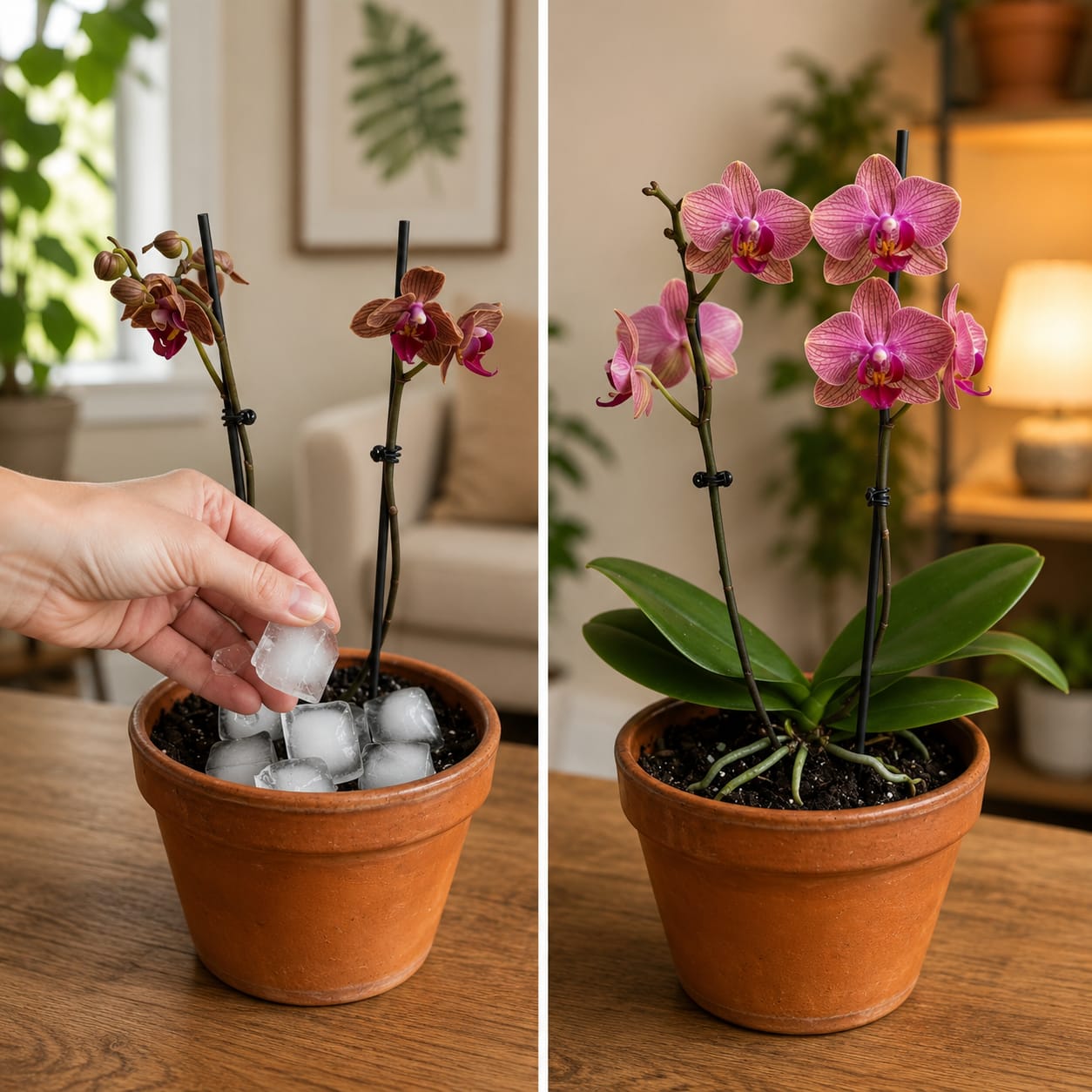
How to Refresh an Orchid After Blooming
After blooms fade, trim the flower spike depending on its condition. If the spike is brown and dry, cut it near the base. If it is still green, some growers cut above a node and wait to see if it reblooms.
After blooming, focus on:
- Healthy leaves
- Strong roots
- Fresh orchid medium if the old mix is breaking down
- Bright indirect light
- Gentle watering
- Occasional diluted feeding
The plant may need time before blooming again. Orchids are not always in flower, but they can still be beautiful as foliage plants between bloom cycles.
Decor Styling With Orchid Pots
Orchids can fit many interior styles. Their clean structure makes them easy to decorate with.
For a modern home, use a white, black, or stone-colored ceramic pot. For a rustic home, use terracotta or woven baskets. For a luxury look, use a tall matte pot with a clean saucer. For a soft feminine display, pair pink orchids with cream ceramics and light wood.
Good styling combinations include:
- Pink orchids with terracotta pots
- White orchids with black ceramic pots
- Purple orchids with neutral stone containers
- Mini orchids grouped on a tray
- One tall orchid on a clean side table
- Orchids near candles, books, or linen textures
The key is not to overdecorate. Orchids already have a sculptural look. A simple pot and clean placement often look best.
Care Table for a Healthy Blooming Orchid
| Care Factor | Best Choice | Why It Matters |
|---|---|---|
| Light | Bright indirect light | Supports strong leaves and future blooms |
| Water | Measured and occasional | Prevents root rot and dehydration |
| Pot | Drainage holes | Allows excess water to escape |
| Medium | Orchid bark or airy mix | Gives roots oxygen |
| Ice cubes | Small amount only | Helps control watering for beginners |
| Decor | Simple outer pot | Makes the orchid look elegant and clean |
Frequently Asked Questions
Can I water orchids with ice cubes?
Yes, some homeowners use a few ice cubes as a measured watering method, especially for common Phalaenopsis orchids. Keep the cubes on the potting medium and away from leaves, crown, and exposed roots.
How many ice cubes should I use?
For a standard orchid pot, two or three small ice cubes are often used. For a mini orchid, one may be enough. Always adjust based on pot size, medium, and how quickly it dries.
Can ice cubes damage orchid roots?
They can if placed directly against roots or plant tissue. Orchids are tropical plants, so cold contact should be avoided. Use the method carefully or choose room-temperature water instead.
Is room-temperature water better?
Room-temperature water is a gentler traditional option. It works well when the pot drains fully and the plant is not watered too often.
Why are my orchid leaves wrinkled?
Wrinkled leaves may mean the plant is dehydrated, but it can also mean the roots are damaged and cannot absorb water. Check the roots before adding more water.
Why did my orchid flowers fall off?
Flowers naturally fade after blooming, but sudden bud or flower drop can be caused by stress, drafts, temperature changes, low humidity, or inconsistent watering.
Final Thoughts
Placing ice cubes around an orchid pot is a simple watering trick that can help some homeowners avoid overwatering and keep orchid care cleaner. The method works best as a controlled watering tool, not as a miracle treatment. The cubes should be placed on the growing medium only, away from the crown, leaves, and exposed roots.
For many orchid owners, the real secret is consistency. Orchids need bright indirect light, airy potting medium, good drainage, stable temperatures, and careful watering. Whether you use ice cubes or room-temperature water, the goal is the same: moist roots that can still breathe.
When the root care is right, the orchid rewards you with firm leaves, strong flower spikes, and an elegant display that makes any room look more polished. A healthy blooming orchid does not need complicated care. It needs a clean setup, a gentle routine, and a little patience.