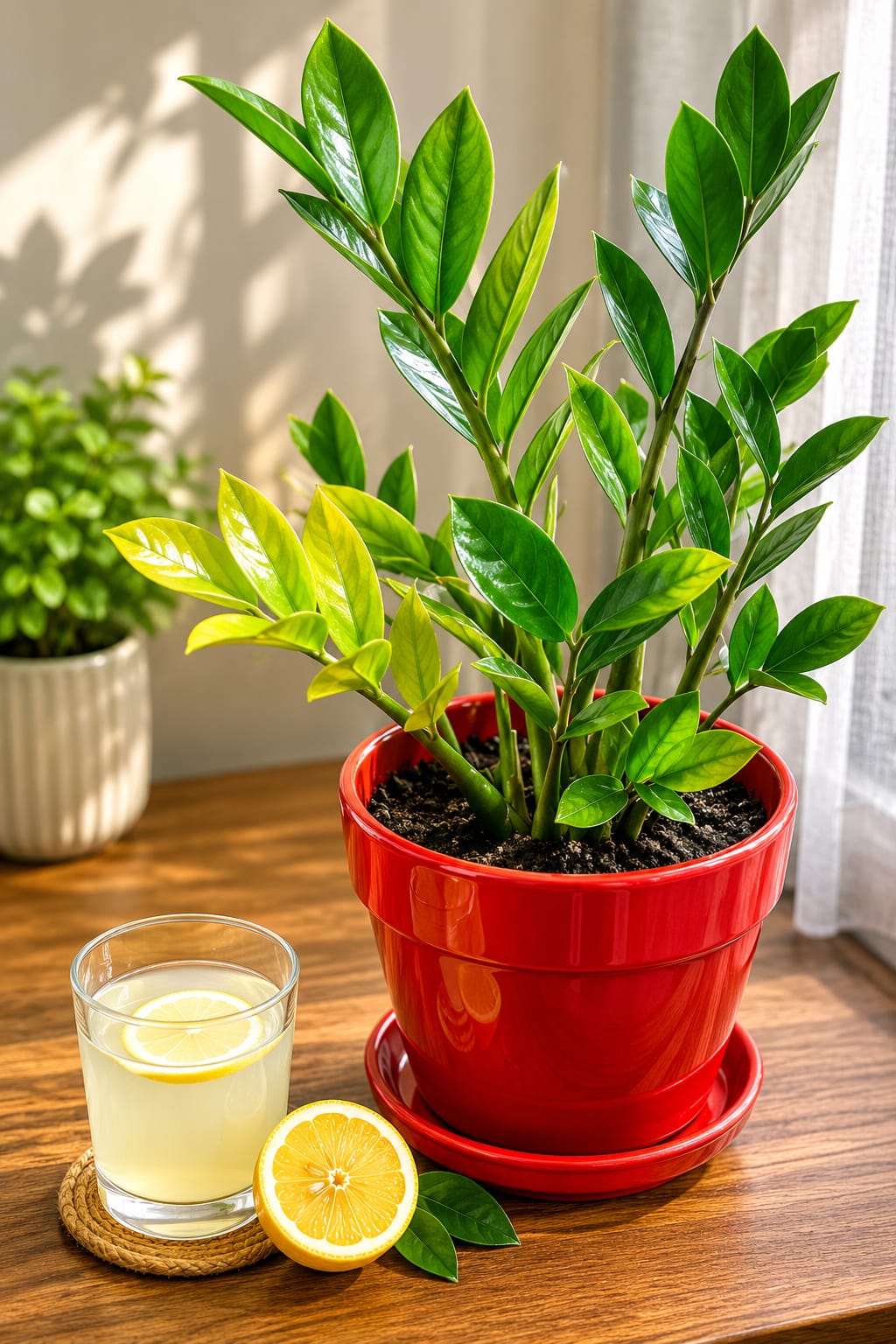
ZZ plants are loved because they look polished with almost no effort. Their thick upright stems, glossy oval leaves, and deep green color make them one of the most elegant low-maintenance houseplants for modern homes. Even a small ZZ plant can make a windowsill, desk, hallway table, bedroom shelf, or apartment corner look calmer and more expensive.
That is why simple care tricks for ZZ plants get so much attention. One popular idea is using a light lemon-based root tonic around the soil to refresh the plant, support cleaner growth, and help the foliage look brighter. The concept is not about soaking the plant in lemon juice or pouring strong acid into the pot. It is about using a very diluted lemon-style water as an occasional root-zone rinse for plants that look dull, tired, or slightly yellow.
This kind of method must be handled carefully. ZZ plants are tough, but they are also slow-growing and sensitive to overwatering. Their thick underground rhizomes store water, which means the roots do not like sitting in wet soil. A lemon-based tonic should never replace proper care. It should be treated as a light occasional support step, used only in a small amount and only when the soil conditions are suitable.
The real secret behind a beautiful ZZ plant is still simple: bright indirect light, excellent drainage, controlled watering, clean leaves, and a stable pot. A gentle lemon-based mix may help refresh the root zone when used carefully, but the full care routine is what creates strong, elegant growth.
What Is a ZZ Plant?
The ZZ plant, also known as Zamioculcas zamiifolia, is one of the most popular indoor plants for beginners and busy homeowners. It grows from thick underground rhizomes that store moisture and nutrients. From those rhizomes, upright stems rise with glossy green leaflets arranged neatly along each side.
A healthy ZZ plant usually has:
- Glossy deep green leaves
- Firm upright stems
- Thick underground rhizomes
- Slow but steady new shoots
- A clean sculptural shape
- Strong tolerance for normal indoor conditions
Because the plant stores water underground, it can handle dry periods much better than many tropical houseplants. This is one reason it is often recommended for offices, apartments, bedrooms, entryways, and low-care indoor plant collections.
Why ZZ Plants Sometimes Turn Yellow
Yellow leaves on a ZZ plant are usually a sign that something in the care routine is out of balance. Sometimes the problem is minor. Other times, yellowing can signal root stress. The most common cause is too much water, especially if the plant is sitting in heavy soil or a pot without good drainage.
Common reasons for yellow ZZ plant leaves include:
- Overwatering
- Poor drainage
- Soil staying wet too long
- Low light combined with frequent watering
- Old leaves naturally aging
- Cold drafts
- Root damage
- Too much fertilizer
- Compacted soil
Before using any tonic, fertilizer, or homemade plant drink, it is important to check the basics. If the soil is wet, sour-smelling, or compacted, adding more liquid can make the problem worse.
What a Light Lemon-Based Root Tonic Is Meant to Do
A lemon-based root tonic is usually presented as a refreshing liquid for the soil zone. It is not meant to be a heavy fertilizer. It is not meant to force instant growth. It is not meant to cure root rot. Its purpose is more gentle: to support a cleaner growing environment and help the plant recover from dullness when the care conditions are already mostly correct.
When used carefully and in very diluted form, this type of tonic may be used to:
- Refresh the soil surface
- Support a cleaner root-zone routine
- Encourage a fresher-looking plant display
- Help reduce stale buildup from poor watering habits
- Support a brighter, cleaner appearance when paired with proper care
- Add a simple natural-care step to the routine
The key word is light. Lemon is acidic. Too much can disturb the soil, stress roots, and damage a plant that is already weak. The tonic should be extremely diluted and used rarely.
Why It Should Be Diluted
Pure lemon juice is far too strong for a ZZ plant. It can irritate roots, change soil conditions too quickly, and cause more stress instead of helping. A ZZ plant does not need strong acidic treatments. It needs balance.
A safer lemon-style tonic should be very mild. Think of it as lightly scented water rather than lemon juice. The goal is not to make the soil sour. The goal is to create a gentle rinse that supports freshness without shocking the plant.
Too much lemon can cause:
- Root irritation
- Leaf yellowing
- Soil imbalance
- Stress to rhizomes
- Slower growth
- Brown leaf tips
- Damage to already weak roots
For this reason, lemon-based plant tonics should always be used cautiously, especially on indoor plants that grow slowly.
A Gentle Lemon-Based ZZ Plant Tonic Recipe
For a safer approach, keep the mixture extremely weak. A little is enough.
- 1 liter of room-temperature water
- 3 to 5 drops of fresh lemon juice
- Optional: let the mixture sit for 10 minutes before using
This is a very light mix. Do not add tablespoons of lemon juice. Do not make the water taste strongly sour. Do not add sugar, salt, vinegar, baking soda, milk, or random kitchen ingredients. ZZ plants prefer simple care.
Use only a small amount around the outer soil area, not directly into the crown of the plant. The soil should be dry or almost dry before applying any liquid.
How to Apply It Safely
The safest method is to treat the tonic like a light watering, not a flood. ZZ plants should not be drenched repeatedly. Their rhizomes hold moisture and can rot if kept too wet.
- Check that the soil is dry at least several centimeters deep.
- Make sure the pot has drainage holes.
- Mix a very weak lemon-water tonic.
- Pour a small amount around the soil edge.
- Avoid pouring directly onto the stems or crown.
- Let excess liquid drain away completely.
- Do not repeat often.
If the plant is in a decorative pot without drainage, do not use this method. Move the plant into a proper draining pot first, or water very carefully outside the cover pot and let it drain before returning it.
How Often to Use It
This is not a weekly routine. ZZ plants do not need frequent tonics. A lemon-based root tonic should be used rarely, only as an occasional refresh.
A reasonable schedule would be:
- Once every 6 to 8 weeks at most
- Only during active growth seasons
- Only when the soil is dry
- Never on a rotting or mushy plant
- Never as a replacement for regular watering care
If the plant looks healthy, dark green, and firm, it may not need this tonic at all. Sometimes the best care for a ZZ plant is to leave it alone.
When This Trick Makes Sense
A light lemon-based tonic may make sense when the plant is mostly healthy but looks slightly dull, dusty, or tired. It can be part of a refresh routine that also includes wiping the leaves, checking drainage, and improving light.
It may be suitable when:
- The plant has firm stems
- The soil drains well
- The pot has drainage holes
- The yellowing is mild
- The plant is not mushy
- The soil is dry before application
- The mixture is very diluted
It is not suitable when:
- The soil is wet
- The pot has no drainage
- The plant smells rotten
- Stems are soft or collapsing
- Rhizomes are mushy
- The plant is already stressed from too much fertilizer
- The mixture is strong or acidic
Why the Root Zone Matters More Than the Leaves
ZZ plant leaves are glossy and attractive, so many people focus only on the top of the plant. But the real health of a ZZ plant begins underground. The rhizomes and roots decide whether the plant can produce new stems, keep leaves firm, and recover from stress.
A healthy root zone helps the ZZ plant:
- Hold upright stems
- Store water safely
- Push new shoots
- Maintain glossy leaves
- Recover from dry periods
- Avoid leaf collapse
When the root zone is too wet or compacted, the leaves may slowly turn yellow. That is why watering control is more important than any tonic.
Do Not Spray Lemon on ZZ Plant Leaves
Lemon water should not be sprayed on ZZ plant leaves. The leaves are smooth and glossy, and acidic residue can leave marks or cause spotting under bright light. If the leaves are dusty, clean them with plain water and a soft cloth.
For leaf cleaning:
- Use a damp microfiber cloth
- Support each stem gently
- Wipe both sides of the leaflets
- Avoid oils and acidic sprays
- Let leaves dry away from harsh direct sun
Clean leaves reflect light better and make the plant look healthier. Often, a ZZ plant looks instantly fresher after a simple leaf wipe.
Best Light for Fresher ZZ Plant Color
ZZ plants tolerate low light, but they look better in bright indirect light. Low light can keep them alive, but growth becomes slower and watering mistakes become more dangerous. A plant in low light uses water slowly, so the soil stays wet longer.
Good light placements include:
- Near an east-facing window
- A few feet from a bright south-facing window
- A bright room with filtered light
- A home office with natural daylight
- A bedroom windowsill with soft morning sun
Avoid harsh midday sun pressing directly on the leaves for long hours. Strong direct light can scorch the foliage, especially if the plant was previously kept in shade.
ZZ Plant Watering Rules
Watering is the biggest part of ZZ plant success. This plant prefers to dry out between waterings. Because it stores water in rhizomes, it is better to underwater slightly than overwater.
A simple watering routine is:
- Check the soil before watering
- Water only when the mix is dry
- Use room-temperature water
- Water thoroughly if the pot drains well
- Let all extra water escape
- Empty the saucer after watering
- Water less in winter
Do not water on a fixed calendar without checking the soil. A ZZ plant in a warm bright room may dry faster than one in a cool shaded room.
Continue to Page 2
Continue to page 2 for more details about this article and the key points many readers miss on the first page.