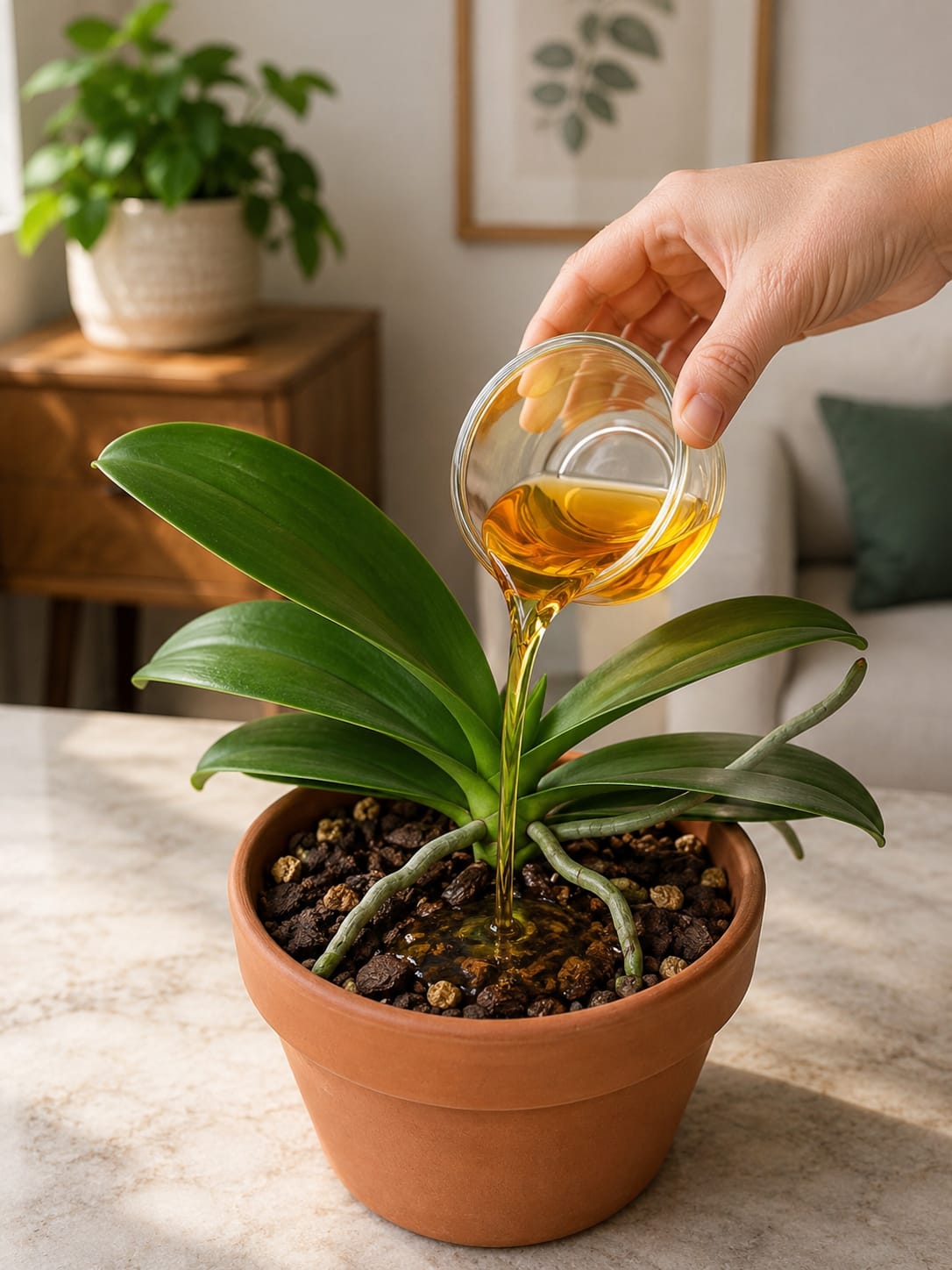
Orchids are some of the most elegant indoor plants a homeowner can grow. Their smooth green leaves, sculptural roots, and long-lasting flowers can make a simple table, windowsill, shelf, or balcony corner look expensive without needing complicated decoration. Even one healthy orchid in a terracotta pot can change the feeling of a room, especially when the leaves are glossy, the roots look active, and the plant is preparing for a new flower spike.
That is why the golden liquid orchid method gets so much attention. The idea is simple: a light amber or golden tonic is poured gently around the orchid’s root area to refresh the growing medium, support root activity, and help the plant recover enough strength to grow better. It is not used as a leaf shine. It is not meant to flood the crown. It is a root-zone care step, and with orchids, the root zone is everything.
Orchids can look delicate, but they are not impossible plants. Most indoor orchids struggle because their roots are either too wet, too dry for too long, packed in old medium, or placed in low light. When the roots are healthy, orchids can push new leaves, stronger roots, and eventually flower spikes. When the roots are weak, no trick will create fast growth overnight.
A golden liquid may be presented as a natural orchid tonic, a light nutrient water, a mild homemade fertilizer, or a gentle root-refreshing mix. The exact recipe can vary, so the safest way to use the idea is to treat it as a diluted support step, not a miracle cure. Orchids prefer weak feeding and careful watering. Too much of any liquid can damage the roots, especially if the potting medium stays soggy.
What the Golden Liquid Method Is Really About
The golden liquid method focuses on the orchid’s roots and growing medium. Instead of spraying the leaves or soaking the flowers, the liquid is poured slowly near the base so it can move through the bark, clay pebbles, or orchid mix. This is important because orchids absorb moisture and nutrients mainly through their roots.
Many popular indoor orchids, especially Phalaenopsis orchids, naturally grow with roots that like oxygen. They do not want dense soil like regular houseplants. Their roots need a chunky, airy medium that dries slightly between waterings. When a light tonic is added correctly, it should pass through the medium without leaving the roots sitting in stagnant water.
The golden liquid idea may help support:
- Cleaner root-zone care
- Gentle nutrient refreshment
- Better root hydration
- Stronger leaf growth
- Improved plant recovery after blooming
- A tidier and more polished orchid display
- More consistent care habits
The goal is not to make the orchid explode with flowers in a few days. The goal is to support the plant so it has the energy to grow steadily over time.
Why Orchid Roots Matter More Than the Flowers
Many people judge orchids only by their flowers. When the flowers fall, they think the plant is finished. But the flowers are only one stage of the orchid’s life. The real health of the plant is shown by its roots and leaves.
Healthy orchid roots are usually firm. Depending on moisture level, they may look green, silvery, white, or pale. Active root tips may appear fresh and slightly brighter. Weak roots may turn brown, hollow, mushy, or dry and papery.
Strong orchid roots help the plant:
- Absorb water properly
- Use light feeding more efficiently
- Support new leaf growth
- Prepare for future flower spikes
- Recover after stress
- Stay stable inside the pot
If the roots are damaged, adding a golden liquid will not instantly fix the plant. The orchid may first need trimming, repotting, better airflow, and a cleaner medium. A tonic works best when the plant still has enough healthy roots to use it.
Can a Golden Liquid Make Orchids Grow Fast?
A golden liquid can support orchid growth only when the full care routine is correct. It cannot replace light, drainage, airflow, and healthy roots. Orchids grow faster when several conditions work together.
For faster orchid growth, the plant needs:
- Bright indirect light
- Healthy roots
- Airy orchid medium
- Warm stable temperatures
- Light feeding during active growth
- Proper watering
- Good humidity without constant wetness
If an orchid is kept in a dark room, sitting in old soggy bark, or watered too heavily, a golden liquid will not solve the problem. But if the plant already has decent roots and good light, a gentle tonic may help refresh the root zone and support stronger growth.
Why Orchids Prefer Gentle Feeding
Orchids are not heavy feeders. In nature, many orchids receive small amounts of nutrients from rainwater, decomposing organic matter, and the environment around their roots. Indoors, they usually respond better to weak, regular support than to strong fertilizer doses.
This is why any golden liquid should be diluted. A strong homemade mix can burn roots, leave residue, or create buildup in the pot. A weak tonic is safer because orchid roots are sensitive.
Signs that a liquid is too strong may include:
- Brown root tips
- Sticky or sour-smelling medium
- Leaf yellowing after application
- Soft roots
- White crust on the potting mix
- Sudden leaf stress
When caring for orchids, less is usually better. A small amount of a gentle liquid is safer than a heavy pour.
How to Use a Golden Orchid Tonic Safely
The safest method is slow, light, and controlled. Orchids do not like being flooded with mystery liquids. The tonic should be treated like a mild root-zone refresh.
- Check the orchid roots and medium first.
- Make sure the pot is not already soaked.
- Use only a diluted plant-safe tonic.
- Pour slowly around the edge of the pot or root zone.
- Avoid pouring liquid into the crown of the orchid.
- Let excess liquid drain away completely.
- Do not leave the orchid sitting in a saucer full of liquid.
- Wait and observe the plant before repeating.
The crown is the center area where the leaves meet. Water or tonic sitting there can cause crown rot, especially indoors where airflow is weaker. Always keep that area dry after watering.
Best Time to Use a Root Tonic on Orchids
The best time to use a gentle orchid tonic is during active growth. This is when the orchid is producing new roots, new leaves, or preparing for future flower spikes. During this stage, the plant can use light nutrients more effectively.
A tonic may be useful when:
- New root tips are appearing
- A new leaf is growing
- The orchid has finished blooming and needs recovery
- The plant looks stable but slightly tired
- The medium is airy and drains well
- The plant is receiving bright indirect light
It is not ideal when:
- The roots are rotting
- The potting mix smells bad
- The orchid is sitting in soggy medium
- The crown is already soft
- The plant is in very low light
- The room is cold
- The liquid recipe is unknown or too strong
Orchid Watering: The Rule That Matters Most
Watering is more important than any tonic. Most indoor orchids fail because they are watered incorrectly. Some are soaked too often, while others dry out completely for too long. The best routine depends on the pot, medium, light, temperature, and humidity.
For most indoor orchids, especially Phalaenopsis orchids, the medium should become partly dry before watering again. The roots should not remain wet all the time.
A good watering routine includes:
- Water when the medium is nearly dry
- Use room-temperature water
- Let the pot drain fully
- Avoid water sitting in the crown
- Never leave the orchid standing in old water
- Water less in cooler or darker conditions
- Water more carefully in decorative pots without drainage
If the pot has no drainage holes, the golden liquid method becomes riskier. Orchids need drainage. A beautiful pot is not enough if the roots cannot breathe.
Best Medium for Healthy Orchid Roots
Orchids should not be planted in regular garden soil. Their roots need air. A chunky orchid mix is usually best.
A good orchid medium may include:
- Orchid bark
- Clay pebbles
- Charcoal
- Perlite
- Coconut husk chips
- Sphagnum moss in controlled amounts
Bark is common because it creates airflow around the roots. Clay pebbles can also help create a clean decorative top layer while improving drainage. Moss holds more moisture, so it must be used carefully. Too much moss can keep roots wet for too long, especially in a cool room.
Why the Pot Choice Changes Everything
Orchid pots are not only decorative. They control airflow, drainage, and moisture. A terracotta pot can look natural and elegant, while also allowing some moisture to evaporate through the sides. Clear plastic pots are useful because they let you see the roots. Decorative ceramic pots look beautiful, but they should be used with an inner nursery pot that drains.
Good orchid pot choices include:
- Clear orchid pots with drainage holes
- Slotted pots for airflow
- Terracotta pots for a natural look
- Decorative outer pots with a draining inner pot
- Shallow orchid bowls for certain arrangements
A pot that traps water at the bottom can quickly turn a useful tonic into a root rot problem. Always prioritize drainage before decoration.
Bright Indirect Light for Faster Orchid Growth
Light is one of the biggest growth triggers for orchids. A tonic may help the roots, but light gives the plant energy. Without enough light, the orchid cannot use nutrients properly.
The best light is bright but indirect. Direct harsh sunlight can burn leaves, especially through a window. Too little light can make the orchid stay alive but stop blooming or growing strongly.
Good locations include:
- Near an east-facing window
- Close to a bright filtered window
- A few feet from a sunny window with sheer curtains
- A bright bathroom with airflow
- A warm kitchen windowsill with indirect light
Healthy orchid leaves are usually medium green. Very dark green leaves can mean low light. Yellowish or scorched leaves may mean too much direct sun.
How to Tell If an Orchid Is Ready to Grow
Before using a golden liquid, look for signs that the orchid is actively growing. Active growth means the plant is more likely to respond positively.
Signs include:
- Fresh green root tips
- A new leaf emerging from the center
- Firm leaves that are not wrinkled
- Roots that turn green after watering
- No sour smell from the pot
- Stable plant base
If the plant has mushy roots, limp leaves, or a bad smell, focus on root repair before adding any tonic.
How Often Should You Use a Golden Orchid Tonic?
A golden tonic should not be used too often. Orchids prefer gentle support. If the tonic contains nutrients, too much can create buildup in the medium.
A safer rhythm is:
- Use lightly during active growth
- Apply only after checking the medium
- Repeat occasionally, not constantly
- Flush the pot with plain water sometimes
- Stop if roots or leaves show stress
For many orchids, once every few weeks during active growth is already enough if the tonic is mild. During winter or rest periods, reduce feeding and focus on light, warmth, and correct watering.
What to Avoid With Orchids
Orchids are sensitive to mistakes that trap moisture. The golden liquid method should never encourage overwatering.
Avoid:
- Pouring tonic into the crown
- Using thick sugary liquids
- Leaving residue on roots
- Using strong homemade fertilizer
- Adding tonic to rotten roots
- Keeping orchids in dense soil
- Letting the pot sit in liquid
- Repeating the method too frequently
- Using cold liquid on warm roots
- Trying to force flowers overnight
Orchids grow beautifully when their care is consistent. They do not need panic treatments or heavy feeding.
Decor Styling: Making an Orchid Look More Expensive
An orchid already has a luxurious shape. To make it look more refined, focus on the pot, surface layer, and placement. A simple terracotta pot can look warm and natural. A white ceramic pot creates a clean modern style. A glass container can look elegant if drainage is handled correctly.
To upgrade the display, try:
- Adding a clean top layer of clay pebbles
- Using a neutral pot that matches the room
- Placing the orchid near soft window light
- Keeping the leaves dust-free
- Using a slim plant stake for flower spikes
- Pairing the orchid with wood, stone, or linen textures
- Keeping the area uncluttered
Orchids look best when the surrounding space is calm. Too many decorations around them can make the plant look less special.
Continue to Page 2
Continue to page 2 for more details about this article and the key points many readers miss on the first page.