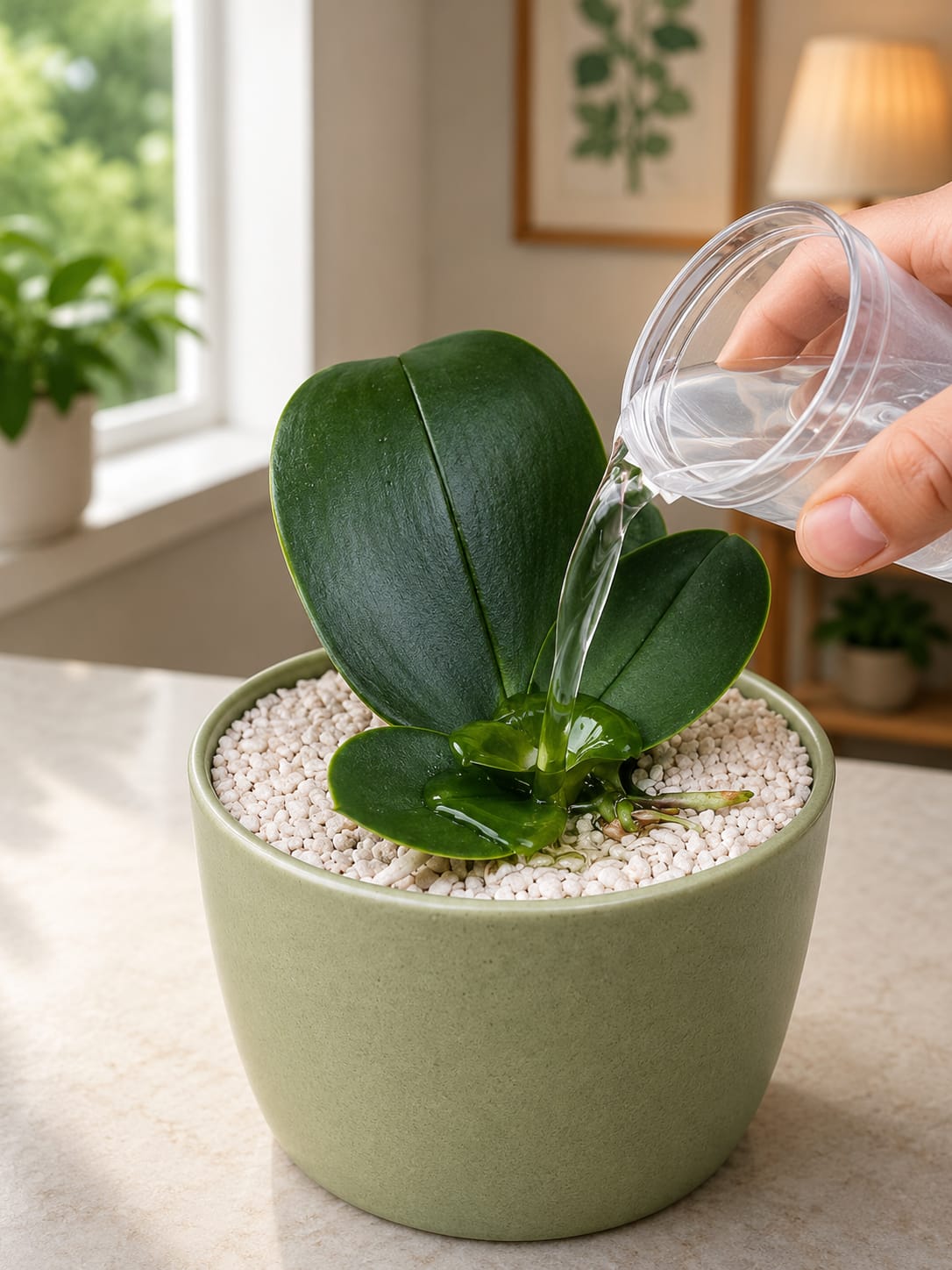
Orchids can look dramatic when they begin to struggle. One week the leaves seem firm and glossy, and the next week the plant looks tired, the roots appear dry, the surface feels dusty, and the blooms may disappear completely. Many homeowners immediately think the orchid needs a new pot, fresh mix, or a full root rescue. But sometimes the smartest first step is much simpler: do not repot too quickly. Give the orchid a gentle watering reset, check the root zone, and let the plant recover slowly before disturbing it.
This simple orchid care trick is based on patience. Instead of rushing to remove the plant from its container, the method focuses on careful hydration around the base, clean root support, and a stable growing environment. Orchids are sensitive plants. They can react badly when they are repotted at the wrong time, especially if they are already stressed. A light watering reset can help the plant rehydrate, wake up weak roots, and support new leaf growth without creating unnecessary shock.
The idea is not to drown the orchid. It is not to pour water into the crown or keep the plant sitting in soggy conditions. The goal is to refresh the root zone carefully, allow moisture to reach the roots, and then let the pot drain properly. When done correctly, this approach can help an orchid look cleaner, stronger, and more decorative indoors.
The Orchid Trick: Do Not Repot Immediately
Many orchid owners make the same mistake: they see a tired orchid and immediately repot it. While repotting can be necessary in some cases, it is not always the first solution. If the orchid still has firm leaves, some healthy roots, and a stable base, it may simply need better hydration and cleaner care before being disturbed.
Repotting too soon can stress the orchid because the roots may already be weak. When roots are dry, damaged, or adjusting to a new environment, removing the plant from its pot can break more roots and slow recovery. A gentle watering reset gives the orchid a chance to respond before any major action is taken.
This trick works best when the orchid is not rotten, not collapsing, and not sitting in old sour potting mix. It is a first-aid style step for a plant that looks tired but still has life.
Why Orchids Sometimes Look Weak After Blooming
Orchids often use a lot of energy to produce flowers. After the blooming period ends, the plant may enter a resting or rebuilding stage. During this time, it may focus on growing new roots and new leaves instead of flowers. Many people mistake this natural stage for failure.
An orchid may look less impressive after blooming because:
- The flower spike has finished its cycle
- The plant is redirecting energy to roots
- The leaves need time to firm up again
- The roots may be drying faster than expected
- The potting medium may need better moisture balance
- The plant needs brighter indirect light
- The orchid is preparing for a new growth phase
If the plant is still alive and the crown is firm, it may not need emergency repotting. It may simply need stable care and careful watering.
Why Root Hydration Matters So Much
Orchid roots are one of the most important signs of plant health. A Phalaenopsis orchid, one of the most common indoor orchids, has thick roots that absorb water and store moisture. These roots often change color depending on hydration. Dry roots may look silvery or pale gray, while freshly watered roots often turn green.
Healthy roots help the orchid:
- Absorb moisture properly
- Support firm green leaves
- Build energy for future blooms
- Recover after flowering
- Produce new leaves
- Anchor itself in the pot
- Stay resilient during indoor stress
When the roots are too dry for too long, the leaves may wrinkle, soften, or droop. When the roots stay too wet, they may rot. The trick is finding the middle: enough water to hydrate, but enough airflow to prevent decay.
How to Do a Gentle Orchid Watering Reset
This method should be done slowly and carefully. The goal is to refresh the orchid, not flood it.
- Place the orchid in bright indirect light before watering.
- Check that the container can drain properly.
- Pour room-temperature water gently around the root zone.
- Avoid filling the crown where the leaves meet.
- Let the water pass through the potting medium or stones.
- Allow excess water to drain away fully.
- Do not leave the orchid sitting in standing water.
- Wait and observe the plant for several days.
If the roots begin to look greener and the leaves feel firmer, the orchid may have simply needed hydration. If the plant continues to decline, then a root inspection or repot may be necessary.
Why Water Should Not Sit in the Crown
One of the most important orchid rules is to protect the crown. The crown is the center of the plant where the leaves grow. If water collects there and stays trapped, it can lead to crown rot. Crown rot can damage the main growing point of the orchid and may kill the plant.
To avoid this problem:
- Water around the root area, not directly into the center
- Use a narrow-spout cup or small watering container
- Dry any water trapped between leaves with tissue
- Water earlier in the day so moisture can evaporate
- Keep the plant in a place with good airflow
This is especially important for orchids kept indoors where airflow is lower than outdoors.
When You Should Wait Before Repotting
Waiting before repotting can be a smart choice when the orchid is not in serious danger. A plant that is slightly dry, tired after blooming, or adjusting to a new location may recover better with stable care than with sudden repotting.
Wait before repotting if:
- The leaves are still firm or only slightly soft
- The crown is green and solid
- Some roots are still healthy
- The potting medium does not smell bad
- The plant is not sitting in water
- The orchid recently finished blooming
- The plant was recently moved to a new location
In these cases, a careful watering reset may be enough to support recovery.
When Repotting Is Actually Needed
Even though waiting can help, some orchids really do need repotting. If the potting medium is broken down, sour, compacted, or full of rotten roots, watering alone will not solve the problem.
Repot the orchid if:
- The potting mix smells sour or rotten
- The roots are mostly black, mushy, or hollow
- The plant wobbles badly in the pot
- The bark has broken down into dense soil-like material
- The pot stays wet for too many days
- The roots are suffocating
- The orchid has pests in the root zone
In that situation, remove the orchid carefully, trim dead roots with clean scissors, and repot into fresh orchid bark or a suitable orchid mix.
Best Potting Medium for Orchids
Orchids usually do not like regular garden soil. Most common indoor orchids grow best in airy materials that allow the roots to breathe. Heavy soil can trap too much moisture and cause root rot.
Good orchid potting materials include:
- Orchid bark
- Coconut husk chips
- Perlite
- Charcoal
- Sphagnum moss in small amounts
- Pumice
- LECA or decorative clay pebbles in suitable setups
The best mix depends on your home conditions. If your home is dry, the orchid may need a medium that holds a little more moisture. If your home is humid or cool, a chunkier bark mix may be safer.
Using Decorative Stones Around Orchids
Decorative stones can make an orchid look cleaner and more expensive. White stones, cream pebbles, clay balls, or smooth top dressing can hide the messy pot surface and create a polished display. This works especially well in modern interiors where the orchid is used as part of the decor.
Decorative stones can help:
- Give the pot a clean finished surface
- Make the orchid look more luxurious
- Reduce visual clutter around the roots
- Match neutral home decor
- Support a calm spa-like indoor look
However, decorative stones should not trap too much moisture. If the orchid’s roots cannot breathe, the display may look beautiful while the plant slowly declines. Always balance beauty with root health.
How to Style an Orchid for a More Expensive Indoor Look
An orchid does not need a complicated setup to look elegant. The plant already has a naturally graceful shape. The secret is to keep the display clean, balanced, and intentional.
Try these decor ideas:
- Use a soft white ceramic pot for a clean modern look
- Choose a pale blue, beige, or stone-colored container for calm decor
- Add white pebbles for a bright polished surface
- Place the orchid near a window with filtered light
- Use a simple plant stand to lift the display
- Pair orchids with wood, linen, stone, or glass decor
- Keep the surrounding area uncluttered
A healthy orchid in a simple pot can look more luxurious than a crowded plant shelf full of messy containers.
Best Places to Display Orchids Indoors
Orchids look beautiful in many rooms, but they need the right light and airflow. They do best in bright indirect light, not a dark corner and not harsh direct sun all day.
Good places for orchids include:
- Near an east-facing window
- On a bright kitchen counter
- On a bedroom dresser near filtered light
- On a bathroom shelf with natural light
- On a living room side table
- On an entryway console
- On a home office desk
Avoid placing orchids near heaters, air conditioners, cold drafts, or very dark areas. Stable conditions help the plant recover and grow new leaves.
Continue to Page 2
Continue to page 2 for more details about this article and the key points many readers miss on the first page.