Orchids are some of the most beautiful houseplants for indoor styling, but they can also be confusing when they begin to look weak. A plant may lose flowers, show yellowing leaves, develop dry-looking roots, or sit for months without producing new growth. Because orchids look delicate, many homeowners rush to repot them, cut roots, or try strong fertilizers. But sometimes the better approach is a gentler one: refresh the root zone slowly, support hydration, and give the plant a mild nutrient boost without disturbing it too much.
One simple plant-care trick uses a light banana-based root tonic. The idea is to soak banana slices in warm water, strain the liquid well, and use the diluted water carefully around the orchid roots. This method is popular because banana is naturally associated with potassium, and potassium is often connected with flower support, plant strength, and overall growth balance. However, orchids are sensitive, so this trick should always be used lightly, cleanly, and only on plants that are not rotting.
The purpose of this orchid trick is not to force instant flowers overnight. It is not a miracle cure for dead roots or severe rot. Instead, it works as a gentle homemade tonic that may help support the plant during a recovery stage, especially when paired with good light, airflow, correct watering, and a clean orchid potting setup.
The Banana Orchid Root Tonic Trick
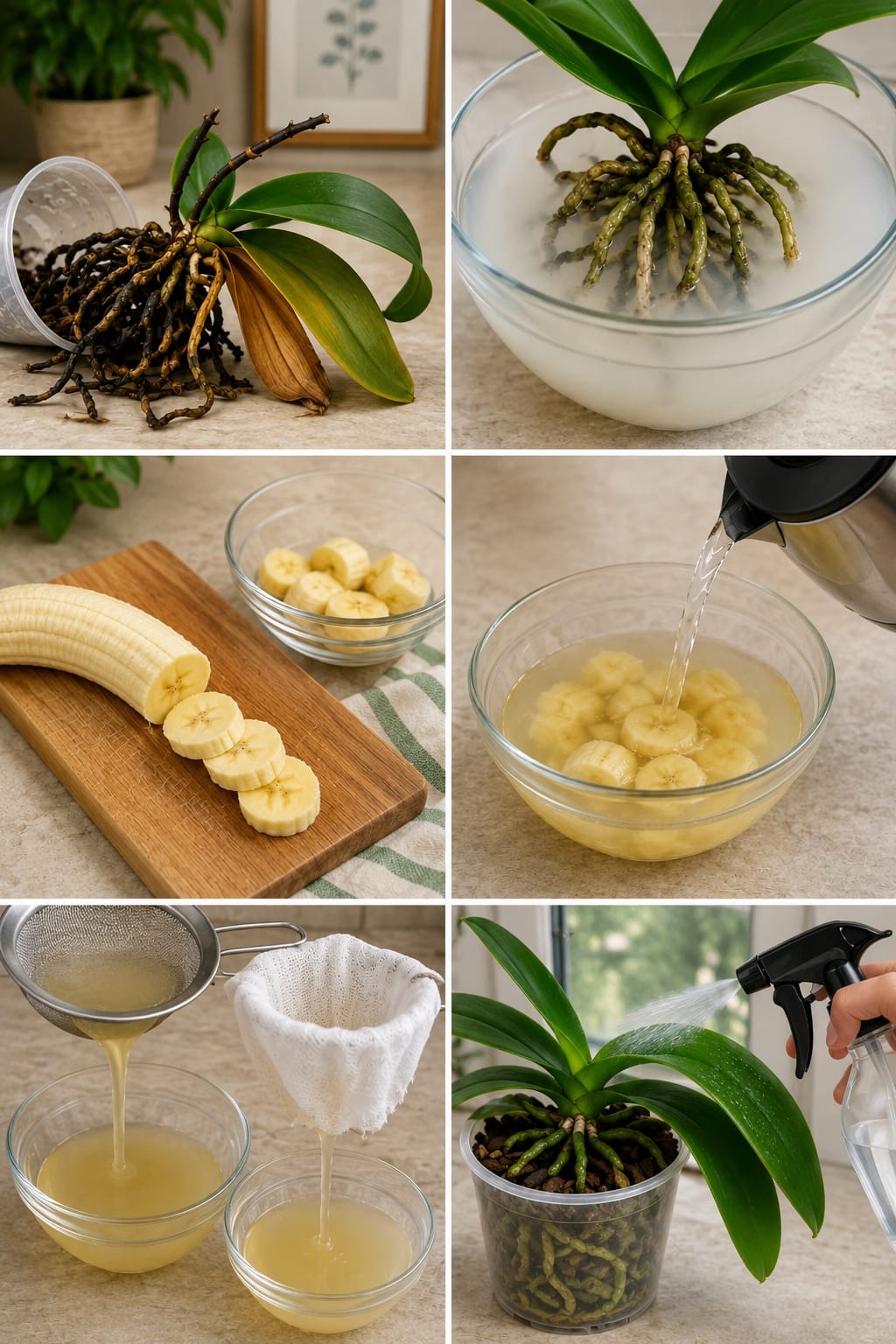
The banana tonic method is simple. A ripe banana is sliced, placed in a bowl, and covered with warm water. After the mixture sits for a short time, the liquid is strained through a fine sieve or cloth so that no soft banana pieces remain. The strained liquid is then diluted and used lightly around the orchid root zone.
The most important word here is lightly. Orchids do not like thick, sugary, dirty liquids around their roots. If banana pulp is left in the pot, it can attract pests, create odor, encourage mold, and suffocate roots. The tonic should be thin, well-strained, and used only as an occasional support step.
Why Banana Is Used in Plant Care
Bananas are often used in homemade plant-care ideas because they contain potassium. Potassium is one of the major nutrients plants need. It helps with general plant function, water movement, and flowering support. That is why banana water is often discussed as a natural plant tonic.
For orchids, the idea is not that banana water replaces proper orchid fertilizer. It is better understood as a gentle supplemental trick. The plant still needs the basics first: healthy roots, bright indirect light, breathable potting medium, and correct watering.
A banana-based tonic may be used to support:
- Root-zone freshness
- Leaf firmness
- Recovery after bloom loss
- Gentle nutrient support
- Future blooming strength
- A cleaner indoor plant routine
Why Orchids Need Gentle Care
Orchids are not regular soil plants. Many common indoor orchids, especially Phalaenopsis orchids, naturally grow with exposed roots in airy conditions. Their roots need oxygen as much as moisture. This is why orchids often struggle when they are placed in dense soil or kept constantly wet.
The roots are covered with a special outer layer that absorbs water quickly. When the roots are dry, they may look silver or pale. After watering, healthy roots often turn green. This color change helps homeowners understand when the plant has received moisture.
Because orchid roots are sensitive, any homemade liquid must be used carefully. Thick banana water, strong mixtures, or frequent applications can do more harm than good.
How to Make a Safe Banana Orchid Tonic
Use a clean and simple method. The goal is to create a mild liquid, not a fermented mess.
- Slice half of a ripe banana into small pieces.
- Place the slices in a clean bowl.
- Add about two cups of warm water.
- Let it sit for 30 minutes to 2 hours.
- Strain the liquid through a fine sieve.
- Strain again through cloth if the liquid looks cloudy or pulpy.
- Dilute the strained liquid with more plain water.
- Use only a small amount around the orchid roots.
For orchids, dilution is important. A safe approach is to mix one part banana liquid with three to four parts plain water. This keeps the tonic gentle and reduces the risk of residue buildup.
How to Apply It to Orchids
The banana tonic should be applied around the root area, not poured into the center of the plant. Orchids can rot if liquid sits in the crown where the leaves meet. Always keep the crown dry.
Use the tonic this way:
- Apply it in the morning
- Pour lightly around the potting medium
- Avoid the crown and leaf joints
- Let excess liquid drain away fully
- Never leave the pot sitting in the tonic
- Use it only occasionally
After application, the orchid should be placed in bright indirect light with good airflow. This helps the potting medium dry properly and prevents moisture from staying trapped around the roots.
How Often to Use Banana Water on Orchids
This is not a daily treatment. Orchids do better with moderation. Using banana water too often can create sticky residue, attract fungus gnats, and encourage mold in the potting medium.
A safe routine is:
- Use once every 4 to 6 weeks during active growth
- Do not use on rotten roots
- Do not use in cold, dark conditions
- Do not use while the potting medium is already wet
- Stop immediately if mold, odor, or pests appear
Plain water should still be the main watering method. Banana tonic is only an occasional support step.
When This Trick Makes Sense
This trick works best for orchids that are alive, stable, and slightly tired. It is useful when the plant has finished blooming, has some healthy roots, and needs gentle support while it builds new leaves or roots.
It may make sense when:
- The orchid has finished flowering
- The leaves are slightly dull but not mushy
- The roots are partly healthy
- The pot drains well
- The plant is in bright indirect light
- The owner wants a gentle homemade support routine
When You Should Not Use It
Banana water should not be used on every orchid. If the plant is already rotting, smells bad, or has black mushy roots, a homemade tonic will not fix the problem. In fact, it may make the pot wetter and worse.
Avoid this trick if:
- The roots are black and slimy
- The crown is soft or rotten
- The potting medium smells sour
- The orchid is sitting in water
- There are fungus gnats or mold already present
- The plant is in a dark cold corner
- The pot has poor drainage
In those cases, root inspection and proper repotting may be needed first.
Why Straining Is So Important
The most common mistake with banana plant tonic is leaving pulp in the liquid. Banana pulp breaks down quickly. In an orchid pot, it can attract pests and create bacterial or fungal problems.
Always strain the liquid until it is thin and clean. A fine cloth is better than only a sieve because it catches small particles. The cleaner the liquid, the safer it is for indoor use.
Never place banana chunks directly into an orchid pot. They may seem natural, but they can rot before the orchid benefits from them.
Orchid Roots Need Air, Not Heavy Liquid
Orchid roots are different from the roots of many common houseplants. They need an airy environment. If the potting medium becomes heavy, wet, or compacted, the roots can suffocate.
This is why banana tonic must be used lightly. The best orchid care routine always protects airflow.
Good orchid root conditions include:
- Chunky bark or airy medium
- Drainage holes
- No standing water
- Bright indirect light
- Moderate humidity
- Good airflow
- Careful watering
Best Potting Medium for Orchids
Orchids usually should not be planted in regular garden soil. Most indoor orchids prefer bark-based or airy mixes. The potting medium should hold some moisture but still allow oxygen to reach the roots.
Good orchid potting materials include:
- Orchid bark
- Coconut husk chips
- Perlite
- Charcoal
- Pumice
- LECA clay pebbles
- A small amount of sphagnum moss if the home is very dry
If the potting medium is old and broken down, banana water will not solve the problem. Old compacted medium should be replaced with fresh orchid mix.
Why Yellow Leaves Happen on Orchids
One yellow leaf is not always an emergency. Orchids naturally lose older leaves over time. But multiple yellowing leaves can signal stress.
Common causes include:
- Overwatering
- Underwatering
- Root damage
- Too much direct sun
- Low light
- Cold drafts
- Natural aging
- Fertilizer burn
If a lower leaf turns yellow while the crown remains firm and new growth appears, the plant may simply be recycling an older leaf. But if the crown is soft or the roots smell bad, check for rot.
How Banana Tonic Fits Into Bloom Support
Many homeowners use banana water because they want more flowers. While potassium can support plant function, blooms depend on more than one homemade liquid. Orchids need a full care routine before they bloom well.
To support future blooms, focus on:
- Bright indirect light
- Healthy roots
- Stable watering
- Good airflow
- Mild fertilizer during active growth
- A slight nighttime temperature drop for some orchids
- Patience after the previous bloom cycle
Banana tonic may be part of the routine, but it should never replace proper orchid fertilizer or correct growing conditions.
Continue to Page 2
Continue to page 2 for more details about this article and the key points many readers miss on the first page.