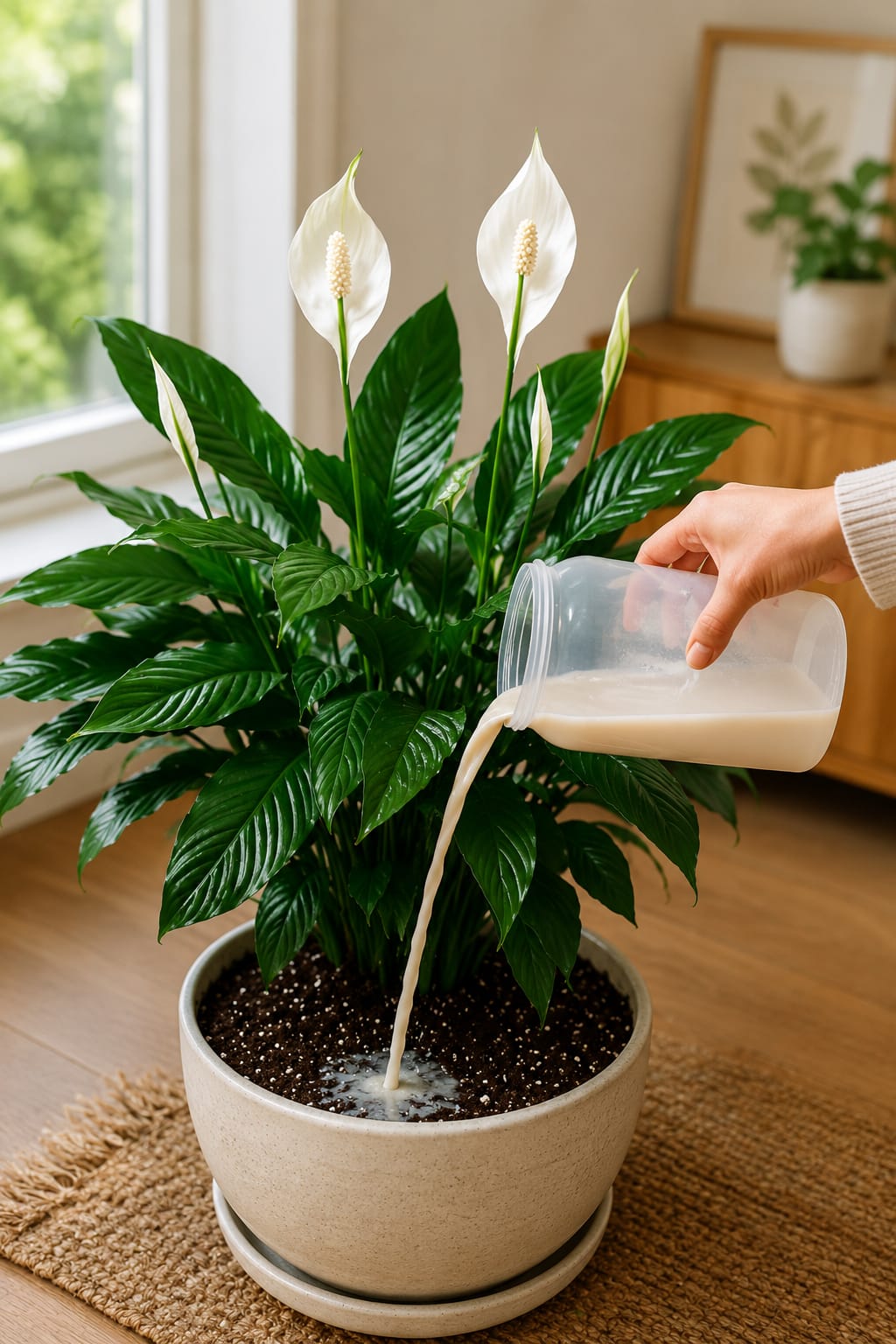
Peace lilies are among the most graceful indoor plants because they bring together two things every plant lover wants: glossy green leaves and elegant white flowers. Their soft white spathes look refined, their foliage stays attractive even when the plant is not blooming, and their shape works beautifully in modern homes, cozy corners, bright apartments, shaded patios, and calm office spaces. But even though peace lilies are considered easy plants, many owners eventually face the same problem: the plant grows leaves but refuses to bloom, the foliage looks dull, the soil feels tired, or the plant no longer has that full, expensive-looking appearance it had when it first came home.
That is why simple natural care routines have become so popular among indoor gardeners. A peace lily does not usually need complicated treatments. It responds best to steady watering, gentle feeding, clean leaves, bright indirect light, and a growing medium that stays lightly moist without becoming swampy. One popular idea is using a mild homemade root tonic to refresh the soil and support greener, fuller growth. The safest way to think about this trick is not as a miracle bloom formula, but as an occasional extra-care routine that works alongside proper light, water, and maintenance.
Peace lilies can look dramatically healthier when their basic needs are balanced. A plant with clean leaves absorbs light better. A plant with evenly moist soil avoids stress. A plant with healthy roots can push out new foliage and support flowers more easily. A plant placed in the right decorative pot instantly looks more luxurious. This guide explains how to use a gentle natural peace lily tonic safely, how often to apply it, what mistakes to avoid, and how to style the plant so it becomes a polished focal point in the home.
Understanding What Peace Lilies Really Need
Before using any natural trick, it helps to understand how peace lilies grow. Peace lilies, also known as Spathiphyllum, are tropical plants that naturally prefer warm conditions, filtered light, and consistent moisture. They do not like to dry out completely for long periods, but they also dislike sitting in soggy soil. This balance is important because many peace lily problems come from extremes: too much water, too little water, too much sun, too little light, or too much fertilizer.
The leaves often communicate what the plant needs. Drooping leaves usually mean the plant is thirsty, although they can also droop from root stress if the soil is constantly wet. Brown leaf tips may come from dry air, inconsistent watering, fertilizer buildup, or minerals in the water. Yellow leaves can appear from overwatering, old age, poor drainage, or sudden environmental changes. No tonic can fix these issues unless the basic care routine is corrected first.
Peace lilies bloom best when they receive bright indirect light. Many people keep them in dark corners because the plant can survive in low light, but survival is not the same as blooming. A peace lily may stay green in a dim room, but it often needs more filtered brightness to produce white flowers. This is why a plant placed near a bright window with softened light usually looks fuller and more active than one placed far from natural light.
The Idea Behind a Natural Peace Lily Tonic
A natural peace lily tonic is usually a very mild liquid mixture used around the root zone to refresh the plant and support steady growth. The goal is not to force flowers overnight. Instead, the idea is to provide a gentle boost while keeping the soil clean and hydrated. Some plant lovers use diluted rice water, banana peel water, compost tea, diluted milk water, or other homemade mixtures. However, not all homemade tricks are safe, and some can create odor, mold, fungus gnats, or root problems if used too strongly.
For peace lilies, the safest homemade approach is always weak and occasional. A very diluted natural liquid can be used once in a while, but it should never replace proper watering or balanced fertilizer. The plant still needs clean water, drainage, and light. Strong mixtures can damage roots, attract pests, or leave sticky residue in the soil. When in doubt, weaker is better.
The most useful version of this trick is a gentle root drench made from clean water and a very small amount of natural nutrient source. The liquid should be thin, not thick or creamy. It should drain easily through the soil. It should not sit on the surface in a heavy layer. Peace lily roots need oxygen, so anything that clogs the soil can create trouble.
A Safe Gentle Peace Lily Tonic Recipe
For a simple and cautious peace lily tonic, use this mild mixture:
- 1 liter of clean water
- 1 to 2 tablespoons of unsalted rice water, banana peel water, or very diluted compost tea
- Optional: strain the liquid before using it
The mixture should look watery, not thick. If it smells sour, fermented, rotten, or unpleasant, do not use it. Fresh is safer. A peace lily does not need heavy homemade liquid sitting around its roots. The tonic should feel like a light watering, not a food soup.
One of the best options is strained rice water because it is mild when diluted. Another option is banana peel water that has been soaked briefly and strained well, but it must be used carefully because strong banana mixtures can attract insects. Compost tea can be helpful, but only if it is clean, well-diluted, and not foul-smelling. For indoor plants, very mild formulas are safer because indoor soil does not dry or break down organic material as quickly as outdoor garden soil.
How to Apply the Tonic Correctly
Apply the tonic only when the top layer of soil feels slightly dry. Do not pour it into already wet soil. If the soil is soggy, wait. Peace lilies like moisture, but they do not like waterlogged roots. The goal is to water the root zone gently, then allow excess moisture to drain away.
Pour the tonic slowly around the base of the plant, not directly into the crown. The crown is the central area where the leaves emerge. Keeping this area constantly wet can encourage rot. Water the soil evenly around the plant instead.
After applying, check the saucer. If water collects beneath the pot, empty it after 10 to 15 minutes. Never let a peace lily sit in standing water for long. Even a healthy plant can decline if the roots remain submerged.
Use the tonic once every four to six weeks during active growth. In winter, reduce or stop the routine because peace lilies usually grow more slowly in cooler, darker months. Overusing natural mixtures is one of the most common mistakes. A small boost occasionally is enough.
Why This Trick Works Best With the Right Light
A tonic cannot make a peace lily bloom if the plant is sitting in deep shade. Light is one of the most important bloom triggers. Peace lilies prefer bright indirect light, such as near an east-facing window, close to a north-facing window with good brightness, or a few feet away from a south or west window with filtered light.
Direct harsh sunlight can scorch the leaves, especially during hot afternoon hours. Scorched leaves may show pale patches, brown marks, or crispy edges. On the other hand, too little light produces weak growth and fewer flowers. The ideal light is bright but soft.
To improve blooming, move the peace lily closer to a bright window gradually. Do not move it suddenly from shade into strong light. Let it adjust over one or two weeks. Once the plant receives enough light, it can use water and nutrients more effectively, and the foliage often becomes stronger and more upright.
Watering Peace Lilies the Right Way
Peace lilies are famous for drooping when thirsty. This can be helpful because the plant gives a clear signal, but it is better not to let it collapse repeatedly. Frequent wilting can stress the plant and lead to brown tips. Instead, check the soil regularly. When the top inch feels slightly dry, water thoroughly.
Water until some moisture runs from the drainage holes, then empty the saucer. This ensures the root ball is evenly hydrated. Small splashes on the surface often leave dry pockets deeper in the pot. Deep, thorough watering followed by proper drainage is better than tiny frequent sips.
If your tap water is very hard or treated heavily, consider using filtered water, rainwater, or water left out overnight. Some peace lilies are sensitive to minerals and chemicals, which may contribute to brown tips. Clean water helps maintain a fresher, healthier look.
How to Keep Leaves Glossy Without Leaf Shine Products
Peace lily leaves naturally have a beautiful shine when they are clean and hydrated. Dust can make the plant look dull and block some light from reaching the leaf surface. Wiping the leaves regularly is one of the easiest ways to make the plant look more expensive.
Use a soft damp cloth and gently wipe each leaf while supporting it from underneath. Avoid commercial leaf shine sprays, oils, mayonnaise, or heavy homemade polish. These can clog leaf pores, attract dust, and sometimes damage the foliage. Plain water is usually enough.
For a plant displayed in a living room or entryway, cleaning the leaves every two weeks keeps it looking fresh. The difference is immediate: the green becomes deeper, the plant looks healthier, and the white blooms stand out more beautifully against the glossy foliage.
Best Soil for a Fuller Peace Lily
Peace lilies prefer a soil mix that holds moisture but still drains well. A dense, compact mix can suffocate roots. A mix that dries too quickly may cause constant drooping. The best balance is soft, airy, and moisture-retentive.
A good indoor peace lily mix can include regular potting soil, perlite, orchid bark, coco coir, or a small amount of compost. Perlite improves drainage. Coco coir helps hold gentle moisture. Orchid bark creates air pockets. The exact mix depends on your home’s conditions. In a humid room, use more drainage. In a dry room, use slightly more moisture-holding material.
If the soil smells sour, stays wet for too long, or pulls away from the pot edges, it may be time to refresh it. Repotting into a better mix can often revive a tired peace lily more effectively than any homemade tonic.
When to Repot a Peace Lily
Repot when the plant becomes root-bound, dries out too quickly, has roots circling tightly around the pot, or shows slowed growth despite proper care. Peace lilies often enjoy being slightly snug, but they should not be trapped in exhausted soil forever.
Choose a pot only one size larger than the current one. A pot that is too large holds extra moisture and can lead to root rot. Make sure the pot has drainage holes. Decorative pots are beautiful, but drainage is essential.
After repotting, avoid strong fertilizer or homemade tonics for a few weeks. Let the roots settle first. Keep the soil lightly moist and the plant in bright indirect light.
How to Encourage More White Blooms
Peace lily blooms are usually encouraged by a combination of maturity, light, nutrients, and stable care. If the plant is healthy but not blooming, increase indirect light first. This is often the missing piece.
Next, feed lightly during the growing season. Use a balanced houseplant fertilizer diluted to half strength every four to six weeks, or use a gentle natural tonic occasionally. Do not overfeed. Too much fertilizer can burn roots and create brown tips.
Remove faded flowers by cutting the flower stem near the base with clean scissors. This helps the plant redirect energy. Also remove yellow or damaged leaves to keep the plant tidy and encourage a fuller display.
Continue to Page 2
Continue to page 2 for more details about this article and the key points many readers miss on the first page.