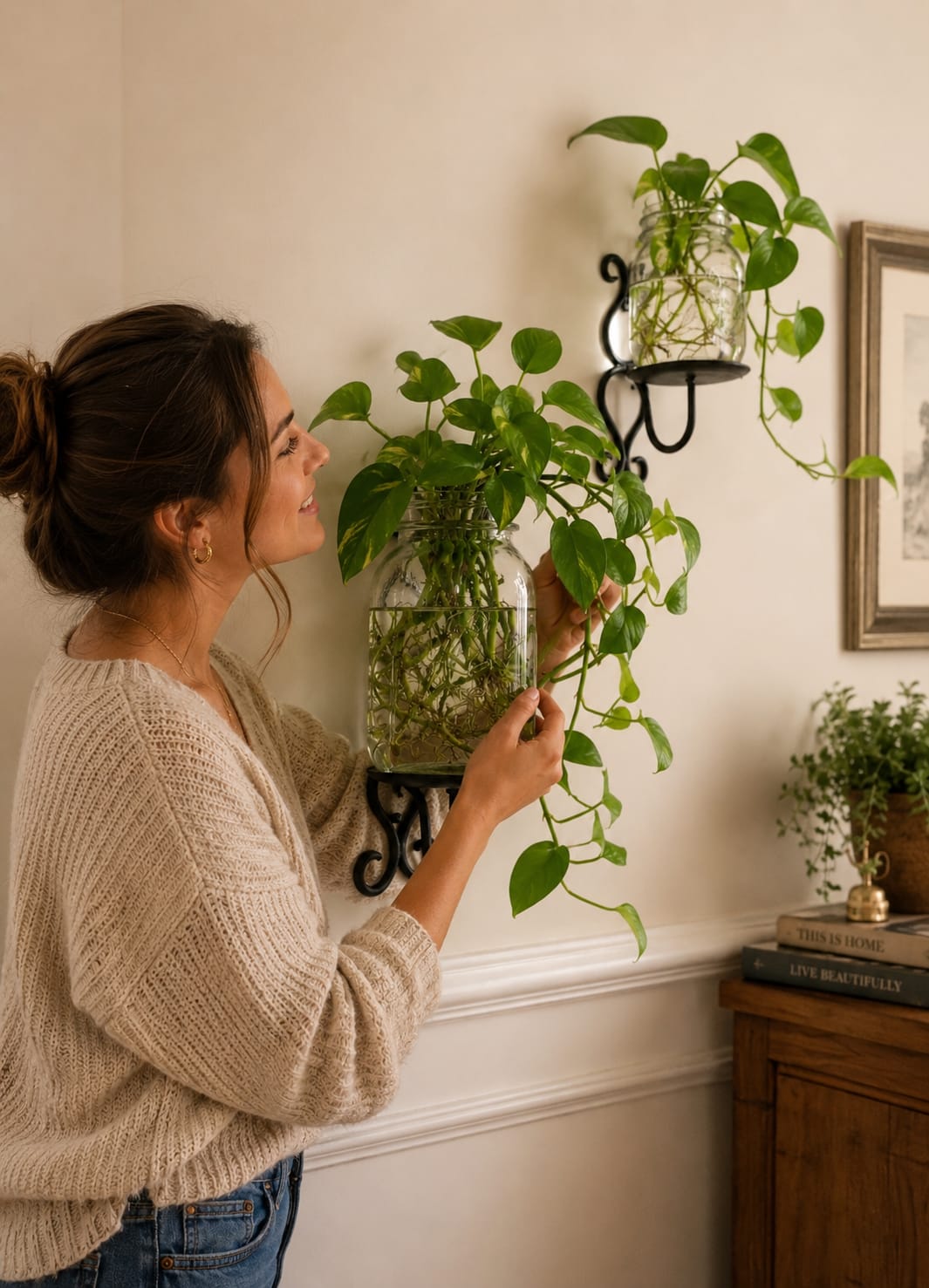
Pothos is one of the easiest indoor plants to turn into a beautiful home decor feature. Its heart-shaped green leaves, long trailing vines, and forgiving nature make it perfect for shelves, windows, kitchen corners, bedrooms, bathrooms, and wall displays. But one of the most stylish ways to show off pothos is by growing it in clear glass jars mounted on wall brackets. This simple idea gives your home a fresh botanical look while keeping the plant care routine clean, visible, and surprisingly easy.
A glass jar pothos wall planter combines plant propagation, hydroponic-style growing, and indoor decorating in one simple project. Instead of hiding roots inside soil, the clear jar lets you see the roots growing in water. The vines spill beautifully from the jar, softening the wall and creating a natural hanging effect. With the right placement, clean water, and occasional trimming, pothos can stay healthy and attractive for a long time in water.
This method is especially useful for people who want greenery without messy soil. It is also perfect for small homes because it uses vertical space. A blank wall can become a living display, a hallway can feel warmer, and a simple corner can look styled and intentional. The best part is that pothos does not demand complicated care. Once the cuttings root well, they only need bright indirect light, fresh water, and occasional nutrients.
Why Pothos Works So Well in Glass Jars
Pothos is a naturally adaptable plant. It can grow in soil, climb a moss pole, trail from a shelf, or root in water. When a pothos cutting is placed in clean water, small white roots begin to grow from the nodes along the stem. These nodes are the little bumps where leaves and roots develop. As long as at least one node is under water, the cutting has a good chance of rooting.
Clear glass jars make this process easy to monitor. You can see if the water is clean, whether roots are growing, and if any stem pieces are starting to rot. This visibility is one reason glass jar planters feel cleaner and more controlled than hidden containers. They also create a soft, modern look that works with many decor styles.
In a farmhouse room, jars add charm. In a modern apartment, they look minimal and fresh. In a boho space, they blend beautifully with wood, rope, baskets, and trailing vines. In a classic room, black metal brackets and clear glass can create an elegant wall garden effect without overwhelming the decor.
The Best Pothos Varieties for Wall Jars
Golden pothos is one of the best choices because it is strong, fast-growing, and tolerant of different light levels. Its green leaves with yellow variegation create warmth and brightness. Marble queen pothos has creamy white and green leaves, giving the display a softer, more decorative look. Neon pothos adds a bold lime-green color that can brighten darker corners, although it still needs enough indirect light to stay vibrant.
Jade pothos is a simple deep green variety that looks clean and classic. It is great if you prefer a calm, uniform style. N’Joy or pearls and jade pothos have smaller patterned leaves, making them beautiful for compact jar displays. These varieties may grow a bit slower, but they look very refined in glass.
For a fuller wall arrangement, you can mix varieties. One jar can hold golden pothos, another neon pothos, and another marble queen. The different shades create a layered botanical display that looks more designed.
What You Need for a Pothos Wall Jar Planter
You do not need many materials. The basic setup includes clear glass jars, wall-mounted brackets or small shelves, pothos cuttings, clean water, and a bright indirect light location. You can also use decorative hooks, metal rings, wooden boards, or small wall sconces that hold jars securely.
Choose jars with wide enough openings so you can remove the cuttings for cleaning. Very narrow bottles can look pretty, but they make maintenance harder. A medium-size jar is usually best because it gives the roots space to grow and holds enough water to stay stable for several days.
The wall support must be strong. Water and glass are heavier than they look. Always install brackets properly, especially if the jars are large. If you are renting and cannot drill into the wall, use a sturdy freestanding plant rack or wall shelf instead.
How to Take Pothos Cuttings
Start with a healthy pothos vine. Look for stems with several leaves and visible nodes. Use clean scissors or pruning shears to cut the vine into sections. Each cutting should have at least one node, but two or three nodes are even better. Remove the lowest leaf so that no leaves sit below the water line.
This step is important because submerged leaves can rot and make the water smell bad. Only stems and nodes should be under water. The leaves should stay above the jar opening, where they can breathe and receive light.
If you want a full-looking jar from the beginning, place several cuttings together. Three to six cuttings in one jar can create a lush appearance. A single cutting will root too, but it may look sparse until it grows longer.
How to Place the Cuttings in Water
Fill the jar with clean room-temperature water. Place the pothos cuttings inside so the nodes are submerged. Arrange the stems gently so the leaves fan out over the top of the jar. Do not pack too many stems tightly because they need airflow around the crown area.
If the cuttings keep slipping, you can use decorative pebbles at the bottom of the jar to hold them in place. Glass beads, clean stones, or leca clay balls can also help stabilize the stems. Make sure anything you add is washed thoroughly before placing it in the jar.
After arranging the cuttings, place the jar in its wall bracket or shelf. Step back and look at the balance. Let some vines trail downward and others reach sideways. This creates a natural flowing shape.
Best Light for a Glass Jar Pothos Display
Pothos grows best in bright indirect light. A wall near a window is ideal, especially if the light is filtered by curtains or does not hit the leaves directly for many hours. Direct harsh sun can heat the water, scorch the leaves, and encourage algae growth inside the jar.
Low light is possible, but growth will slow down. Variegated varieties may lose some of their lighter patterns if they do not receive enough brightness. If you want fuller vines and stronger leaves, give the plant a bright but gentle location.
A north-facing or east-facing window area often works well. If the display is far from natural light, a small grow light can help. Keep the light soft and consistent rather than intense and close.
How Often to Change the Water
Fresh water is the secret to a clean pothos jar. Change the water every one to two weeks. If the water becomes cloudy, smells unpleasant, or develops algae, change it sooner. Rinse the jar before refilling it, and gently rinse the roots if they feel slimy.
Do not let the water level drop below the roots. Roots need to stay hydrated. In warm rooms, water may evaporate faster, so check the jars regularly. Topping up between full water changes is fine, but do not rely only on topping up forever. Full water changes keep the display fresher.
Use room-temperature water. Very cold water can shock the roots, while hot water can damage them. If your tap water is heavily treated, let it sit overnight before using it, or use filtered water.
Do Pothos Plants Need Fertilizer in Water?
Yes, eventually they do. Water alone does not provide enough nutrients forever. Pothos can survive in water for a long time, but for strong growth, it benefits from a very diluted liquid fertilizer. Use a balanced houseplant fertilizer at about one-quarter strength once every four to six weeks during active growth.
Do not overfeed. Too much fertilizer can burn water roots and create buildup in the jar. If you notice brown root tips, cloudy water, or leaf stress after feeding, dilute more or feed less often.
After fertilizing, keep an eye on the water. If it becomes cloudy quickly, change it and use a weaker dose next time.
How to Keep the Jars Looking Clean
Glass jars look beautiful when clear, but they can show algae, water marks, and mineral buildup. Clean them regularly with warm water and a bottle brush. Avoid harsh chemical cleaners unless you rinse extremely well. A small amount of vinegar can help remove mineral marks, but the jar must be rinsed thoroughly before the plant goes back inside.
To reduce algae, avoid direct sunlight on the jar. Algae grows faster when light hits the water. If algae becomes a repeated problem, move the display slightly away from the window or use tinted glass jars.
Clean roots also make the display look more elegant. Healthy pothos roots in water are usually white to light tan. Dark, mushy, or foul-smelling roots should be trimmed away with clean scissors.
How to Style the Wall Display
A pothos wall jar planter can look simple or dramatic depending on how you arrange it. For a clean modern look, use matching glass jars and identical black metal brackets. Space them evenly along the wall. Let the vines trail naturally for a soft green effect.
For a rustic look, mount the jars on a reclaimed wood board. Add hooks or metal rings to hold the jars. The contrast between clear glass, green leaves, and warm wood creates a cozy handmade feeling.
For a boho style, tie jute rope around the jar necks and combine the display with woven baskets, macrame, and warm lighting. For a luxury look, keep the arrangement minimal: clear glass, black or brass brackets, a neutral wall, and healthy glossy vines.
Continue to Page 2
Continue to page 2 for more details about this article and the key points many readers miss on the first page.